Ding (丁): Characteristics and Applications of the Yin Fire Heavenly Stem in Fate Analysis
把这篇文章落到自己身上验证:先看结构,再进入个人分析,不做泛泛阅读。
Concept Definition
Ding (丁) is one of the Ten Heavenly Stems (天干) in traditional Chinese metaphysics, classified as a Yin Stem and belonging to the Fire element (五行火). As a representative of Yin Fire, Ding has unique properties and symbolic meanings within the Five Elements system. Its associated direction is south, and its representative colors are red, purple, and orange, which correspond to the characteristics of the Fire element, embodying warmth and vitality.
In the relationships of Heavenly Stem combinations and clashes, Ding combines with Ren (壬) to form the Ding-Ren combination (丁壬合), a transformative union representing the harmony between Yin Fire and Yang Water, reflecting the balance of Yin and Yang. Conversely, Ding clashes with Gui (癸), illustrating the dynamic opposition between Yin Fire and Yin Water, showing mutual restraint.
The seasonal strength ratings of Ding indicate that it is most vigorous during spring (Yin 寅, Mao 卯) and summer (Si 巳, Wu 午), especially reaching the highest rating of 3 in spring, aligning with the natural growth cycle of Fire in spring and summer. In autumn and winter, Ding's strength diminishes, with generally negative or low ratings, demonstrating the seasonal fluctuations of the Fire element.
Fate Characteristics and Symbolic Meaning
As Yin Fire, Ding exhibits a gentle and reserved yet passionate personality. Unlike the intense Yang Fire, Ding Fire is more delicate, symbolizing a warm lamp or candlelight, providing stability and guidance. Its Yin Yang attribute allows Ding to both nurture and restrain within fate patterns, embodying a quality of softness with underlying strength.
Ding’s association with the southern direction closely ties it to the Fire element, representing brightness, enthusiasm, and vitality. In terms of color symbolism, red, purple, and orange are all representative colors of Fire, reflecting Ding Fire’s active and passionate nature. In metaphysics, Ding Fire is often linked to warmth, illumination, passion, and creativity, expressing its positive and uplifting life energy.
The Ding-Ren combination, as a transformative union, reflects the mutual generation and harmony between Yin Fire and Yang Water, combining the nourishing qualities of water with the warmth of fire, symbolizing the balance and integration of Yin and Yang. In contrast, the clash between Ding and Gui represents the opposition between Yin Fire and Yin Water, often bringing conflict and challenges that require attention in fate analysis.
Practical Configuration and Interpretation
In practical fate analysis, Ding Fire is often used to assess an individual's personality tendencies and fortune trends. When Ding Fire is supported, especially appearing in spring months Yin (寅) and Mao (卯), its strength is robust, typically indicating a person with a warm yet resilient character, rich in creativity and leadership potential.
When Ding Fire meets Ren Water in the Heavenly Stems forming the Ding-Ren combination, it signifies the presence of Yin Yang harmony in the chart, with water and fire complementing each other. This is beneficial for resolving conflicts and promoting career and interpersonal development. Conversely, when Ding Fire clashes with Gui Water, it may cause emotional fluctuations or fortune volatility, necessitating balancing through other Five Elements.
Seasonal strength ratings show that Ding Fire is also strong in the Si (巳) and Wu (午) months, which belong to the summer period of Fire abundance, making it favorable to harness Ding Fire’s enthusiasm and vitality to advance career progress. Conversely, in months such as Shen (申), You (酉), Hai (亥), and Zi (子), Ding Fire is weaker, requiring comprehensive analysis with other Heavenly Stems and Earthly Branches (地支) to evaluate the chart’s strength and weakness.
Common Misconceptions
Some learners of fate analysis mistakenly equate Ding Fire simply with Yang Fire, overlooking Ding’s Yin Stem attribute. In reality, Ding Fire’s Yin Yang nature determines that its personality and energy expression are more introverted and delicate, and it should not be confused with the intense nature of Yang Fire.
Another common misconception is neglecting the Ding-Ren combination’s transformative relationship. The Ding-Ren combination embodies a complex interaction of Yin Yang harmony; this transformation is not merely a simple combination but a crucial factor for adjustment and transformation in the chart, directly influencing the individual’s fortune and character.
FAQ
Question: What exactly does the Ding-Ren combination mean? Answer: Ding Fire is Yin Fire, and Ren Water is Yang Water. Their combination represents the mutual complement of Yin and Yang, with fire and water generating each other. This implies harmonious energy in the chart, conducive to resolving conflicts and promoting smooth development in career and relationships.
Question: How does the seasonal strength of Ding Fire affect fate analysis? Answer: Ding Fire is stronger in spring (Yin 寅, Mao 卯) and summer (Si 巳, Wu 午), indicating that Ding Fire’s power is robust during these periods, making individual traits and fortune more prominent. Conversely, Ding Fire is weaker in autumn and winter, requiring integration with other Heavenly Stems and Earthly Branches for a comprehensive assessment of the chart’s strength.
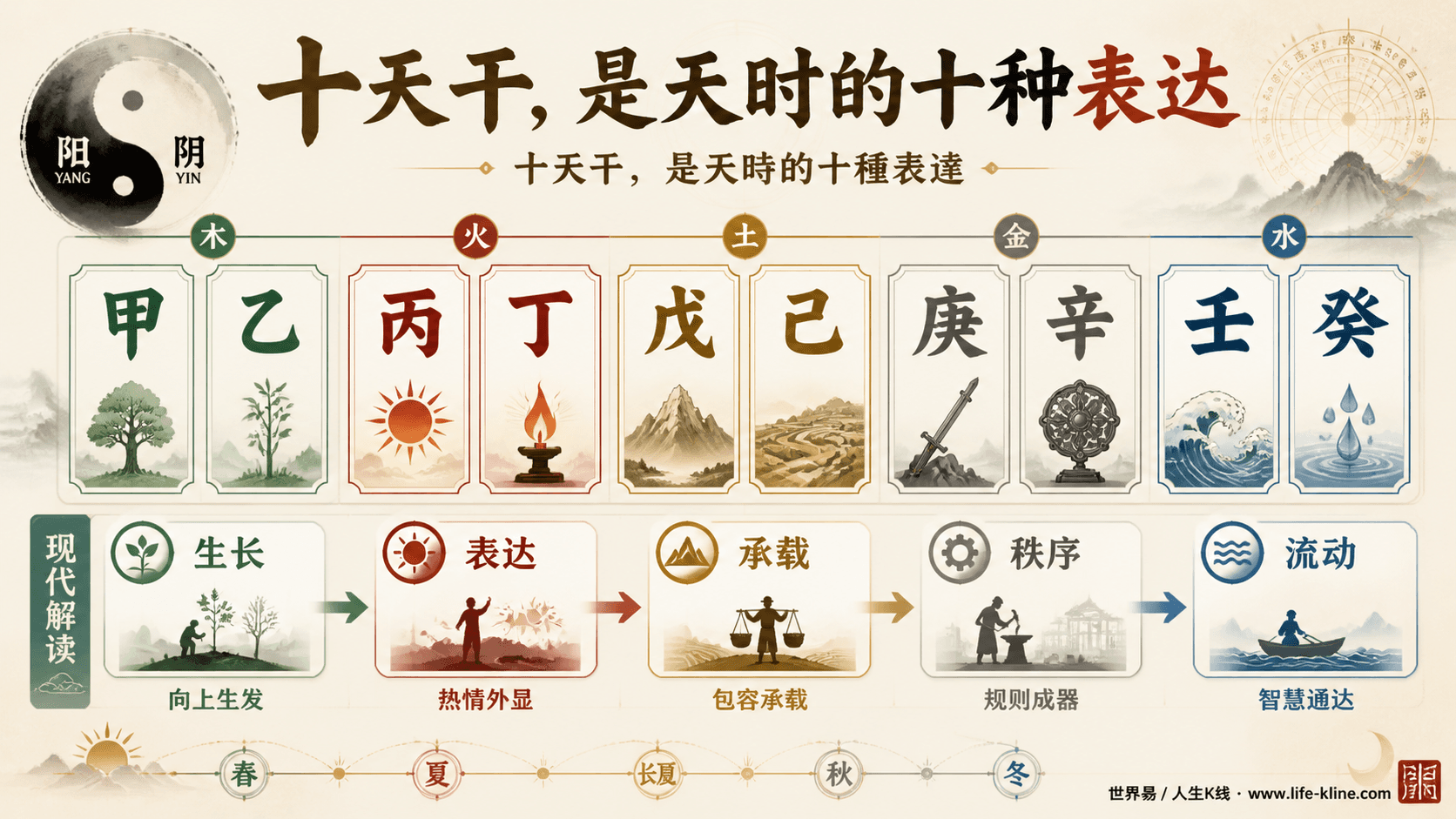
十天干总览图
这张图把《Ding (丁): Characteristics and Applications of the Yin Fire Heavenly Stem in Fate Analysis》里的命理概念转成关系、边界和应用场景,适合先看图建立结构,再回到知识文章正文理解细节。
十天干是时间与环境变化的十种基础模式。理解其阴阳、五行属性,能帮助我们在不同时位中找到清晰的结构入口,而非预测结果。
查看图片解读