Detailed Analysis and Application of the Heavenly Stem Geng (庚) in Fate Study
把这篇文章落到自己身上验证:先看结构,再进入个人分析,不做泛泛阅读。
Concept Definition
Geng (庚) is the seventh Heavenly Stem (天干) in the traditional Chinese system. It is a Yang stem belonging to the Metal element. Geng's directional association is the west, and its representative colors include white, gold, and silver, symbolizing the texture and luster of metal. In fate study, the Heavenly Stem Geng holds an important position and is often used in combinations with Earthly Branches (地支), influencing the structure and strength distribution within the BaZi (Eight Characters) chart.
Geng has specific combination (He) and clash (Chong) relationships with other Heavenly Stems. It forms a Geng-Yi (庚乙) combination, implying mutual influence and transformation. Conversely, Geng clashes with Jia (甲) Wood, indicating conflict and opposition. Furthermore, Geng's strength varies by season: it is strongest in spring, especially during the Shen (申) and You (酉) months, while its power weakens during the Yin (寅) and Mao (卯) months.
Fate Characteristics and Symbolic Meaning
As a Yang Metal stem, Geng symbolizes hardness, perseverance, and decisiveness, akin to unrefined metal—solid and full of potential. Its Metal attribute represents cutting, forging, and purification forces, reflecting sharpness and directness. The west direction and representative colors of white, gold, and silver further reinforce Geng's symbolism of metal and brightness.
Within fate structures, Geng's combination and clash relationships reveal its complex interaction with the Wood element. The Geng-Yi combination represents the union of Metal and Wood, symbolizing the integration of metal and green plants, which may imply achieving renewal or transformation through harmonizing contradictions. In contrast, the Geng-Jia clash manifests Metal-Wood conflict, often bringing obstacles or intense changes that require analysis in conjunction with other fate factors.
Geng's seasonal strength rating shows it is weaker in spring and strongest in the Shen (申) and You (酉) months during autumn. Wood energy is vigorous in spring, restraining Metal; thus, Geng's Metal energy is relatively weak then. In autumn, Metal energy flourishes, significantly enhancing Geng's power. This seasonal variation reflects the natural laws of the Five Elements' generating and overcoming cycles, providing guidance for fate analysis.
Practical Configuration and Interpretation
In the BaZi chart, Geng as a Yang Metal Heavenly Stem is commonly used to assess the personality traits and fortune trends of the individual. For example, when Geng appears in the Year Stem or Day Stem positions, it often indicates a person who is resolute and decisive, possessing strong execution and decision-making abilities, but may also exhibit rigidity and difficulty in compromise.
The Geng-Yi combination is regarded in practical fate analysis as a Metal-Wood harmony that can bring a moderating effect, alleviating conflicts between Metal and Wood. For instance, when Geng Metal meets Yi Wood in the chart, it may suggest resolving conflicts through cooperation or adjustment, enabling effective utilization of resources. On the other hand, the Geng-Jia clash requires caution due to its intense conflict, potentially causing fluctuations in career or interpersonal relationships, necessitating balancing with other Five Elements energies.
Applying seasonal strength is also crucial. If Geng Metal is located in the spring months of Yin (寅) and Mao (卯), its Metal power is weaker, and the individual may need support from other Five Elements. Conversely, in the autumn months of Shen (申) and You (酉), Geng Metal is strong, displaying more pronounced Metal qualities and influence. Properly configuring Geng Metal with other Heavenly Stems and Earthly Branches enhances the overall harmony and auspiciousness of the BaZi chart.
Common Misconceptions
Many beginners mistakenly believe that Geng Metal only represents hardness and rigidity, overlooking its softness and transformative capacity demonstrated in combination relationships. In fact, the Geng-Yi combination shows that Geng Metal can positively interact with Yi Wood, revealing its multifaceted nature and regulatory ability.
Another common misconception is to simply judge the Geng-Jia clash as unfavorable without considering the specific fate environment and constraints from other Five Elements. Although the Geng-Jia clash involves conflict, it is not absolutely inauspicious; reasonable coordination and harmonization can resolve conflicts and even turn adversity into opportunity.
FAQ
Question: What personality traits does Geng Metal represent in BaZi? Answer: As a Yang Metal stem, Geng Metal typically symbolizes firmness, decisiveness, and hardness. Individuals with Geng often have strong execution skills and are not easily compromising, but may also appear somewhat rigid.
Question: Why is the Geng-Yi combination considered favorable? Answer: The Geng-Yi combination represents Metal-Wood harmony. Although Metal and Wood are naturally conflicting elements, this combination reflects their adjustment and transformation, bringing new momentum and positive changes that benefit the overall fate balance.
Question: In which season is Geng Metal strongest? Answer: Geng Metal is strongest in the autumn months of Shen (申) and You (酉), and weaker in the spring months of Yin (寅) and Mao (卯). This reflects the natural laws of the Five Elements' generating and overcoming cycles, influencing the expression of Geng Metal's power in the chart.
Question: Is the Geng-Jia clash completely unfavorable? Answer: The Geng-Jia clash represents Metal-Wood conflict, which can cause disputes and fluctuations. However, the specific auspiciousness depends on the overall BaZi chart and other Five Elements' interactions, so it is not absolutely unfavorable.
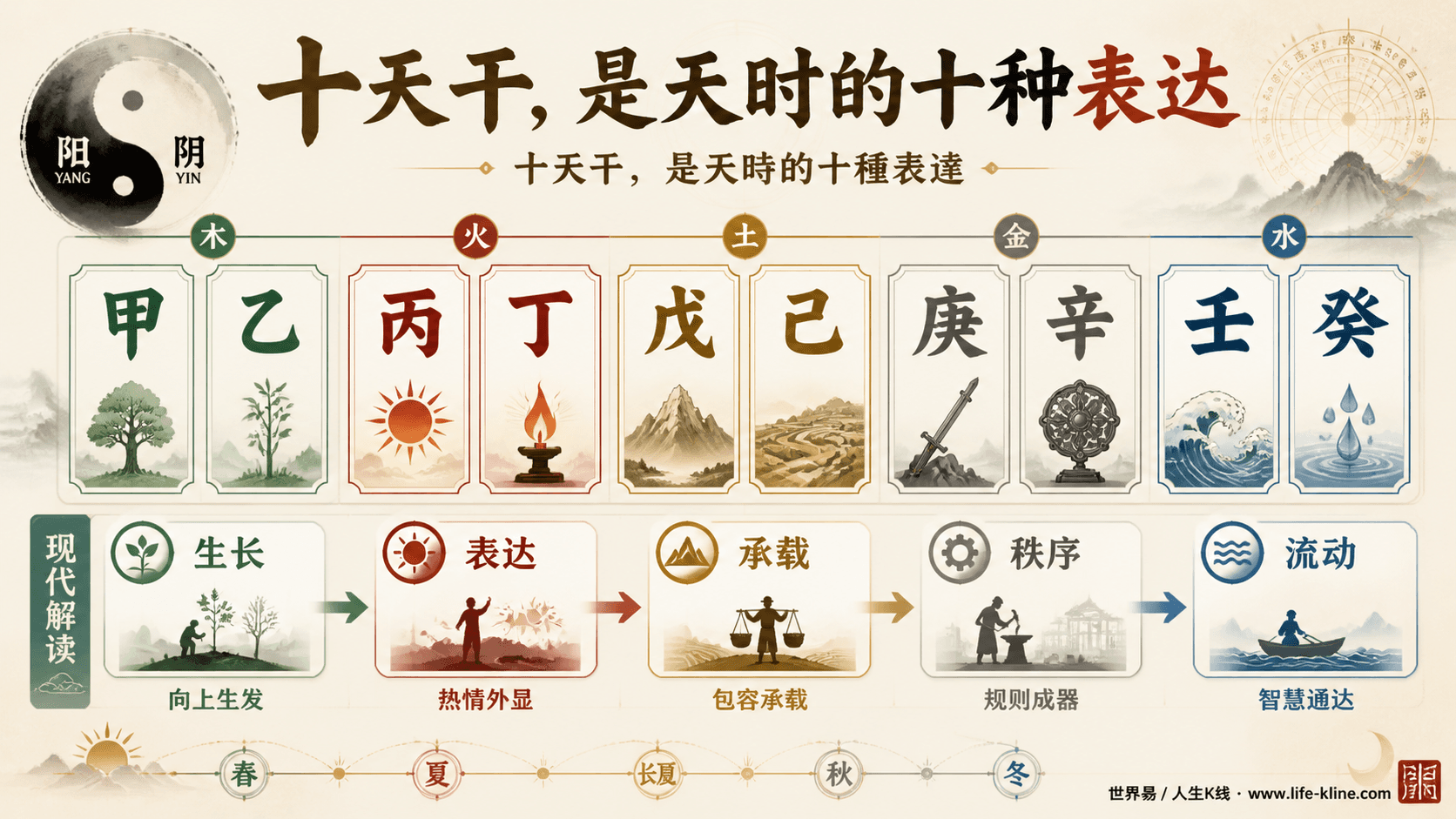
十天干总览图
这张图把《Detailed Analysis and Application of the Heavenly Stem Geng (庚) in Fate Study》里的命理概念转成关系、边界和应用场景,适合先看图建立结构,再回到知识文章正文理解细节。
十天干是时间与环境变化的十种基础模式。理解其阴阳、五行属性,能帮助我们在不同时位中找到清晰的结构入口,而非预测结果。
查看图片解读