Comprehensive Analysis of the Earthly Branch Chou (丑): Yin-Yang Attributes, Five Elements Hidden Stems, and Conflict-Harmony Relationships
把这篇文章落到自己身上验证:先看结构,再进入个人分析,不做泛泛阅读。
你现在搜索的,
其实是一个要落到自己身上的判断。
当前页面主要回答「Earthly Branches」这类搜索问题;真正有价值的下一步是把这套结构带进自己的报告、工具与案例验证。
Concept Definition
Chou (丑) is the second of the twelve Earthly Branches (Di Zhi), classified as a Yin Branch, representing Yin energy. In the Five Elements (Wu Xing), Chou corresponds to Earth, embodying qualities of stability and support. As an Earthly Branch, Chou plays an important role in marking time and space in metaphysical studies, serving as a crucial basis for fate and fortune calculations.
The hidden Heavenly Stems (Cang Gan) within Chou include Ji (己), Gui (癸), and Xin (辛), each corresponding to different Five Elements and Yin-Yang attributes. Ji (己) represents Earth (Yang Earth), Gui (癸) represents Water (Yin Water), and Xin (辛) represents Metal (Yin Metal). This combination reflects Chou’s multifaceted Five Elements connotations and complex energy structure. Being a Yin Branch, Chou’s energy tends to be gentle and introverted.
Regarding inter-branch relationships, Chou forms a Six Clash (Liu Chong) with Wei (未), indicating intense conflict and transformation between the two; it forms a Six Harmony (Liu He) with Zi (子), showing cooperation and mutual support. Additionally, Chou has a punishment (Xing) relationship with Xu (戌) and a harm (Hai) relationship with Wu (午). These conflict, harmony, punishment, and harm relationships are foundational in metaphysical analysis, indicating interaction patterns among different Earthly Branches.
Metaphysical Characteristics and Symbolic Meaning
As a Yin Branch, Chou symbolizes introversion, steadiness, and the accumulation of energy. Its Five Element Earth represents heaviness, tolerance, and nurturing. Therefore, Chou is often regarded as a solid foundation in metaphysics, with functions of bearing and supporting. Its Yin nature makes it suitable for receiving and transforming external energies, reflecting endurance and latent strength.
The presence of hidden stems Ji (己), Gui (癸), and Xin (辛) means Chou is not merely a symbol of Earth alone, but a complex combination of Earth containing Water and Metal. Ji Earth is Yang Earth, representing restrained Earth qualities; Gui Water is Yin Water, bringing moisture and flow; Xin Metal is Yin Metal, symbolizing refinement and contraction. This hidden stem structure enables Chou to regulate energy flow and balance on the Earth foundation, embodying an internal and external cultivation characteristic.
The Six Clash relationship between Chou and Wei reveals tension and opposition, often signifying conflict or change in metaphysical terms, requiring harmonization. The Six Harmony relationship between Chou and Zi reflects mutual generation and assistance, indicating potential cooperation and harmony. Punishment and harm relations, such as Chou’s punishment with Xu and harm with Wu, represent constraints and mutual damage respectively, serving as conflict points to be noted in metaphysical analysis, suggesting possible contradictions between a person and their environment or inner conflicts.
Practical Configuration and Interpretation
In practical fate analysis, Chou’s Yin-Yang and Five Elements attributes along with its hidden stem composition provide key information for interpreting a birth chart. For example, the Ji Earth hidden stem in Chou indicates the individual has a steady and solid personality foundation; the Gui Water hidden stem suggests rich inner emotions and certain wisdom; the Xin Metal hidden stem may bring strong contraction ability and meticulousness.
The conflict (Xiang Chong) between Chou and Wei often signals significant changes or conflicts in life, potentially affecting career or health, requiring attention to harmonization and resolution. Conversely, the harmony (Liu He) between Chou and Zi is a favorable combination, usually indicating harmonious relationships, complementary resources, and benefits for cooperation and social interactions.
When applying Chou in metaphysical deductions, considering its punishment (Xing) with Xu and harm (Hai) with Wu, a metaphysician can assess possible constraints or damages in certain aspects of the individual’s life, which may be alleviated through balancing other Five Elements or Earthly Branches. For instance, the punishment with Xu might reflect internal conflicts or external obstacles, while the harm with Wu suggests emotional fluctuations or environmental pressures.
Common Misconceptions
Some beginner metaphysics students mistakenly regard Chou as representing only the Earth element, overlooking the presence of Gui Water and Xin Metal in its hidden stems, leading to an overly simplistic and one-sided understanding of Chou’s energy. In fact, Chou’s diverse hidden stem structure endows it with complex Five Elements interactions that must be analyzed comprehensively to accurately assess its influence.
Additionally, the Six Clash (Liu Chong) relationship between Chou and Wei is often misunderstood as an absolute negative omen, ignoring the transformation and dynamic potential behind the conflict. While the Six Clash brings tension, it can also be an opportunity for change and growth, and should be judged in the context of the entire birth chart environment to avoid simplistic good-or-bad evaluations.
FAQ
Question: Why is Chou classified as a Yin Branch? Answer: Chou belongs to the Yin Branches among the twelve Earthly Branches. Yin Branches are characterized by energies that are introverted and gentle, contrasting with Yang Branches, reflecting the Yin aspect in the Yin-Yang balance.
Question: What is the significance of Chou’s hidden stems in metaphysical analysis? Answer: Chou’s hidden stems include Ji Earth (己), Gui Water (癸), and Xin Metal (辛), representing a complex structure of Earth containing Water and Metal. This affects the individual’s personality and fortune, requiring integrated analysis with the overall Five Elements configuration.
Question: What does the Six Clash between Chou and Wei imply? Answer: The Six Clash indicates conflict and opposition between two Earthly Branches. The clash between Chou and Wei may cause conflict, change, or instability, which needs to be harmonized or resolved through other metaphysical factors.
Question: How should the Six Harmony relationship between Chou and Zi be understood? Answer: Six Harmony is a combining relationship between Earthly Branches. The harmony between Chou and Zi means mutual support and smooth coordination, usually indicating good interpersonal relationships or favorable cooperation opportunities.
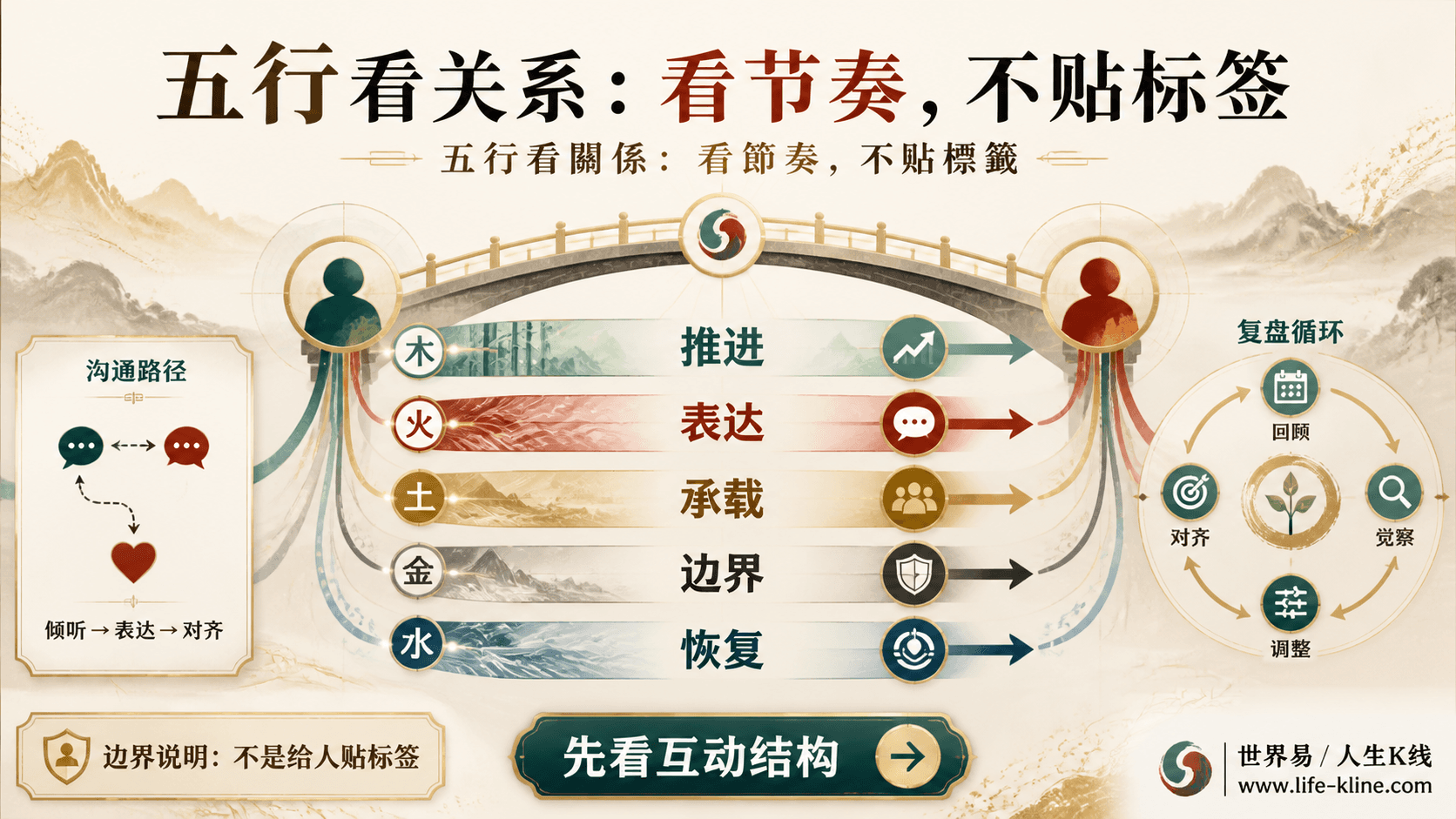
五行与关系节奏图
这张图把《Comprehensive Analysis of the Earthly Branch Chou (丑): Yin-Yang Attributes, Five Elements Hidden Stems, and Conflict-Harmony Relationships》里的命理概念转成关系、边界和应用场景,适合先看图建立结构,再回到知识文章正文理解细节。
五行提供一种结构化视角,帮助观察关系中的推进、表达、承载、边界与恢复节奏。它不是性格定型工具,而是辅助我们留意互动的时位、环境与动作选择。
查看图片解读