The Metaphysical Attributes and Applications of the Earthly Branch Hai (亥)
把这篇文章落到自己身上验证:先看结构,再进入个人分析,不做泛泛阅读。
Concept Definition
Hai (亥) is one of the twelve Earthly Branches in traditional Chinese metaphysics and is classified as a Yin Branch. As a Yin Branch, Hai exhibits Yin characteristics within the Yin-Yang system, representing gentle and introverted energy. Its intrinsic Five Element is Water, which means it carries the properties and functions of Water within the Five Element cycle.
The hidden Heavenly Stems (藏干) within Hai are Ren (壬), which is Yang Water, and Jia (甲), which is Yang Wood. Together, these form the internal energy structure of Hai. The hidden stems refer to the Heavenly Stems concealed within an Earthly Branch, determining the branch's specific manifestations in various metaphysical combinations.
In terms of interrelations among Earthly Branches, Hai forms a Six Clash (Liu Chong) with Si (巳), representing conflict and change; a Six Harmony (Liu He) with Yin (寅), symbolizing harmony and mutual assistance; and also has a mutual harm (Xiang Hai) relationship with Shen (申), indicating a certain degree of restraint or unfavorable influence between them.
Metaphysical Characteristics and Symbolic Meanings
As a Yin Branch, Hai expresses introverted and reserved qualities, symbolizing hidden strength and latent wisdom. Its Five Element being Water carries the nature of flow, nourishment, and inclusiveness, which associates Hai in metaphysics with emotions, intelligence, and adaptability.
The combination of the hidden stems Ren Water and Jia Wood reflects the relationship of Water nurturing Wood, symbolizing continuous vitality and sustainable development. Ren Water represents vast waters such as rivers and seas, broad and profound; Jia Wood represents newly sprouted trees, full of life. This combination endows Hai with a complex attribute of both stability and vitality.
The Six Clash relationship between Hai and Si reveals potential conflicts and challenges Hai may face, especially involving the mutual restraint between Fire and Water. Conversely, the Six Harmony relationship between Hai and Yin emphasizes cooperation and mutual support, bringing balance and harmony. The mutual harm relationship between Hai and Shen warns of the need to be mindful of their interactions to avoid unfavorable factors.
Practical Configuration and Interpretation
In practical metaphysical analysis, Hai’s Yin Water attribute makes it suitable for interpreting charts related to emotions, intelligence, and flexible adaptability. For example, when Hai and Yin appear together, their Six Harmony relationship can bring good cooperation and support, enhancing the Day Master’s career luck and interpersonal relationships.
When Hai encounters Si, due to the Six Clash relationship, it may trigger conflicts and fluctuations, reminding the metaphysician to pay attention to contradictions and challenges within the chart and to take appropriate harmonizing measures to mitigate unfavorable effects.
The presence of the hidden stems Ren Water and Jia Wood allows Hai to play a bridging role in Five Element configurations. The fluidity of Ren Water combined with the growth energy of Jia Wood is suitable for analyzing the Day Master’s intellectual development and potential release, especially when Hai appears in the Liu Nian (annual fortune) or Da Yun (decade luck cycle), where its specific manifestations should be closely observed.
Common Misconceptions
Some mistakenly consider Hai as purely representing Water and overlook the influence of its hidden stem Jia Wood. In fact, the presence of hidden stems enriches and complicates Hai’s attributes, and it should not be simply understood as Water alone.
Additionally, the Six Clash relationship between Hai and Si is often misunderstood as an absolute conflict and disadvantage. In actual metaphysical practice, it is necessary to analyze the overall chart comprehensively; sometimes, the Six Clash can also bring positive transformation and momentum.
FAQ
Question: Why is Hai classified as a Yin Branch? Answer: Hai is classified as a Yin Branch within the Earthly Branch system because the Yin-Yang classification is based on the Yin-Yang attributes of the branches. Hai exhibits gentle and introverted Yin qualities, thus it is categorized as a Yin Branch.
Question: What do the hidden stems Ren and Jia within Hai represent respectively? Answer: Ren is Yang Water, symbolizing vast waters like rivers and seas with broad and profound qualities; Jia is Yang Wood, representing newly sprouted trees, symbolizing vitality and growth. Together, they form the internal energy of Hai.
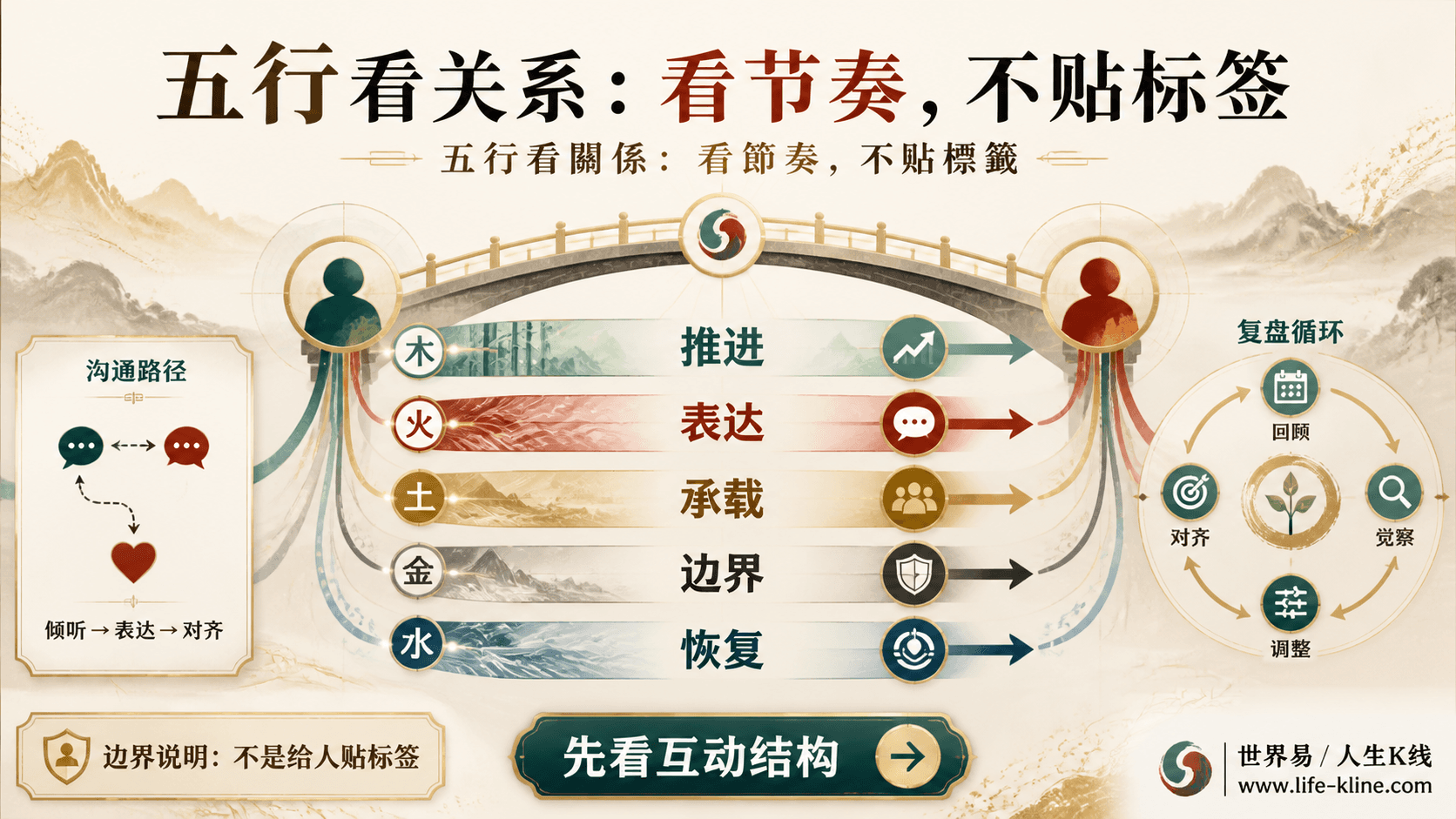
五行与关系节奏图
这张图把《The Metaphysical Attributes and Applications of the Earthly Branch Hai (亥)》里的命理概念转成关系、边界和应用场景,适合先看图建立结构,再回到知识文章正文理解细节。
五行提供一种结构化视角,帮助观察关系中的推进、表达、承载、边界与恢复节奏。它不是性格定型工具,而是辅助我们留意互动的时位、环境与动作选择。
查看图片解读