Encyclopedia of Earthly Branches: Si (巳) — Detailed Explanation of Yin Branch Fire Five Elements and Hidden Heavenly Stems
把这篇文章落到自己身上验证:先看结构,再进入个人分析,不做泛泛阅读。
你现在搜索的,
其实是一个要落到自己身上的判断。
当前页面主要回答「Earthly Branches」这类搜索问题;真正有价值的下一步是把这套结构带进自己的报告、工具与案例验证。
Concept Definition
Si (巳) is the sixth Earthly Branch (Di Zhi) in the traditional Chinese Heavenly Stems and Earthly Branches (Tian Gan Di Zhi) calendrical system. It is classified as a Yin Branch and its Five Element is Fire. Earthly Branches are ancient symbols used to mark time and years, with Si positioned sixth in the sequence, symbolizing specific time points and natural phenomena.
The intrinsic Five Element of Si is Fire, representing enthusiasm, brightness, and energy. Regarding hidden Heavenly Stems (藏干, Cang Gan), Si contains three stems: Bing (丙, Yang Fire), Geng (庚, Yang Metal), and Wu (戊, Yang Earth). These hidden stems play important roles in fate analysis, influencing the balance of Five Elements and Yin-Yang transformations within a natal chart.
Additionally, Si has complex combination, clash, punishment, and harm relationships with other Earthly Branches. Si clashes with Hai (亥), indicating opposing forces; forms a harmonious union (六合, Liu He) with Shen (申), representing cooperative harmony; and simultaneously has punishment (刑, Xing) with Shen and harm (害, Hai) with Yin (寅). These relationships reflect dynamic interactions among the Earthly Branches.
Metaphysical Characteristics and Symbolic Meaning
As a Yin Branch, Si represents a quality of gentleness combined with firmness in the Yin-Yang balance. Yin Branches generally tend toward introversion and softness, but Si’s Fire element imparts an active and passionate nature, creating a unique character trait.
The hidden stems in Si—Bing (丙, Yang Fire), Geng (庚, Yang Metal), and Wu (戊, Yang Earth)—correspond to Yang Fire, Yang Metal, and Yang Earth respectively. This combination gives Si a multifaceted Five Element attribute. Bing Fire symbolizes warmth and brightness; Geng Metal represents hardness and strength; Wu Earth signifies stability and tolerance. Their coexistence endows Si with rich connotations.
Si’s harmonious union with Shen (申) reflects the generating (相生) relationship between Fire and Metal, symbolizing coordination and mutual assistance. In contrast, its clash with Hai (亥) represents the conflict between Water and Fire, illustrating the natural law of mutual overcoming (相克). Punishment and harm relationships further reveal the complex mutual influences among Earthly Branches, affecting personality and destiny trajectories.
Practical Configuration and Interpretation
In BaZi (Eight Characters) fate analysis, attention should be paid to the combination of hidden stems within Si. Bing Fire is the dominant energy, while Geng Metal and Wu Earth play supporting roles. If the Day Master’s (Ri Zhu) Five Element favors Fire, the presence of Si can strengthen this energy; otherwise, it may cause imbalance in the Five Elements.
Si’s clash with Hai often appears in charts reflecting Water-Fire opposition. Such conflict can bring emotional fluctuations or environmental changes. Fate practitioners usually recommend harmonizing with other Five Elements to mitigate the adverse effects of this clash.
Si’s harmonious union with Shen signifies a beneficial combination of Fire and Metal, often regarded as auspicious. This union symbolizes opportunities and cooperation. In practical analysis, this Liu He relationship helps enhance the individual’s career prospects and interpersonal relations.
It is important to note that Si’s punishment with Shen and harm with Yin often imply potential internal contradictions or external conflicts. These must be assessed in the context of the entire chart to avoid one-sided interpretations.
Common Misconceptions
Many beginners mistakenly consider Si as a Yang Branch, but in fact, Si is a Yin Branch. This distinction is critical in Yin-Yang and Five Elements coordination. Confusing Yin and Yang properties can lead to errors in fate judgment and disrupt the understanding of Five Element balance.
Another common misconception is neglecting the diversity of Si’s hidden stems. Si’s hidden stems include not only Fire but also Metal and Earth. Treating Si solely as Fire may cause biased interpretations of the natal chart. Correct understanding of the hidden stems’ multiplicity aids in more accurate analysis.
FAQ
Question: Why is Si classified as a Yin Branch? Answer: Earthly Branches are divided into Yin and Yang categories. Si is categorized as a Yin Branch among the twelve Earthly Branches, representing relatively introverted and gentle qualities. Although its intrinsic Five Element is Fire, the Yin-Yang attribute is determined based on the overall distribution.
Question: What does the harmonious union (六合, Liu He) between Si and Shen specifically represent? Answer: The Liu He between Si and Shen indicates a harmonious relationship between these two Earthly Branches, symbolizing the generating and mutual compatibility between Fire and Metal. In practical fate analysis, it manifests as beneficial cooperation, supporting career advancement and improving interpersonal relationships.
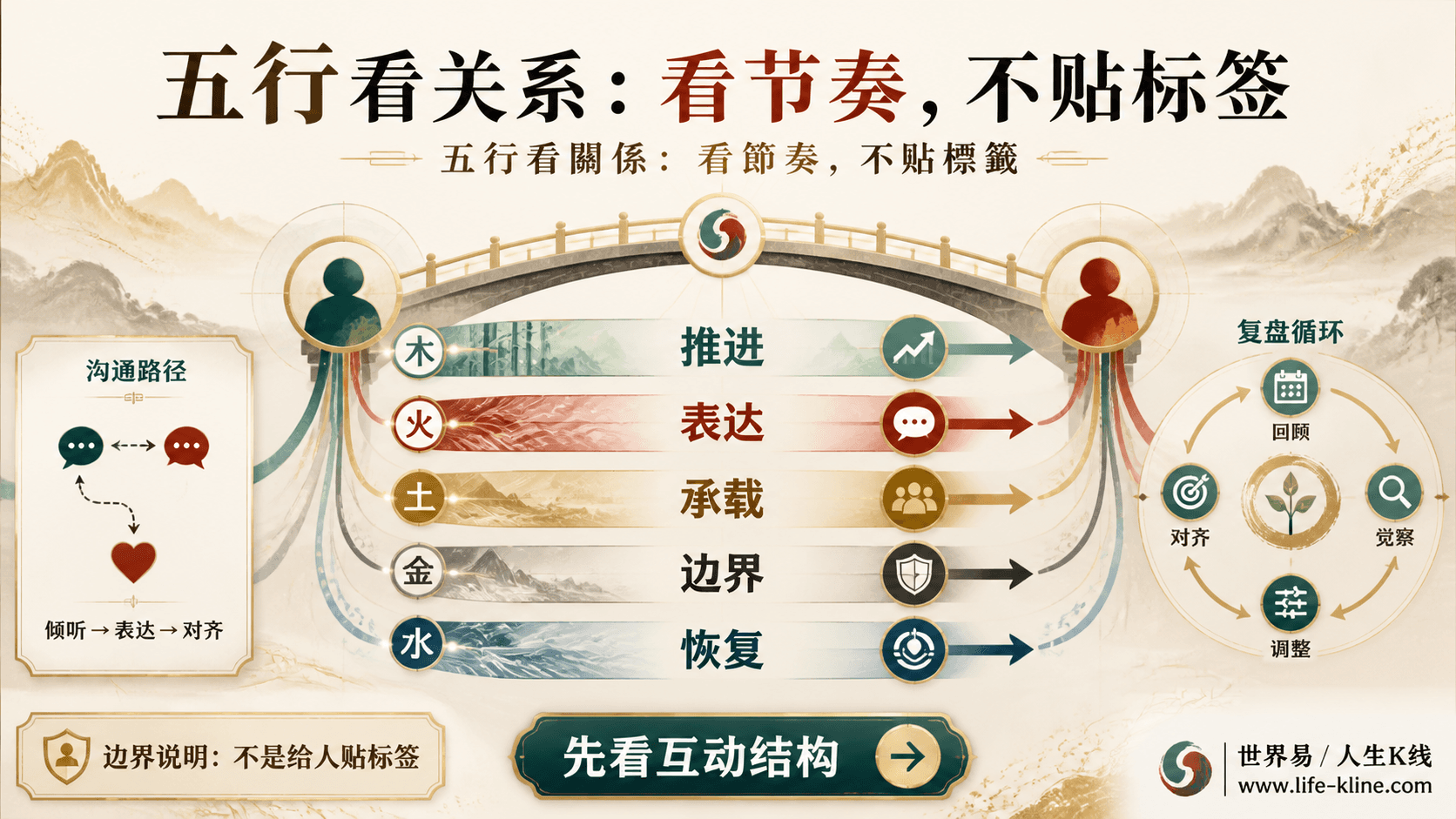
五行与关系节奏图
这张图把《Encyclopedia of Earthly Branches: Si (巳) — Detailed Explanation of Yin Branch Fire Five Elements and Hidden Heavenly Stems》里的命理概念转成关系、边界和应用场景,适合先看图建立结构,再回到知识文章正文理解细节。
五行提供一种结构化视角,帮助观察关系中的推进、表达、承载、边界与恢复节奏。它不是性格定型工具,而是辅助我们留意互动的时位、环境与动作选择。
查看图片解读