Detailed Explanation of Qimen Nine Stars: Complete Beginner’s Guide and Real Chart Analysis
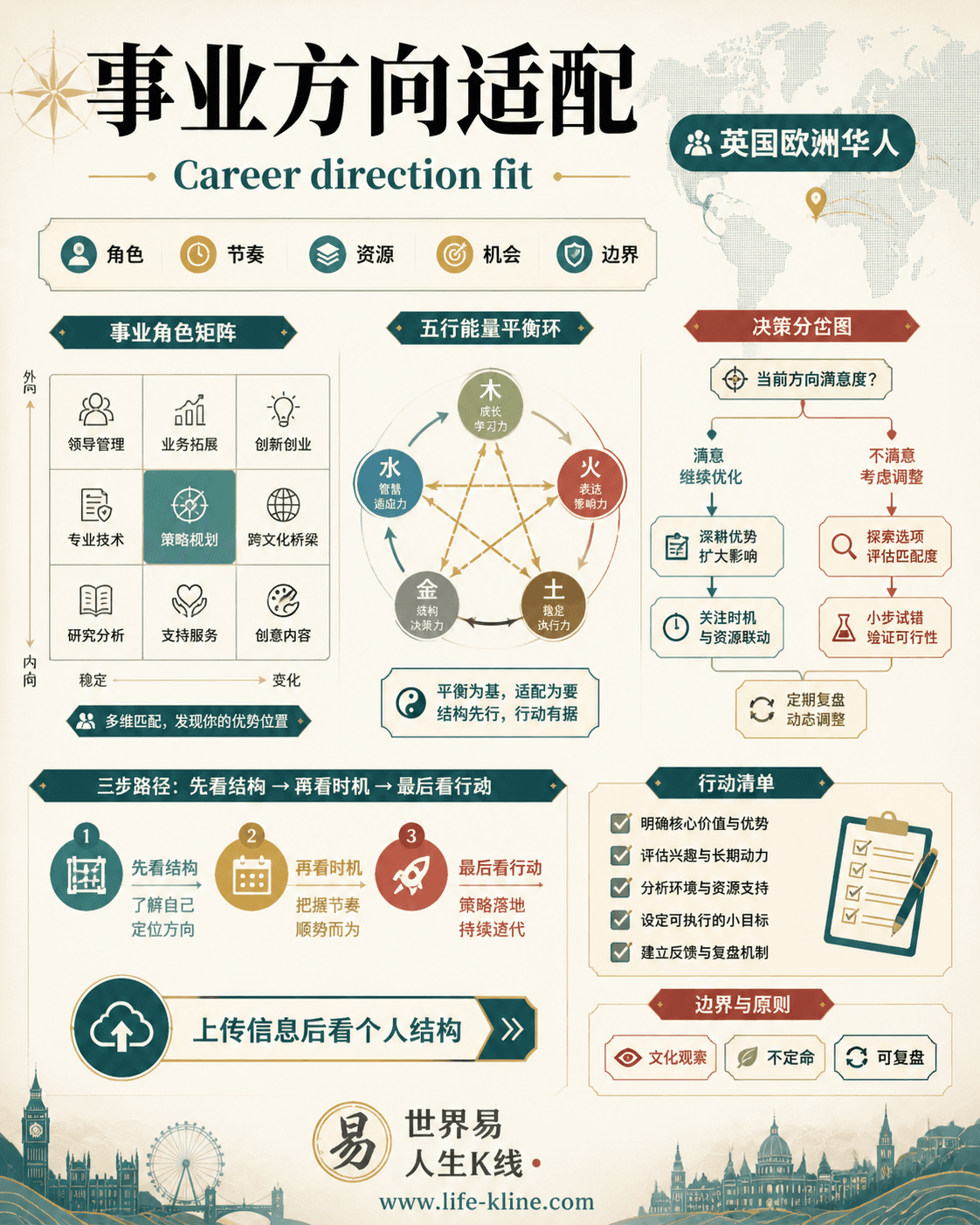
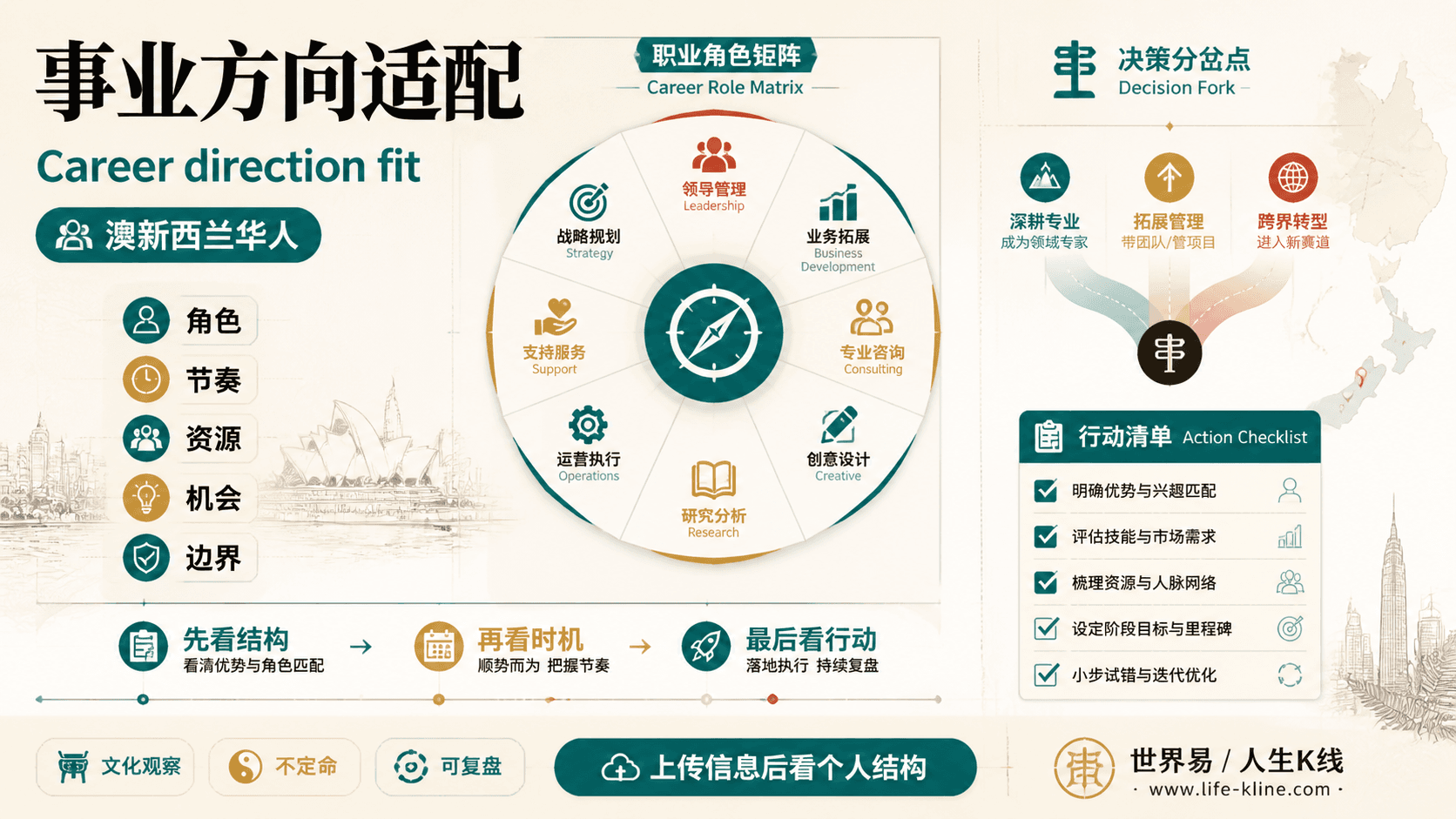
把这篇文章落到自己身上验证:先看结构,再进入个人分析,不做泛泛阅读。
What Are the Qimen Nine Stars
The Qimen Nine Stars are an important star system within the art of Qimen Dunjia, originating from ancient Chinese astronomy and the Yin-Yang Five Elements theory. The nine stars each represent different celestial phenomena and Five Elements attributes. They are arranged in a Qimen chart according to specific rules, influencing the auspiciousness and inauspiciousness of the situation.
The Nine Stars include Zhi Fu (Chief Star), Teng She (Soaring Snake), Tai Yin (Great Yin), Liu He (Six Harmony), Bai Hu (White Tiger), Xuan Wu (Black Tortoise), Jiu Di (Nine Earth), Jiu Tian (Nine Heaven), and Jiu Mang (Nine Bright). Each star carries symbolic meaning and energy characteristics, serving as key factors in judging temporal-spatial and situational changes in Qimen Dunjia.
The arrangement and combination of the Nine Stars are closely related to the Qimen Eight Doors (Ba Men), Eight Spirits (Ba Shen), and Nine Palaces (Jiu Gong), forming a complex and variable Qimen chart. By analyzing the positions and interrelations of the Nine Stars, one can infer the auspiciousness, strength of the Yong Shen, and future trends of the situation.
In ancient times, Qimen Dunjia was mainly used for military deployment and major decision-making, earning the reputation as the “Imperial Science.” The Nine Stars system is one of its core hallmarks. In modern times, the Qimen Nine Stars are widely applied in timing selection, Feng Shui, and business decision-making.
How to Read the Qimen Nine Stars: Core Elements
To understand the Qimen Nine Stars, one must first grasp each star’s Five Elements attribute and symbolic meaning. For example, the Zhi Fu star belongs to Wood and represents dominant power; Bai Hu belongs to Metal and symbolizes malevolent energy. The mutual generation and restriction relationships between the Nine Stars and the Day Master’s Five Elements directly affect the auspiciousness of the situation.
Secondly, it is necessary to combine the auspiciousness and inauspiciousness of the Eight Doors. Among the Eight Doors, Kai Men (Open Door), Xiu Men (Rest Door), and Sheng Men (Life Door) are auspicious; Shang Men (Harm Door), Du Men (Stop Door), and Jing Men (Scenery Door) are neutral to slightly inauspicious; Si Men (Death Door) and Jing Men (Shock Door) are very inauspicious. If a Nine Star falls on an auspicious door, it brings beneficial influence; otherwise, it may cause obstacles.
In practical destiny charts, the analysis of Yong Shen (favorable element) and Ji Shen (unfavorable element) must also be integrated. The Yong Shen represents the element that harmonizes the situation, while the Ji Shen is the element to be avoided. If the Nine Stars can generate the Yong Shen or restrain the Ji Shen, the situation tends to be favorable.
The influence of Da Yun (decade luck cycle) and Liu Nian (annual fortune) on the Qimen Nine Stars cannot be ignored. Da Yun represents the long-term trend, while Liu Nian reflects the changes within the year. The auspiciousness or inauspiciousness of the Nine Stars during different Da Yun and Liu Nian reflects the stability or fluctuations of the person’s fortune.
Only by comprehensively considering the palace where the Nine Stars fall, the auspiciousness of the Eight Doors, the Yong Shen and Ji Shen, and the interaction with Da Yun and Liu Nian can one accurately interpret the specific meanings of the Qimen Nine Stars in a destiny chart and their guiding role in life.
Three Real BaZi Chart Case Studies
Case One involves a male aged 25 to 30, with a Day Master Yi Wood (乙木, Yi) of moderate strength, following a Pian Cai (偏财) pattern. The Yong Shen is Water, and the Ji Shen is Metal. The current Da Yun is Ding Mao (丁卯, 19-28 years old), and the Liu Nian is Bing Wu (丙午). In this chart, although the Yi Wood Day Master is moderate, the Pian Cai pattern is prominent. Water as the Yong Shen nourishes Yi Wood, enhancing vitality. If the Qimen Nine Stars assist the power of Water, it benefits wealth and career development. Under the stable Ding Mao Da Yun, the changes brought by the Bing Wu Liu Nian require adaptability, making the dynamic position changes of the Nine Stars especially important, reflecting their key role in regulating the situation.
Case Two is a female aged 45 to 50, with a Day Master Bing Fire (丙火, Bing) tending to be strong, following a Qi Sha (七杀) pattern. The Yong Shen are Water and Metal, and the Ji Shen is Wood. The current Da Yun is Ding Si (丁巳, 44-53 years old), with the Liu Nian also being Bing Wu (丙午). Since Bing Fire is strong, Water and Metal are needed to control and balance it. If the Qimen Nine Stars can coordinate with the Yong Shen Water and Metal to restrain the Ji Shen Wood, it helps stabilize the chart and fortune. The Ding Si Da Yun is stable, and the Bing Wu Liu Nian requires adaptability. The assistance of the Nine Stars lies in mitigating the impact of Qi Sha, protecting the person’s safety and smooth progress, demonstrating the flexibility and guiding value of the Nine Stars in response to timing.
Case Three involves a male aged 25 to 30, with a Day Master Gui Water (癸水, Gui) of weak strength, following a Zheng Yin (正印) pattern. The Yong Shen is Metal, and the Ji Shen are Wood and Fire. The current Da Yun is Ding Hai (丁亥, 22-31 years old), and the Liu Nian is Bing Wu (丙午). The weak Gui Water Day Master benefits from Metal as the Yong Shen, which can generate and support Water, strengthening the Day Master. If the Qimen Nine Stars are reasonably arranged to enhance Metal’s effect and suppress the Ji Shen Wood and Fire’s restriction on Water, it is favorable for the person’s fortune improvement. The Ding Hai Da Yun is stable, while the Bing Wu Liu Nian requires flexible response. Here, the Nine Stars play a role in harmonizing and guiding, highlighting their importance in supporting the steady development of the Zheng Yin pattern.
Common Misconceptions
Many people mistakenly believe that the Qimen Nine Stars alone can determine auspiciousness or inauspiciousness. In fact, the auspiciousness of the Nine Stars must be analyzed in combination with the Eight Doors (Ba Men), Eight Spirits (Ba Shen), and the Nine Palaces (Jiu Gong). The quality of a single star cannot be judged in isolation.
Another misconception is neglecting the influence of Yong Shen and Ji Shen on the Nine Stars. If the Nine Stars in the chart do not coordinate with the Yong Shen, they may instead exacerbate the negative effects of the Ji Shen, leading to erroneous judgments.
Some also misunderstand that the Qimen Nine Stars are only applicable to military or ancient uses. In reality, modern Qimen Nine Stars are widely applied in business negotiations, timing selection, Feng Shui, and many other fields, with theories and methods that have practical guiding significance.
Finally, ignoring the impact of Da Yun and Liu Nian on the auspiciousness of the Nine Stars results in inaccurate timing judgments. The auspiciousness of the Nine Stars changes dynamically with Da Yun and Liu Nian, requiring ongoing observation and adjustment.
Practical Suggestions
When applying the Qimen Nine Stars in practice, it is recommended to first comprehensively understand the Day Master’s Five Elements, pattern, Yong Shen, and Ji Shen, ensuring a clear grasp of the overall chart. Then analyze the palace positions of the Nine Stars along with the auspiciousness of the corresponding Eight Doors.
Dynamically observing the influence of Da Yun and Liu Nian on the Nine Stars is especially important. Da Yun provides the long-term trend, while Liu Nian reflects short-term fluctuations. Combining both enables more accurate prediction and strategy adjustment.
Additionally, practical application should involve extensive use of real cases for practice, to understand the specific manifestations and roles of the Nine Stars in different patterns. This avoids purely theoretical judgments and improves practical skill and metaphysical accuracy.
FAQ
Question 1: Why is Qimen Dunjia called the “Imperial Science”? Answer: In ancient times, Qimen Dunjia was mainly used for military deployment and major decision-making. Due to its complex structure and the need for skilled practitioners to interpret it, it was ranked first among the “Three Techniques” (Tai Yi, Qimen, Liu Ren) and often served emperors and generals. In modern times, Qimen is commonly used in business judgment, timing selection, interpersonal negotiations, and other scenarios.
Question 2: How to determine the auspiciousness of the Eight Doors? Answer: The Eight Doors are Kai (Open), Xiu (Rest), Sheng (Life), Shang (Harm), Du (Stop), Jing (Scenery), Si (Death), and Jing (Shock). Among them, Kai, Xiu, and Sheng Doors are auspicious; Shang, Du, and Jing Doors are neutral to slightly inauspicious; Si and Jing Doors are very inauspicious. However, the auspiciousness of the doors must be judged in combination with the palace where the door’s symbol falls and the overall pattern; judging by the door alone is insufficient.
Question 3: How do the Qimen Nine Stars affect the person’s fortune? Answer: The Qimen Nine Stars influence the auspiciousness and inauspiciousness changes in the chart through their Five Elements attributes and palace positions. If the Nine Stars can generate the Yong Shen or restrain the Ji Shen, they help improve fortune; otherwise, they may cause obstacles. Combined with Da Yun and Liu Nian, the Nine Stars also reflect the stability or fluctuations of the person’s fortune, guiding practical decisions and responses.
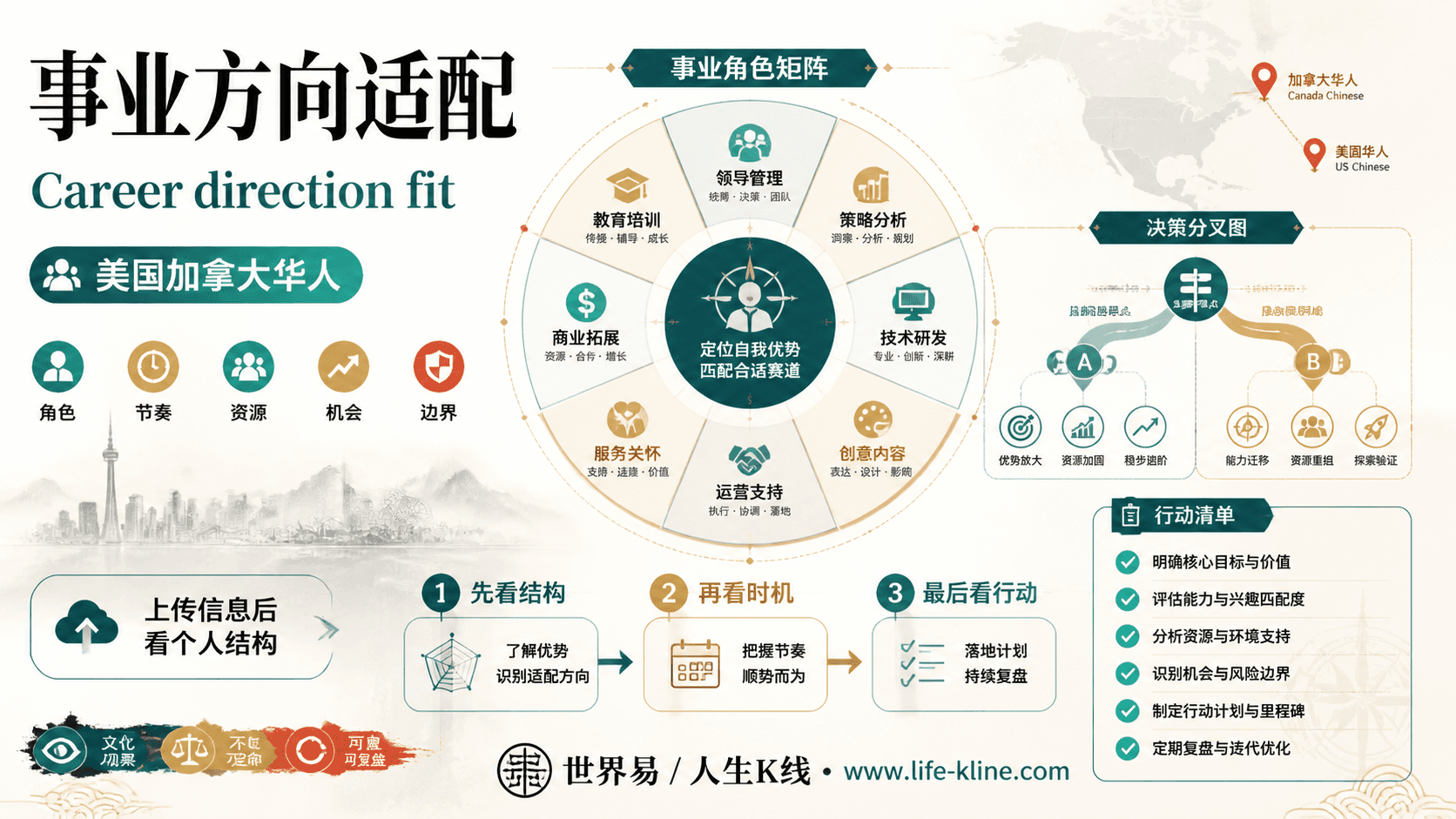
事业方向适配|美国加拿大华人
这张图把《Detailed Explanation of Qimen Nine Stars: Complete Beginner’s Guide and Real Chart Analysis》里的命理概念转成关系、边界和应用场景,适合先看图建立结构,再回到知识文章正文理解细节。
事业方向适配不应被写成固定结论。更适合美国加拿大华人的读法,是把传统术语翻译成结构、时机、环境、行动和复盘。
查看图片解读