Analysis of Optimal Submission Timing for Japan Business Manager Visa and Study-to-Work Transition
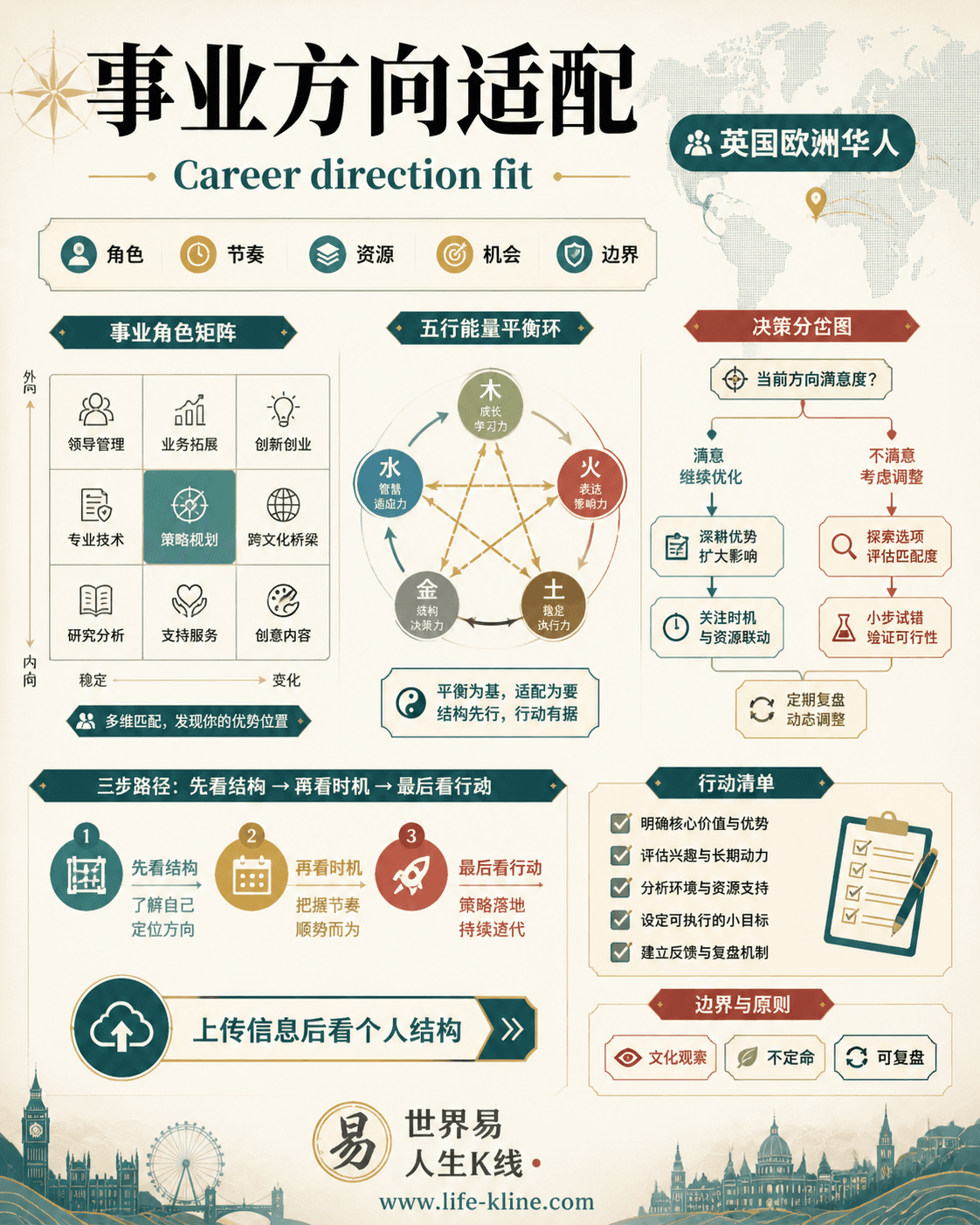
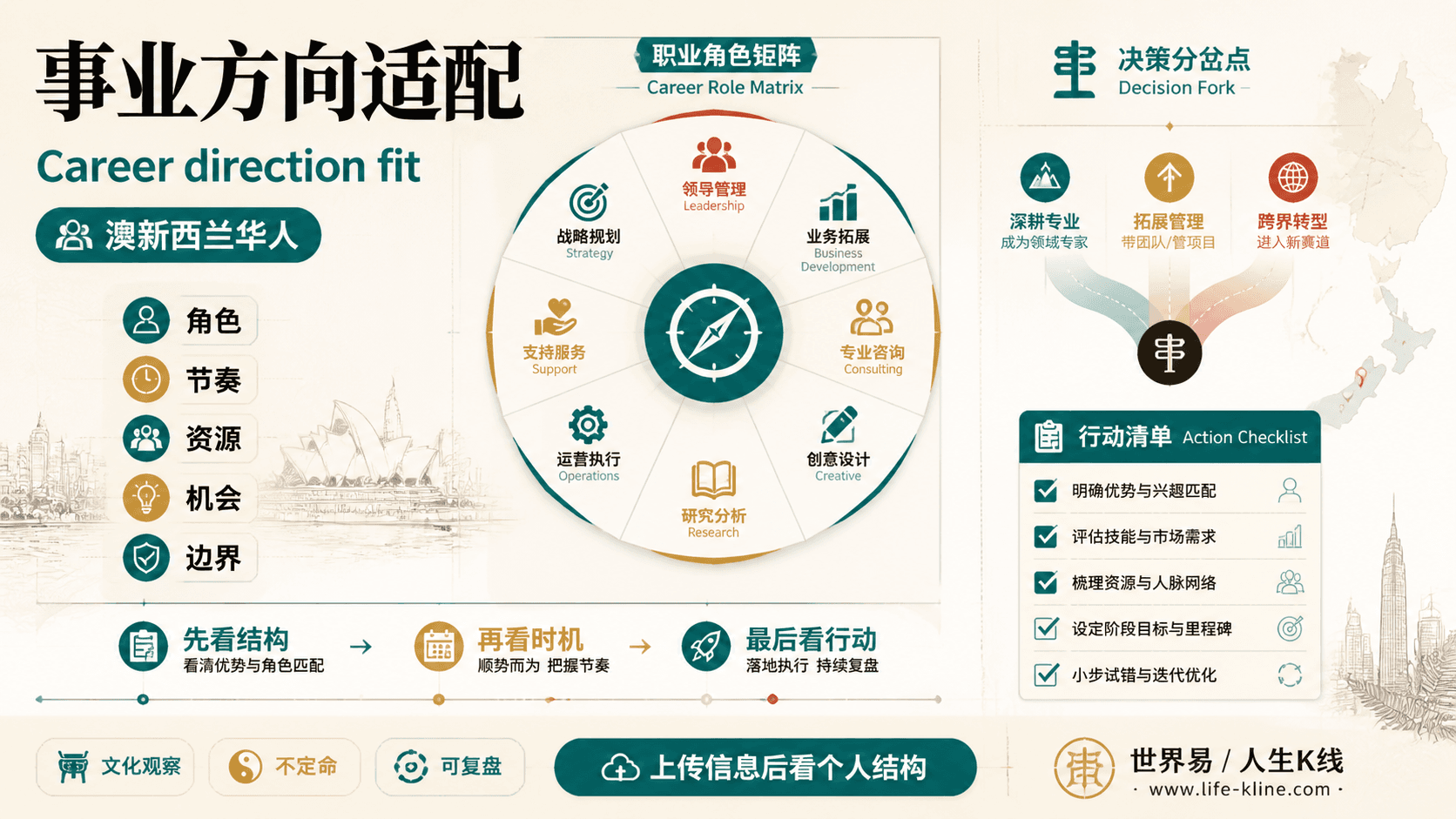
把这篇文章落到自己身上验证:先看结构,再进入个人分析,不做泛泛阅读。
Why This Decision Is Especially Difficult at This Destination
Japan, as a developed Asian economy, faces unique migration challenges across diverse pathways such as the Business Manager visa, Highly Skilled Professional introduction, and study-to-work transitions. Firstly, Japan’s language barrier is relatively high; applicants must possess a certain level of Japanese proficiency. This not only affects visa document preparation but also directly impacts interviews and social integration after entry. Language obstacles often prolong application cycles and even cause multiple submission failures.
Secondly, Japan’s long-term residence and naturalization cycles are lengthy. Applicants need to renew their visas multiple times within the visa validity period, each renewal accompanied by strict document review. The pace of visa approval is closely related to Japan’s policies on foreign talent, while slow social integration and an aging population structure exacerbate applicants’ psychological pressure and uncertainty.
From a metaphysical perspective, key nodes in the visa application, submission, and landing processes are often influenced by the rhythms of Da Yun (decade luck cycles), Liu Nian (annual fortune), and monthly branch combinations. Especially the combinations of wealth stars (Cai Xing), Bi Jian (Peer), Qi Sha (Seven Killings), Zheng Guan (Proper Authority), and Yin stars (supporting elements) can significantly amplify or suppress smoothness and obstacles during the application. Correctly grasping these rhythms helps applicants find the best submission timing amid complex and changing environments, reducing risks caused by policy changes or missing documents.
Therefore, applying for the Business Manager visa and study-to-work transition is not only a legal and policy challenge but also a result of the interaction between metaphysical rhythms and real-world conditions. Scientifically combining metaphysics with reality and reasonably controlling departure and submission rhythms is key to improving overall success rates.
Three Core Dimensions of Metaphysical Judgment
First, the Day Master and Yi Ma (Traveling Horse) combination reflects the applicant’s migration motivation and environmental adaptability. A Ren Water (壬, Ren) Day Master that is relatively strong and carries Yi Ma symbolizes strong mobility and ability to go abroad, but wood as the Yong Shen (favorable element) is needed to harmonize, indicating reliance on external resources or learning ability when seeking wealth or adapting in a foreign land. A Xin Metal (辛, Xin) Day Master that is relatively strong with Metal as Yong Shen represents the applicant’s resilience and hard skills, such as in the metal industry, but Earth is the Ji Shen (unfavorable element) which, if excessive, obstructs circulation and information transmission. A Gui Water (癸, Gui) Day Master that is balanced and of Zheng Guan (Proper Authority) pattern, with Guan Sha (authority stars) representing identity pressure and rule constraints, uses Fire as Yong Shen to indicate overcoming obstacles through effort and vitality.
Second, the relationship between wealth stars and seeking wealth in a foreign land is especially important in Business Manager and study-to-work applications. Wealth stars represent wealth and resources; their strength or weakness in Liu Nian and Da Yun directly affects the sufficiency of application materials and smoothness of financial proof. Bi Jian (Peer) reflects competition and peer pressure; an overly strong Bi Jian may cause resource dispersion and internal conflicts, affecting material integration. Guan Sha (authority stars) represent visa offices and government authorities; when strong, attention must be paid to policy environment and approval trends. Yin stars represent support forces such as lawyers, consultants, or family support; reasonable use of Yin stars can alleviate Guan Sha pressure.
Finally, the clash and combination relationships between Liu Nian and Da Yun reflect critical nodes in the application process. The three case study subjects are all currently in stable Da Yun, combined with the adaptive nature of the Bing Wu (丙午, Bing Wu) Liu Nian, indicating a need for flexible adjustment and alignment with actual conditions. For submission rhythm, it is advisable to choose periods when Da Yun is stable and Liu Nian does not conflict with Yong Shen, avoiding risks from Da Yun and Liu Nian clashes. Particular caution is needed regarding clashes in monthly branch combinations to prevent sudden disruptions.
Three Real BaZi Case Studies
Case 1: Male, 20-25 years old, Ren Water (壬, Ren) Day Master relatively strong, Yang Ren (羊刃) pattern, Wood as Yong Shen, Metal as Ji Shen. Currently in the 6th year of Gui Chou (癸丑, Gui Chou) Da Yun, with Bing Wu (丙午, Bing Wu) Liu Nian. The Ren Wu (壬午, Ren Wu) and Bing Wu Liu Nian form a Fire-Water clash, but Gui Chou Da Yun is stable, so maintaining the status quo is advisable. Wood as Yong Shen symbolizes the need to rely on growth, learning, and external resources when seeking wealth in Japan. The Yang Ren pattern indicates strong self-breakthrough ability, but excessive Ji Shen Metal may cause obstacles in visa document preparation. Considering Japan’s language barrier and social integration difficulties for the Business Manager visa, it is recommended that the applicant prioritize language improvement and financial proof preparation during stable Da Yun and adaptive Liu Nian, avoid submitting during periods of intense Metal-Fire conflict in Liu Nian, and cooperate with professional legal and tax consultants to ensure solid documentation and wait for visa window periods.
Case 2: Female, 30-35 years old, Xin Metal (辛, Xin) Day Master relatively strong, Yang Ren pattern, Metal as Yong Shen, Earth as Ji Shen. Currently in the 8th year of Ren Chen (壬辰, Ren Chen) Da Yun, with Bing Wu (丙午, Bing Wu) Liu Nian. The Xin Metal Day Master with Metal as Yong Shen shows the applicant has strong execution ability and resilience to policy changes, but Earth as Ji Shen may cause obstacles, possibly corresponding to cultural barriers in social integration or administrative resistance in visa approval. Ren Chen Da Yun is stable and conducive to maintaining status quo; Bing Wu Liu Nian indicates the need for adaptability. This chart is suitable for active submission when Da Yun and Liu Nian complement each other, with special attention to avoiding obstruction periods caused by Earth-heavy monthly branches. It is advised to combine professional language training and legal consultation, prepare submission materials in advance, and initiate applications during stable Da Yun and Liu Nian periods, avoiding blind submissions during policy adjustments or social event peaks.
Case 3: Male, 40-45 years old, Gui Water (癸, Gui) Day Master balanced, Zheng Guan pattern, Fire as Yong Shen, Earth as Ji Shen. Currently in the 4th year of Ren Shen (壬申, Ren Shen) Da Yun, with Bing Wu (丙午, Bing Wu) Liu Nian. The Zheng Guan pattern reflects identity pressure and rule constraints; Fire as Yong Shen represents overcoming obstacles through vitality and effort. Ren Shen Da Yun is stable; Bing Wu Liu Nian emphasizes flexible response. This chart is suitable for active action when Liu Nian and Da Yun do not clash or combine, with particular attention to administrative or social obstacles caused by Ji Shen Earth. Considering Japan’s Highly Skilled Professional and study-to-work visa policies, the applicant should focus on the latest visa policy developments, cooperate with professional consultants to reasonably arrange submission rhythm, avoid submitting during critical months when Ji Shen Earth is strong, ensure material completeness and policy compliance, and increase success rates.
Common Misjudgments and Blind Spots at This Destination
Many applicants underestimate the long-term impact of Japan’s language barrier, assuming that simply submitting materials is sufficient. In reality, language ability not only affects interview performance but also directly relates to the completeness of submission materials and the visa officer’s recognition. The relationship between Yong Shen and Ji Shen in metaphysics reminds us that meticulous management during material preparation is crucial; those with Metal or Earth as Ji Shen should pay extra attention to language and cultural adaptation preparation.
Another common misjudgment is mistiming submissions by blindly following policy hotspots or misinterpreting policy adjustment cycles, lacking sensitivity to Da Yun and Liu Nian rhythms. Metaphysics shows that submission success rates are often lower during Liu Nian and Da Yun clashes; applicants should combine metaphysical rhythms and avoid blind submissions during periods when Ji Shen is strong.
Additionally, slow social integration and psychological pressure from an aging population are often overlooked. Applicants who fail to reasonably adjust mindset and rhythm may become impatient due to setbacks, affecting subsequent applications. Those with strong Bi Jian should particularly note competition pressure and peer friction, and reasonably utilize Yin stars for support to better cope with complex environments.
Finally, overreliance on metaphysical rhythms while neglecting legal, tax, and visa compliance risks is also common. Metaphysics can only serve as an auxiliary reference and cannot replace professional policy interpretation and material preparation.
Practical Judgment Sequence
Step one: Applicants should combine their own Yong Shen and Ji Shen in their BaZi to evaluate the current impact of Da Yun and Liu Nian on visa application, paying special attention to whether the monthly branch has clashes or combinations, to judge if the submission window is appropriate. Taking the three cases as examples, stable Da Yun and adaptive Liu Nian phases are preferred submission times; during periods when Ji Shen is strong, it is recommended to improve materials or language skills and postpone submission.
Step two: Combine Japan’s visa policies and personal conditions, cooperate with professional immigration lawyers and financial consultants to ensure materials are compliant and complete. Metaphysical rhythms remind us that during material preparation, focus should be on resource allocation corresponding to Yong Shen—for example, those with Wood as Yong Shen should strengthen resource accumulation, Metal as Yong Shen should enhance execution ability, and Fire as Yong Shen should improve action capability, avoiding material deficiencies or approval obstacles caused by Ji Shen factors.
Finally, after submission, flexibly adjust landing and residence plans according to Liu Nian changes. During periods of Da Yun and Liu Nian clashes, proactively communicate with visa authorities or seek legal support to avoid passive situations caused by policy changes or social events. Overall rhythm should balance metaphysical rhythms and real policies, weighing risks and opportunities to scientifically formulate migration timetables.
FAQ
Question 1: What specific guidance does Yong Shen provide for submission rhythm? Answer: Yong Shen represents favorable elements beneficial to the application process, such as Wood, Metal, or Fire. In submission rhythm, the applicant should act when Yong Shen is strong and Ji Shen is restrained, enhancing material completeness and approval smoothness, and avoid submitting during periods when Ji Shen is strong to prevent obstacles.
Question 2: Does a clash between Da Yun and Liu Nian mean submission is absolutely inadvisable? Answer: Clashes often indicate increased risk but do not absolutely prohibit submission. One should consider the strength of Ji Shen and professional advice; if materials are complete and policies supportive during clash periods, submission can be appropriate. If Ji Shen is strong and materials insufficient, it is recommended to wait for a better timing.
Question 3: Can metaphysics replace professional immigration and tax consultation? Answer: Metaphysics is only an auxiliary tool for rhythm judgment and cannot replace legal, tax, and visa compliance work. Applicants should primarily rely on professional consultation; metaphysics is used to assist in timing judgment and mindset adjustment to improve overall success rates.
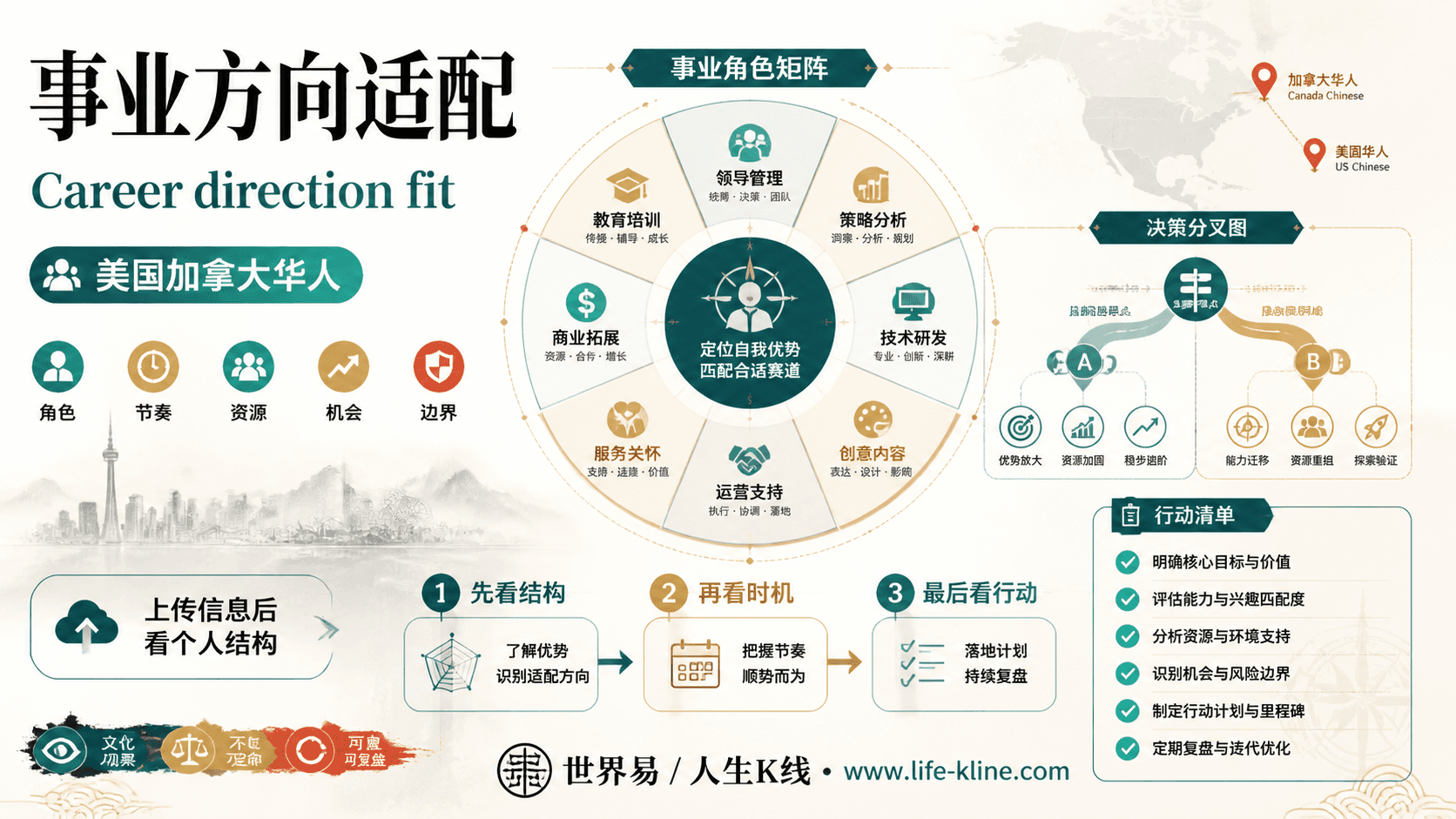
事业方向适配|美国加拿大华人
这张图把《Analysis of Optimal Submission Timing for Japan Business Manager Visa and Study-to-Work Transition》里的命理概念转成关系、边界和应用场景,适合先看图建立结构,再回到知识文章正文理解细节。
事业方向适配不应被写成固定结论。更适合美国加拿大华人的读法,是把传统术语翻译成结构、时机、环境、行动和复盘。
查看图片解读