Hexagram Fire-Water Wei Ji: Metaphysical Insights on Unfinished Matters and Potential
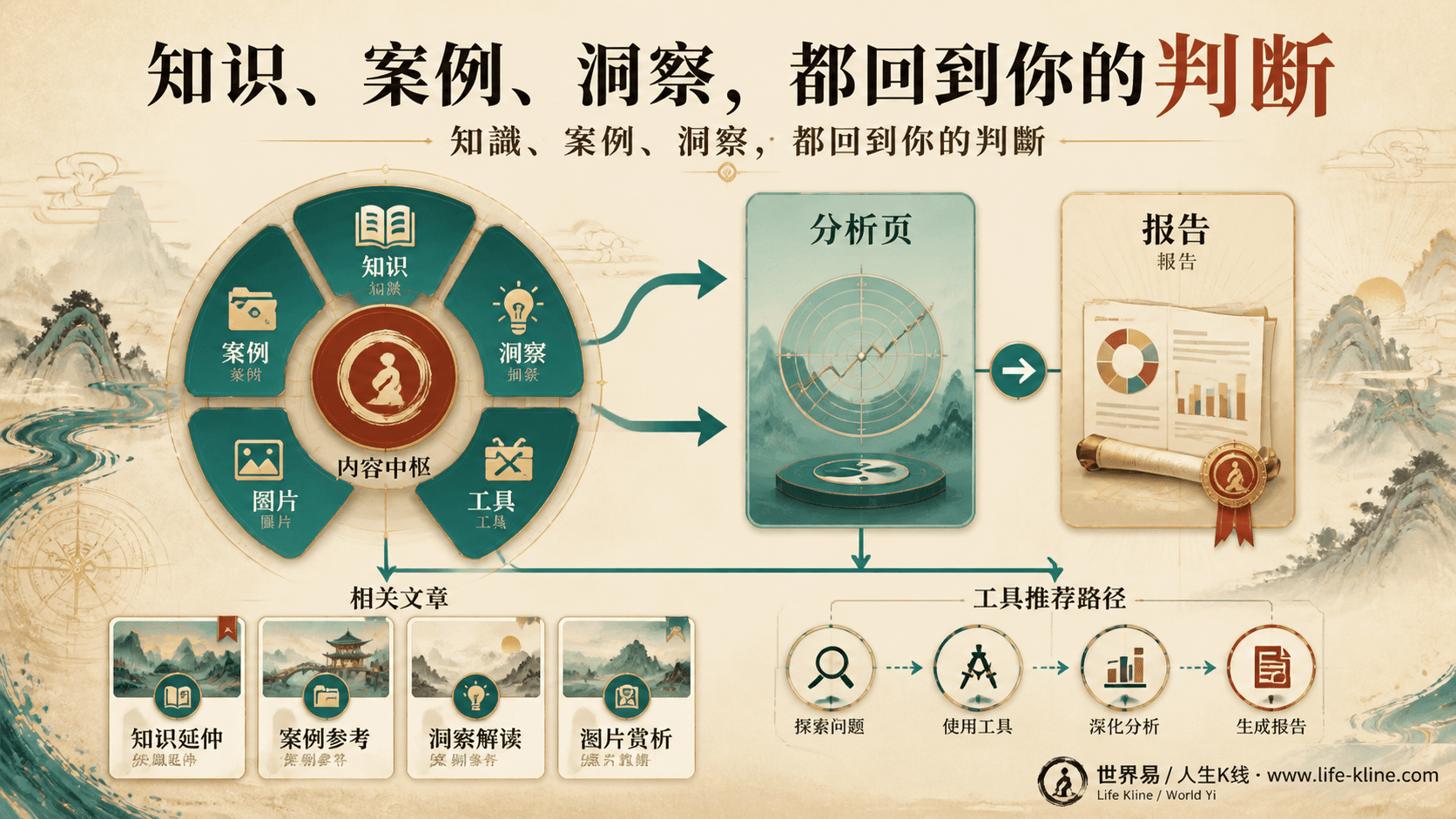
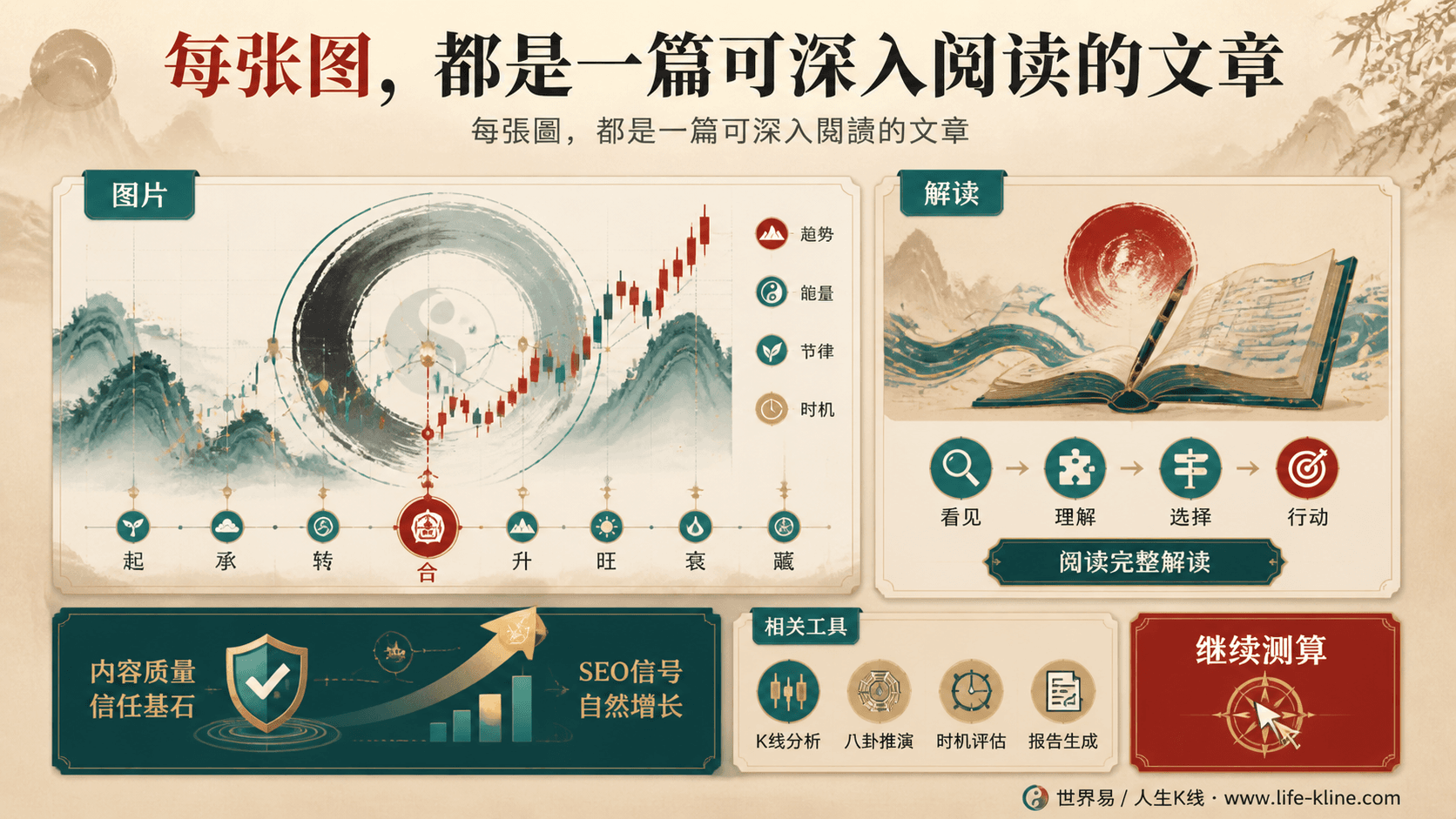
把这篇文章落到自己身上验证:先看结构,再进入个人分析,不做泛泛阅读。
Concept Definition
Fire-Water Wei Ji is the final hexagram among the sixty-four hexagrams of the I Ching, named Fire-Water Wei Ji. It is composed of the Li trigram above and the Kan trigram below, forming a structure of Kan below Li above. In terms of hexagram composition, the sixty-four hexagrams are formed by stacking two of the eight trigrams, with each hexagram containing six lines arranged from bottom to top, referred to as the First Line to the Sixth Line respectively.
The core metaphysical meaning of this hexagram lies in describing the state of fire and water not yet combined, matters unfinished. Fire naturally rises while water naturally descends, their natures opposing each other, making them difficult to blend, hence termed Wei Ji (not yet accomplished). This symbolizes that the development of affairs is in an unfinished stage; although facing challenges and separation, it is not an end but contains new beginnings and possibilities.
From a metaphysical perspective, Fire-Water Wei Ji indicates incompleteness, effort, and the potential for success. It represents a dynamic balance state, neither a complete failure nor a total victory. In this state, the individual needs to recognize the unfinished nature of the current situation and understand that this is both an obstacle and an opportunity, with the key lying in how to grasp the subsequent actions.
Traditional Metaphysical Significance
In the traditional system of divination applications, Fire-Water Wei Ji has profound philosophical implications. The structure of Kan below Li above reflects the complex relationship of Yin-Yang interaction, where Kan represents water and danger, and Li represents fire and brightness. This combination suggests that danger may be hidden within brightness, and brightness may be sought within danger. The hexagram emphasizes that fire and water are not yet combined, matters unfinished, reminding people not to rush for success.
The main theme of this hexagram clearly states to proceed with caution and avoid arrogance. In life circumstances or career planning, if one encounters a situation similar to Fire-Water Wei Ji, it means the external environment is not yet mature or internal conditions are not fully prepared. Acting rashly at this time is likely to lead to failure due to impatience.
Its core spirit affirms the value of effort, namely that there is potential for success. Even if the current matter is not accomplished, as long as one follows the timing and maintains a clear mind, there is still an opportunity to turn the tide. This unfinished form is precisely when vitality is most vigorous, predicting infinite possibilities and transformation potential for the future.
Practical Configuration and Interpretation
In practical configuration, Liu Yao method uses Sheng Ying (World and Response lines), Yong Shen (favorable deity), and Sheng Ke (generative and controlling relationships) as the core for judgment. When casting a hexagram results in Fire-Water Wei Ji, one must first determine the positions of the World line and Response line, and then select the Yong Shen representing the specific matter. If the Yong Shen receives generation and is prosperous, even within a Wei Ji framework, it predicts that although difficult, the matter may eventually succeed; if the Yong Shen is controlled or in a state of rest, one must be extra cautious, preferring stillness over action.
Meihua Yi Shu determines auspiciousness and inauspiciousness based on the Sheng Ke relationship between Ti (body) and Yong (use). In the Fire-Water Wei Ji hexagram, the upper trigram Li fire is the Ti, and the lower trigram Kan water is the Yong, resulting in Ti-Yong mutual control. This usually indicates significant resistance during the development of the matter, with Ti-Yong conflict. Interpretation requires observing the changes brought by moving lines; if a moving line can resolve the Ti-Yong control and turn into a generating relationship, the situation shifts from inauspicious to auspicious, reflecting the meaning that matters are unfinished but can be remedied.
Regardless of the school, the principle of proceeding with caution is emphasized. In specific Liu Nian (annual fortune) and Liu Yue (monthly fortune) luck cycles, if the Fire-Water Wei Ji hexagram image appears, it is recommended to adopt a defensive strategy, avoiding high-risk investments or major decisions. By accumulating resources and improving self-abilities to cope with the current unfinished state, one can wait for the timing to mature before advancing, thus conforming to the hexagram's guidance of effort and potential.
Common Misconceptions
Many people, when encountering the Fire-Water Wei Ji hexagram, easily misunderstand it as absolute failure or an end. Actually, the hexagram's meaning explicitly states 'matters unfinished' (Shi Wei Ji), not 'matters ended'. Wei Ji represents the continuation of the process and future variables, not a dead end at the present moment. If despair or abandonment of effort arises from this, it violates the original intention of the hexagram which encourages advancement.
Another common misconception is to simply interpret the Kan below Li above structure as water and fire being incompatible, thereby concluding that nothing can be done. However, the sixty-four hexagrams are formed by stacking two of the eight trigrams, and each hexagram has its own dialectical relationship. The Wei Ji hexagram precisely demonstrates the wisdom of seeking unity within contradictions, with the key lying in how to adjust mindset and strategy to achieve a new harmony between the Qi of water and fire under certain conditions.
FAQ
Question: Does the appearance of the Fire-Water Wei Ji hexagram mean destined failure? Answer: No. The hexagram's meaning indicates incompleteness, effort, and potential for success, meaning that although the current matter is not yet completed, continued effort and cautious advancement still offer a chance of success. The key lies in attitude and method.
Question: In Liu Yao prediction, how does the Ti-Yong relationship in the Fire-Water Wei Ji hexagram affect the result? Answer: In Liu Yao method, the Sheng Ke relationship between Ti and Yong is crucial. If Ti and Yong control each other, it usually represents high resistance; one must observe if moving lines bring a turning point. If moving lines can alleviate the conflict, it predicts that although the matter has twists and turns, it can eventually succeed, conforming to the hexagram's meaning of unfinished but remediable matters.
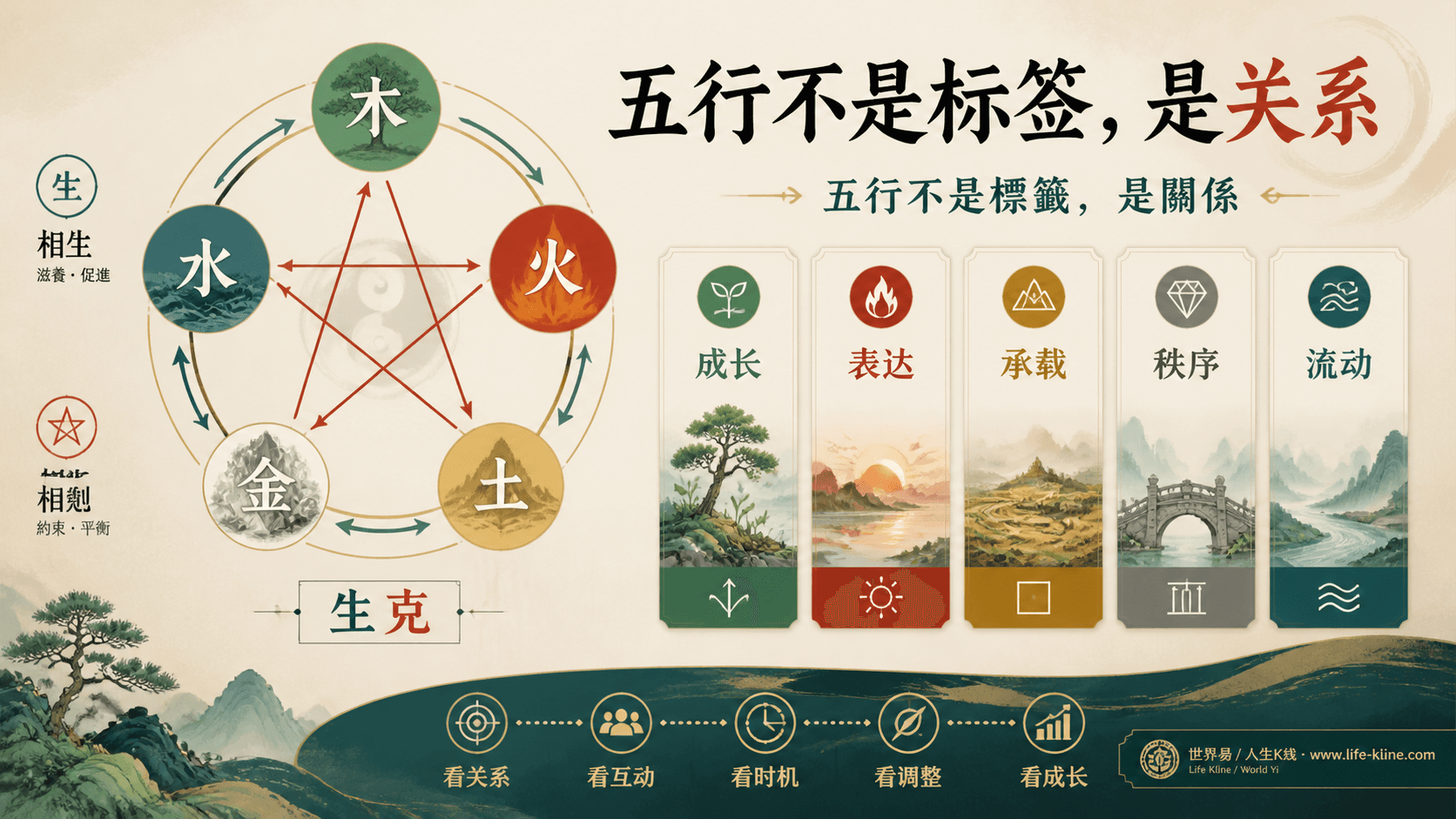
五行现代翻译图
这张图把《Hexagram Fire-Water Wei Ji: Metaphysical Insights on Unfinished Matters and Potential》里的命理概念转成关系、边界和应用场景,适合先看图建立结构,再回到知识文章正文理解细节。
五行图把金木水火土从人格标签翻译成系统关系,帮助用户理解生克、承载和转化。