Zé Dì Cuì Hexagram: Analysis of Gathering and Collective Consensus in the 64 Hexagrams
把这篇文章落到自己身上验证:先看结构,再进入个人分析,不做泛泛阅读。
Concept Definition
Zé Dì Cuì is one of the sixty-four hexagrams in the I Ching, composed of Kūn (坤, Earth) as the lower trigram and Duì (兑, Lake) as the upper trigram. Kūn represents the earth’s solidity and inclusiveness, while Duì symbolizes the softness and joy of lake water. Their combination forms the symbol of “gathering.” Cuì (萃) means to gather or assemble, implying the convergence and meeting of many entities.
This hexagram consists of six lines (yao), counted from bottom to top as the first line, second line, third line, fourth line, fifth line, and top line, reflecting the progressive stages of gathering. The core meaning emphasizes a harmonious atmosphere when people meet, with collective consensus, demonstrating group cohesion and harmony.
Within the I Ching system, the 64 hexagrams are formed by stacking two of the eight fundamental trigrams, each hexagram comprising six lines, creating a complete symbolic system. As one of these, Zé Dì Cuì carries unique symbolic significance and practical value.
Traditional Metaphysical Significance
The Zé Dì Cuì hexagram symbolizes scenes of harmonious gathering, emphasizing the unity of people’s intentions and their meeting, reflecting the power of solidarity and cooperation. In traditional metaphysics, this hexagram advises maintaining a sincere and respectful attitude in collective activities to foster good cooperation and consensus.
Sincerity and respect are among the core teachings of the Zé Dì Cuì hexagram. Only by treating others with genuine sincerity and respect can one achieve collective consensus and a harmonious gathering. Conversely, if there is laxity and disorder, effective cohesion is difficult to form, resulting in dispersion and discord.
In ancient society, the philosophy of Zé Dì Cuì was widely applied in interpersonal relationships, political alliances, and commercial gatherings, reflecting the cultural value of group cooperation. It also reminds people to balance collective interests with individual attitudes.
Practical Configuration and Interpretation
In divination, the Six Yao method judges the fortune of the hexagram through the generating and overcoming relationships among the Shi Yao (世爻, the self line), Ying Yao (应爻, the responding line), and Yong Shen (用神, the favorable element). In the Zé Dì Cuì hexagram, the theme of gathering places particular focus on the dynamics and harmony within the group, with changes in generating and overcoming relationships revealing internal support and obstruction forces.
Plum Blossom Numerology determines fortune through the generating and overcoming relationships between the Ti (体, the body) and Yong (用, the application). In Zé Dì Cuì, the Ti is the lower trigram Kūn, representing a stable foundation, and the Yong is the upper trigram Duì, symbolizing communication and joy. If the Ti and Yong mutually generate and flourish, it indicates smooth gathering and collective harmony; if they overcome each other, caution is advised against laxity and breakdown of cooperation.
In practice, the Zé Dì Cuì hexagram is suitable for judging the success or failure of gatherings, collaborations, and alliances. It advises actors to treat partners with sincerity and respect, avoid laxity and disorder, and ensure that all hearts and efforts are united.
Common Misconceptions
Some mistakenly believe that the Zé Dì Cuì hexagram simply represents gathering, overlooking its emphasis on sincerity and respect. In fact, gathering itself is not absolutely auspicious; without sincerity and order, it can lead to chaos and dispersion.
Another misconception is to interpret Zé Dì Cuì as a symbol of singular success, neglecting the impact of generating and overcoming changes on fortune. Accurate judgment requires combining the specific line texts and generating/overcoming relationships to ascertain benefits and development trends.
FAQ
Question: Why does the Zé Dì Cuì hexagram emphasize sincerity and avoid laxity? Answer: Zé Dì Cuì symbolizes people gathering; only with a sincere and respectful attitude can a harmonious atmosphere and collective consensus be achieved. Laxity destroys order, causing dispersion and discord, which contradicts the core spirit of the hexagram.
Question: How to use the Zé Dì Cuì hexagram to judge fortune in Six Yao divination? Answer: The Six Yao method focuses on the generating and overcoming relationships among the Shi Yao, Ying Yao, and Yong Shen. By analyzing their interactions and combining with the gathering theme of Zé Dì Cuì, one judges whether cooperation or gathering will be smooth and achieve collective unity.
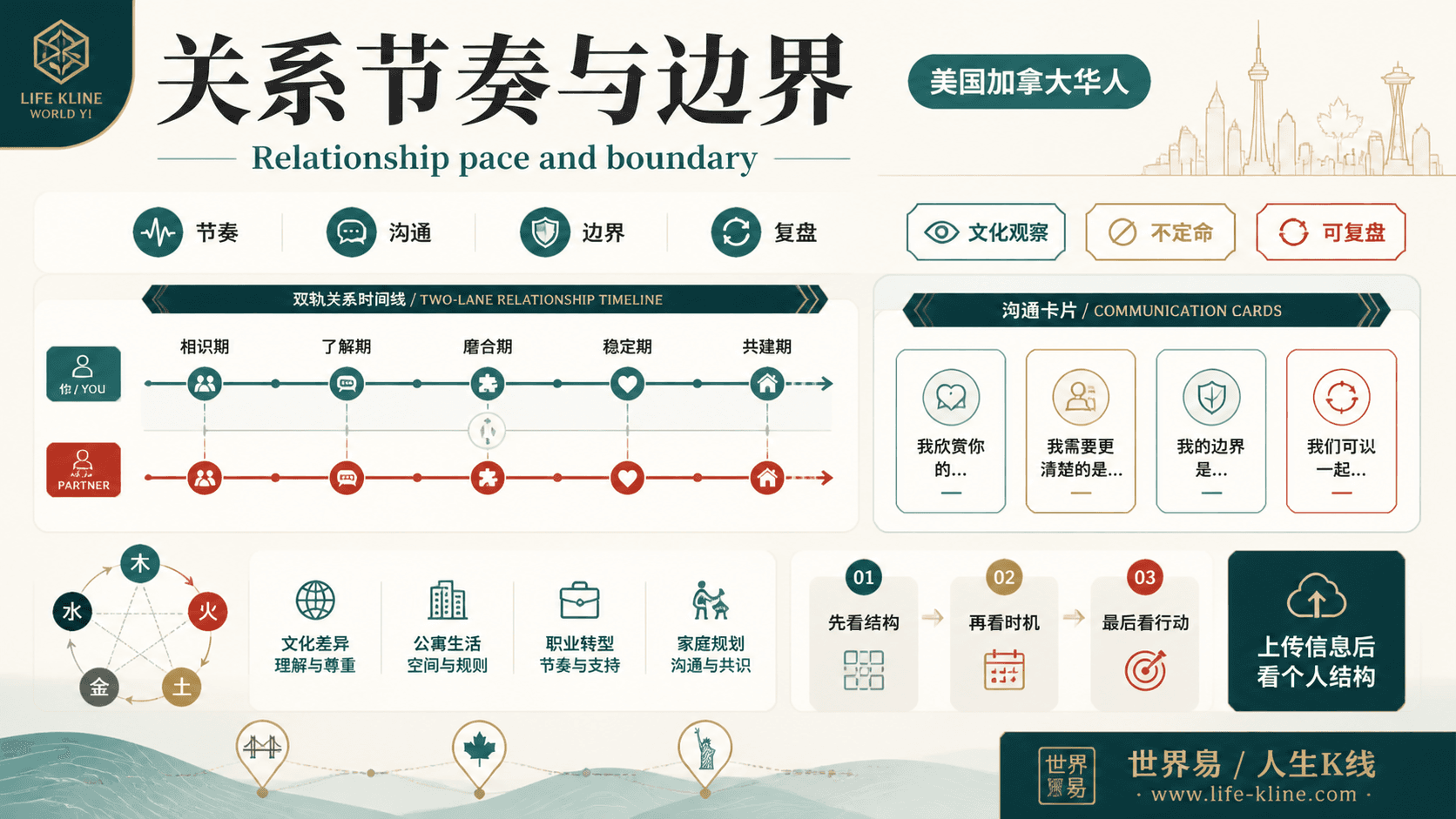
关系节奏与边界|美国加拿大华人
这张图把《Zé Dì Cuì Hexagram: Analysis of Gathering and Collective Consensus in the 64 Hexagrams》里的命理概念转成关系、边界和应用场景,适合先看图建立结构,再回到知识文章正文理解细节。
关系节奏与边界不应被写成固定结论。更适合美国加拿大华人的读法,是把传统术语翻译成结构、时机、环境、行动和复盘。
查看图片解读