The Hexagram of Qi (Modesty): Wisdom of Humility and Self-Holding
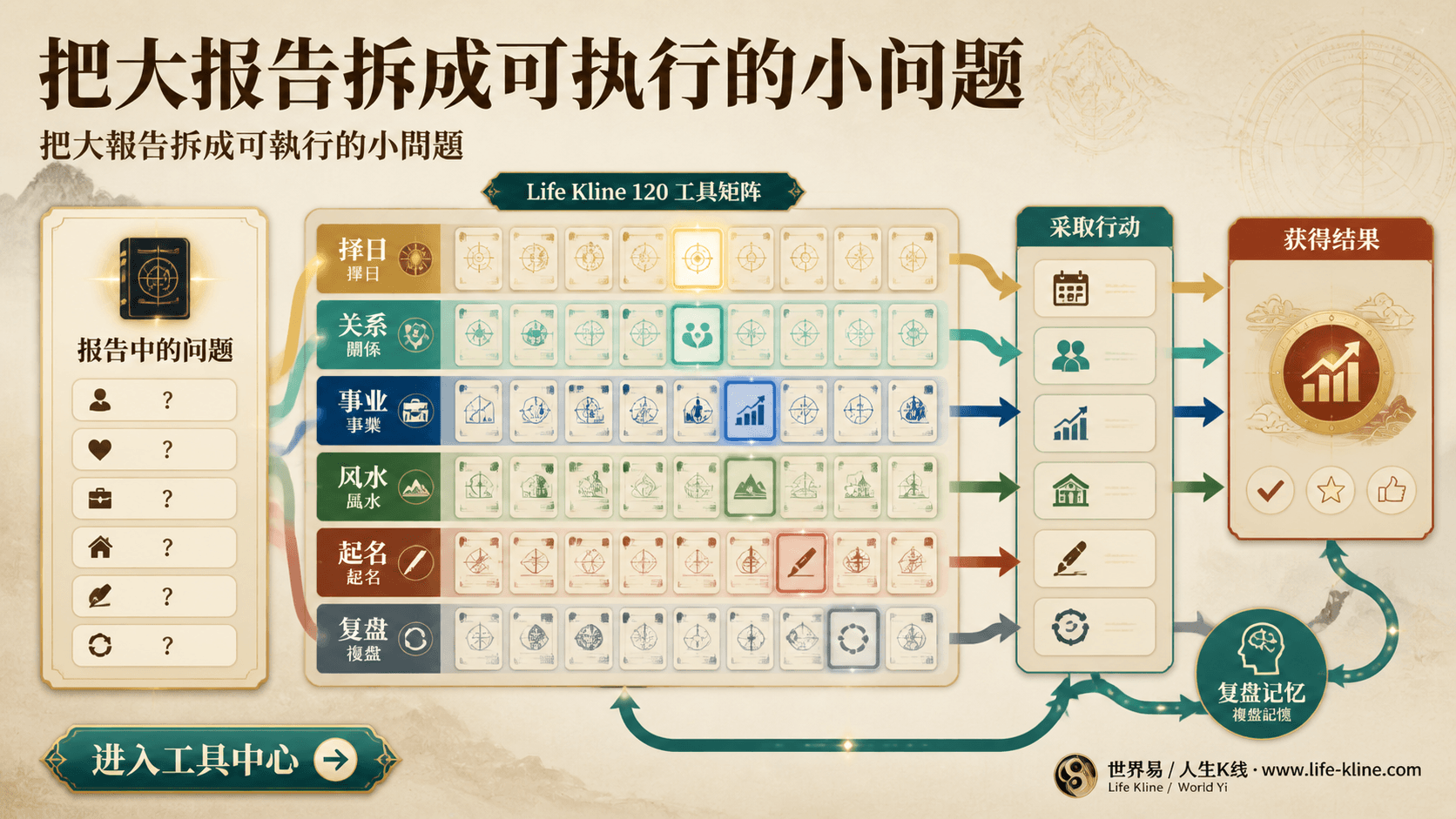
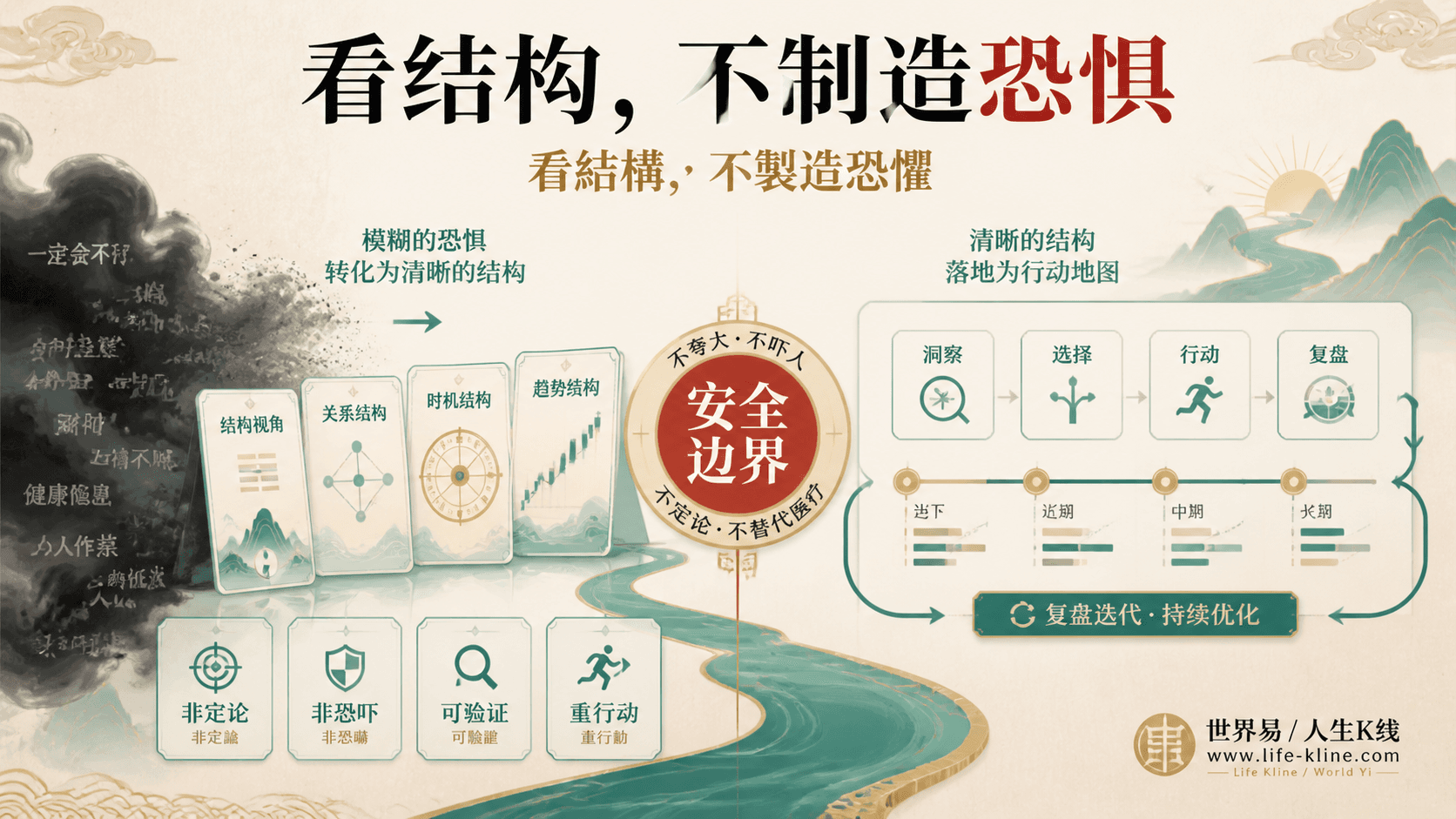
把这篇文章落到自己身上验证:先看结构,再进入个人分析,不做泛泛阅读。
Concept Definition
The Hexagram of Qi is the 54th hexagram among the 64 hexagrams of the I Ching. Its structure consists of the Mountain trigram below and the Earth trigram above. The Mountain represents a mountain, and the Earth represents the earth. A mountain, which is naturally tall, is placed beneath the earth, vividly depicting a state of inner strength and outer gentleness. This structure not only forms the basis of yin-yang interaction but also establishes the core value of humility and self-holding at the philosophical level.
The arrangement of lines follows the order from bottom to top, progressing from the initial line to the sixth line. The 64 hexagrams are all formed by overlapping two basic hexagrams, each with six lines. The Hexagram of Qi is a typical composite hexagram example. Its name is directly derived from the characteristics of the hexagram image, implying that the mountain hides beneath the earth, not showing its sharp edge. This embodies the philosophy of life and moral norms of introversion and subtlety in traditional Chinese culture.
Traditional Metaphysical Meaning
The core meaning of the Hexagram of Qi lies in humility, low profile, and a good conclusion. The mountain being beneath the earth means that inner talent and power are collected and restrained, not displayed or boasted about, thereby allowing for long-term existence and development. This state is regarded as the highest manifestation of virtue. Ancient people believed that only by benefiting from humility and not being arrogant can one avoid disaster and receive the protection of heaven and earth.
In terms of fortune and misfortune judgments, this hexagram indicates good fortune in all matters, predicting smooth conduct and few obstacles. It encourages people to maintain a peaceful mindset, not to strive for superiority, and to advance by retreating. However, the meaning of the hexagram also clearly points out the only taboo, which is to avoid hypocrisy. If one appears humble on the outside but is deceitful on the inside, it violates the essence of the Hexagram of Qi. Not only can one not obtain auspicious signs, but one may also attract backlash.
From the perspective of life's journey, the Hexagram of Qi symbolizes a mature wisdom and a final destination. It reminds people not to be arrogant in prosperity and not to lose heart in adversity, always maintaining a humble attitude. Such an attitude not only resolves conflicts but also accumulates blessings, leading life towards completeness and peace, serving as an important guide for self-cultivation.
Practical Configuration and Interpretation
In the Liu Yao divination system, the judgment of the Hexagram of Qi relies on the World and Response lines, the Use God, and the five elements' generating and controlling relationships. First, the positions of the World line and the Response line must be determined. The World line represents the querent themselves, while the Response line represents the other party or the external environment. Next, the Use God corresponding to the matter being queried is selected, and its generating and controlling relationship with the World line and other lines is analyzed. If the Use God supports the World line and there are no moving lines to clash or control, it is mostly an auspicious sign.
Mei Hua Yi Shu focuses more on determining fortune and misfortune based on the generating and controlling relationship between the Body and Use. In the Hexagram of Qi, the Mountain trigram is the Body and the Earth trigram is the Use, or vice versa, depending on the principle of movement and stillness at the time of casting the hexagram. If the Body generates the Use, energy is drained and damage occurs, making matters difficult; if the Use generates the Body, assistance is received and matters can succeed. Combining with the inherent meaning of the Hexagram of Qi, even if the Body and Use clash, it can still be considered an auspicious ending if the hexagram meaning is pure, provided the heart and mind are upright.
In terms of configuration scenarios, the Hexagram of Qi is often used for consulting on interpersonal relationships, career promotion, or self-cultivation inquiries. When the World line is in its correct position and receives support, while the Response line controls the World line, it can be inferred that although the other party may be dominant, the querent, by responding with a humble attitude, can turn enemies into friends and achieve cooperation. If a moving line destroys the humble atmosphere, one must be wary of the hidden dangers brought by a hypocritical heart and adjust strategies in time, returning to sincerity.
Common Misconceptions
Many beginners easily misunderstand the Hexagram of Qi as purely representing negative avoidance of the world, mistakenly believing that humility means weakness and inability. In fact, the Mountain trigram represents inner strength and steadiness. The Hexagram of Qi emphasizes the internalization of power rather than its extinction. True humility is a manifestation of confidence; it is a choice to act low-key after possessing strength, not a cover-up for a lack of ability.
Another common misconception is interpreting the hexagram's meaning of 'good fortune in all matters' as unconditional smoothness. Although the Hexagram of Qi indicates good fortune, it still requires adherence to the principle of avoiding hypocrisy. If one merely puts effort into appearance while the heart is full of calculation, even if the hexagram image is auspicious, the actual result may be hindered due to a violation of righteousness. Metaphysical analysis must combine with character and behavior and cannot be mechanically applied without considering reality.
FAQ
Question: What does the mountain beneath the earth specifically represent in the Hexagram of Qi? Answer: The mountain beneath the earth symbolizes that inner talent and power are collected and hidden, not displayed outwardly. This state embodies the virtue of humility and self-holding, meaning that although one possesses strength, one chooses to live low-key, thereby allowing for long-term development and avoiding jealousy and disaster.
Question: How to judge fortune and misfortune when encountering the Hexagram of Qi in Liu Yao divination? Answer: The Liu Yao method uses the World and Response lines, the Use God, and generating/controlling relationships as the core for judgment. One must first determine the positions of the World and Response, select the correct Use God, and analyze its generating and controlling relationships. If the Use God supports the World line and there is no clash or control, combined with the meaning of the Hexagram of Qi indicating good fortune in all matters, it can be judged as auspicious. However, if signs of hypocrisy appear or moving lines destroy the humble atmosphere, one must be vigilant and not be overly optimistic.
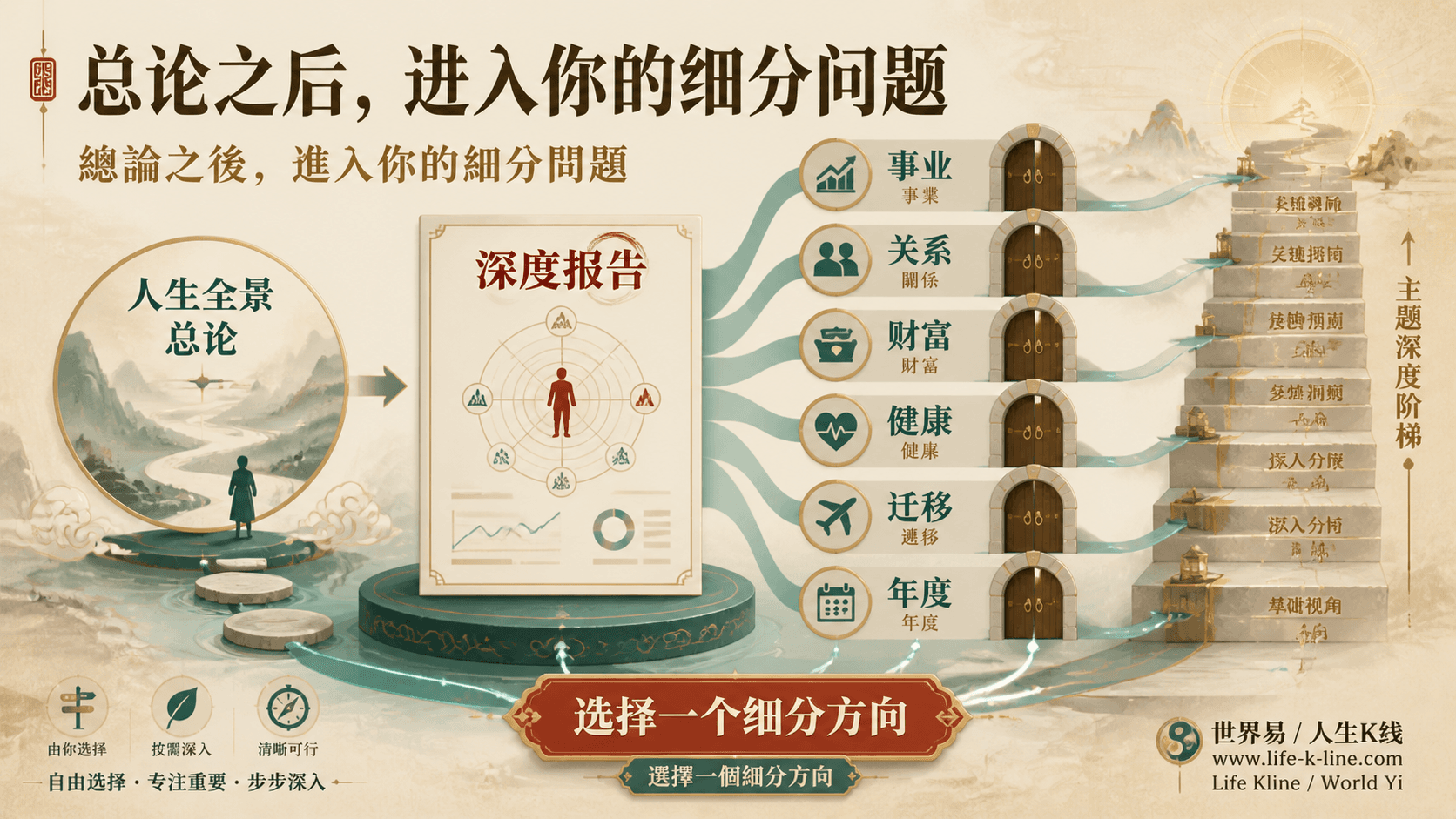
深入报告层级地图
这张图说明用户从当前知识文章进入测算报告后,应该先看什么、如何分层阅读,以及何时进入深入报告。
深入报告把综合判断拆成事业、关系、财富、健康、迁移、年度等方向,让用户逐层深入。