Judging the Physical Boundaries of Primary Caregivers in Elderly Chronic Disease Home Care Using BaZi
把这篇文章落到自己身上验证:先看结构,再进入个人分析,不做泛泛阅读。
Why This Decision Is Especially Difficult in This Health Scenario
Elderly chronic disease patients such as those with hypertension and diabetes require long-term and meticulous home care, with caregivers often bearing significant physical and psychological pressure. During care, symptoms like fatigue, anxiety, and sleep disturbances frequently arise, affecting care quality and the primary caregiver's own health. Especially when patients face risks like falls or memory decline, family members must frequently intervene in decision-making, increasing the complexity of care.
In reality, the physiological rhythm of the primary caregiver often does not match the patient's disease rhythm. Long-term medication and disease fluctuations induce stress, exacerbating caregiving difficulties. If caregivers cannot accurately grasp their physical and emotional boundaries, they are prone to overwork and psychological breakdown, which in turn affects the overall stability of family care.
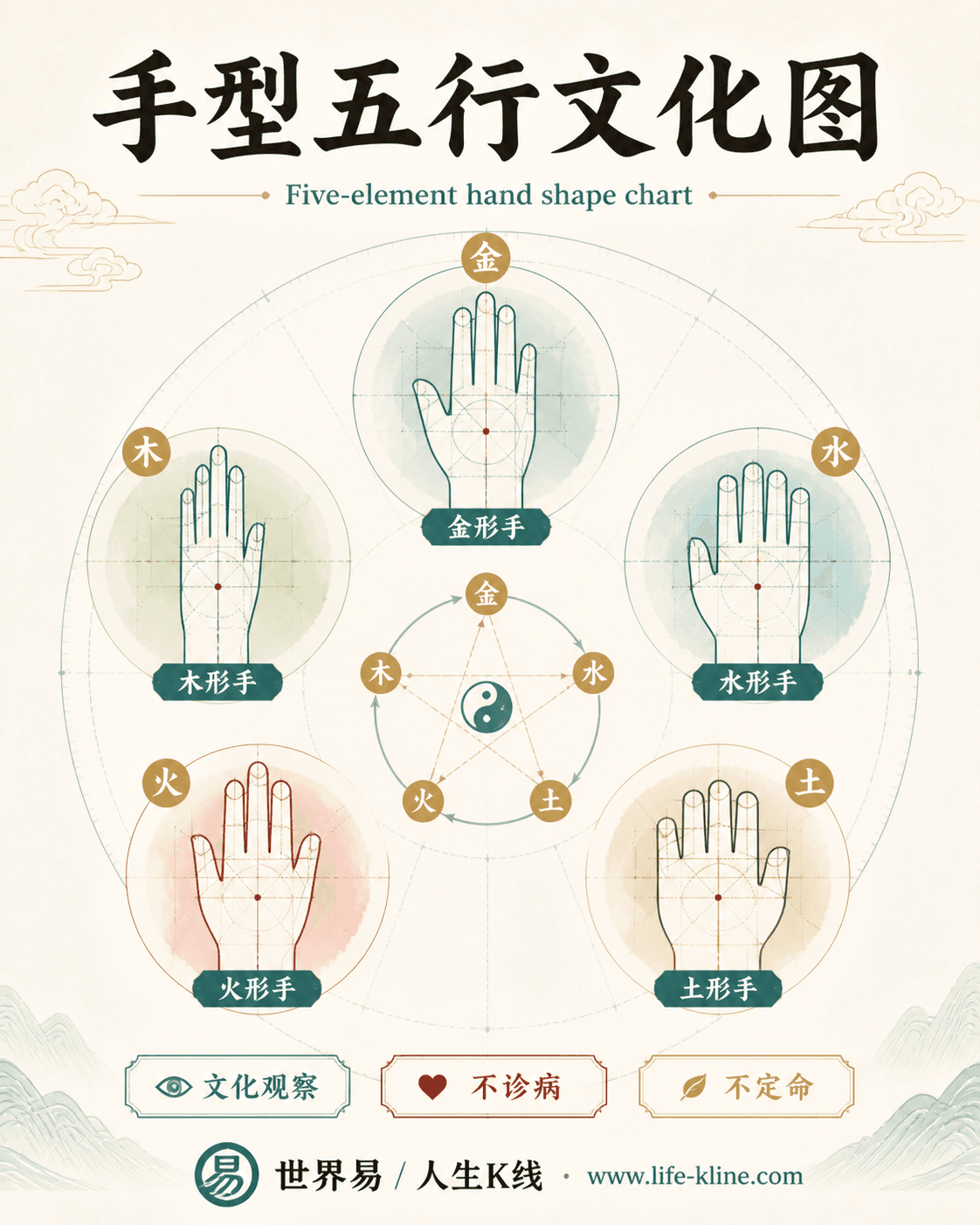
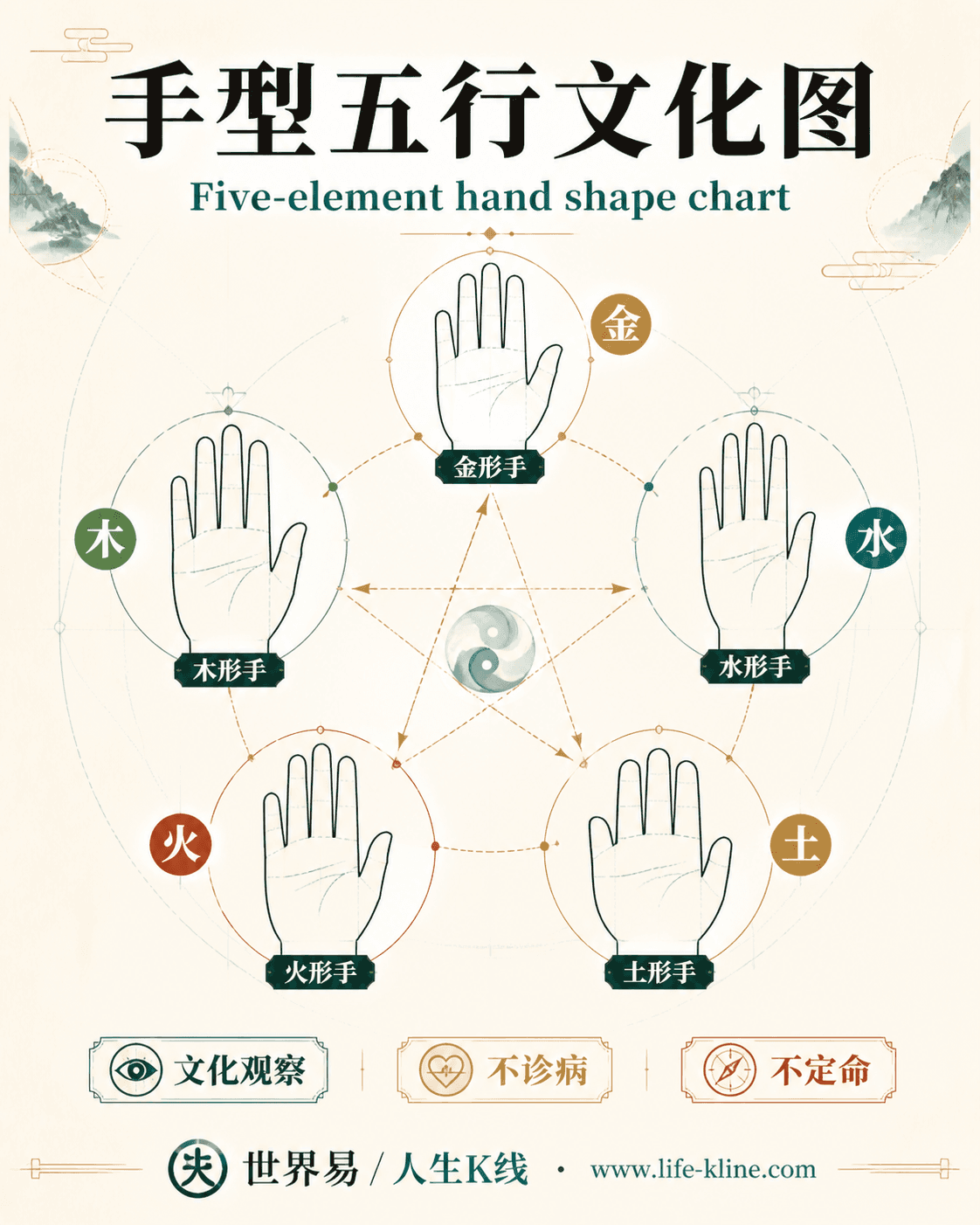
BaZi, as a rhythm reference tool, combined with the strength of the Day Master, the Yong Shen and Ji Shen (unfavorable element), and Five Elements organ correspondences, can assist in assessing the caregiver's constitution and regulatory capacity, revealing their potential physical caregiving limits. Together with changes in Da Yun and Liu Nian, BaZi indications help family members reasonably arrange caregiving tasks, avoiding blindly taking on excessive burdens, ensuring the sustainability and safety of care.
BaZi and Five Elements Organ Correspondences
In BaZi, the Day Master represents the individual's core vitality; a bias toward strength or weakness reflects constitution robustness. The Yong Shen is the Five Element that harmonizes the Day Master, indicating which organ systems the primary caregiver should pay attention to. For example, a Fire Day Master (e.g., 丁 (Ding)) that is overly strong requires Water as Yong Shen to nourish it, with organs mainly referring to the heart and small intestine; a Metal Day Master (e.g., 辛 (Xin)) that is overly strong requires Wood and Fire as Yong Shen for balance, involving lung, large intestine, and heart functions.
The Ji Shen indicates possible Five Element excess or deficiency causing organ burdens, such as Earth Ji Shen often relating to spleen and stomach strain. Da Yun and Liu Nian influence the BaZi chart holder's current physical and psychological state. A stable Da Yun favors maintaining status quo, while fluctuating Liu Nian suggests rhythm variations requiring flexible adjustment of caregiving intensity.
Combining Five Elements and organs, a BaZi chart with Fire dominance and Water as Yong Shen warns the caregiver to be cautious of overwork affecting the heart and nervous system; Metal dominance with Wood and Fire as Yong Shen requires attention to lung function and mental stress; a prominent Earth Yong Shen highlights spleen and stomach function and physical recovery capacity. Using BaZi rhythm as auxiliary judgment, family members can more scientifically identify the caregiver's physical boundaries and reasonably allocate caregiving tasks.
Three Real BaZi Chart Cases
Case 1: This female BaZi chart has a 丁火 (Ding Fire) Day Master, biased strong, with Zhuan Wang (special strong) pattern. The Yong Shen is Water, and Ji Shen is Earth. Currently in the 8th year of the 乙酉 (Yi You) Da Yun, with 丙午 (Bing Wu) Liu Nian; overall Da Yun is stable, Liu Nian requires flexible adaptation. Fire is strong, born within 亥水 (Hai Water), Water as Yong Shen reflects the need for Water nourishment to relieve heart and small intestine burden. If there are elderly chronic diseases at home, the primary caregiver may suffer from insomnia, irritability due to excessive heart fire, and faster physical depletion. Care decisions should focus on their Water organ regulation capacity, avoiding excessive physical exhaustion, with timely rest and emotional adjustment as priorities. Suggested judgment sequence: first confirm if the caregiver has cardiovascular discomfort, observe sleep quality, be alert to nervous tension caused by Fire excess; if severe mental or physical weakness appears, adjust caregiving division and consider medical intervention.
Case 2: This chart's Day Master is 辛金 (Xin Metal), biased strong, with Yang Ren (Yang Blade) pattern. Yong Shen are Fire and Wood; Ji Shen is Earth. Currently in the 8th year of the 庚辰 (Geng Chen) Da Yun, with 丙午 (Bing Wu) Liu Nian; Da Yun is stable. Metal dominance requires Fire and Wood for harmony, involving lung, large intestine functions, and mental state. Fire and Wood as Yong Shen indicate physical depletion mainly from respiratory system and emotional stress. When family members care for elderly chronic diseases, the primary caregiver may show symptoms like shortness of breath, anxiety, or chronic fatigue. Family decision-making should emphasize the caregiver's physical recovery rhythm, avoiding overexertion that could reduce immunity. Suggested judgment sequence: monitor respiratory symptoms and emotional fluctuations, reasonably arrange rest and supportive care, avoid aggravating spleen and stomach burden due to Earth Ji Shen, and ensure balanced nutrition.
Case 3: This chart's Day Master is 丙火 (Bing Fire), balanced pattern, Shi Shen (Eating God) pattern. Yong Shen is Earth; Ji Shen is Water. Currently in the 9th year of the 癸丑 (Gui Chou) Da Yun, with 丙午 (Bing Wu) Liu Nian; overall stable. Earth Yong Shen highlights the importance of spleen and stomach function, with physical recovery relying on digestion and absorption. Water Ji Shen warns of potential kidney and urinary system burdens. Facing elderly chronic disease patients with long-term medication and memory decline, the primary caregiver's physical depletion is mainly related to digestive absorption capacity. Family care and decision-making should focus on dietary regulation and preventing Water dampness intrusion causing fatigue. Suggested judgment sequence: first assess digestive system status and signs of Water dampness accumulation, reasonably control caregiving intensity, enhance nutritional support, and adjust caregiving structure as necessary to ensure caregiver's physical and mental balance.
Common Misjudgments and Blind Spots in This Scenario
Family care often suffers from misjudgments about the primary caregiver's physical and psychological endurance, especially ignoring BaZi indications of organ weaknesses. For example, Fire dominance is often overlooked regarding heart and nervous system burdens; overinvestment can lead to palpitations and worsened insomnia, negatively impacting care effectiveness. BaZi cannot replace medical diagnosis; if severe fatigue, confusion, or persistent insomnia appear as red flags, immediate medical attention is mandatory.
Another blind spot is misusing BaZi as the sole judgment basis, neglecting the patient's condition and actual physical responses. BaZi is only an auxiliary rhythm reference and cannot substitute professional medical evaluation. Family members should combine doctors' advice and dynamically adjust care plans to avoid delayed treatment or deterioration of the caregiver's health due to overreliance on BaZi.
Additionally, common misjudgments include ignoring the impact of Liu Nian and Da Yun changes on physical strength, overlooking fluctuations in the caregiver's mental state, and neglecting psychological health maintenance. Care decisions should integrate BaZi rhythms with real symptoms to ensure scientific and reasonable caregiving.
Practical Judgment Sequence
Step 1: Assess the primary caregiver's core symptoms, focusing on organ functions corresponding to the Yong Shen Five Elements. For Fire dominance, prioritize heart and nervous system status; for Metal dominance, focus on lung function and emotional stress; for Earth Yong Shen, examine spleen and stomach digestion. Combine symptoms like physical fatigue, insomnia, and anxiety to determine if there are significant health risks.
Step 2: Combine Da Yun and Liu Nian rhythm analysis to judge whether the current BaZi state is in a stable maintenance phase or requires flexible adaptation, then adjust caregiving pace and intensity accordingly. Stable periods allow moderate maintenance; fluctuating periods require flexible arrangements to prevent overwork or emotional exacerbation.
Step 3: If obvious red flags such as persistent palpitations, severe headaches, acute breathing difficulties, or consciousness disturbances occur, seek immediate medical care and do not rely on BaZi speculation to delay treatment. In the absence of emergencies, use BaZi indications to reasonably arrange rest and supportive care, optimize caregiving task allocation, and ensure the caregiver's physical and mental balance and long-term sustainability.
FAQ
Question 1: How do Yong Shen and Ji Shen in BaZi help judge the primary caregiver's physical endurance? Answer: Yong Shen represents the Five Element that harmonizes the Day Master and supports constitution, indicating which organ functions and regulatory directions the caregiver should focus on; Ji Shen reflects possible Five Element excess or imbalance, pointing to potential physical or health risks. Combined with symptoms, they help determine the physical endurance boundaries.
Question 2: How to combine BaZi in family care to avoid caregiver overexertion? Answer: By observing the Day Master's strength and the Yong Shen Five Elements, combined with Da Yun and Liu Nian changes, assess the caregiver's current physical and psychological state, reasonably arrange care duration and intensity, avoid sustained high load, and emphasize rest and emotional management to reduce overwork risk.
Question 3: Can BaZi replace doctors in judging caregiver health? Answer: Absolutely not. BaZi is only an auxiliary rhythm reference and cannot replace medical diagnosis. When urgent or severe physical symptoms occur, immediate medical attention is required. BaZi's role is to help understand physical rhythms and psychological states and assist in reasonable care arrangements but should not be the sole health basis.
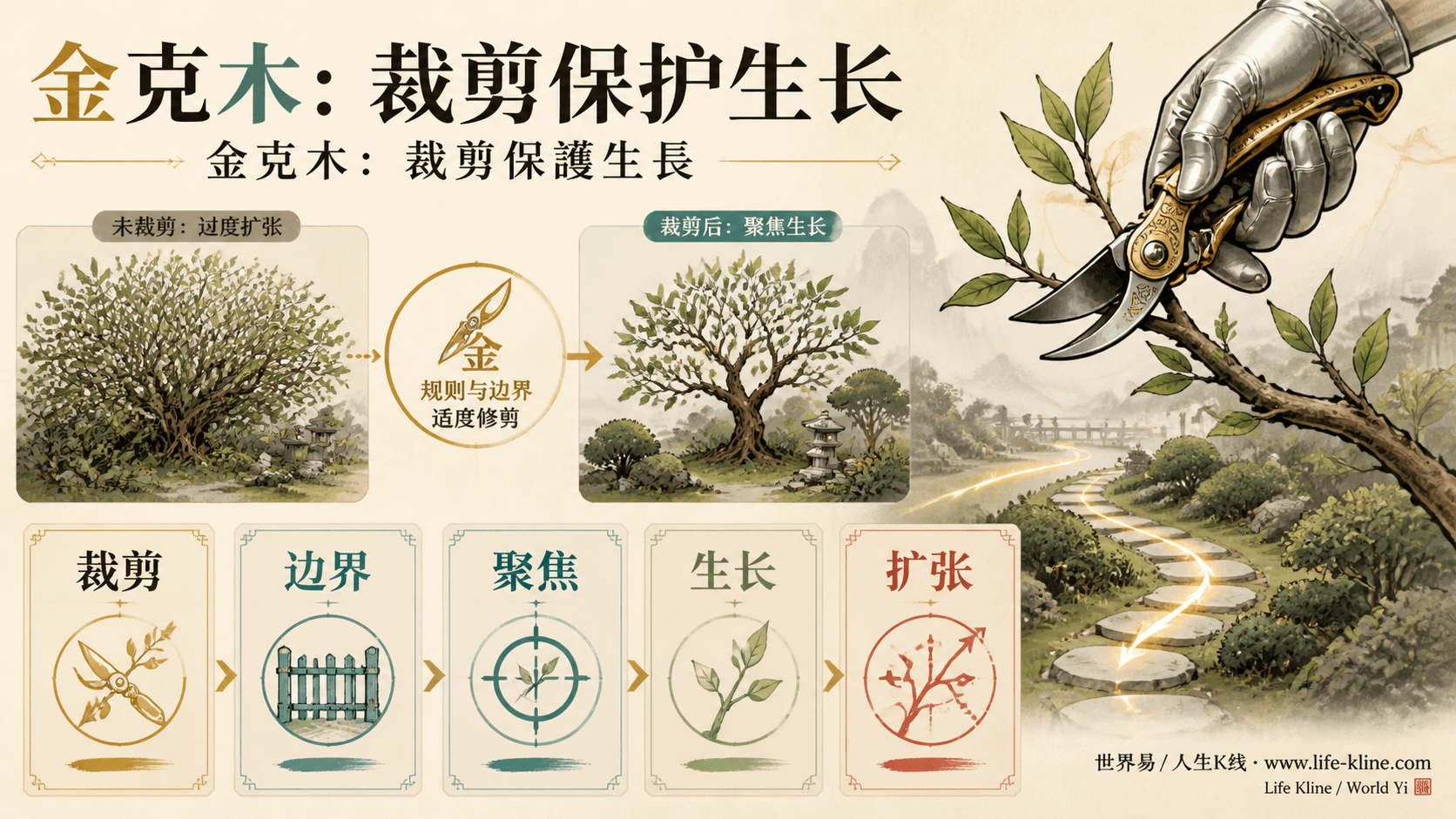
金克木调节图
这张图把《Judging the Physical Boundaries of Primary Caregivers in Elderly Chronic Disease Home Care Using BaZi》里的命理概念转成关系、边界和应用场景,适合先看图建立结构,再回到知识文章正文理解细节。
在人生K线与世界易的框架中,金克木并非限制,而是通过规则与边界实现聚焦,让生长保持结构与效率。理解这一调节机制,能帮助我们在不同时位中主动优化路径。
查看图片解读