Analysis of Long-Term Care Strategies and Fate Interpretation in Elderly Chronic Disease Care
把这篇文章落到自己身上验证:先看结构,再进入个人分析,不做泛泛阅读。
Why This Decision Is Especially Difficult in This Health Scenario
Elderly chronic disease care involves multiple complex symptoms, including hypertension, diabetes, fall risks, and cognitive decline, with patients experiencing gradual decline in bodily functions and reduced self-care ability. Family members must balance medication management, daily life rhythms, and psychological support when formulating long-term care strategies, making the process extremely challenging.
Chronic disease patients often require multiple medications, increasing uncertainty in care due to drug interactions and side effects. Moreover, as elderly individuals’ organ functions progressively weaken, their adaptability to external environments diminishes, and even minor adjustments in daily rhythms can trigger health fluctuations, posing challenges for long-term care.
From a fate analysis perspective, variations in the Day Master’s Five Elements strength reflect the relative strength or weakness of the patient’s corresponding organs, influencing physiological rhythms and pathological tendencies. The choice of Yong Shen (favorable element) in the natal chart indicates key Five Elements to regulate bodily balance, providing references for adjusting care rhythms. However, this must be scientifically integrated with clinical symptoms and environmental factors.
Therefore, family members must find a balance between fate analysis guidance and real medical needs when making decisions, avoiding overreliance on fate analysis that could delay treatment, while fully utilizing Five Elements rhythms to optimize care plans and achieve dynamic physical and mental balance.
Correlation Between Fate Analysis and Five Elements Organs
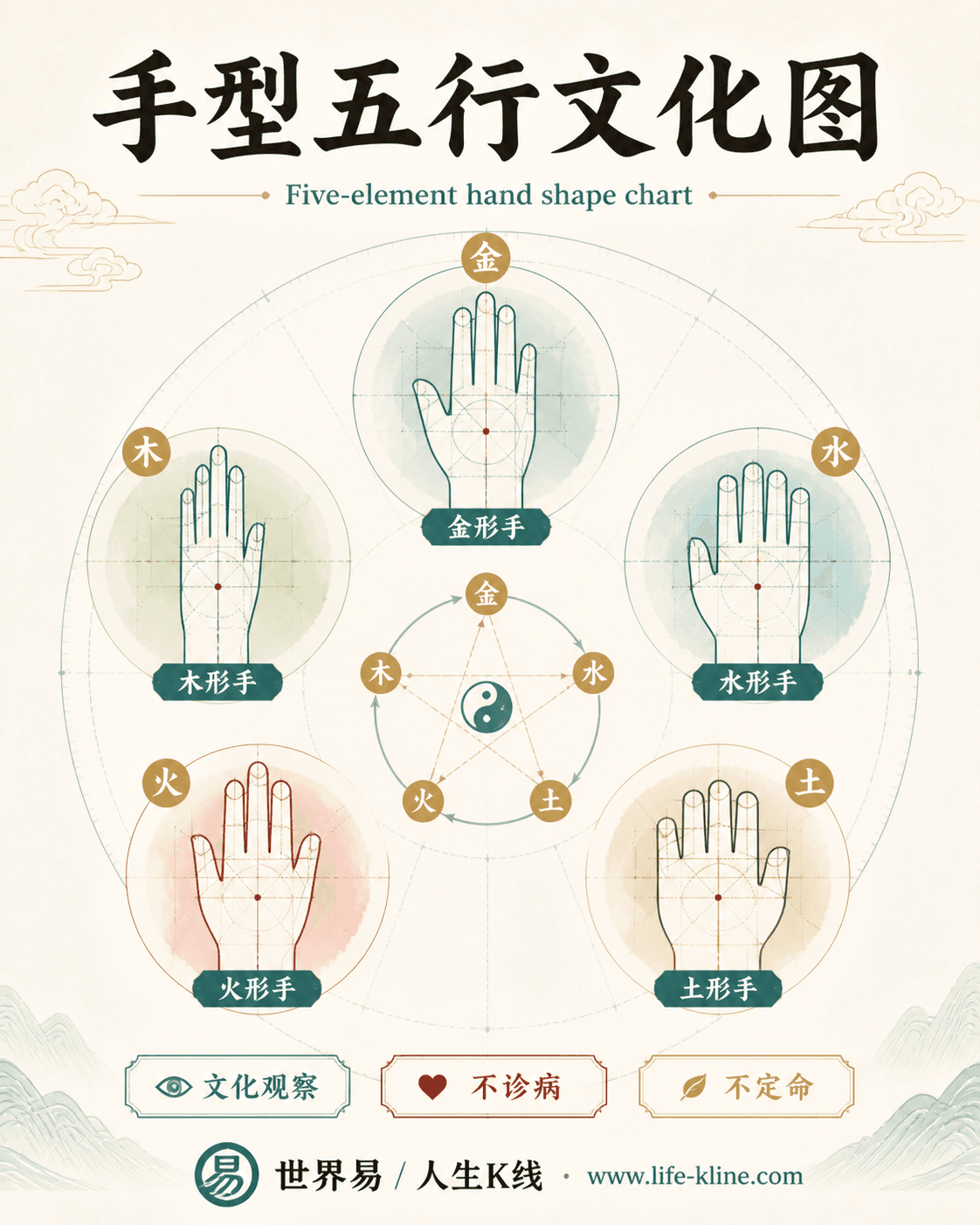
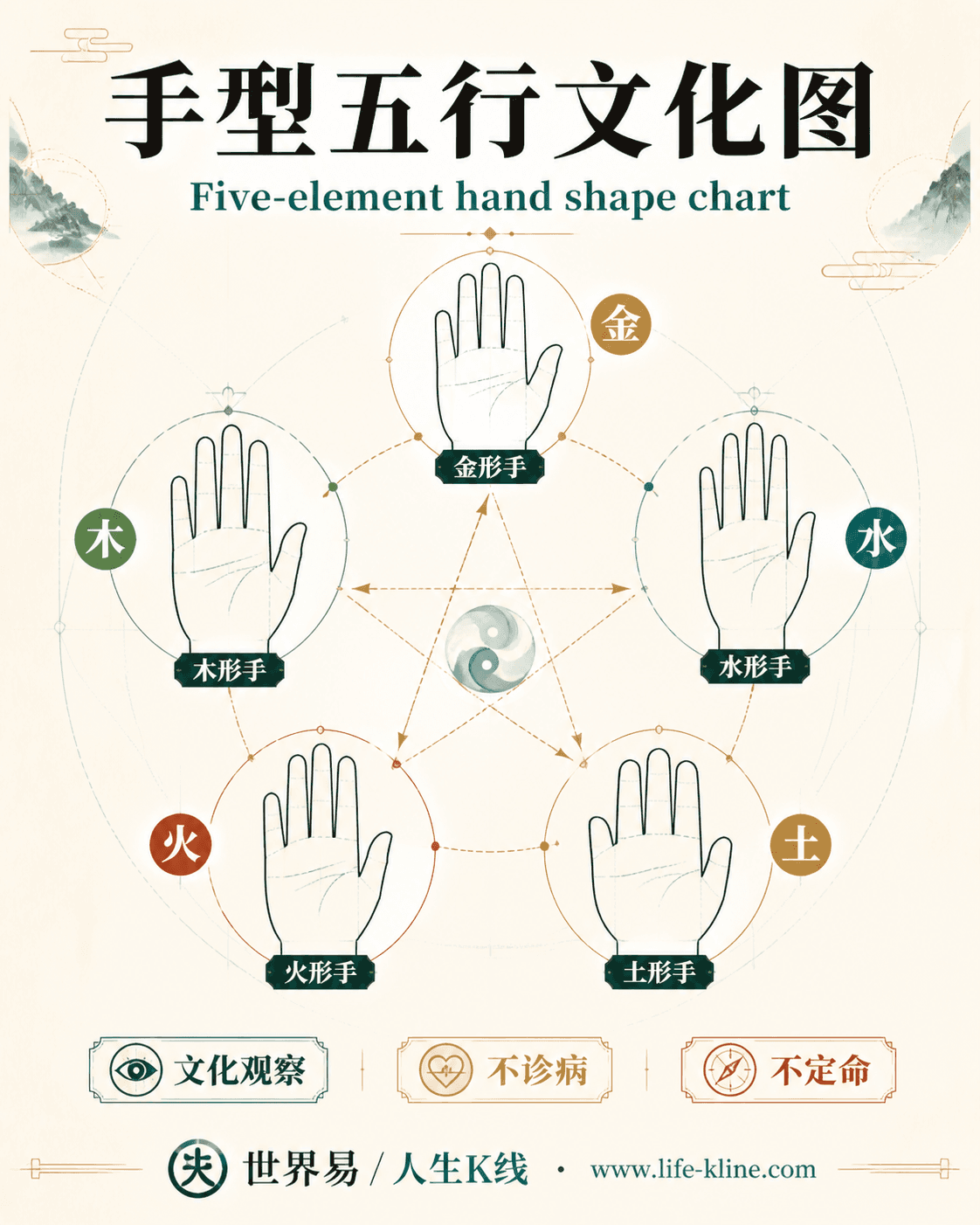
In fate analysis, the Day Master (日主) represents the individual’s fundamental energy, and the Five Elements’ relative strength or weakness reflects the functional condition of the body’s organs. Fire governs the heart and small intestine; Earth governs the spleen and stomach; Metal governs the lungs and large intestine; Wood governs the liver and gallbladder; Water governs the kidneys and bladder. Proper configuration of the Day Master and Yong Shen helps harmonize the Five Elements, balance organ functions, and maintain stable bodily rhythms.
The interaction between the current Da Yun (大运, decade luck cycle) and Liu Nian (流年, annual fortune) reveals the impact of external environment and time rhythms on individual health. For example, during the Ren Xu (壬戌) Da Yun, Earth and Metal are stable, favoring maintenance; in the Bing Wu (丙午) Liu Nian, Fire is strong, potentially stimulating heart and liver Fire, requiring attention to heart and liver organ care. By dynamically observing Da Yun and Liu Nian, family members can anticipate health fluctuations and adjust daily rhythms and care priorities accordingly.
Those with Five Elements excess, such as strong Fire, need to prevent heart and liver functions from overheating, which may manifest as insomnia and anxiety; those with Five Elements deficiency, such as weak Water, may suffer kidney Qi deficiency, leading to fatigue and memory decline. The choice of Yong Shen involves supplementing or restraining certain Five Elements to help organs regain balance, guiding adjustments in diet, routine, and environment during long-term care.
In elderly chronic disease care, combining fate analysis with the Five Elements-organ correspondence allows more precise identification of patients’ underlying physical excess or deficiency states, assists in setting scientific daily rhythms, reduces fall risks, improves sleep quality, alleviates chronic symptoms, and enhances quality of life.
Three Real BaZi Case Studies
Case 1: Based on Fact Package 1, this gentleman’s Day Master is Xin Metal (辛), balanced, with a Cong Sha pattern (从杀格). The Yong Shen are Fire and Wood; the Ji Shen (忌神, unfavorable elements) are Earth and Metal. Currently in the Ren Xu (壬戌) Da Yun, with Bing Wu (丙午) Liu Nian. Xin Metal governs the lungs and large intestine; Fire and Wood as Yong Shen indicate a need to nourish the heart and liver organs. His elderly chronic disease background may manifest as lung function and circulatory system burdens, combined with hypertension and diabetes risks. Excessive heart Fire may cause anxiety and insomnia. Long-term care should focus on regulating Fire and Wood to maintain heart and liver harmony and prevent heart Fire excess.
In long-term care strategies, this chart suggests avoiding overly intense or anxious daily rhythms, recommending regular routines and gentle exercise, with dietary care supporting Fire and Wood elements. Family members should monitor fluctuations in cardiopulmonary function, especially during Fire-strong Liu Nian periods, and adjust care focus accordingly. However, if severe palpitations or breathing difficulties occur, immediate medical attention is necessary.
The recommended assessment sequence starts with observing the patient’s heart rate and sleep quality, combined with the mental state related to Fire and Wood elements, to judge whether Fire is excessive or insufficient and to adjust daily rhythms. Blood pressure and blood glucose should be monitored to prevent chronic disease deterioration and ensure medication is appropriately coordinated.
Case 2: Based on Fact Package 2, this gentleman’s Day Master is Yi Wood (乙), balanced, with a Cong Er pattern (从儿格). The Yong Shen are Fire and Earth; the Ji Shen is Water. Currently in the Jia Yin (甲寅) Da Yun, with Bing Wu (丙午) Liu Nian. Yi Wood governs the liver and gallbladder; Fire and Earth as Yong Shen indicate a need to nurture heart and spleen organs, while Water as Ji Shen may affect kidney function. His chronic disease manifestations may include unstable liver, gallbladder, and spleen-stomach functions, with prominent diabetes and metabolic issues. Heart and spleen care is especially important.
Long-term care strategies should emphasize dietary regulation to strengthen spleen and stomach functions, avoid excessive liver Fire causing emotional fluctuations, and promote kidney Yin balance. Rhythm-wise, avoiding staying up late and overexertion is advised, ensuring regular meals and rest. During Fire-strong Liu Nian, heart and spleen nurturing should be intensified to prevent worsening insomnia and anxiety.
The assessment sequence recommends focusing on the patient’s digestive absorption and emotional changes, monitoring blood glucose fluctuations, and combining the Fire and Earth balance to timely adjust care plans. If severe digestive issues or kidney dysfunction are detected, immediate medical consultation is required.
Case 3: Based on Fact Package 3, this gentleman’s Day Master is Gui Water (癸), relatively weak, with a Pian Cai pattern (偏财格). The Yong Shen is Metal; the Ji Shen are Wood and Fire. Currently in the Gui Mao (癸卯) Da Yun, with Bing Wu (丙午) Liu Nian. Gui Water governs the kidneys and bladder; Metal as Yong Shen indicates a need to supplement lungs and large intestine, while Wood and Fire as Ji Shen may exacerbate liver and heart Fire burdens. His chronic disease symptoms may mainly include kidney Qi deficiency, memory decline, and physical fatigue, with heart and liver Fire excess potentially causing insomnia and anxiety.
In long-term care, focus should be on supplementing Metal and Water to enhance kidney and lung functions, suppress excessive Wood and Fire, and stabilize emotions and sleep. Daily rhythms should maintain a light diet, avoid emotional fluctuations, and ensure sufficient rest. During Fire-strong Liu Nian periods, special attention is needed to prevent heart and liver Fire heat risks and memory deterioration.
The assessment sequence suggests starting from kidney function and respiratory status, observing sleep and emotional fluctuations, and adjusting care measures based on Metal and Water balance. If severe memory impairment or mental abnormalities arise, immediate medical attention is imperative; fate analysis serves only as an auxiliary reference.
Common Misjudgments and Blind Spots in This Scenario
A common blind spot in long-term elderly chronic disease care is overreliance on fate analysis while neglecting medical diagnosis. Fate analysis provides auxiliary references regarding bodily rhythms and organ functions but cannot replace professional medical evaluation and treatment. Especially in acute chronic disease emergencies such as severe hypertensive crises or acute cardiac events, immediate medical intervention is mandatory to avoid treatment delays.
Another misjudgment is ignoring the dynamic changes of Yong Shen and Ji Shen. The Five Elements excess or deficiency in the natal chart is not fixed; care strategies must be dynamically adjusted according to Da Yun, Liu Nian, and actual symptoms. Relying on a static fate analysis conclusion risks overlooking changes in the patient’s physical condition.
Additionally, attributing absolute causality to fate analysis while ignoring the combined effects of living environment, psychological state, and medical intervention is problematic. Control of chronic diseases like hypertension and diabetes depends on multifactorial cooperation; fate analysis serves only as rhythm guidance and cannot be the sole basis for care decisions.
Therefore, family members and caregivers must treat fate analysis as an auxiliary tool, integrating clinical manifestations and medical advice to scientifically formulate long-term care plans, avoiding risks caused by misjudgments and blind spots.
Practical Assessment Sequence
Step one: Observe the patient’s basic physiological indicators such as blood pressure, blood glucose, heart rate, and sleep quality to understand current bodily function status. Combine with the Day Master’s Five Elements excess or deficiency in fate analysis to preliminarily assess organ strength and possible rhythm imbalances.
Step two: Pay attention to the dynamic influence of Liu Nian and Da Yun, identify potential rhythm fluctuations in disease conditions, adjust daily routines and diet accordingly, focusing on supporting Yong Shen elements and suppressing Ji Shen elements to maintain organ balance and stable mental state.
Step three: If obvious abnormal physical signals appear, such as severe chest pain, breathing difficulty, serious falls, or acute consciousness disturbances, immediate medical care is required; fate analysis cannot replace emergency medical treatment. For chronic symptom fluctuations, fate analysis rhythm observations can be combined to scientifically adjust long-term care plans, ensuring coordinated physical and mental health.
FAQ
Question 1: How do Yong Shen and Ji Shen in fate analysis specifically guide the daily rhythms of elderly chronic disease care? Answer: Yong Shen represents the Five Elements needing supplementation, while Ji Shen indicates those that are excessive or need suppression. By adjusting diet, routines, and environment to support Yong Shen and restrain Ji Shen, organ function balance is promoted, chronic symptoms are improved, and daily rhythms are optimized.
Question 2: How to distinguish when medical intervention is necessary rather than continuing to observe fate analysis indications? Answer: In cases of acute severe symptoms such as intense chest pain, breathing difficulties, loss of consciousness, or serious falls, immediate medical attention is mandatory. Fate analysis serves only as auxiliary reference and must not delay medical treatment.
Question 3: How to integrate long-term medication with Five Elements fate analysis to adjust care strategies? Answer: Long-term medication may affect organ functions; Five Elements excess or deficiency can indicate underlying organ conditions, assisting in dietary and routine adjustments to alleviate medication side effects. However, all medication adjustments must be conducted under medical supervision.
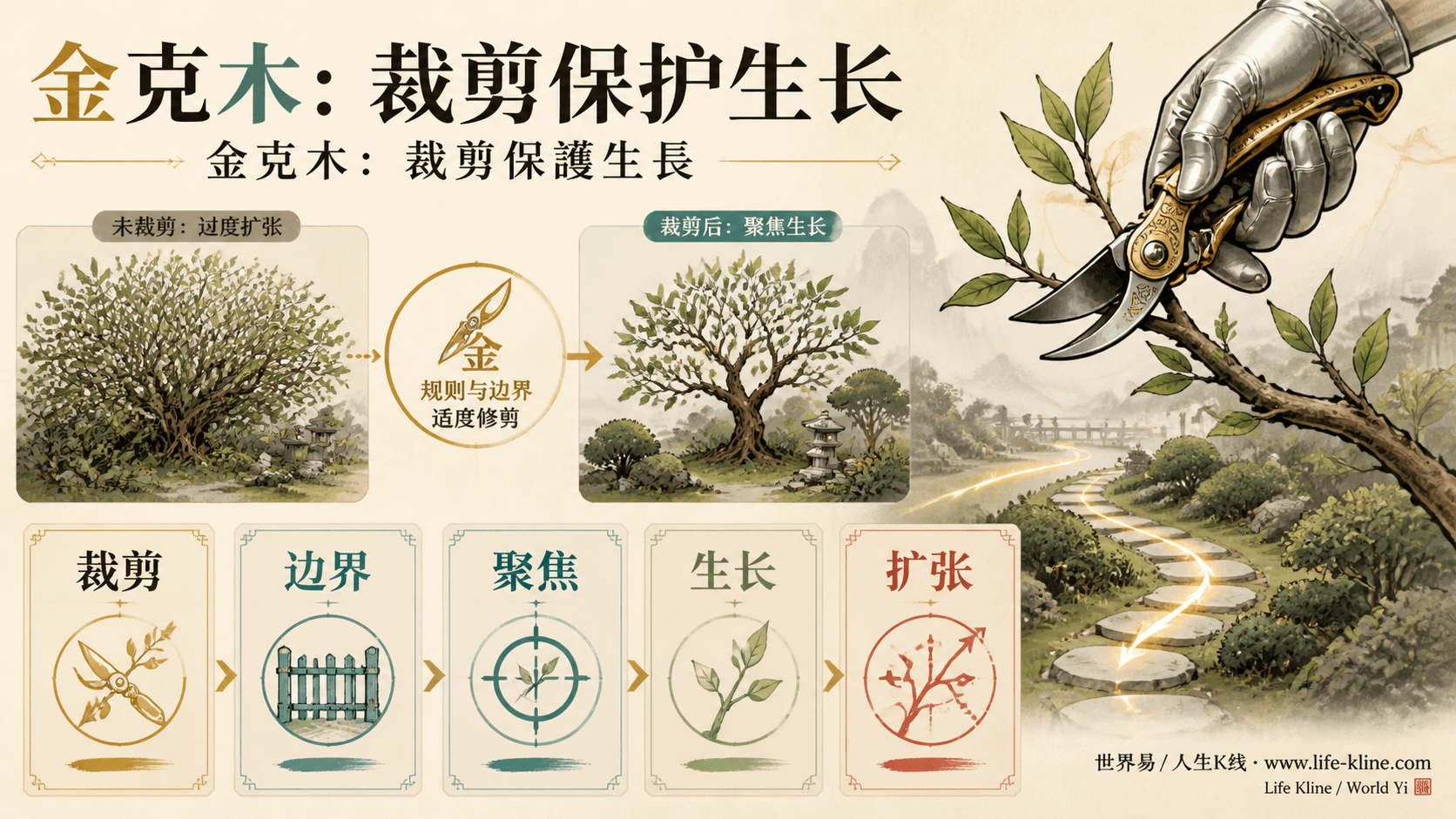
金克木调节图
这张图把《Analysis of Long-Term Care Strategies and Fate Interpretation in Elderly Chronic Disease Care》里的命理概念转成关系、边界和应用场景,适合先看图建立结构,再回到知识文章正文理解细节。
在人生K线与世界易的框架中,金克木并非限制,而是通过规则与边界实现聚焦,让生长保持结构与效率。理解这一调节机制,能帮助我们在不同时位中主动优化路径。
查看图片解读