Encyclopedia of Earthly Branches: Zi - The Yang Water Branch's Fate Analysis and Applications
把这篇文章落到自己身上验证:先看结构,再进入个人分析,不做泛泛阅读。
Concept Definition
Zi is the first of the twelve Earthly Branches (Di Zhi), classified as a Yang branch. Its intrinsic Five Element (Ben Qi) is Water, and its hidden Heavenly Stem (Cang Gan) is Gui (癸). As a Yang branch, Zi possesses active and outward attributes within the Yin-Yang and Five Elements system, governing the energy and characteristics of Water. The hidden stem Gui Water represents the essence and fluidity of Water, serving as the core of Zi's metaphysical system.
In the interrelationships among Earthly Branches, Zi forms a Six Clash (Liu Chong) relationship with Wu (午), indicating intense opposition and conflict in fate analysis. Conversely, Zi forms a Six Harmony (Liu He) relationship with Chou (丑), symbolizing harmony and cooperation that help balance the energy in a fate chart. Additionally, Zi is subject to penalty (Xing) by Mao (卯) and harm (Hai) by Wei (未). These special penalty and harm relationships play important roles in adjustment and caution during metaphysical interpretation.
Fate Characteristics and Symbolic Meaning
As a Yang branch with the Five Element Water, Zi symbolizes flow, wisdom, and the source of life. The nature of Water is gentle and inclusive, capable of nourishing all things, while also possessing unpredictable and transformative qualities. Due to its hidden stem Gui Water, Zi embodies the pure water characteristic, representing latent wisdom and agile thinking.
Zi's Six Harmony relationship with Chou reflects the complementary interaction between Water and Earth elements, symbolizing coordination and stability. The Six Clash with Wu Fire demonstrates the classic Water-Fire opposition, indicating that conflicts and energy imbalances need attention in fate configurations. The penalty and harm relationships reveal potential obstacles and challenges Zi may encounter in specific combinations, reminding metaphysicians to consider these comprehensively during interpretation.
Practical Configurations and Interpretation
In practical fate configurations, Zi often combines with Chou to form a Six Harmony, enhancing harmony and energy flow within the chart. For example, the Zi-Chou union strengthens the complementarity between Water and Earth, bringing stability and support that benefit career and interpersonal development.
The Six Clash between Zi and Wu is frequently used to interpret conflicts and changes within a fate chart, potentially signaling intense transformations or challenges. Such clashes require mitigation through other Earthly Branches or Five Elements to ease the impact. For instance, when a Zi-Wu clash appears, attention should be paid to emotional fluctuations and environmental instability.
The penalty by Mao and harm by Wei should not be overlooked in fate analysis. The Zi-Mao penalty may bring internal contradictions and conflicts, while Wei's harm to Zi implies potential harm and obstacles. Proper configuration and adjustment of these relationships are important tasks in metaphysical practice.
Common Misconceptions
A common misconception is to simplistically regard Zi as merely a Water attribute, neglecting its Yang branch nature and complex Six Clash and Six Harmony relationships. In reality, Zi's metaphysical meaning extends beyond Water, embodying the dynamic and positive characteristics of Yang Water.
Another misconception is ignoring Zi's penalty and harm relationships with other Earthly Branches, leading to one-sided fate analysis. Misunderstanding the Zi-Mao penalty and Zi-Wei harm relationships can cause omission of potential conflicts and risks, affecting the completeness of interpretation.
FAQ
Question: What specifically does the Six Clash between Zi and Wu represent? Answer: The Six Clash between Zi and Wu represents intense opposition and conflict in fate, usually indicating clashes, changes, or challenges that require balancing through other Five Element forces.
Question: What special significance does the hidden stem Gui Water in Zi have? Answer: The hidden stem Gui Water represents Zi's intrinsic Five Element, symbolizing pure water nature, wisdom, and fluidity. It is the core element in Zi's metaphysical analysis, reflecting its essential Yin-Yang and Five Element characteristics.
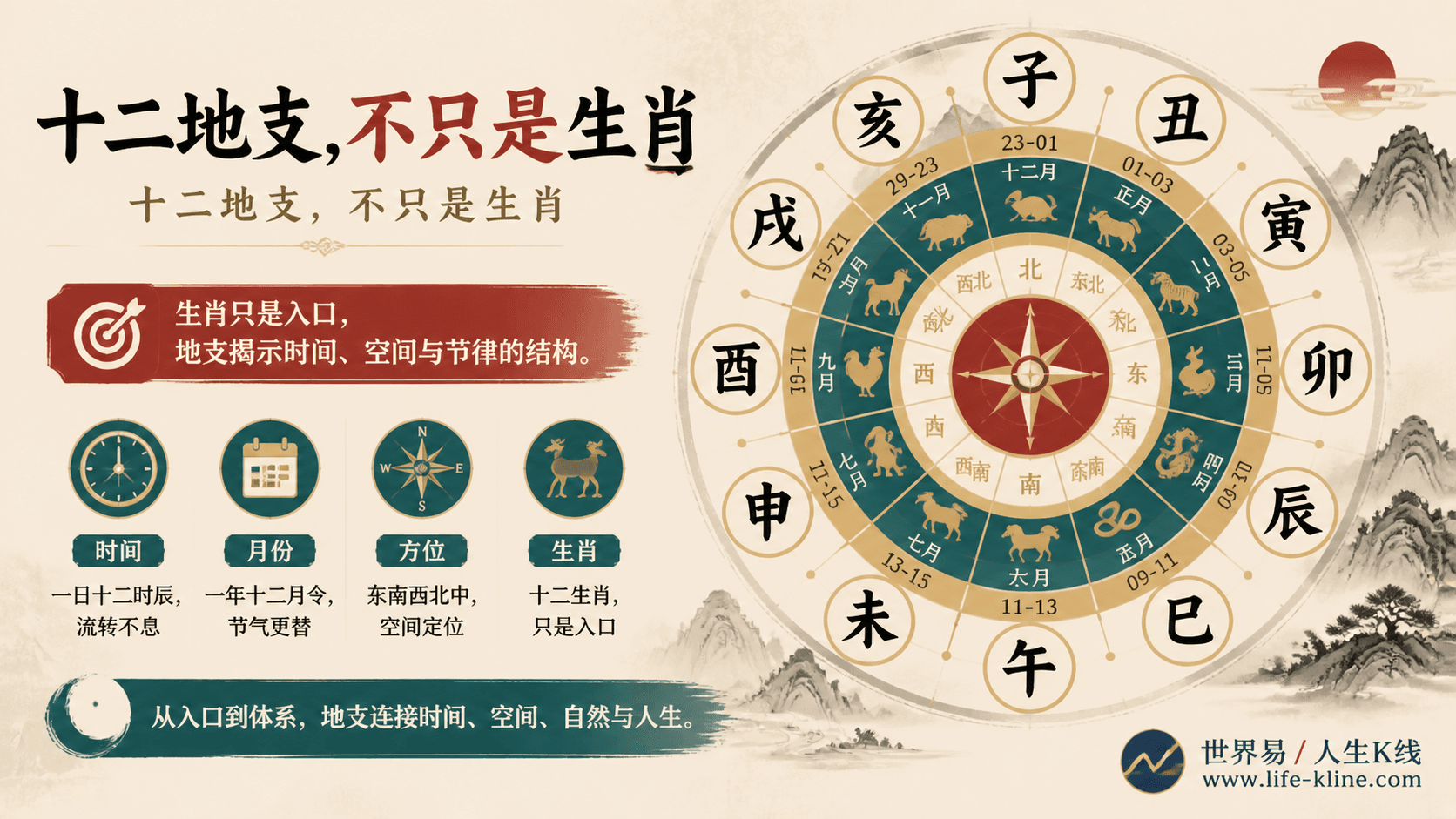
十二地支总览图
这张图把《Encyclopedia of Earthly Branches: Zi - The Yang Water Branch's Fate Analysis and Applications》里的命理概念转成关系、边界和应用场景,适合先看图建立结构,再回到知识文章正文理解细节。
说明子丑寅卯辰巳午未申酉戌亥与时间、月份、方位和生肖的关系。
查看图片解读