Detailed Analysis and Application of the Earthly Branch Wu (午) in Metaphysics
把这篇文章落到自己身上验证:先看结构,再进入个人分析,不做泛泛阅读。
Concept Definition
Wu (午) is one of the traditional Chinese Earthly Branches (Di Zhi), characterized as a Yang Branch with the Five Element Fire. As an important component of the Earthly Branches, Wu carries specific temporal and spatial symbolic meanings in metaphysics. According to the fact list, Wu's hidden Heavenly Stems (Cang Gan) include Ding (丁) and Ji (己), each representing different Heavenly Stem energies.
In the mutual relationships among Earthly Branches, Wu forms a Six Clash (Liu Chong) with Zi (子), symbolizing opposition and change between the two. At the same time, Wu forms a Six Harmony (Liu He) with Wei (未), representing harmony and cooperation. Additionally, Wu has a self-punishment relationship and a harm (Hai) relationship with Chou (丑), reflecting complex interactions.
Metaphysical Characteristics and Symbolic Meanings
As a Yang Branch with the Five Element Fire, Wu symbolizes enthusiasm, brightness, vitality, and the release of energy. The fire nature associates Wu in metaphysics with warmth, radiance, and motivation, representing a positive and upward force. Among its hidden Heavenly Stems, Ding (丁) is Yin Fire, delicate and gentle, while Ji (己) is Yin Earth, indicating an internal dynamic and support of fire-earth mutual generation within Wu.
Wu's clash with Zi (子) reflects the conflict between fire and water, symbolizing opposition and intense change. In metaphysical applications, this clash often signifies movement and tense energy. Conversely, Wu's Six Harmony with Wei (未) shows coordination and mutual support between the two, with the Six Harmony relationship typically bringing balance and auspiciousness.
Wu's self-punishment suggests internal contradictions and self-restraint; its harm relationship with Chou (丑) reflects conflict and adverse effects between Wu and Chou, reminding metaphysicians to pay attention to these complex relationships when analyzing BaZi charts.
Practical Configuration and Interpretation
In BaZi metaphysics, the presence of Wu often brings the energy of fire, representing initiative, enthusiasm, and action. For example, when Wu forms a Six Harmony with Wei (未), it usually indicates harmonious interpersonal relationships and smooth cooperation, suitable for teamwork and partnership ventures.
Wu's clash with Zi (子) signals change and challenges, commonly indicating potential conflicts or sudden events in life. At such times, it is necessary to consider other metaphysical factors for a comprehensive judgment, avoiding isolated conclusions.
Wu's hidden Heavenly Stems, Ding Fire and Ji Earth, serve different functions in metaphysics. Ding Fire represents a subtle fire nature, often associated with artistic and emotional qualities; Ji Earth symbolizes tolerance and support, representing stability and nurturing. When both Ding and Ji are present in Wu's hidden stems, it demonstrates the harmonious fire-earth mutual generation, which helps the expression of personal talents and steady development.
Common Misconceptions
Some mistakenly believe that Wu, as a representative of fire, solely symbolizes passion and impulsiveness, overlooking the complex connotations of its hidden stems Ding Fire and Ji Earth. In fact, Wu's Five Element attributes contain diverse energies, requiring a comprehensive understanding of its Yin-Yang and hidden stem structure.
Another common misconception is to interpret Wu's clash with Zi simply as inauspicious or inevitably leading to setbacks. In reality, the Six Clash relationship can also bring positive changes and momentum; the key lies in analyzing the entire BaZi chart rather than making isolated judgments.
FAQ
Question: Why is Wu classified as a Yang Branch? Answer: According to the fact list, Wu is clearly a Yang Branch. Yang Branches in the Earthly Branch system represent Yang energy, symbolizing activity and extroversion. Wu's fire attribute aligns with Yang energy, thus it is categorized as a Yang Branch.
Question: What does Wu's Six Harmony with Wei mean? Answer: The Six Harmony relationship represents harmonious cooperation between Earthly Branches. Wu's Six Harmony with Wei means mutual support between the two, bringing stability and auspiciousness, often used to determine good interpersonal or cooperative relationships.
Question: What are the differences between Ding and Ji in Wu's hidden Heavenly Stems? Answer: Ding is Yin Fire, delicate and gentle, symbolizing introspective fire energy; Ji is Yin Earth, representing tolerant and nurturing earth energy. Together, they form Wu's complex connotation, reflecting the characteristic of fire-earth mutual generation.
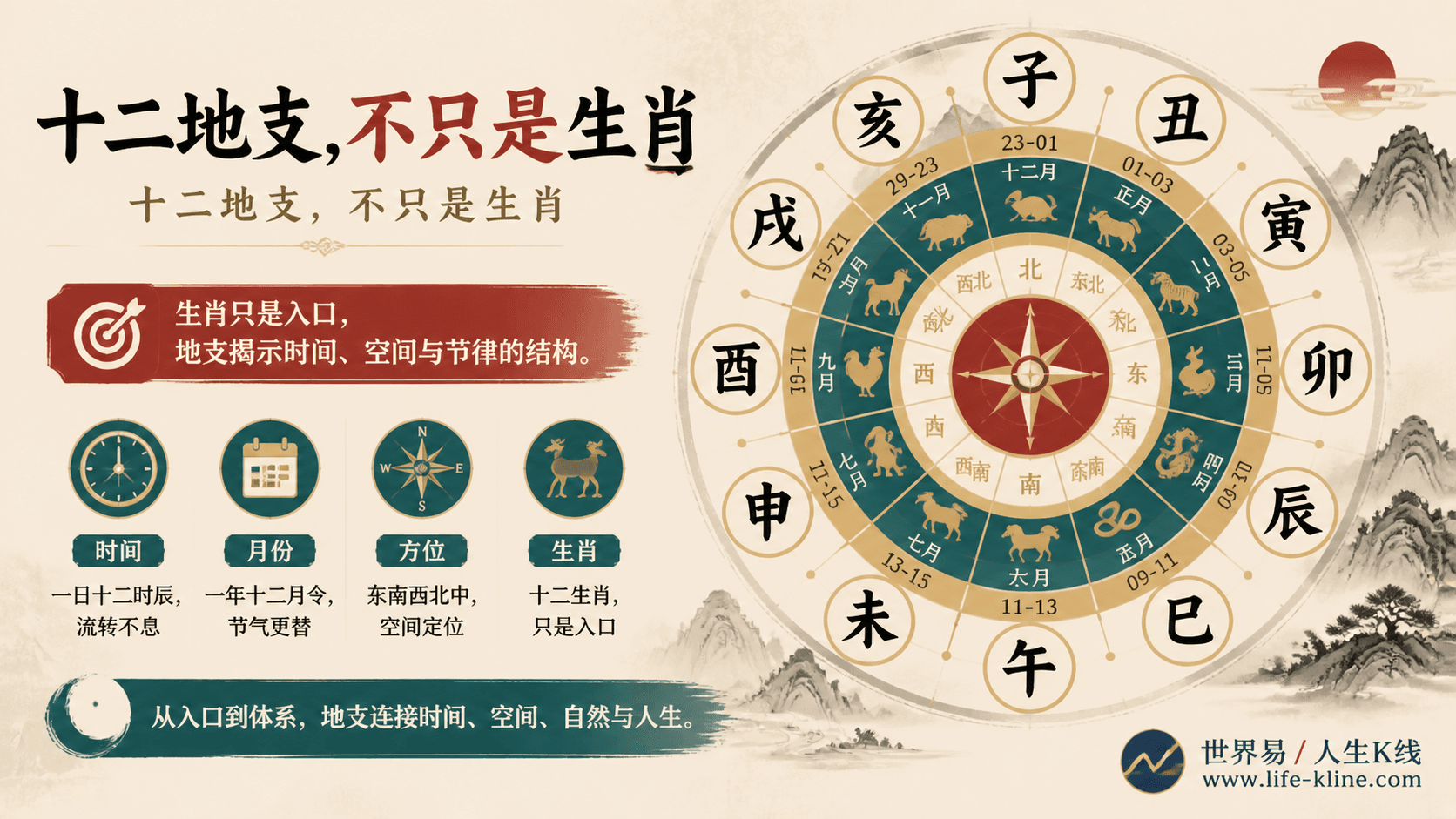
十二地支总览图
这张图把《Detailed Analysis and Application of the Earthly Branch Wu (午) in Metaphysics》里的命理概念转成关系、边界和应用场景,适合先看图建立结构,再回到知识文章正文理解细节。
说明子丑寅卯辰巳午未申酉戌亥与时间、月份、方位和生肖的关系。
查看图片解读