BaZi Analysis and Parenting Strategies for Adult Children’s Late Launch and Family Intervention Decisions
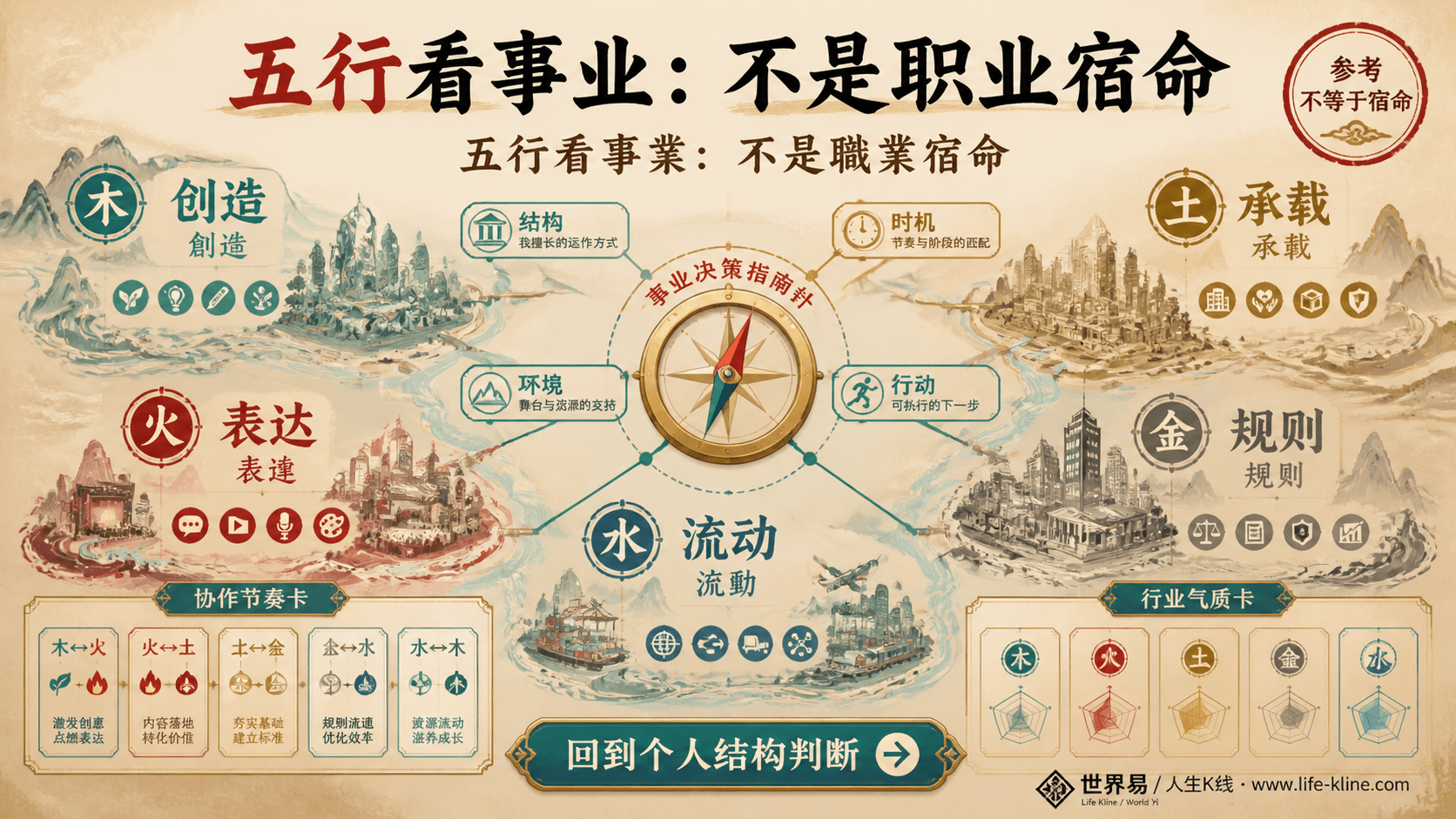
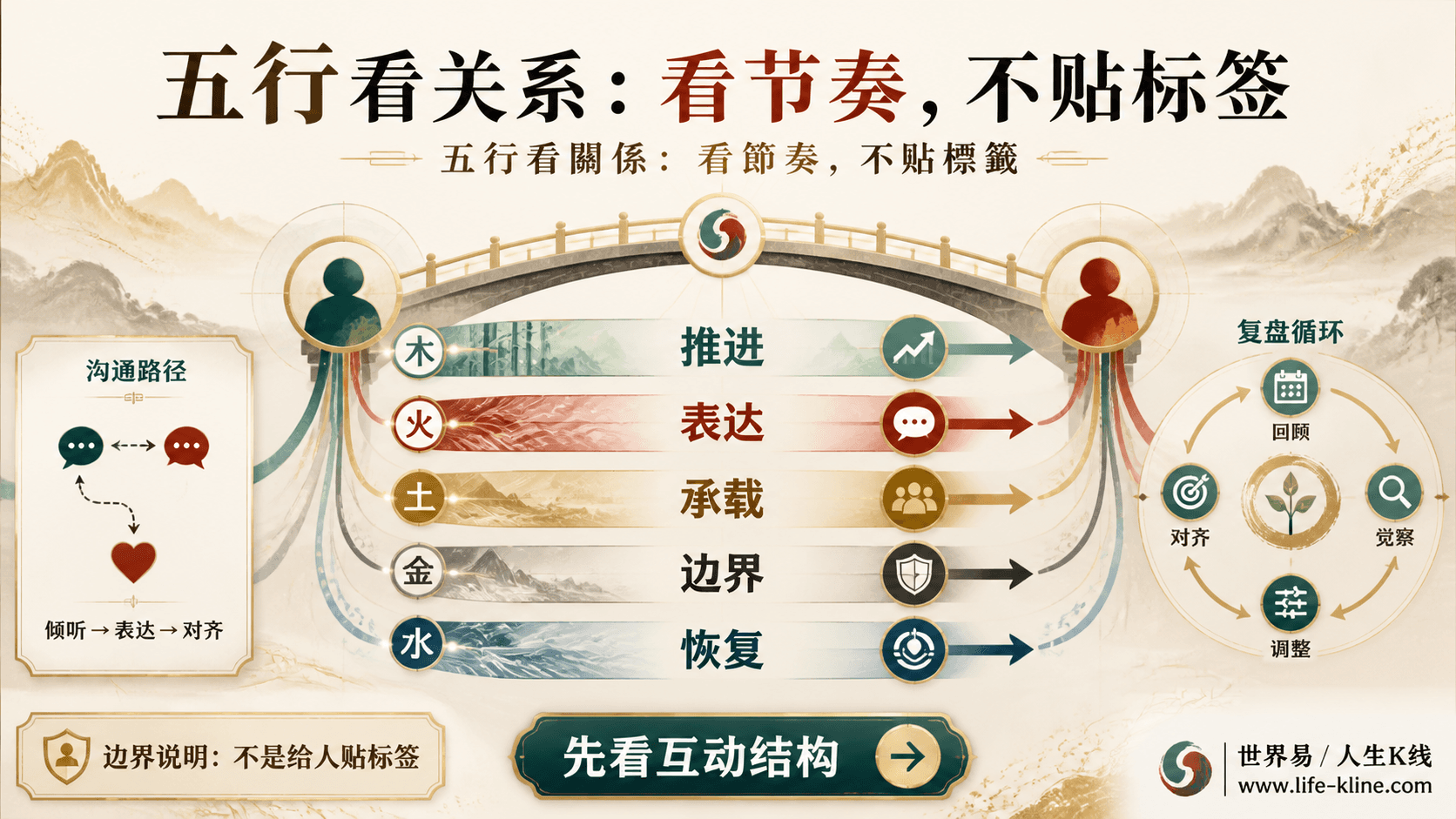
把这篇文章落到自己身上验证:先看结构,再进入个人分析,不做泛泛阅读。
Why This Decision Is Especially Difficult in This Scenario
The core challenge in parenting adult children who launch late lies in the tension between economic interdependence and the development of autonomy. Parents oscillate between supporting their children financially and expecting them to become independent, often resulting in anxiety-driven extremes of over-intervention or premature disengagement. For the children, late launch is frequently accompanied by weak autonomy and strong attachment, intensifying psychological dependence and power struggles within the family.
BaZi structures amplify the complexity of this parenting dynamic in such contexts. For example, the strength of the Day Master reflects the child’s intrinsic energy level; the Yin star (印星, Yin Xing) relates to attachment and support systems; the Guan Sha (官杀, authority stars) represent pressure from authority and rules; and the Shi Shang Cai (食伤财星, expression and resource stars) symbolize creativity and resource flow. Different combinations determine parental psychological expectations and response patterns during observation and intervention.
Moreover, the interaction of Liu Nian (annual fortune) and Da Yun (decade luck cycle) provides temporal rhythm cues that help assess the child’s current growth stage and energy fluctuations, influencing parents’ timing for intervention. Parental anxiety often hinders calm observation of these BaZi rhythms, leading to decisions that deviate from actual parenting needs.
Therefore, integrating psychodynamic theory with BaZi rhythms not only clarifies reasonable boundaries for intervention but also prevents exacerbation of parent-child conflicts, facilitating gradual autonomy in adult children while enabling parents to offer appropriate support at the right time.
Three Core Dimensions of BaZi Judgment
The Day Master focuses on the child’s individual vitality, with its strength indicating intrinsic self-drive. Adult children who launch late with a weak Day Master typically exhibit insufficient autonomy, requiring greater parental intervention; conversely, a strong Day Master may indicate risks of rebellion or excessive independence, warranting a balanced approach of observation and guidance.
The Yin star (印星) usually represents parental or nurturing environment support and attachment. A strong Yin star structure suggests deep child dependence on parents, often accompanied by emotional reliance and lack of psychological security behind late launch. In such cases, parental intervention must be cautious to avoid intensifying dependence while preventing neglect that leads to self-loss.
The Guan Sha stars (官杀) symbolize authority and discipline, reflecting parental control and social norms pressure. In charts with strong Guan Sha, parents tend to use firm methods to urge independence, which may provoke resistance or rebellion. The Shi Shang Cai stars (食伤财星) relate to the child’s expressive and creative abilities; suppression of these stars often corresponds to more pronounced late launch phenomena.
Da Yun and Liu Nian act as dynamic temporal regulators. Stable Da Yun periods such as Xin Wei (辛未) and Xin Hai (辛亥) suggest a phase suitable for observation and steady support. Liu Nian like Bing Wu (丙午) indicate potential changes, reminding parents to monitor children’s psychological and behavioral signals and adjust intervention strategies timely.
Three Real BaZi Case Studies
Case 1: Male, aged 50-55, Day Master Ji (己, Earth) balanced, pattern is Cong Sha (从杀格), Yong Shen are Wood and Water, Ji Shen are Fire and Earth. Currently in Xin Wei Da Yun (辛未, 49-58 years), a stable luck cycle suitable for maintaining status quo, with Liu Nian Bing Wu (丙午). The balanced Ji Earth Day Master indicates relatively stable internal energy, but the Cong Sha pattern shows vitality constrained by Guan Sha; although Guan Sha are Ji Shen, they are absorbed by the pattern. Yong Shen Wood and Water suggest the child requires more external support and emotional regulation. The stable Xin Wei Da Yun advises observation and cautions against hasty intervention. The Bing Wu Liu Nian brings some changes; parents should pay attention to emotional and behavioral signals and provide emotional support timely. It is recommended that parents focus on stable support, avoid excessive control, and gradually intervene if clear dependent anxiety appears, ideally combined with professional psychological counseling to adjust family relations.
Case 2: Male, aged 50-55, Day Master Xin (辛, Metal) relatively strong, Zhuan Wang pattern (专旺格), Yong Shen Earth, Ji Shen Wood. Currently in Xin Hai Da Yun (辛亥, 50-59 years), stable and suitable for maintaining status quo, with Liu Nian Bing Wu (丙午). The relatively strong Xin Metal Day Master indicates strong internal drive, but the Zhuan Wang pattern may cause internal friction or stubbornness, requiring Earth Yong Shen to harmonize. The Ji Shen Wood is suppressed, indicating restricted creative expression; late launch may stem from emotional or environmental constraints. The stable Xin Hai Da Yun suits steady observation, but the Bing Wu Liu Nian signals potential changes, alerting parents to watch for signs of rebellion or avoidance. Parents are advised to maintain boundaries while granting moderate freedom to avoid triggering defiance, encourage self-expression, and seek family therapy if necessary.
Case 3: Male, aged 40-45, Day Master Bing (丙, Fire) relatively strong, Bi Jian pattern (比肩格), Yong Shen Water and Metal, Ji Shen Wood. Currently in Xin Hai Da Yun (辛亥, 41-50 years), a very auspicious luck cycle with smooth affairs, and Liu Nian Bing Wu (丙午) aligning favorably. The strong Bing Fire Day Master with Bi Jian pattern indicates the child has strong autonomy and prominent self-awareness. Yong Shen Water and Metal moderate the excessive Fire, while Ji Shen Wood is restrained, possibly causing emotional fluctuations and external rejection. The auspicious Da Yun and favorable Liu Nian suggest the child is at a turning point in growth, and late launch may be gradually transforming. Parents can observe moderately, avoid forceful intervention, and adopt guidance and encouragement strategies to promote proactive growth. Combining professional psychological counseling is recommended to help the child express and resolve inner conflicts healthily, fostering autonomy.
Common Misjudgments and Blind Spots in This Scenario
When parenting adult children who launch late, parents often fall into anxiety-driven over-intervention, mistakenly believing that forcing independence will quickly solve problems. In reality, this may intensify dependence or rebellious emotions, straining parent-child relationships. In BaZi charts with strong Guan Sha, excessive authoritative suppression is especially prone to backfire.
Conversely, some parents avoid conflict by completely relinquishing control, misjudging that the child’s autonomy is mature, while ignoring deep-seated dependence indicated by a weak Day Master or strong Yin star. This leads to insufficient psychological security and prolonged late launch.
Another blind spot is neglecting the timing rhythm of Da Yun and Liu Nian, failing to align with the child’s life energy fluctuations. Stable Da Yun phases call for observation and maintenance, while rash changes often produce adverse effects. Ignoring these rhythms can cause unbalanced decisions, resulting in ineffective support and lack of constructive guidance.
Finally, parents often oversimplify BaZi as fatalism, overlooking the importance of professional psychological counseling and the complex interactions of emotions, communication, and family systems. This reduces BaZi references to misleading guidance. BaZi should serve as an auxiliary tool complemented by scientific interventions to truly help families resolve difficulties.
Practical Judgment Sequence
Step one: Parents should identify the child’s Day Master strength and the combination of Yin star and Guan Sha from the BaZi chart to assess intrinsic autonomy and attachment level. When the Day Master is weak and Yin star strong, emotional dependence tends to dominate, so priority should be given to the child’s psychological security and avoid premature forced intervention.
Step two: Combine Da Yun and Liu Nian rhythms to judge whether the current phase suits maintaining and observing. Stable Da Yun periods like Xin Wei and Xin Hai require patient observation, monitoring change signals from Liu Nian, and adjusting intervention intensity accordingly to avoid blind interference.
Step three: Observe the child’s behavior and emotional expressions. If clear signs of dependent anxiety, self-isolation, or communication resistance appear, initiate professional psychological counseling and family therapy promptly to assist communication and emotional regulation, promoting autonomy development.
In summary, BaZi judgment serves as a rhythm reference and cannot replace professional intervention. Parents should flexibly adjust intervention strategies based on scientific observation and professional support, ensuring the child’s psychological safety while facilitating gradual independence.
FAQ
Question 1: Does a strong Yin star in BaZi necessarily mean the child depends on parents? Answer: A strong Yin star generally indicates increased attachment and support needs from the nurturing environment, but not absolute dependence. It must be assessed together with Day Master strength and Da Yun/Liu Nian, observing actual psychological and behavioral manifestations.
Question 2: How should parents adjust intervention strategies based on Da Yun and Liu Nian? Answer: Stable Da Yun phases favor maintaining and steady support, avoiding aggressive intervention. When Liu Nian brings changes, parents should monitor psychological and behavioral shifts in the child, timely adjust intervention intensity, and combine professional counseling to assist decision-making.
Question 3: Can BaZi help if the child shows self-harm or violent tendencies? Answer: BaZi can only serve as an auxiliary rhythm reference and cannot replace professional psychological counseling or medical intervention. In cases of self-harm, depression, or violence, seeking professional psychological or family therapy help is the priority.
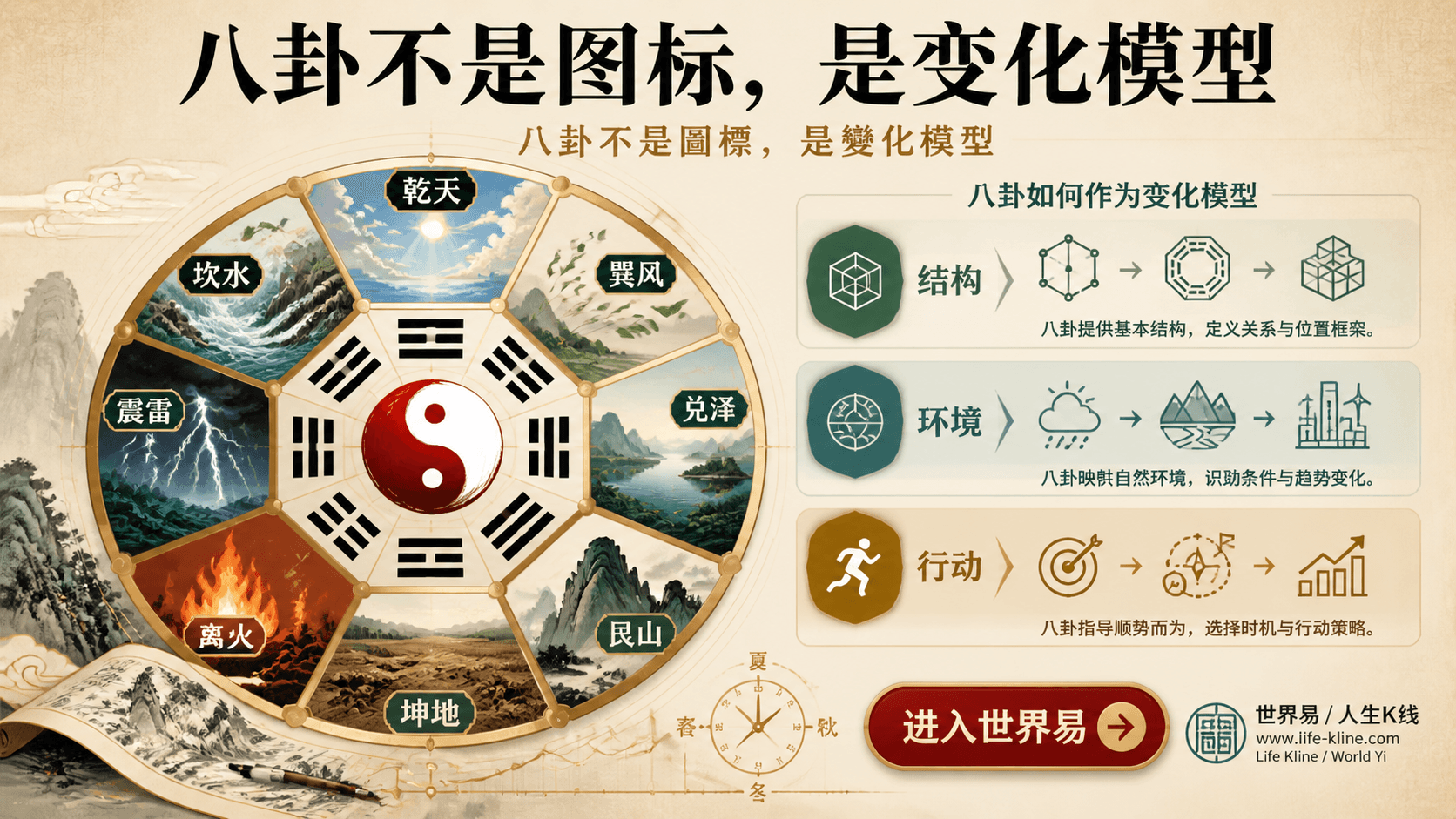
八卦不是图标
这张图把《BaZi Analysis and Parenting Strategies for Adult Children’s Late Launch and Family Intervention Decisions》里的命理概念转成关系、边界和应用场景,适合先看图建立结构,再回到知识文章正文理解细节。
八卦以天地雷风水火山泽为象,构建了一个动态观察结构、环境与行动的框架。它不是装饰符号,而是帮助我们在具体时位中识别趋势、匹配动作并管理风险的思维工具。
查看图片解读