Introduction and Practical Guide to Astrology: Analysis with Real Natal Charts
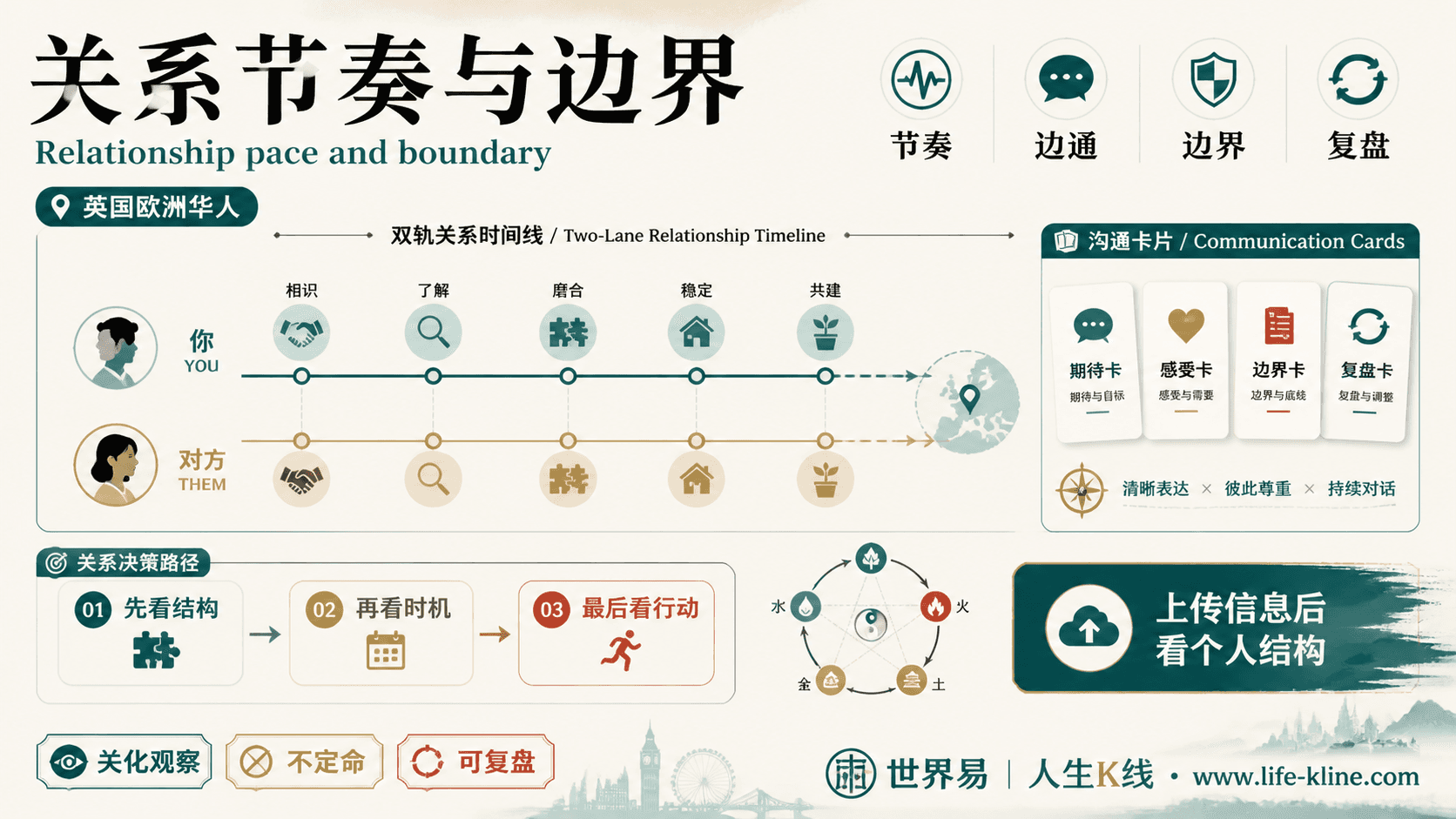
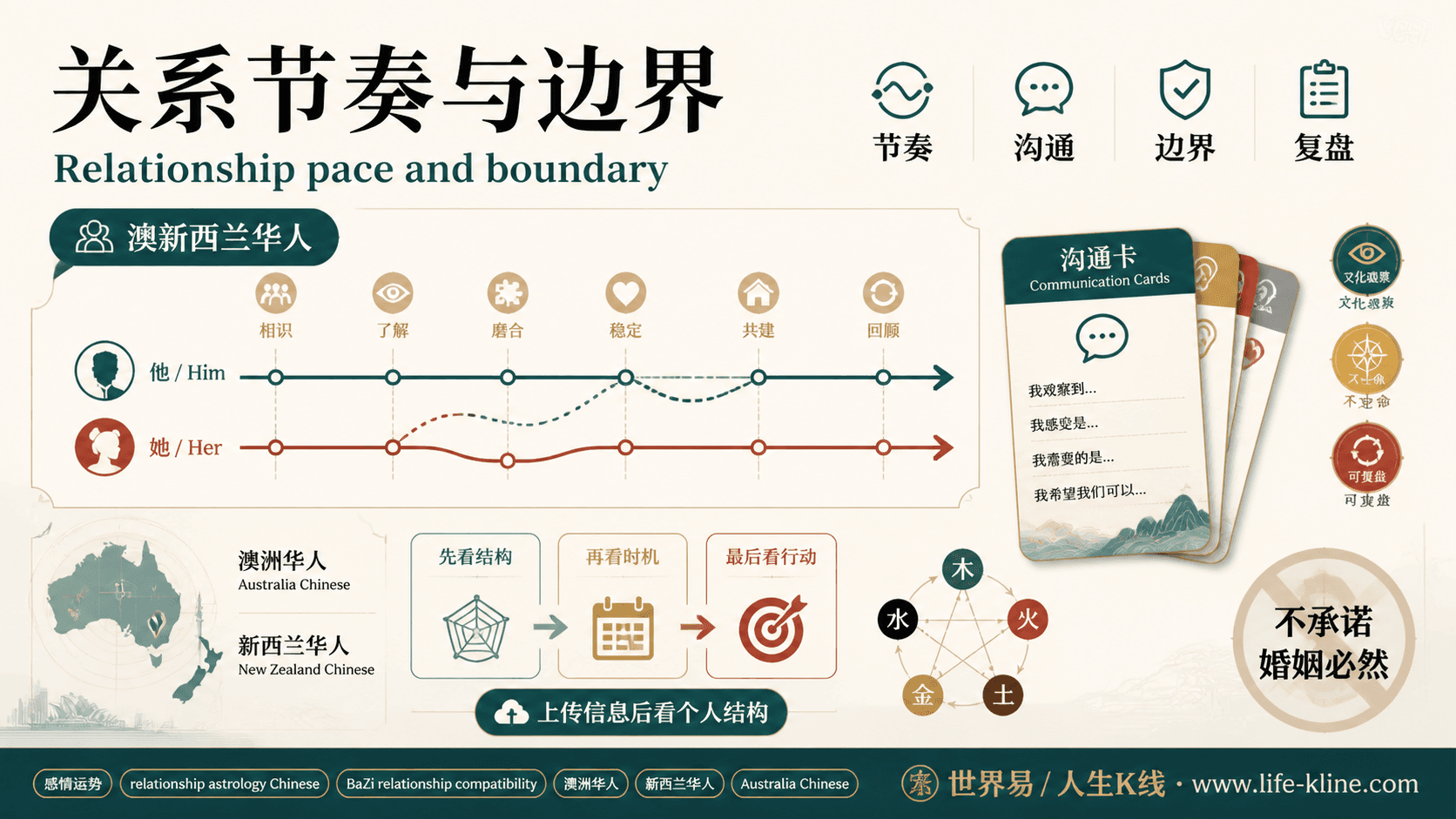
把这篇文章落到自己身上验证:先看结构,再进入个人分析,不做泛泛阅读。
What is Astrology
Astrology is a study of the relationship between celestial movements and human life and events, widely applied in ancient civilizations. It interprets an individual's personality traits, potential trends, and future development by analyzing the positions of celestial bodies at the time of birth. Modern astrology integrates elements such as the Sun sign, Moon sign, and Ascendant sign, forming a complex natal chart system.
Astrology is deeply influenced by ancient astronomy and philosophy, with a long history. It not only focuses on zodiac symbols but also uses tools like houses and planetary aspects to reveal an individual's inner psychological structure and external life environment. Astrology embodies the concept of cosmic-human resonance, emphasizing the harmonious unity between the universe and individual destiny.
In Western astrology, the natal chart is the core tool. By using precise birth time and location, the positions of celestial bodies are plotted to infer personality, emotions, career, and health aspects. Astrology is applied not only in personal destiny analysis but also widely in date selection, forecasting, and psychological counseling.
How to Read Astrology: Core Elements
When interpreting a natal chart, the first step is to identify the Sun sign, Moon sign, and Ascendant sign. The Sun sign represents the core self and life purpose; the Moon sign reflects emotions and subconscious; the Ascendant sign indicates outward expression and how others perceive the individual. These three complement each other to form a complete personality profile.
Secondly, the division of houses is key to understanding different life areas. The twelve houses correspond to various aspects of personal life, such as career, marriage, and wealth. Accurate birth time is essential for determining houses; missing this information affects interpretation accuracy, especially in judging career and destiny directions.
Furthermore, planetary placements and aspects reveal inner drives. Each planet symbolizes different psychological energies and life domains, and their signs and houses influence how these energies manifest. The angular relationships between planets reflect internal harmony or conflict, providing dynamic insights into fate fluctuations.
Additionally, integrating Eastern metaphysics such as the Four Pillars BaZi enables a more comprehensive analysis of an individual's Five Elements attributes, Day Master strength, patterns, and Yong Shen (favorable elements). Da Yun (decade luck cycles) and Liu Nian (annual fortune) correspond to changes in fortune at different ages, aiding astrology interpretations of real-life auspicious and inauspicious events.
Three Real Natal Chart Cases
Case One is a female aged 30-35, with a Day Master of 甲 (Jia) Wood, moderately strong, pattern of Pian Yin (偏印) pattern, Yong Shen being Metal and Earth, and Ji Shen (unfavorable element) being Water. She is currently in the 己酉 (Ji You) Da Yun, which is very auspicious, with the Liu Nian being 丙午 (Bing Wu), indicating favorable circumstances. From the astrology perspective, the 'moderately strong Day Master' corresponds to a strong internal energy as shown by the Sun sign in the natal chart, while the Yong Shen Metal and Earth elements resemble planetary positions that harmonize weaker aspects in the chart, reflecting smooth career and life conditions during the current Da Yun and Liu Nian.
Case Two is a female aged 45-50, with a Day Master of 己 (Ji) Earth, moderately strong, pattern of Zheng Yin (正印) pattern, Yong Shen being Fire, and Ji Shen also Fire. She is currently in the 辛未 (Xin Wei) Da Yun, a stable luck cycle, with Liu Nian being 丙午 (Bing Wu), requiring adaptability. In astrology, this situation is similar to energy balance between the Sun sign and Ascendant sign, with the Liu Nian influence necessitating flexible adjustment. The fact that both Yong Shen and Ji Shen are Fire suggests attention to balancing internal emotions and external environment to avoid impulsiveness and maintain steady development.
Case Three is a female aged 35-40, with a Day Master of 辛 (Xin) Metal, moderately strong, pattern of Shang Guan (伤官) pattern, Yong Shen being Fire and Wood, and Ji Shen being Earth. She is currently in the 丙子 (Bing Zi) Da Yun, an auspicious cycle, with Liu Nian 丙午 (Bing Wu) harmonizing with the Da Yun, showing progress in career and wealth. Corresponding to astrology, this reflects a strong Sun sign combined with positive planetary aspects, indicating a high-energy period suitable for active pursuits and career expansion. The Yong Shen Fire and Wood elements act like supportive Fire and Wood zodiac energies in the chart, enhancing smooth development.
Common Misconceptions
Many people mistakenly believe that knowing only the Sun sign is sufficient to fully understand a person's destiny, which oversimplifies the matter. While the Sun sign represents the core self, ignoring the Moon sign and Ascendant sign leads to misjudgments regarding emotions and external behavior. A full chart interpretation must consider multiple factors to avoid one-sided conclusions.
Another misconception is neglecting the importance of the birth time. Without an accurate birth time, one can determine the Sun and Moon signs but cannot precisely divide the twelve houses, resulting in inaccurate judgments in key areas such as career and marriage. It is recommended to obtain accurate birth time to enhance the scientific and practical value of astrology interpretation.
Additionally, some astrology interpretations overlook the role of Yong Shen (favorable elements) and Da Yun/Liu Nian from metaphysics, leading to incomplete assessments of individual fortune and life stages. Integrating the Yong Shen concept from Eastern Four Pillars BaZi helps more precisely grasp energy balance and auspicious/inauspicious changes, improving the practical value of astrology.
Practical Suggestions
Learning astrology should start with the basics of the Sun sign, Moon sign, and Ascendant sign, gradually mastering house divisions and planetary aspect interpretations. Combining theory with practice through real natal chart case studies helps deepen understanding and application of the astrology system.
In actual interpretation, it is important to accurately obtain birth time and location to ensure natal chart precision. Missing data should be supplemented as much as possible to avoid affecting key house and planetary angle judgments, thereby improving the reliability of astrological predictions.
Integrating Eastern metaphysics such as the Four Pillars BaZi Day Master, pattern, and Yong Shen analysis provides a more three-dimensional perspective for astrology interpretation. This helps identify the strength and harmonizing directions of individual energies, achieving an organic fusion of Eastern and Western metaphysics to better guide life and decision-making.
FAQ
Question 1: Which is more important, the Sun sign or the Ascendant sign? Answer: The commonly known 'zodiac sign' refers to the Sun sign, determined by birth month, representing the core self and life purpose. The Ascendant sign is the zodiac rising on the eastern horizon at birth time, changing approximately every two hours, reflecting the individual's outward image and first impression. Both are important, with the Moon sign supplementing emotional and subconscious layers. Together, these three form a complete personality model.
Question 2: Can a natal chart be read without birth time? Answer: It is possible to identify the Sun sign, Moon sign, and the zodiac signs of planets, but without accurate birth time, the twelve houses cannot be precisely determined, especially key houses like the career house. Therefore, interpretations are limited. It is recommended to consult hospital birth records or maternal and infant handbooks to obtain birth time for more accurate astrological analysis.
Question 3: What roles do Da Yun (decade luck cycles) and Liu Nian (annual fortune) play in astrology? Answer: The concepts of Da Yun and Liu Nian originate from Eastern metaphysics, reflecting changes in fortune at different life stages. In astrology, these time markers can be combined to understand cyclical fluctuations in individual destiny. Da Yun represents long-term trends, while Liu Nian indicates the luck of the current year. By analyzing the interactions between Da Yun, Liu Nian, and natal chart energies, one can better predict auspicious and inauspicious shifts in career, health, and relationships.
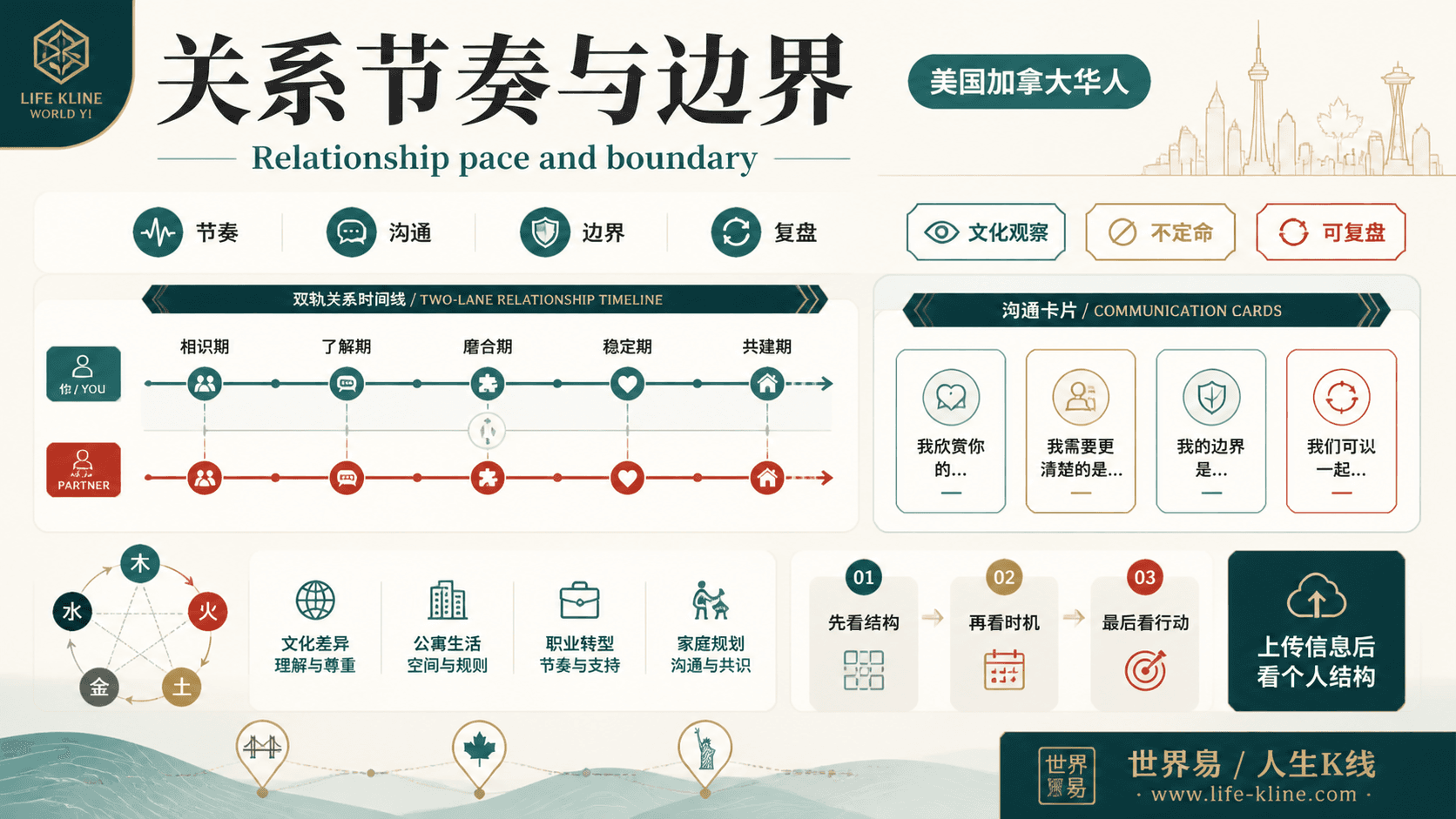
关系节奏与边界|美国加拿大华人
这张图把《Introduction and Practical Guide to Astrology: Analysis with Real Natal Charts》里的命理概念转成关系、边界和应用场景,适合先看图建立结构,再回到知识文章正文理解细节。
关系节奏与边界不应被写成固定结论。更适合美国加拿大华人的读法,是把传统术语翻译成结构、时机、环境、行动和复盘。
查看图片解读