Complete Guide to Ten Gods Query in BaZi: Analyzing the Core Relationship Between Day Master and Yong Shen
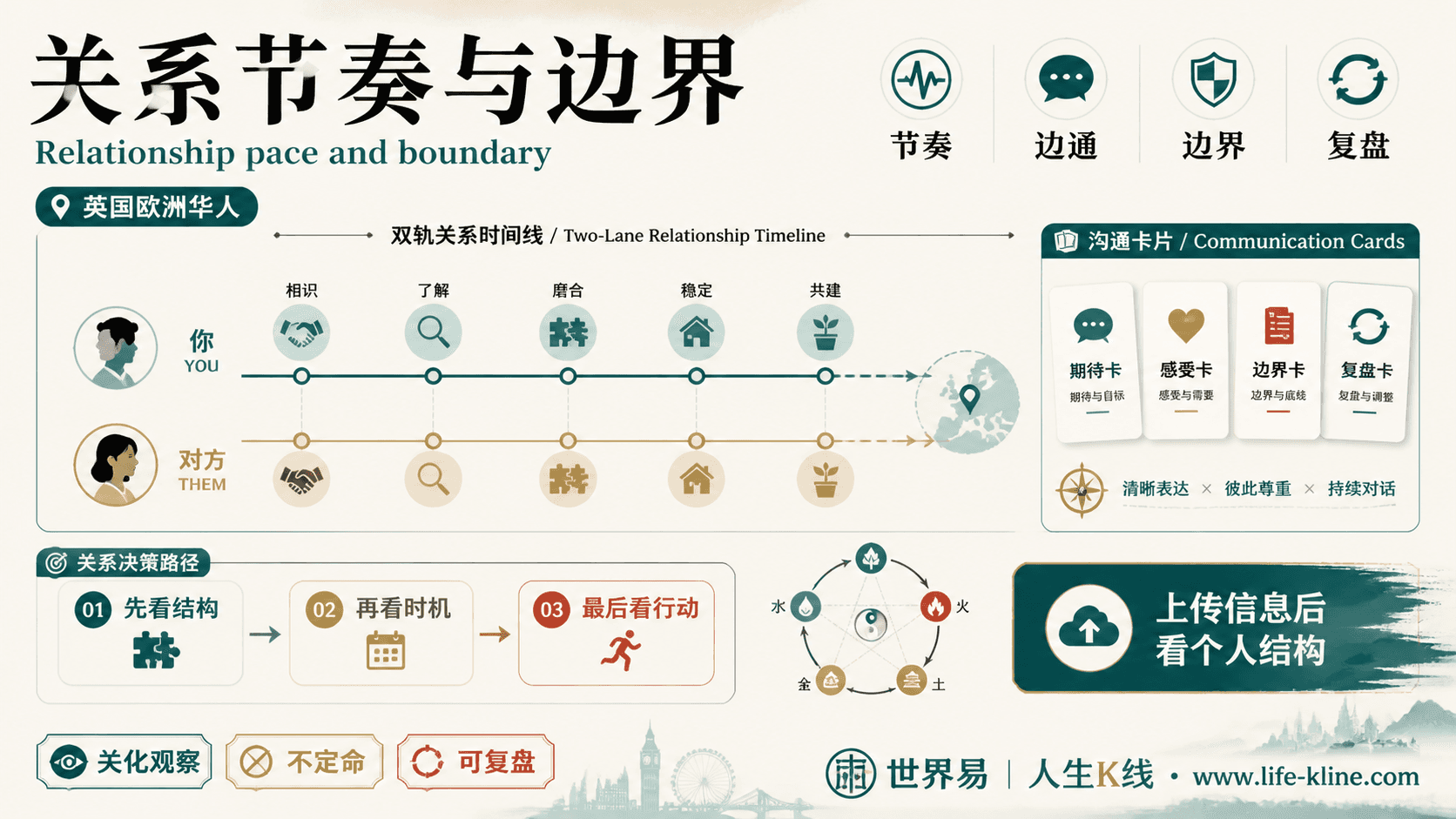
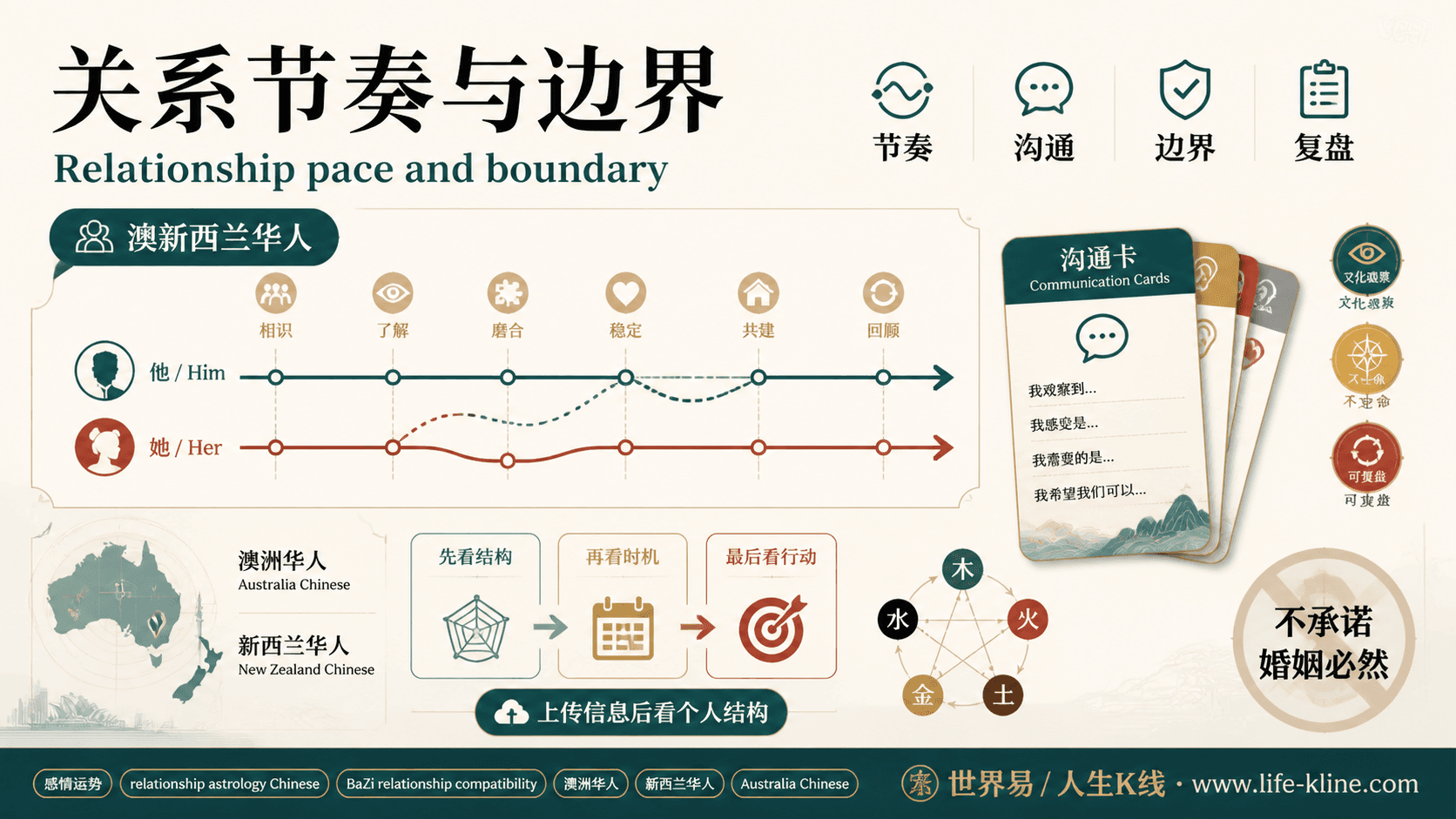
把这篇文章落到自己身上验证:先看结构,再进入个人分析,不做泛泛阅读。
What is Ten Gods Query
Ten Gods query is a fundamental method in BaZi metaphysics used to analyze the relationship between the Day Master (the Heavenly Stem of the birth day) and the external Five Elements. The so-called Ten Gods refer to the five-element generating and controlling relationships between the Day Master and other Heavenly Stems, including the ten types: Bi Jian (Friend), Jie Cai (Rob Wealth), Shi Shen (Eating God), Shang Guan (Hurting Officer), Pian Cai (Indirect Wealth), Zheng Cai (Direct Wealth), Qi Sha (Seven Killings), Zheng Guan (Proper Authority), Pian Yin (Indirect Resource), and Zheng Yin (Proper Resource). By identifying and analyzing these Ten Gods, metaphysicians can more accurately understand the chart’s structure and the personality and fortune characteristics of the individual.
Originating from ancient Chinese Yin-Yang and Five Elements theory, the Ten Gods not only represent the generating and controlling interactions of the Five Elements but also symbolize interpersonal relationships, career, and wealth flow. Ten Gods query holds an important position in BaZi calculation; it is key to judging the Day Master’s strength, chart formation, and the selection of Yong Shen.
Ten Gods query helps metaphysicians build a complete BaZi chart picture, clarify the choices of Yong Shen and Ji Shen, thereby guiding the individual to make reasonable adjustments in life, career, and health. Accurate judgment of the Ten Gods is the foundation for improving BaZi prediction accuracy and makes the analysis of Da Yun and Liu Nian more targeted and in-depth.
How to Interpret Ten Gods Query: Core Elements
First, it is necessary to determine the Five Element attribute and strength of the Day Master. The strength of the Day Master determines the overall balance of the chart; a strong Day Master requires regulation through draining or controlling elements, while a weak one needs support and supplementation. The first step of Ten Gods query is to judge whether the Day Master is relatively strong, weak, or balanced, which directly affects the choice of Yong Shen.
Second, based on the Day Master’s Five Element attribute, analyze the relationships between the other Heavenly Stems in the Four Pillars (Heavenly Stems and Earthly Branches) and the Day Master, classifying the Ten Gods categories. The generating and controlling relationships among the Ten Gods reflect information about wealth luck, official career, resource stars, and eating/shang guan stars. Through analysis of the Ten Gods combinations, one can judge the chart’s structure, such as Pian Yin (Indirect Resource) pattern, Qi Sha (Seven Killings) pattern, Pian Cai (Indirect Wealth) pattern, etc.
The selection of Yong Shen is especially critical. Yong Shen is the element most suitable to harmonize the Day Master’s energy field, capable of balancing the chart and resolving adverse effects caused by Ji Shen. Ji Shen refers to the Five Elements that have a negative impact on the chart and need to be controlled or avoided. Ten Gods query not only helps identify Yong Shen and Ji Shen but also guides the interpretation of Da Yun and Liu Nian, determining auspicious or inauspicious trends.
The influence of Da Yun and Liu Nian on the Ten Gods cannot be ignored. Da Yun changes roughly every ten years, representing the overall trend of the individual’s life stage, while Liu Nian reflects the specific fortune of each year. By observing how Da Yun and Liu Nian interact with the Ten Gods in the chart, one can predict the stability or fluctuations of fortune and provide reasonable advice for life and career.
Three Real BaZi Chart Cases
Case One is a female aged between 45 and 50, with the Day Master 甲 (Jia) Wood, relatively strong, and the chart structure is Pian Yin (Indirect Resource) pattern. Her Yong Shen are Metal and Earth, and Ji Shen is Water. She is currently in the 丁巳 (Ding Si) Da Yun (ages 44-53), which is a stable luck cycle suitable for maintaining achievements. The Liu Nian is 丙午 (Bing Wu), which cooperates well with the Da Yun, resulting in overall stable and flexible fortune. The Ten Gods query shows that the Pian Yin pattern emphasizes wisdom and protection; Metal and Earth as Yong Shen help balance the relatively strong Jia Wood Day Master, avoiding the negative influence of Water Ji Shen. This case exemplifies the role of Ten Gods query in optimizing chart structure and balancing Yong Shen.
Case Two is a male aged between 30 and 35, with the Day Master 戊 (Wu) Earth, relatively strong. The chart structure is Qi Sha (Seven Killings) pattern, with Metal as Yong Shen and Fire as Ji Shen. He is currently in the 辛巳 (Xin Si) Da Yun (ages 29-38), which is a stable cycle suitable for maintaining achievements. The Liu Nian is also 丙午 (Bing Wu), and the Da Yun and Liu Nian coordinate well, keeping overall fortune stable. Qi Sha often represents challenges and motivation; Metal as Yong Shen can control the excessive Qi Sha, protecting the stability of the Wu Earth Day Master. After confirming Yong Shen through Ten Gods query, the individual can effectively avoid excessive Fire damage in career and life, enhancing balance and continuity of fortune.
Case Three is a female aged between 50 and 55, with the Day Master 戊 (Wu) Earth, strength balanced. The chart structure is Pian Cai (Indirect Wealth) pattern, with Fire as Yong Shen and Wood as Ji Shen. She is in the 丙申 (Bing Shen) Da Yun (ages 54-63), which is a favorable luck cycle with progress in career and wealth. The Liu Nian is 丙午 (Bing Wu), aligning with the Da Yun, overall beneficial for development. The Pian Cai pattern reflects active flow of wealth and resources; Fire as Yong Shen helps stimulate the individual’s potential and controls the Wood Ji Shen. Ten Gods query in this case helps clarify Yong Shen and Ji Shen, guiding the individual to seize opportunities during auspicious luck cycles to achieve career and wealth advancement.
Common Misconceptions
Many people mistakenly think that Ten Gods query is simply identifying Five Element attributes, overlooking the in-depth analysis of Day Master strength and the selection of Yong Shen and Ji Shen. In fact, the detailed classification and proper application of Ten Gods are the foundation of precise BaZi judgment; lacking scientific analysis easily leads to misjudgments.
Another common misconception is ignoring the influence of Da Yun and Liu Nian on the Ten Gods. Da Yun and Liu Nian not only affect the ups and downs of the individual’s fortune but also change the generating and controlling relationships of the Ten Gods, causing adjustments in the chart structure. Ignoring this leads to biased predictions and loss of practical guidance.
Some believe that having certain Ten Gods too strong or too weak in the chart is necessarily bad, neglecting the importance of achieving Five Element balance through the selection of Yong Shen. Strength or weakness itself is not absolutely good or bad; the key is to find the balance point suitable for the chart through Ten Gods query.
Practical Suggestions
When applying Ten Gods query in practice, it is essential first to accurately determine the Day Master’s Five Element attribute and its strength to avoid misjudgment that leads to wrong Yong Shen selection. Combined with chart structure characteristics, confirm Yong Shen and Ji Shen to effectively regulate the chart and achieve auspicious outcomes.
Regularly monitor changes in Da Yun and Liu Nian, analyze their impact on Ten Gods relationships, and adjust life and career strategies accordingly. Especially in critical Liu Nian, respond flexibly based on Ten Gods interactions to improve adaptability and avoid blind actions.
If the birth hour is unknown, try to deduce the hour pillar through family records, household registration, or key life events to ensure the completeness of the Four Pillars BaZi. Missing the hour pillar reduces the accuracy of Ten Gods query and affects the scientific and practical value of the overall BaZi analysis.
FAQ
What exactly does BaZi fortune-telling analyze? Answer: BaZi uses the Four Pillars (Year, Month, Day, Hour) converted from the solar calendar to the lunar calendar, combining the generating and controlling relationships of Heavenly Stems and Earthly Branches and the strength of the Five Elements to judge the Day Master’s strength and Ten Gods configuration. A complete BaZi chart analyzes the Day Master’s strength, the selection of Yong Shen, Ten Gods patterns, the trends of Da Yun and Liu Nian, and the auspicious or inauspicious meanings of key palace positions, comprehensively revealing the individual’s destiny trajectory and personality traits.
Can BaZi still be calculated without knowing the birth hour? Answer: Knowing only the three pillars (Year, Month, Day) can provide a rough framework but reduces accuracy by about 30-50%. It is recommended to verify the birth hour with parents or household registration. If it cannot be confirmed, one can use key recent events to deduce the hour pillar, a common method called “reverse hour deduction” used by metaphysicians to improve analysis accuracy.
How often does Da Yun change? Answer: Da Yun generally changes every ten years, starting from the birth month pillar and progressing backward or forward depending on gender and the Yin-Yang attribute of the birth year, moving through one Heavenly Stem and Earthly Branch combination every ten years. Da Yun significantly influences current life rhythm and circumstances, often outweighing the influence of Liu Nian, and is an indispensable part of metaphysical analysis.
What does it mean if the Day Master is too weak or too strong? Answer: When the Day Master is weak, it is advisable to supplement and support it, avoid excessive pressure, and seek help from benefactors and the environment. When the Day Master is strong, it should be regulated by draining or controlling, encouraging independence and avoiding lack of direction. Strength or weakness itself is not absolutely good or bad; the key is to find the appropriate Yong Shen to balance the chart and fully realize the Day Master’s potential.
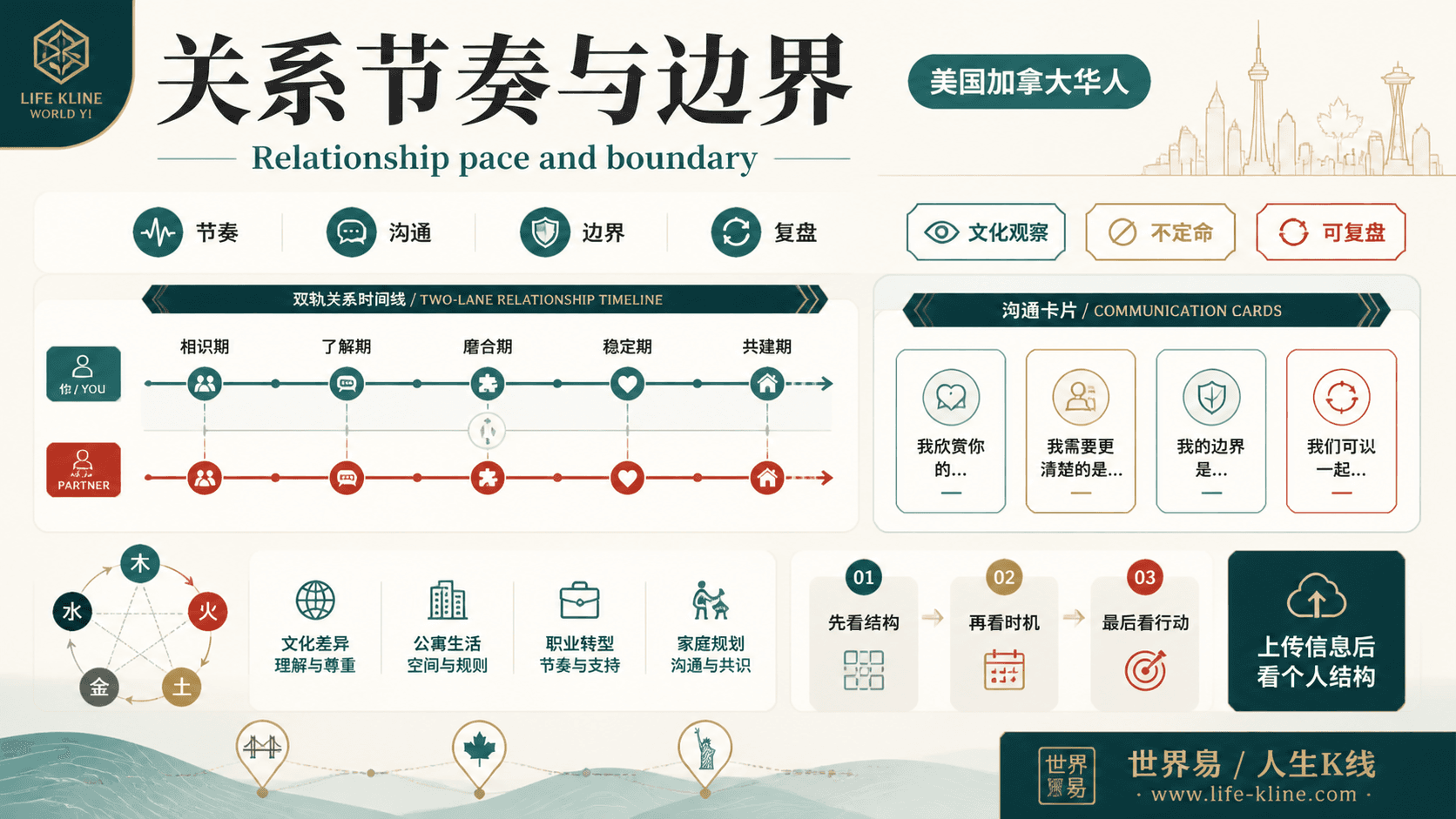
关系节奏与边界|美国加拿大华人
这张图把《Complete Guide to Ten Gods Query in BaZi: Analyzing the Core Relationship Between Day Master and Yong Shen》里的命理概念转成关系、边界和应用场景,适合先看图建立结构,再回到知识文章正文理解细节。
关系节奏与边界不应被写成固定结论。更适合美国加拿大华人的读法,是把传统术语翻译成结构、时机、环境、行动和复盘。
查看图片解读