Summer Solstice: Key Node in BaZi Chart Casting and Month Building Conversion
As the fourth solar term of summer, Summer Solstice marks the Sun's ecliptic longitude at 90 degrees, the longest day, and the transition from Yang to Yin. In BaZi metaphysics, it serves as the true dividing point for casting the month pillar and starting the Da Yun, determined by the solar term switch rather than the lunar new moon.
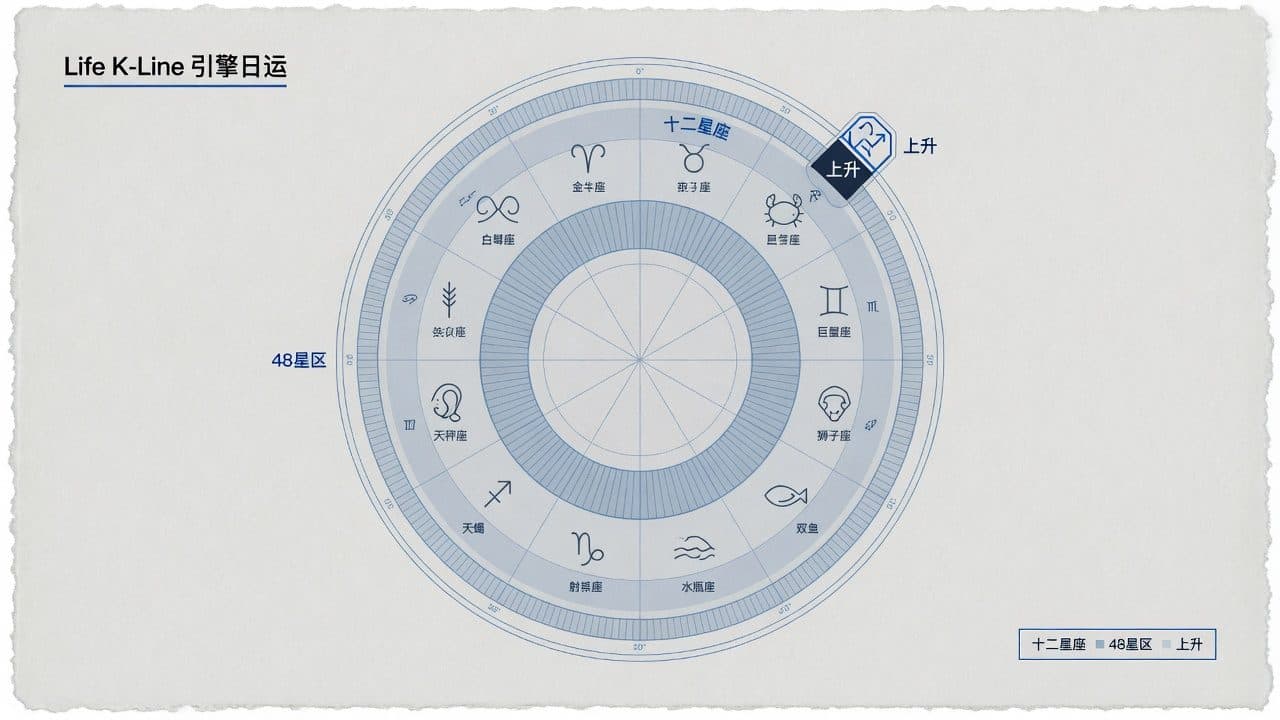
星座百科总览:把抽象判断拆成可看见的结构关系。
Concept Definition
Summer Solstice is the fourth solar term of summer, typically occurring between June 21 and 22 of the Gregorian calendar. From an astronomical perspective, it marks the position where the Sun reaches 90 degrees of ecliptic longitude. At this time, the Northern Hemisphere experiences the longest day of the year and the shortest night, signifying that Yang energy has reached its peak state.
In the temporal system of metaphysics, Summer Solstice plays a decisive role in division. It is the true dividing point for casting the month pillar and starting the Da Yun. Metaphysical chart casting relies on the exchange of solar terms; the replacement of the month pillar is based on the exact moment of the solar term, not the common lunar first day. This means that the transition from the end of the fifth lunar month to the beginning of the sixth must cross the Summer Solstice time point to complete the Month Building conversion.
As one of the 24 equal divisions of the solar ecliptic, the exact moment of Summer Solstice is crucial. Since the Gregorian date fluctuates by 1 to 2 days annually, and the solar term exchange occurs at a specific hour, precise calculation is required during chart casting. Only by accurately mastering the Summer Solstice moment can one correctly determine whether the previous month is Wu Month or the next month, ensuring the accuracy of Da Yun arrangement and avoiding deviations in the analysis of the life chart due to time errors.
Traditional Metaphysical Significance
In the traditional metaphysical system, Summer Solstice corresponds to the Month Building at Wu position, belonging to the Fire element, and is the first month of summer. At this time, solar energy is most vigorous, and all things flourish to their utmost. As the saying goes, 'Yang reaches its peak and Yin is born,' predicting that after things reach their peak, they will soon turn towards decline or transformation. This law of Yin and Yang fluctuation was deeply perceived by ancients and integrated into the metaphysical model.
The Month Building at Wu means Wu Fire is in command, with Fire energy rising upwards. In BaZi analysis, the month before and after Summer Solstice often has the Fire element dominating the life chart. For those who favor Fire, their fortune during this time may reach its zenith; for those who dislike Fire, they may face a situation of multiplied pressure. This change in the strength of the Five Elements directly affects the behavior tendencies and fortune direction of the chart owner during this time period.
The Yin-Yang conversion characteristic of Summer Solstice also gives it special symbolic meaning. As the node where Yang turns to Yin, it prompts the chart owner that when reaching a peak in career or life planning, one should not be too greedy for advancement but should consider收敛 (retraction) and settling. Metaphysical classics often use the opportunity of Summer Solstice to warn people to know when to stop to avoid danger, follow the laws of nature's operation, remain sober in favorable conditions, and prepare for subsequent transformations.
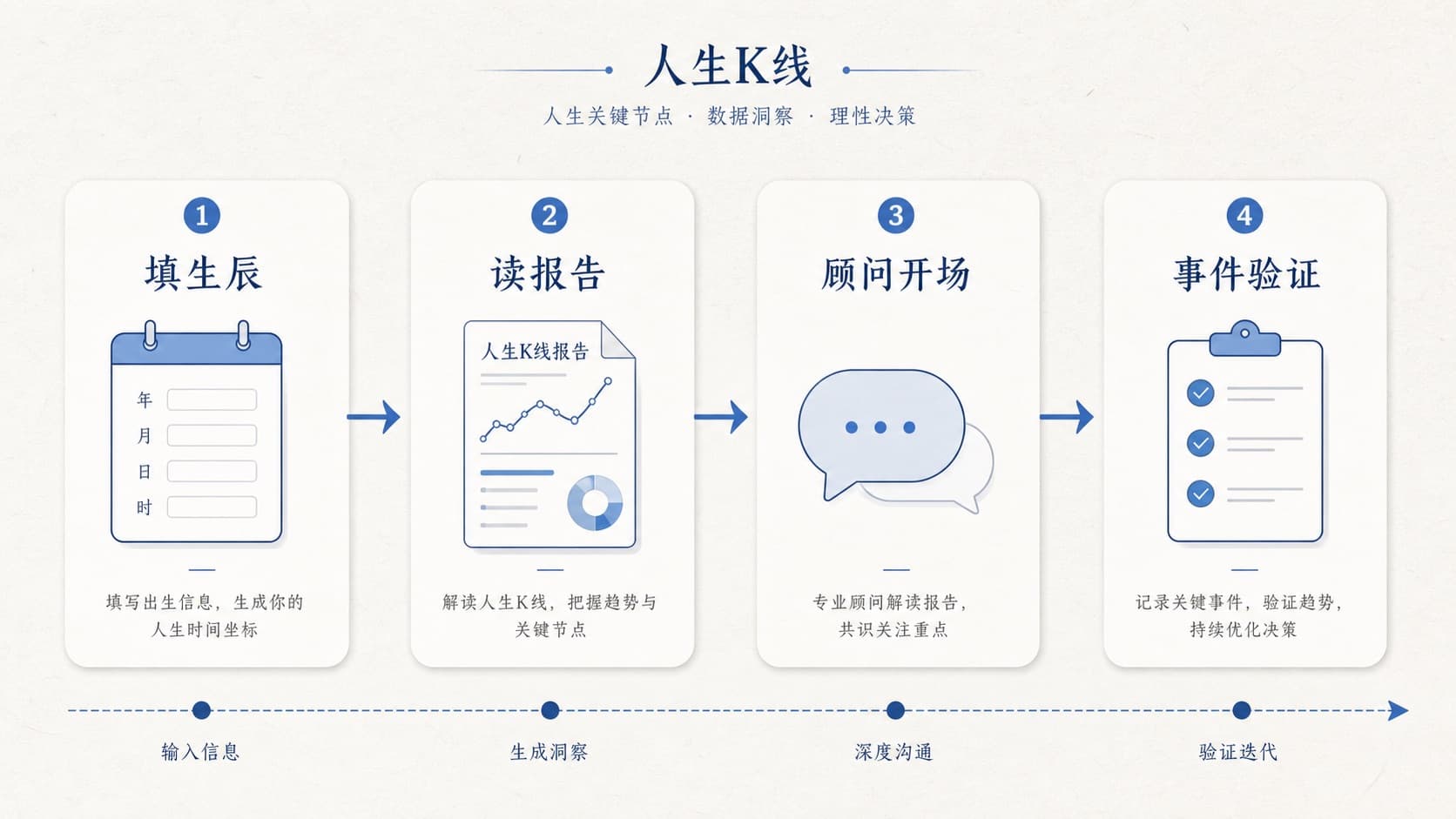
从生辰到可执行判断:把抽象判断拆成可看见的结构关系。
Practical Configuration and Interpretation
In practical chart casting, determining whether the chart owner's birth month crosses Summer Solstice is the primary step. If born before Summer Solstice, one still belongs to the previous month; if born after Summer Solstice, one enters the next month. For example, if born at the end of the fifth lunar month, one must precisely check whether the solar term moment of June 21 or 22 has passed to determine if the month pillar is Wu Wu or Ji Wei.
Da Yun arrangement also strictly follows the Summer Solstice dividing point. The Da Yun starting time is closely related to the exchange of solar terms. Once crossing Summer Solstice, the month command changes, the strength of the Five Elements changes accordingly, and this affects the constraining relationship of the Da Yun on the BaZi life chart. During chart casting, the solar term moment must be calculated precisely to the minute to avoid errors in Da Yun attribution due to vague dates, which would cause the foundation of the entire chart analysis to become unstable.
When analyzing this special time point of Summer Solstice, focus should be placed on the strength and state of the Fire element in the life chart. If the original chart has strong Fire, the added Fire energy during Summer Solstice may trigger impetuous personality or career explosion; if the original chart has weak Fire, one may feel immense pressure. At the same time, the Day Pillar and Hour Pillar must be combined to judge whether the chart owner is going with the flow or resisting the trend at this node, thereby providing more precise fortune advice.
Common Misconceptions
The most common misconception is to mistakenly take the lunar first day as the starting point of BaZi chart casting. Many people are accustomed to changing the month based on the lunar calendar, but this is completely wrong in BaZi metaphysics. BaZi uses solar terms as the boundary, while the lunar first day is merely the starting point of the month in folk customs, unrelated to astronomical operation and Five Elements flow. Ignoring this point will lead to errors in the month pillar, causing the entire chart to be wrong.
Another misconception is believing that Fire energy naturally weakens after Summer Solstice. In fact, although Summer Solstice is the peak of Yang, Fire energy is still in its peak state and does not immediately decline. It is only after Xiao Shu that the stage of gradually retreating Fire energy begins. Therefore, when casting charts around Summer Solstice, Wu Fire should still be regarded as the commanding prosperous spirit, and its power should not be weakened prematurely, otherwise it will lead to errors in judging Five Elements generation and control.
FAQ
Question: Why is BaZi chart casting based on solar terms rather than the lunar first day? Answer: BaZi metaphysics is based on astronomical calendars, reflecting the laws of the Sun's movement and the Earth's revolution. Solar terms are the true nodes of solar energy changes, while the lunar first day is only a man-made agreed date that cannot accurately correspond to the changes in Five Elements strength and weakness, so the switch of solar terms must be the standard.
Question: If born on the day of Summer Solstice or nearby, how to determine the month pillar? Answer: The specific hour of the solar term exchange must be calculated precisely. If the birth time is before the solar term exchange point, it belongs to the previous month; after that, it belongs to the next month. The Gregorian date fluctuates annually, so one must consult the precise solar term moment table for that year and cannot judge roughly based solely on the calendar date.
本文含 2 张图解(封面/结构/时位/行动或风险)。图解用于建立判断框架,不构成宿命结论; 个人决策请结合测算报告与工具验证。