Zi Wei Main Star Po Jun: The Seventh Star of the Big Dipper and the Fate Analysis of Creating a New Situation
把这篇文章落到自己身上验证:先看结构,再进入个人分析,不做泛泛阅读。
Concept Definition
Po Jun is an important star among the fourteen main stars in Zi Wei Dou Shu, ranked as the seventh star of the Big Dipper. Its Five Element attribute is Yin Water, and its transforming qi is called Hao (consumption), hence it is also known as the Hao star. Po Jun is characterized by strong variability, symbolizing the power of breaking the old and establishing the new, as well as creating new situations. Due to its hao star nature, Po Jun is often associated with transformation and financial loss in fate analysis.
In the Zi Wei Dou Shu natal chart, Po Jun’s manifestations vary depending on the twelve palaces it occupies and the changes of the Four Transformations—Hua Lu (transforming prosperity), Hua Quan (transforming authority), Hua Ke (transforming fame), and Hua Ji (transforming taboo). Po Jun is not only analyzed independently but also needs to be combined with auxiliary stars such as Zuo Fu, You Bi, Wen Chang, Wen Qu, Tian Kui, and Tian Yue to form a complete chart pattern and accurately determine the individual’s destiny trends.
Traditional Fate Meaning
As one of the seven stars of the Big Dipper, Po Jun is traditionally regarded in classical texts as a symbol of strong destruction and regeneration. Its Yin Water Five Element attribute endows Po Jun with a quality of softness combined with strength, capable of dissolving old obstacles while representing the flow of emotions and wisdom. The hao star characteristic implies a potential risk of resource consumption and financial loss, but it is also a driving force for transformation and innovation.
Po Jun’s mutable nature means it governs major turning points and breakthroughs in life, suitable for pioneering careers and overcoming difficulties, though caution is needed regarding possible financial setbacks. Traditional fate analysis emphasizes that Po Jun’s auspiciousness or inauspiciousness must be judged in combination with the Four Transformations and auxiliary stars to avoid biased interpretations.
Practical Configuration and Interpretation
In Zi Wei Dou Shu practice, when Po Jun is located in different palaces and combined with the Four Transformations—Hua Lu, Hua Quan, Hua Ke, and Hua Ji—fate analysts judge its auspiciousness accordingly. Hua Lu generally enhances wealth and popularity, Hua Quan increases power and initiative, Hua Ke brings reputation and recognition, while Hua Ji often indicates decline and obstacles. Different Four Transformations of Po Jun alter the subject’s pioneering ability and financial risk accordingly.
Moreover, Po Jun must be observed together with auxiliary stars such as Zuo Fu, You Bi, Wen Chang, Wen Qu, Tian Kui, and Tian Yue. The auspicious or inauspicious nature of these auxiliaries influences Po Jun’s expression, either strengthening or moderating its characteristic of breaking the old and establishing the new. In practice, fate analysts comprehensively consider Po Jun’s star nature, Four Transformations, and auxiliary stars to accurately grasp the subject’s trend of change and destiny direction.
Common Misconceptions
Po Jun is often mistakenly regarded as purely an inauspicious or financial loss star. In reality, its mutable and hao star nature brings both risks and opportunities for creation and transformation. Ignoring the comprehensive analysis of the Four Transformations and auxiliary stars easily leads to biased interpretations and misjudgments of Po Jun’s auspiciousness.
Another misconception is that Po Jun is only suitable for breaking the old without constructive significance. In fact, Po Jun governs breaking the old and establishing the new, acting as a pioneer of transformation with strong abilities to create new situations. Correct understanding of Po Jun’s dual attributes allows it to play a positive role in fate interpretation and practical life application.
FAQ
Question: Why is Po Jun called the Hao star? Answer: Po Jun belongs to the Yin Water Five Element and its transforming qi is Hao, meaning it has the characteristic of consuming resources and energy, hence it is called the Hao star.
Question: How to determine the auspiciousness or inauspiciousness of Po Jun in a natal chart? Answer: It requires combining the specific palace where Po Jun is located and its Four Transformations (Hua Lu, Hua Quan, Hua Ke, Hua Ji), along with auxiliary star cooperation, to accurately judge its fortune.
Question: Does Po Jun always bring financial loss? Answer: Po Jun’s hao star nature tends to carry financial loss risks, but the actual situation depends on a comprehensive analysis of the Four Transformations and auxiliary stars; it is not an absolute symbol of financial loss.
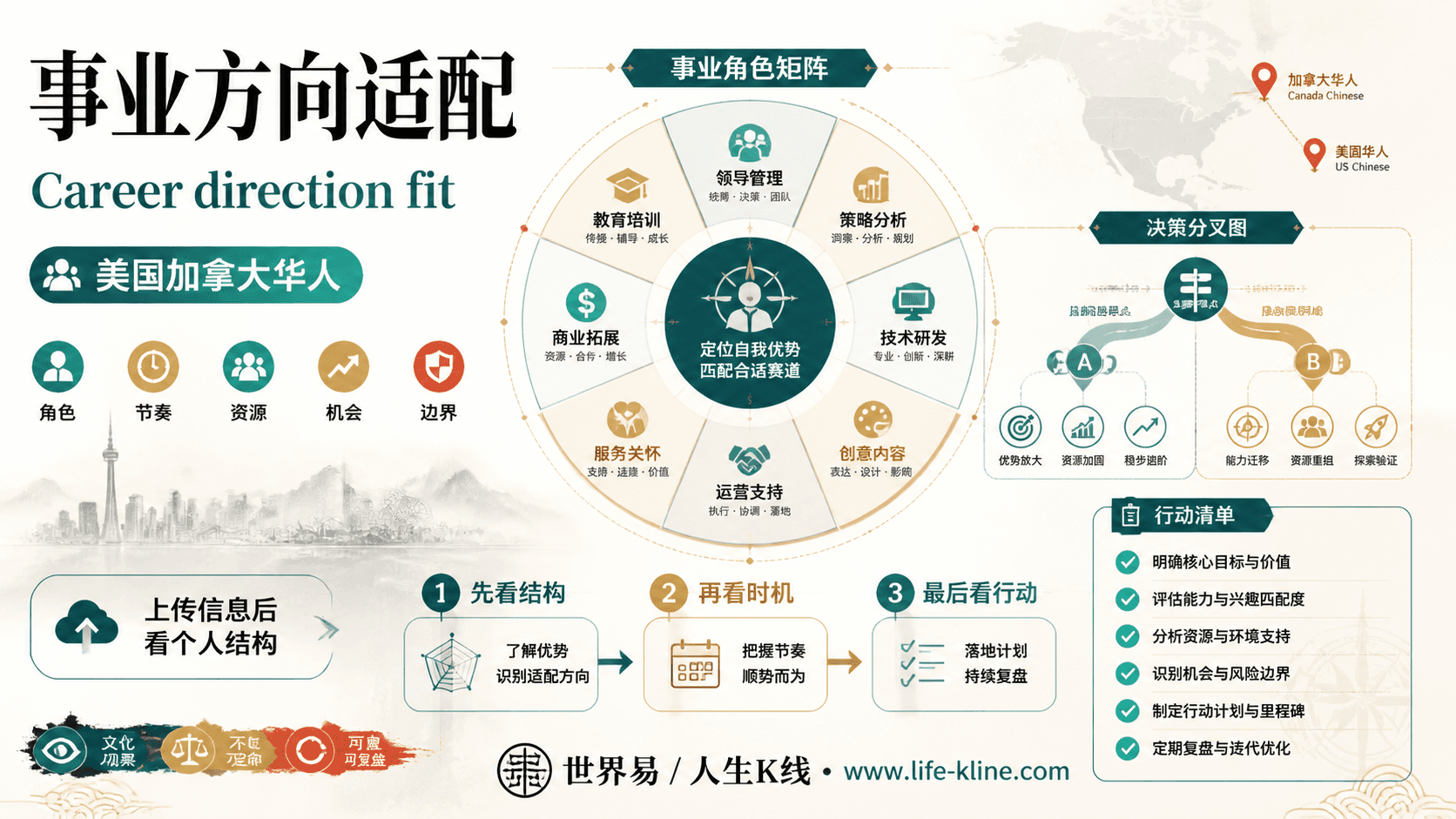
事业方向适配|美国加拿大华人
这张图把《Zi Wei Main Star Po Jun: The Seventh Star of the Big Dipper and the Fate Analysis of Creating a New Situation》里的命理概念转成关系、边界和应用场景,适合先看图建立结构,再回到知识文章正文理解细节。
事业方向适配不应被写成固定结论。更适合美国加拿大华人的读法,是把传统术语翻译成结构、时机、环境、行动和复盘。
查看图片解读