Astrological Attributes and Practical Analysis of the Lian Zhen Zi Wei Main Star
把这篇文章落到自己身上验证:先看结构,再进入个人分析,不做泛泛阅读。
Concept Definition
Lian Zhen is one of the fourteen main stars in Zi Wei Dou Shu, positioned as the fifth star of the Big Dipper, with the Five Element attribute of Yin Fire. Its transformed Qi is called Qiu (囚, Imprisoned), representing a special state of the star in astrological analysis. The personality traits of the Lian Zhen star are extremely strong, with significant contrasts between auspicious and inauspicious outcomes. It possesses the charm of a secondary Peach Blossom star while also being regarded as a star associated with legal disputes, indicating potential conflicts and challenges.
In the Zi Wei Dou Shu natal chart, the influence of the Lian Zhen star depends not only on its inherent nature but also on its interaction with the Four Transformations (Si Hua)—Hua Lu (化禄, Wealth Transformation), Hua Quan (化权, Authority Transformation), Hua Ke (化科, Merit Transformation), and Hua Ji (化忌, Obstruction Transformation)—to determine its auspiciousness or inauspiciousness. The manifestation of Lian Zhen varies across different palaces, reflecting different aspects of the subject’s life.
Furthermore, Lian Zhen often works in conjunction with auxiliary stars such as Zuo Fu (左辅), You Bi (右弼), Wen Chang (文昌), Wen Qu (文曲), Tian Kui (天魁), and Tian Yue (天钺), collectively forming a complete natal chart pattern and creating rich and complex astrological relationships. This cooperative relationship is a crucial aspect of Zi Wei Dou Shu analysis.
Traditional Astrological Meaning
As the fifth star of the Big Dipper, Lian Zhen’s Yin Fire attribute symbolizes a restrained yet intense energy, representing the individual’s inner passion and conflict. In traditional astrology, Lian Zhen is known as a secondary Peach Blossom star, implying strong attractiveness and variability in emotional and interpersonal relationships, often accompanied by romantic ups and downs and social disputes.
As a star of legal disputes, Lian Zhen is also seen as a symbol that may trigger lawsuits, conflicts, or social turmoil. Its strong contrasts between auspiciousness and inauspiciousness mean it can bring both power and fame as well as trouble and obstacles, reflecting a complex dual nature.
Various Zi Wei Dou Shu schools throughout history emphasize the multifaceted characteristics of Lian Zhen, noting that its position in the natal chart and its combination with the Four Transformations determine its specific auspicious or inauspicious manifestations. The Yin Fire nature of Lian Zhen is also often used to explain the subject’s resolute, decisive, and tenacious temperament.
Practical Configuration and Interpretation
In practical Zi Wei Dou Shu applications, judging the auspiciousness or inauspiciousness of Lian Zhen must consider the changes in the Four Transformations. Hua Lu (Wealth Transformation) represents smooth wealth and prosperity; Hua Quan (Authority Transformation) symbolizes authority and control; Hua Ke (Merit Transformation) stands for reputation and talent; Hua Ji (Obstruction Transformation) often indicates obstacles and troubles. When Lian Zhen is transformed into Hua Lu or Hua Quan, it often mitigates its legal dispute attributes and brings positive effects.
The palace where Lian Zhen is located also significantly affects its expression. For example, when Lian Zhen is in the Life Palace (Ming Gong), the subject tends to have a strong-willed personality with high independence and leadership qualities; if located in the Spouse Palace (Qi Fu Gong), it may indicate emotional fluctuations or marital challenges. The cooperation of auxiliary stars is also crucial; the presence of auspicious stars such as Zuo Fu and You Bi can soften Lian Zhen’s negative energy and enhance the overall auspiciousness of the natal chart.
Astrologers analyzing a natal chart must comprehensively consider Lian Zhen’s Five Element Yin Fire attribute, its transformed Qi state as Qiu (Imprisoned), and the Four Transformations, combined with the configuration of auxiliary stars, to accurately assess the subject’s fortune fluctuations, personality traits, and potential risks. This integrated analytical approach reflects the intricacy and sophistication of Zi Wei Dou Shu astrology.
Common Misconceptions
Lian Zhen is often mistakenly regarded as purely an inauspicious star. In fact, its auspicious and inauspicious contrasts are significant and require comprehensive judgment based on the Four Transformations and palace positions. Ignoring positive transformations such as Hua Lu and Hua Quan can lead to one-sided interpretations and misjudgment of the subject’s true fortune.
Another misconception is equating Lian Zhen’s secondary Peach Blossom and legal dispute attributes simply with negative influences. The complexity of Lian Zhen lies in its potential to bring both romantic opportunities and life challenges that foster growth. Correct astrological analysis should focus on its multifaceted nature rather than a single label.
FAQ
Question: What specific effects does Lian Zhen’s Yin Fire attribute have? Answer: Yin Fire represents a restrained yet intense energy, reflecting passion, decisiveness, and resoluteness in the subject’s personality, while also potentially causing emotional fluctuations and conflicts.
Question: How do the Four Transformations affect Lian Zhen’s auspiciousness? Answer: Hua Lu, Hua Quan, Hua Ke, and Hua Ji represent different auspicious and inauspicious factors. When Lian Zhen transforms into Hua Lu or Hua Quan, its auspicious aspects are enhanced; Hua Ji often brings obstacles. The combined effect of the Four Transformations determines Lian Zhen’s ultimate manifestation in the natal chart.
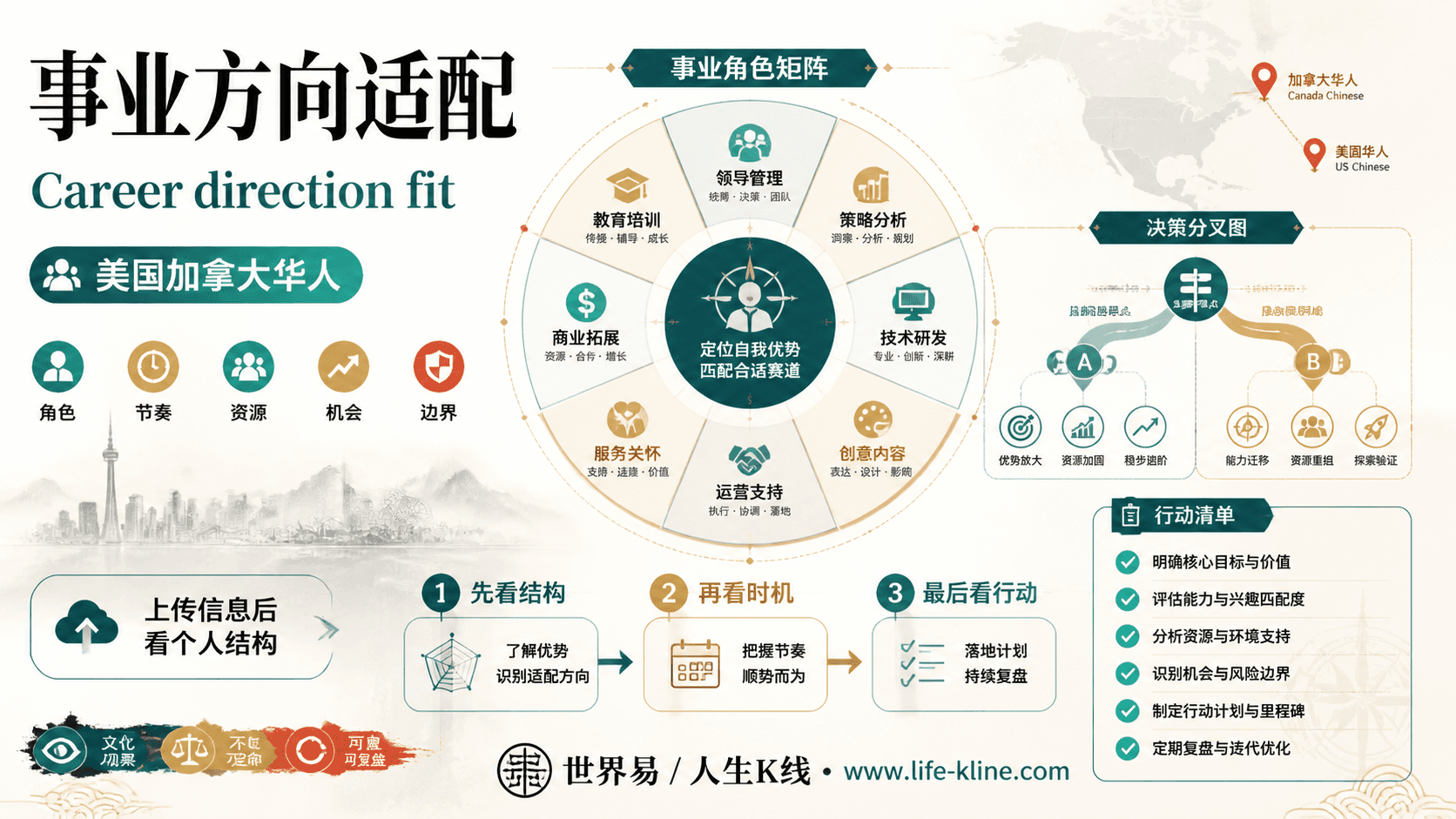
事业方向适配|美国加拿大华人
这张图把《Astrological Attributes and Practical Analysis of the Lian Zhen Zi Wei Main Star》里的命理概念转成关系、边界和应用场景,适合先看图建立结构,再回到知识文章正文理解细节。
事业方向适配不应被写成固定结论。更适合美国加拿大华人的读法,是把传统术语翻译成结构、时机、环境、行动和复盘。
查看图片解读