Astrological Characteristics and Practical Applications of Zi Wei Major Star Tian Xiang
把这篇文章落到自己身上验证:先看结构,再进入个人分析,不做泛泛阅读。
Concept Definition
Tian Xiang is one of the fourteen major stars in Zi Wei Dou Shu, ranked as the fifth star of the Southern Dipper, and belongs to the Five Elements Yang Water. Its transformed energy is called Yin (印), classified as a Yin star, and simultaneously holds the function of official career (Guan Lu). Tian Xiang symbolizes steadiness and supportive talent, emphasizing roles of assistance and support, giving it a unique position in metaphysical studies.
As a major star, Tian Xiang plays a significant role in the natal chart. Its qualities and influence manifest differently through the combination with the Four Transformations of Hua Lu (化禄), Hua Quan (化权), Hua Ke (化科), and Hua Ji (化忌), resulting in various auspicious or inauspicious outcomes. The star’s nature is stable, often representing rationality, practicality, and prudence.
Moreover, Tian Xiang frequently cooperates with auxiliary stars such as Zuo Fu (左辅), You Bi (右弼), Wen Chang (文昌), Wen Qu (文曲), Tian Kui (天魁), and Tian Yue (天钺), forming a complete natal chart pattern. This cooperation decisively affects the overall aura and fortune changes of the chart.
Traditional Metaphysical Meaning
As a Yin star, Tian Xiang governs official career and positions, symbolizing an individual’s stable and powerful supportive role in society and the workplace. Ancient texts often regard Tian Xiang as a symbol of someone who handles affairs steadily, assists leadership, and maintains order, reflecting its important status in teams and organizations.
Belonging to Yang Water in the Five Elements, Tian Xiang possesses a characteristic of gentle strength, combining fluidity and inclusiveness. This enables people influenced by Tian Xiang to affect others with a mild attitude, being adept at mediating conflicts and promoting cooperation. The presence of this star emphasizes the nourishing aspect of the Yin star and the stability of official career, reflecting the traditional metaphysical importance of the mutual generation between official stars and Yin stars.
Within the Zi Wei Dou Shu system, the auspiciousness of Tian Xiang depends not only on its intrinsic star nature but also requires comprehensive judgment based on the Four Transformations. Hua Lu, Hua Quan, Hua Ke, and Hua Ji respectively represent different auspicious or inauspicious information, influencing Tian Xiang’s performance and function in the natal chart.
Practical Configuration and Interpretation
In actual natal chart configurations, the influence of Tian Xiang varies depending on the palace (Gong 位) it occupies. Combined with the Four Transformations, Hua Lu enhances Tian Xiang’s auspicious meaning and strengthens the Yin star’s power; Hua Quan grants leadership and decision-making abilities; Hua Ke represents reputation and recognition; while Hua Ji may bring obstacles and challenges.
Auxiliary stars such as Zuo Fu and You Bi are especially critical in cooperation with Tian Xiang. These stars often assist Tian Xiang in manifesting steadiness and supportive characteristics, creating complementary forces within the chart. The addition of Wen Chang and Wen Qu can enhance wisdom and literary talent, while Tian Kui and Tian Yue increase nobleman luck, collectively boosting the overall strength of the destiny configuration.
Therefore, when interpreting Tian Xiang in practice, it is essential to comprehensively consider its palace position, Four Transformations, and auxiliary star combinations to accurately judge its auspiciousness and specific influence, thereby providing precise metaphysical guidance to the chart owner.
Common Misconceptions
Some metaphysics enthusiasts mistakenly believe that Tian Xiang alone can determine the fortune’s auspiciousness or inauspiciousness, neglecting the importance of the Four Transformations and auxiliary star cooperation. In reality, Tian Xiang’s auspiciousness must be analyzed comprehensively with these factors to reach accurate conclusions.
Another common misconception is to simply equate Tian Xiang with a symbol of power, overlooking its essence as a Yin star and supportive talent. Tian Xiang emphasizes steadiness and assistance rather than pure power struggle, which requires special attention during chart interpretation.
FAQ
Question: Why is the Five Elements attribute of Tian Xiang important? Answer: Tian Xiang belongs to Yang Water, which has fluidity and inclusiveness. This influences Tian Xiang’s expression of steadiness and supportive character in the natal chart, reflecting its nourishing role as a Yin star.
Question: How to judge the auspiciousness of Tian Xiang? Answer: The auspiciousness of Tian Xiang requires combining the Four Transformations of Hua Lu, Hua Quan, Hua Ke, and Hua Ji, along with reference to auxiliary star cooperation and the palace it occupies. Only through comprehensive analysis can an accurate judgment be made.
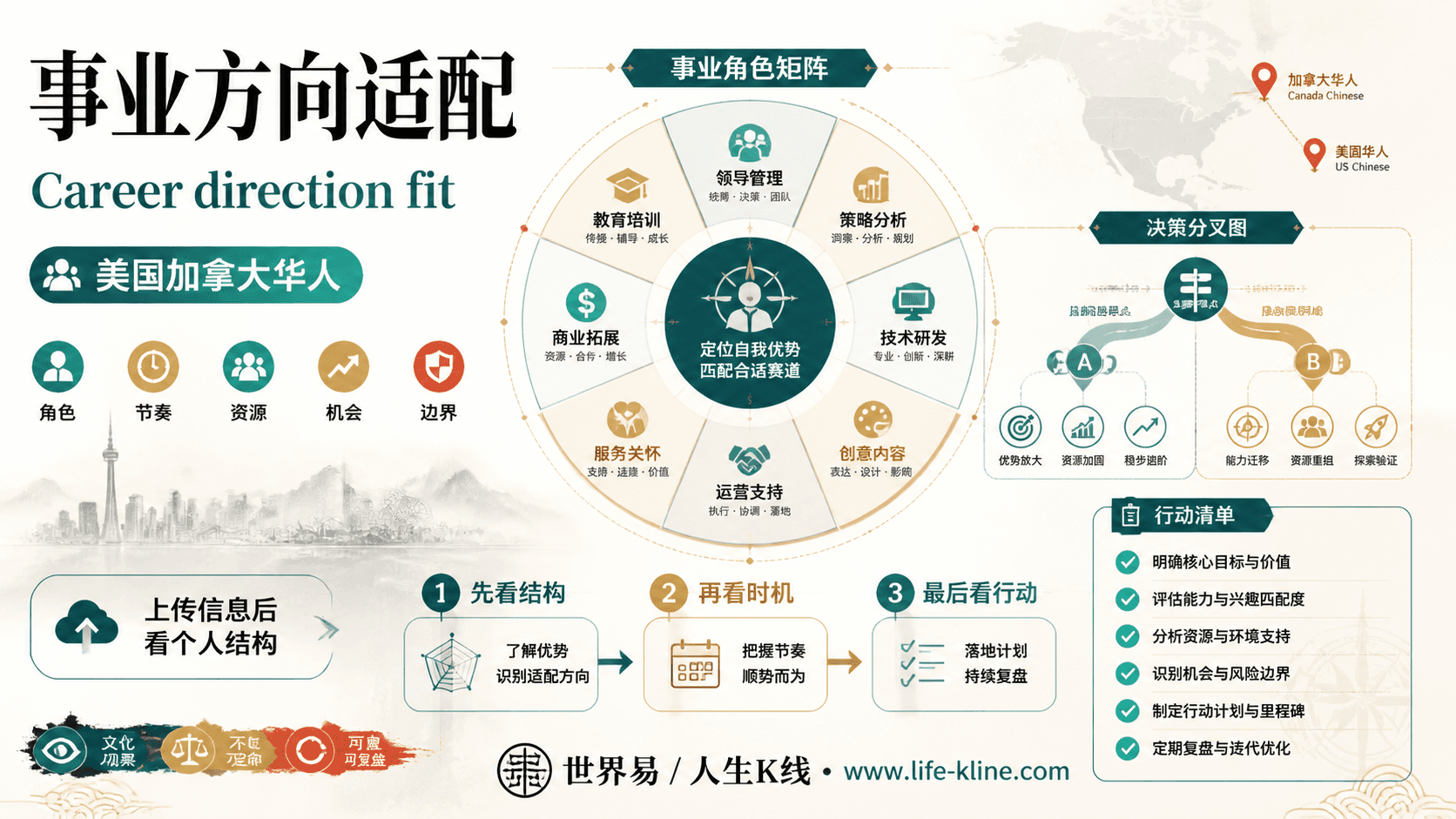
事业方向适配|美国加拿大华人
这张图把《Astrological Characteristics and Practical Applications of Zi Wei Major Star Tian Xiang》里的命理概念转成关系、边界和应用场景,适合先看图建立结构,再回到知识文章正文理解细节。
事业方向适配不应被写成固定结论。更适合美国加拿大华人的读法,是把传统术语翻译成结构、时机、环境、行动和复盘。
查看图片解读