The 'Shou' (收) in the Twelve Gods of Jianchu: Detailed Explanation on Wealth Accumulation and Date Selection Applications
把这篇文章落到自己身上验证:先看结构,再进入个人分析,不做泛泛阅读。
你现在搜索的,
其实是一个要落到自己身上的判断。
当前页面主要回答「Twelve Gods of Jianchu」这类搜索问题;真正有价值的下一步是把这套结构带进自己的报告、工具与案例验证。
Concept Definition
'Shou' (收) is one of the Twelve Gods of Jianchu in traditional Chinese metaphysics, symbolizing harvest and accumulation. As a symbol of temporal auspiciousness and inauspiciousness, the 'Shou' god primarily governs wealth gathering and blessing reception, emphasizing the consolidation and accumulation of existing achievements. It embodies the process of obtaining and internalizing wealth and blessings from external sources and holds a unique position in date selection studies.
The Twelve Gods of Jianchu form the core content of the ancient date selection system, with each day corresponding to a specific divine influence that guides people in choosing appropriate times for various activities. Days governed by the 'Shou' god are commonly regarded as suitable for population increase and wealth accumulation—that is, for recruiting personnel, accumulating wealth, and stabilizing family enterprises.
At the same time, the 'Shou' god has clear taboos, primarily advising against travel and lending. These taboos reflect the 'Shou' god’s emphasis on preservation and accumulation, avoiding wealth and blessings loss caused by going out or extending loans.
Traditional Metaphysical Significance
In traditional metaphysics, the 'Shou' god represents the stage of harvest, implying gathering and accumulation. It involves not only the accumulation of material wealth but also the reception of blessings, symbolizing the harvest and consolidation of previous efforts. Therefore, the 'Shou' god is regarded as an auspicious time to end expansion and begin summarizing and consolidating.
Ancient texts recording the Twelve Gods of Jianchu explicitly state that the 'Shou' god day is favorable for 'population increase and wealth accumulation,' reflecting ancient understanding of social and economic rhythms. Choosing to conduct related affairs on a 'Shou' god day aligns with the qi (energy) of heaven and earth, promoting growth in wealth and human resources.
Opposed to the 'Shou' god’s auspicious activities are the taboos of travel and lending, intended to prevent the loss of wealth and resources and emphasize the importance of preservation. Ancient date selectors would combine the day's 'Shou' god attribute with the individual's BaZi (Eight Characters) for a comprehensive judgment on the suitability of undertaking certain activities.
Practical Configurations and Interpretation
In modern date selection practice, using the 'Shou' god requires integrating the day’s Jianchu god information with the individual’s BaZi Heavenly Stems (天干) and Earthly Branches (地支) for comprehensive judgment. A day corresponding to the 'Shou' god indicates suitability for activities related to wealth gathering and blessing reception, such as business openings, recruitment, and contract signing, leveraging the qi of heaven and earth to promote success.
However, travel or lending activities that may cause resource outflow are unsuitable on 'Shou' god days. Practically, if plans involve travel or loans, one should avoid selecting a 'Shou' god day to prevent contradicting its nature of preservation and accumulation, which could lead to unfavorable outcomes.
Additionally, the 'Shou' god configuration applies to family and personal life planning, such as holding family gatherings or conducting wealth inventories on 'Shou' god days to promote harmony and stability. Date selection masters usually combine the 'Shou' god with other metaphysical factors to formulate more precise auspicious and inauspicious judgments.
Common Misconceptions
First, a common misunderstanding is to consider the 'Shou' god simply favorable for all matters related to harvest and wealth. In fact, the 'Shou' god emphasizes wealth gathering and blessing reception with a focus on preservation and consolidation, thus it is unsuitable for behaviors involving capital outflow, such as lending and long-distance travel. Misapplication may result in adverse effects.
Second, ignoring the integration with the individual’s BaZi and the day’s Heavenly Stems and Earthly Branches is another pitfall. Although the Jianchu gods are important, using them independently can cause deviations. The auspiciousness or inauspiciousness of the 'Shou' god must be judged in conjunction with the BaZi stems and branches for a holistic analysis; lacking this may lead to errors in date selection.
FAQ
Question: What activities are suitable on a 'Shou' god day? Answer: 'Shou' god days are suitable for wealth gathering, blessing reception, population increase, and related activities such as business openings, recruitment, and contract signing, which are beneficial for accumulating wealth and blessings.
Question: Why is travel and lending taboo on 'Shou' god days? Answer: The 'Shou' god emphasizes harvest and preservation; travel and lending may cause loss of wealth and resources, contradicting the essence of the 'Shou' god, hence they are considered taboos.
Question: How to use the 'Shou' god in conjunction with BaZi? Answer: Besides referencing the day’s Jianchu god, one should integrate the individual’s BaZi Heavenly Stems and Earthly Branches for comprehensive judgment to ensure date selection aligns with personal metaphysics, enhancing auspicious outcomes.
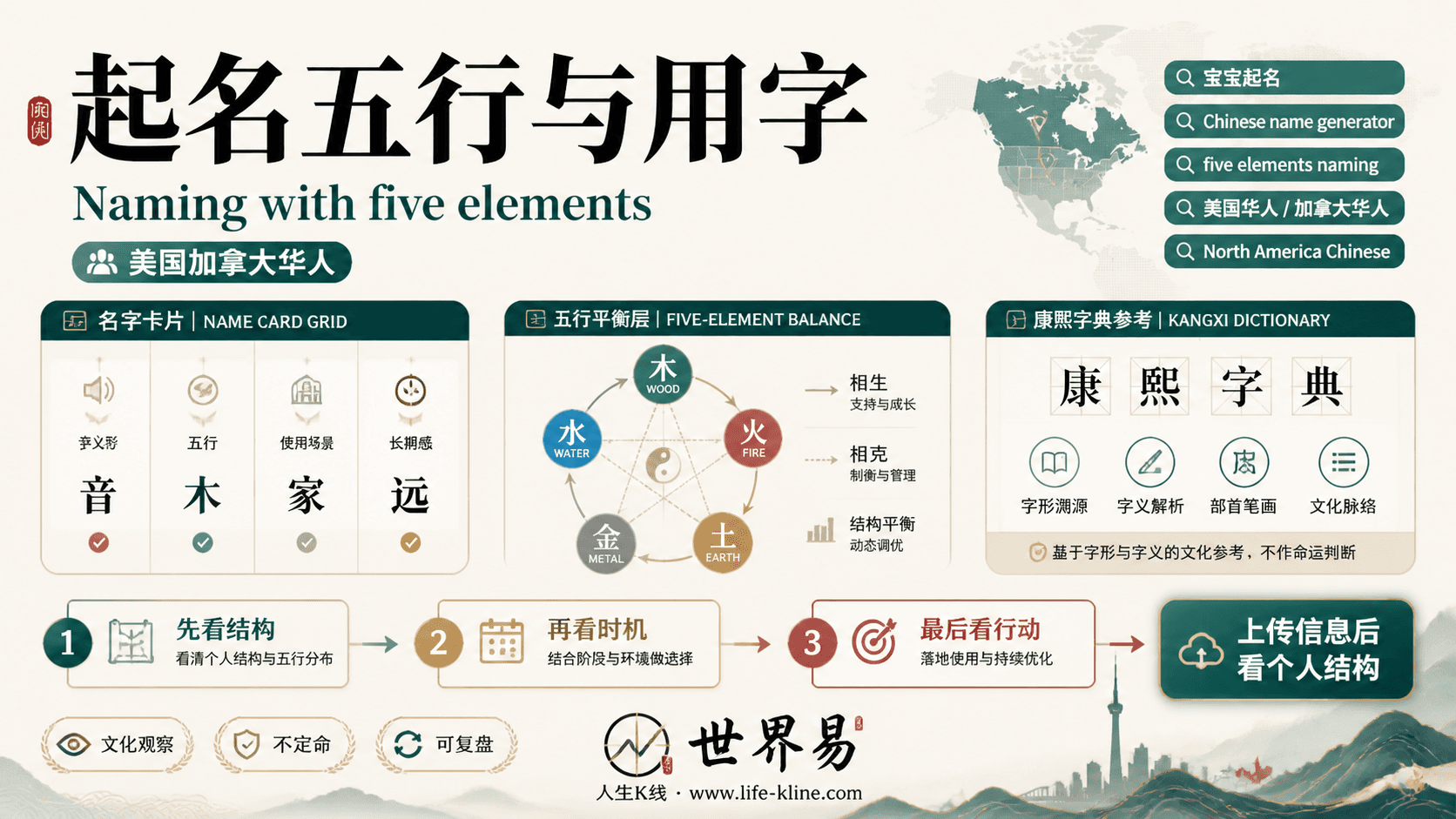
起名五行与用字|美国加拿大华人
这张图把《The 'Shou' (收) in the Twelve Gods of Jianchu: Detailed Explanation on Wealth Accumulation and Date Selection Applications》里的命理概念转成关系、边界和应用场景,适合先看图建立结构,再回到知识文章正文理解细节。
起名五行与用字不应被写成固定结论。更适合美国加拿大华人的读法,是把传统术语翻译成结构、时机、环境、行动和复盘。
查看图片解读