Analysis of Kai Shen in the Twelve Gods of Jianchu and Its Applications in Fate Studies
把这篇文章落到自己身上验证:先看结构,再进入个人分析,不做泛泛阅读。
Concept Definition
Kai Shen is an important deity among the traditional Chinese Jianchu Twelve Gods, representing initiation and openness. In ancient date selection systems, Kai Shen symbolizes the smooth progress and unblocking of matters, carrying a positive meaning of advancement and commencement. The Twelve Gods of Jianchu correspond to different divine spirits on each day; Kai Shen corresponds to a specific day, guiding the favorable and unfavorable activities for that day.
Specifically, Kai Shen governs smooth progress and cultural-educational activities, making it suitable for market openings, construction, and school enrollment. It emphasizes beginnings and smooth unfolding, thus regarded as an auspicious deity promoting career and academic development. At the same time, Kai Shen forbids groundbreaking and funerals, considering these activities incompatible with its nature and prone to adverse effects.
In practical application, the method of using Kai Shen is to check the corresponding favorable and unfavorable activities based on the day’s Jianchu God, then combine this with the Day Heavenly Stem and Earthly Branch and the individual’s overall BaZi situation for comprehensive date selection and fate judgment. This respects traditional solar terms and calendar systems while providing more precise guidance for personal activity arrangements.
Traditional Fate Significance
In traditional fate studies, Kai Shen symbolizes initiation and openness, reflecting the dynamic process of all things growing and developing in heaven and earth. It is not merely the temporal “beginning,” but also represents a state of smooth and unobstructed auspiciousness. Therefore, Kai Shen is suitable for activities requiring initiation and development, such as business openings, construction commencements, and academic enrollment.
Because Kai Shen carries cultural-educational attributes, it is also regarded as an auspicious deity promoting cultural dissemination and academic progress. Choosing a Kai Shen day for enrollment or document-related activities helps enhance learning outcomes and smooth completion of paperwork. Ancient texts often record that Kai Shen days are suitable for rituals, market openings, and other activities, reflecting its positive cultural origins.
The taboo against groundbreaking and funerals reflects that Kai Shen’s positive energy should not conflict with destructive or mourning activities. Groundbreaking involves disturbing the earth, and funerals relate to grief and endings, which contradict Kai Shen’s spirit of initiation and growth, potentially causing unfavorable energy and outcomes.
Practical Configuration and Interpretation
In practical date selection, first confirm whether the day’s Jianchu God is Kai Shen. If so, priority can be given to arranging activities such as market openings, construction, and enrollment. Combine the Five Elements attributes of the day’s Heavenly Stem and Earthly Branch with the individual’s BaZi favorable and unfavorable elements to judge whether the day fits the person’s fate needs, ensuring smooth execution of activities.
For example, if a person’s BaZi favors Wood and Fire, and the day’s Kai Shen day’s stems and branches promote or support Wood and Fire, it is more suitable to arrange opening-type activities like market openings or enrollment. Conversely, if the stems and branches clash or counteract, caution is advised in date selection or choosing another auspicious day.
Additionally, Kai Shen days forbid groundbreaking and funerals, so scheduling groundbreaking projects or funerals on such days is likely to cause adverse effects, disrupting the smoothness and auspicious energy of the activities. Date selectors should consider Kai Shen’s favorable and unfavorable activities to avoid inappropriate events on Kai Shen days, thereby maximizing the positive energy of Kai Shen.
Common Misconceptions
Some mistakenly believe Kai Shen days are suitable for all types of opening activities, overlooking the taboo against groundbreaking and funerals, leading to errors in date selection. In fact, although Kai Shen governs initiation, not all activities are appropriate; specific matters and BaZi must be comprehensively considered.
Another misconception is relying solely on the Jianchu God for date selection while ignoring the compatibility of the Day Heavenly Stem and Earthly Branch with the individual’s BaZi. Although Kai Shen is auspicious, if it conflicts with the person’s fate, it can bring unfavorable effects. Therefore, date selection should be holistic, avoiding mechanical application of the Twelve Gods of Jianchu.
FAQ
Question: What specific activities are suitable on Kai Shen days? Answer: Kai Shen governs initiation and cultural-education, suitable for market openings, construction, enrollment, and other opening-type activities, but forbids groundbreaking and funerals.
Question: How to combine Kai Shen with personal BaZi for date selection? Answer: First confirm that the day’s Jianchu God is Kai Shen, then combine the Day Heavenly Stem and Earthly Branch with the individual’s BaZi favorable and unfavorable elements to judge whether the day suits the planned activities, ensuring smoothness and auspiciousness.
Question: Why can’t Kai Shen and groundbreaking occur on the same day? Answer: Kai Shen governs initiation and smooth progress, while groundbreaking involves disturbing the earth; their natures conflict and can cause adverse effects, so groundbreaking is taboo on Kai Shen days.
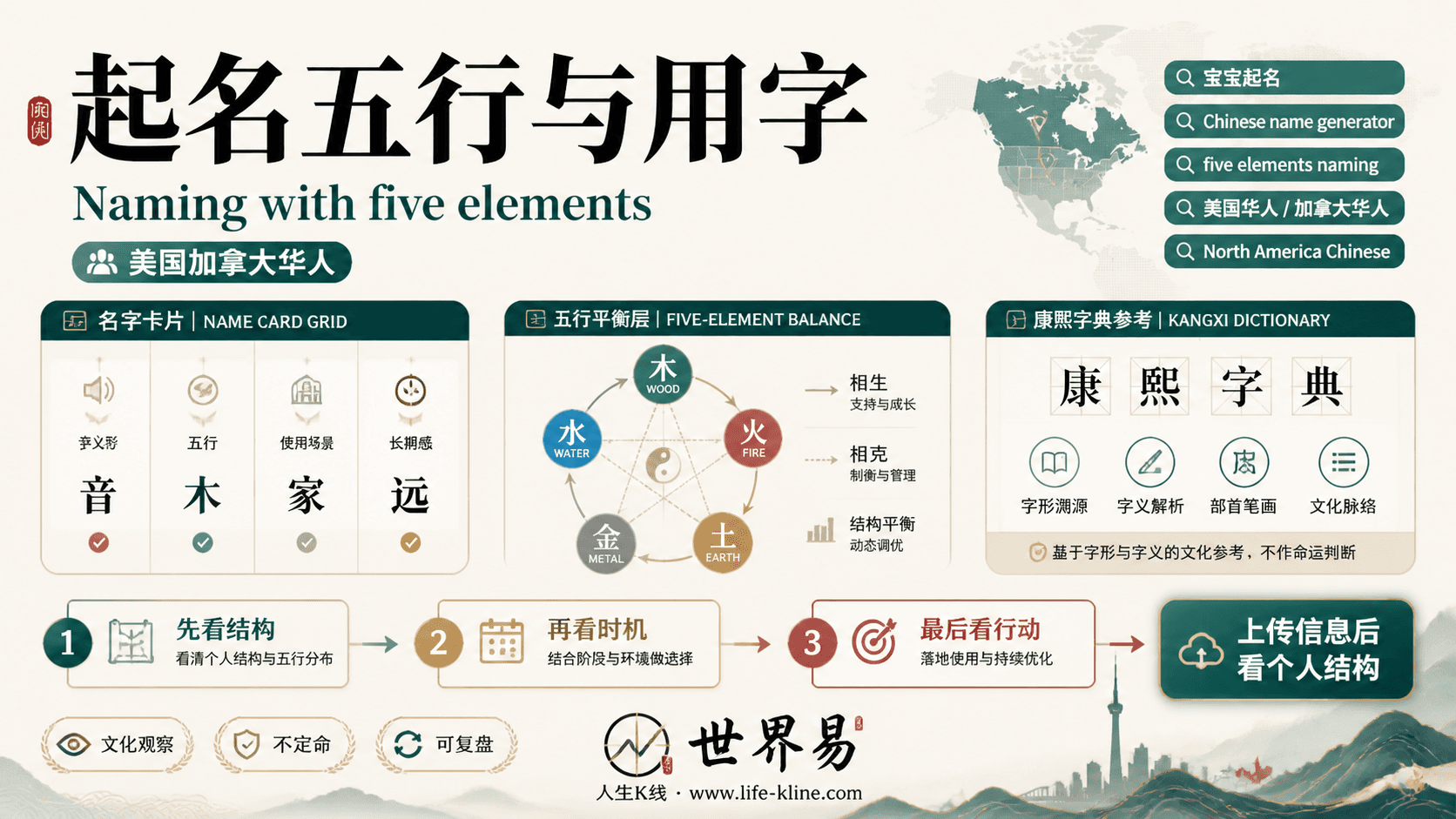
起名五行与用字|美国加拿大华人
这张图把《Analysis of Kai Shen in the Twelve Gods of Jianchu and Its Applications in Fate Studies》里的命理概念转成关系、边界和应用场景,适合先看图建立结构,再回到知识文章正文理解细节。
起名五行与用字不应被写成固定结论。更适合美国加拿大华人的读法,是把传统术语翻译成结构、时机、环境、行动和复盘。
查看图片解读