Ding in the Twelve Gods of Jianchu: Symbol of Stability and Decision
把这篇文章落到自己身上验证:先看结构,再进入个人分析,不做泛泛阅读。
Concept Definition
Ding is one of the members of the traditional Chinese Jianchu Twelve Gods system, representing one of the daily corresponding deities. Its core nature is stability and steadfastness, symbolizing the power of stability and decision. The Jianchu Twelve Gods form the core of the traditional Chinese date selection system, rotating daily to correspond to different deities that guide the auspicious and inauspicious activities of the day.
Specifically, Ding governs stability and decision, making it suitable for signing contracts, establishing rituals, and other occasions requiring certainty and firmness. Because it symbolizes stability, travel and medical activities are taboo on Ding days to avoid disrupting the stable energy of the day.
In practical application, people check whether the Jianchu deity of the day is Ding, combined with the day’s Heavenly Stem and Earthly Branch as well as the individual’s BaZi, to comprehensively judge the day’s auspiciousness and taboos, guiding the selection of favorable dates for important life events.
Traditional Metaphysical Meaning
As a deity of stability and steadfastness, Ding holds an important position in traditional metaphysics. It not only symbolizes firmness and durability but also represents decisiveness and certainty. Traditional date selection studies believe that by harnessing the power of the Ding deity, one can ensure a solid foundation for the undertaken affairs, avoiding repetition and change.
Because Ding governs stability and decision, it is especially suitable for contract signing, wedding rituals, and other ceremonial activities to ensure smooth and lasting outcomes. Traditionally, Ding days are regarded as auspicious for establishing relationships and rules.
However, precisely because it emphasizes stability, Ding days are also taboo for travel and medical treatments. Travel involves many uncontrollable changes, and medical matters involve bodily fluctuations, both of which conflict with the stable energy governed by Ding and may cause adverse effects.
Practical Configuration and Interpretation
In actual date selection, when the Jianchu deity of the day is Ding, priority should be given to arranging matters requiring certainty and stability, such as signing contracts, establishing agreements, and holding ceremonies. Conducting these activities on Ding days can leverage its stable and steadfast nature to enhance the solidity and authority of the affairs.
At the same time, it is advisable to avoid scheduling travel, medical treatments, and other highly variable activities. If travel or medical procedures are necessary, it is better to avoid Ding days and select days governed by more suitable Jianchu deities to ensure smoothness and safety.
Furthermore, by combining the day’s Heavenly Stem and Earthly Branch with the individual’s BaZi, one can further refine the applicable scope and taboos of Ding days for more precise date selection. For example, if the person’s chart favors stability, Ding days are more auspicious; otherwise, caution is warranted.
Common Misconceptions
Many people mistakenly believe that Ding days are suitable for all important matters. In fact, Ding mainly emphasizes stability and decision, suitable for contract signing and ritual confirmation, and is taboo for travel and medical treatments. Its application should not be blindly generalized.
Another misconception is neglecting the coordination with the day’s Heavenly Stem and Earthly Branch and the BaZi, relying solely on Ding day taboos for date selection. Traditional metaphysics stresses comprehensive judgment; deciding based only on the Ding deity may lead to inaccurate results.
FAQ
Question: What specific activities are suitable on Ding days? Answer: Ding days are suitable for signing contracts, confirming rituals, and other affairs requiring stability and decision, as they symbolize steadfastness and help ensure smooth outcomes.
Question: Why are travel and medical treatments taboo on Ding days? Answer: Travel and medical treatments involve dynamic changes that conflict with Ding’s nature of stability and steadfastness, easily disrupting the stable energy of the day and causing adverse effects.
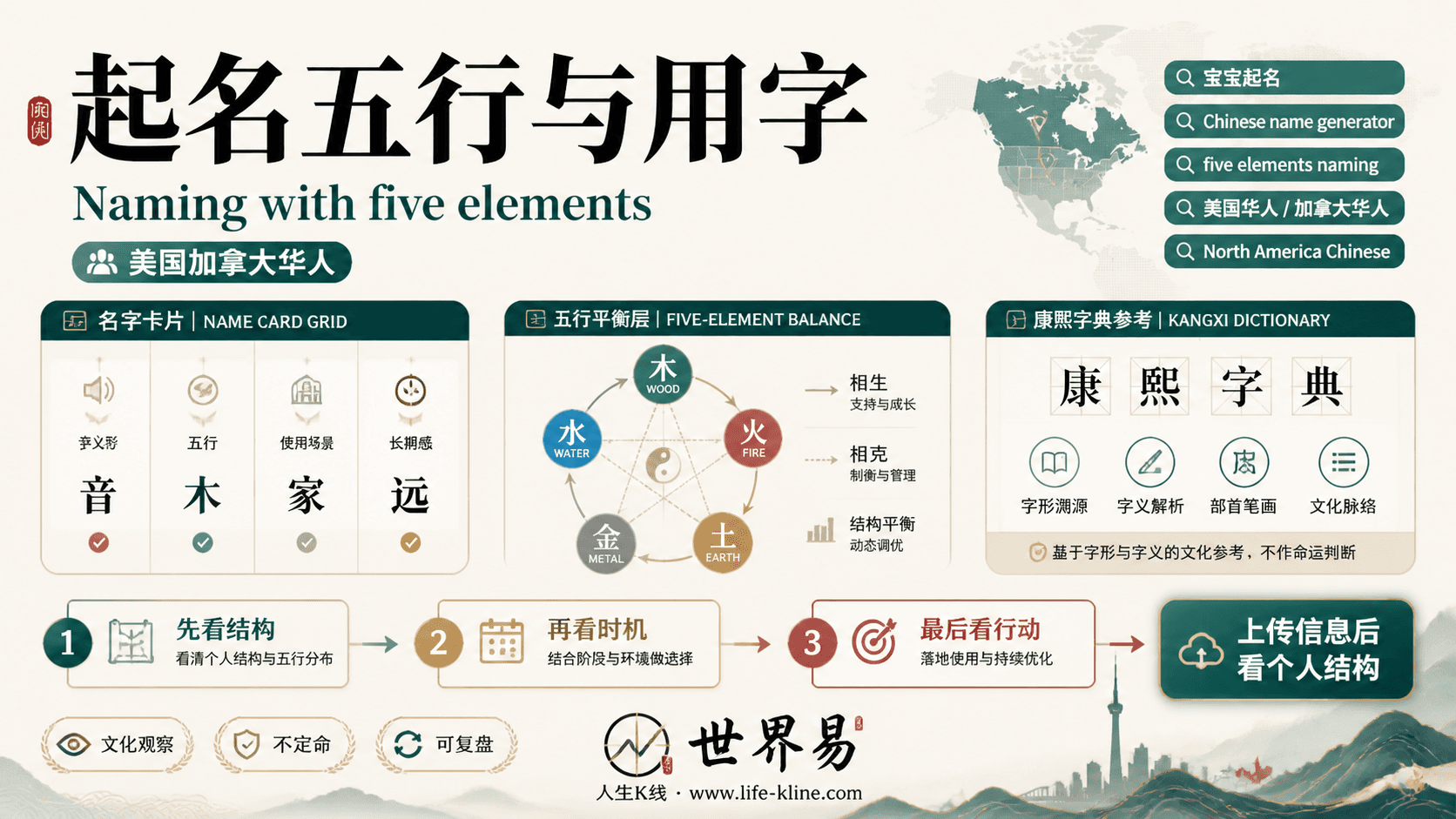
起名五行与用字|美国加拿大华人
这张图把《Ding in the Twelve Gods of Jianchu: Symbol of Stability and Decision》里的命理概念转成关系、边界和应用场景,适合先看图建立结构,再回到知识文章正文理解细节。
起名五行与用字不应被写成固定结论。更适合美国加拿大华人的读法,是把传统术语翻译成结构、时机、环境、行动和复盘。
查看图片解读