Wei in the Twelve Gods of Jianchu: The Deity of Dangerous Heights and Its Applications in Fate Analysis
把这篇文章落到自己身上验证:先看结构,再进入个人分析,不做泛泛阅读。
Concept Definition
Wei is an important deity among the Twelve Gods of Jianchu, symbolizing the deity of dangerous heights. It holds a central position in the traditional Chinese date selection system, with each day corresponding to one of these deities, Wei being one of them. The fundamental nature of Wei emphasizes caution and introspection, reminding people to avoid risky behaviors during specific time periods and maintain inner calm and vigilance.
In fate applications, the Wei deity advocates stillness, making it suitable for activities such as calming the spirit and construction. These actions help stabilize the environment and mindset, avoiding risks caused by rash behavior. At the same time, Wei forbids boating and climbing, symbolizing the high likelihood of accidents in dangerous environments, and advises avoiding such activities.
Therefore, Wei is not only a time marker but also a behavioral guide. Through comprehensive judgment combined with the Day Heavenly Stems and Earthly Branches and an individual's BaZi, it helps people formulate appropriate action strategies for the day to avoid potential dangers.
Traditional Fate Significance
The Twelve Gods of Jianchu system originates from ancient Chinese date selection studies, aiming to guide daily activity arrangements through observation of daily deities. Wei, as one of the twelve gods, carries a clear warning nature, reminding people to maintain high caution and introspection on certain days.
In classical texts, the Wei deity days are often regarded as unsuitable for high-risk activities such as climbing, long-distance travel, or boating, which may cause danger. Conversely, these days are suitable for calming the spirit, construction, and other stable activities that help accumulate positive energy, benefiting physical and mental health as well as environmental stability.
The establishment of the Wei deity reflects ancient concerns for natural environment and personal safety, and also embodies the traditional Chinese cultural emphasis on 'timing' (Tian Shi) and auspiciousness or inauspiciousness (Ji Xiong). By conforming to the timing, one can seek fortune and avoid misfortune, demonstrating the practical value of fate studies.
Practical Configuration and Interpretation
In actual date selection practice, when the day's Jianchu deity is Wei, it is necessary to combine the day's Heavenly Stems and Earthly Branches and the individual's BaZi for a comprehensive analysis of favorable and unfavorable activities. If the Day Master needs to carry out important activities, it is advisable to choose stable affairs such as calming the spirit and construction, avoiding high-risk behaviors like climbing or boating.
For example, if an individual's BaZi already contains impulsive or unstable factors, and the day coincides with the Wei deity, greater caution is required to avoid accidents caused by rashness. When constructing a house or making home adjustments, a Wei day is suitable for calming the spirit and stabilizing the energy, helping to enhance the stability of the living environment.
Additionally, the prohibitive behaviors associated with the Wei deity provide references for modern life, such as avoiding high-altitude work or water activities on Wei days, reflecting the integration of ancient metaphysical wisdom with modern safety awareness.
Common Misconceptions
Some people mistakenly believe that on Wei deity days, going out or taking any action is completely forbidden. In fact, Wei emphasizes caution and avoiding high-risk behaviors, not a total ban on all activities. Properly arranging suitable affairs like calming the spirit and construction can actually achieve the effect of seeking fortune and avoiding misfortune.
Another misconception is ignoring the comprehensive judgment involving the Day Heavenly Stems and Earthly Branches and personal BaZi, and making decisions based solely on the literal meaning of Wei. The correct approach is to combine the favorable and unfavorable aspects of Wei with the overall fate pattern flexibly, so as to truly realize its guiding value.
FAQ
Question: Why does the Wei deity day forbid boating and climbing? Answer: The Wei deity symbolizes dangerous heights. Both boating and climbing involve relatively high-risk environments prone to accidents, so such activities are forbidden to ensure safety.
Question: What activities are suitable on a Wei deity day? Answer: It is suitable to engage in calming the spirit, construction, and other quiet and stable activities that help stabilize the mind and environment, avoiding impulsiveness and risk.
Question: How to combine the Wei deity with an individual's BaZi? Answer: By observing that the day's Jianchu deity is Wei, then combining the Day Heavenly Stems and Earthly Branches and the individual's BaZi five elements attributes and pattern, one can comprehensively judge the day's favorable and unfavorable aspects and formulate a reasonable action plan.
Question: Does the Wei deity mean one should not go out all day? Answer: Not entirely. Wei emphasizes caution and avoiding high-risk behaviors. Appropriate outings and low-risk activities are allowed, with the key being to avoid forbidden behaviors.
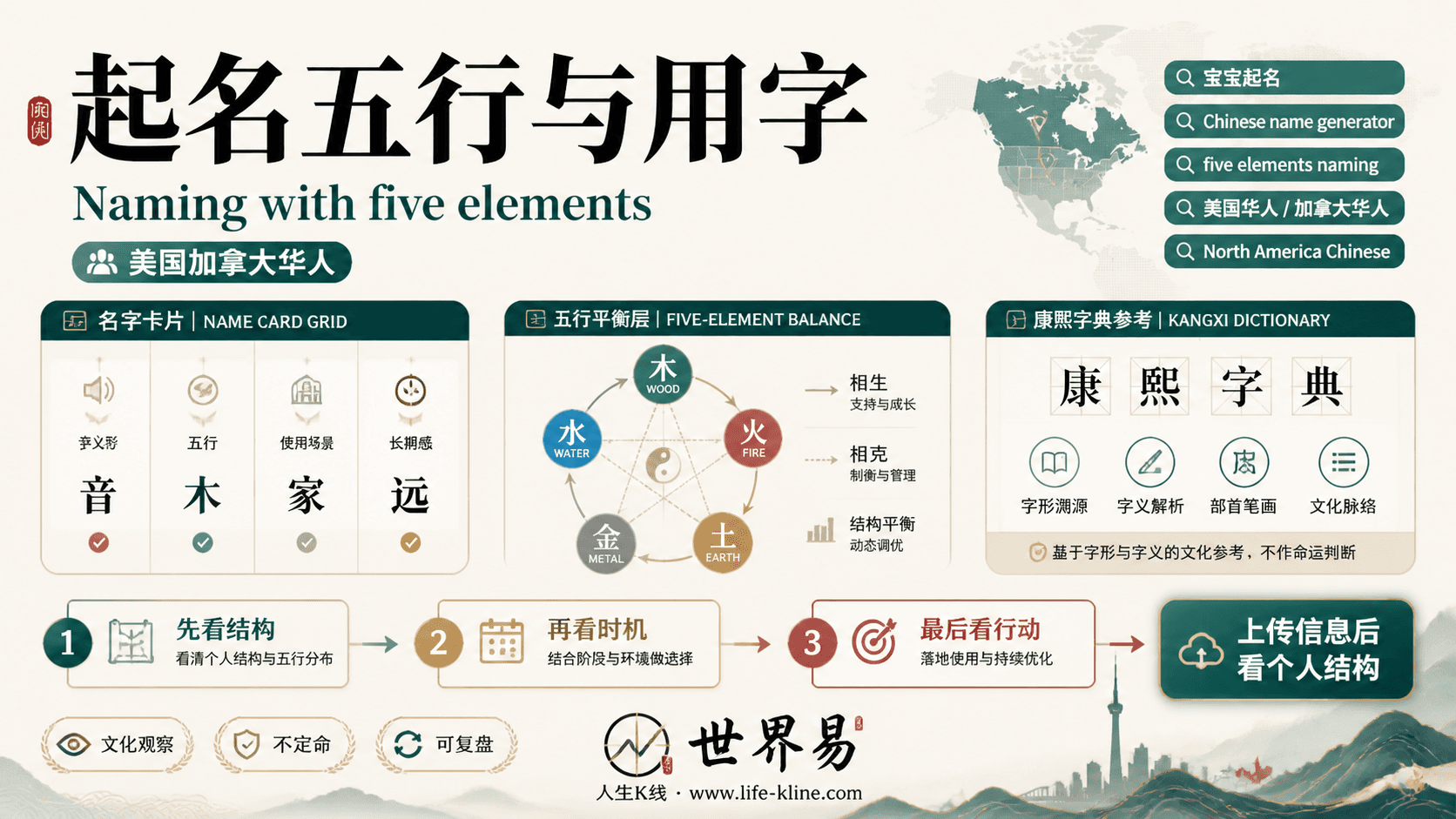
起名五行与用字|美国加拿大华人
这张图把《Wei in the Twelve Gods of Jianchu: The Deity of Dangerous Heights and Its Applications in Fate Analysis》里的命理概念转成关系、边界和应用场景,适合先看图建立结构,再回到知识文章正文理解细节。
起名五行与用字不应被写成固定结论。更适合美国加拿大华人的读法,是把传统术语翻译成结构、时机、环境、行动和复盘。
查看图片解读