Analysis of the Metaphysical Rhythm and Boundary Signals in Partner Selection During the Youth Initial Formation Period
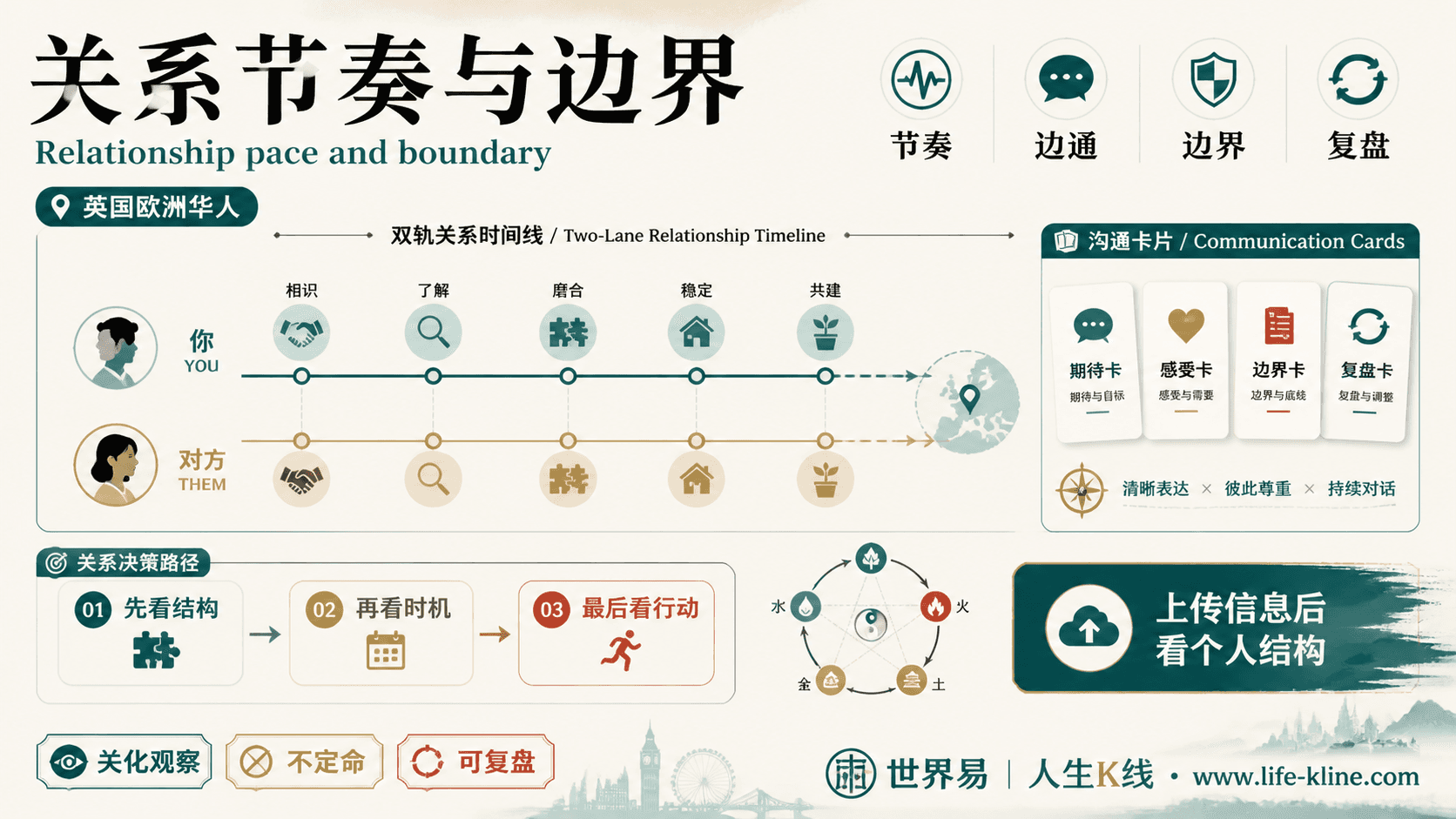
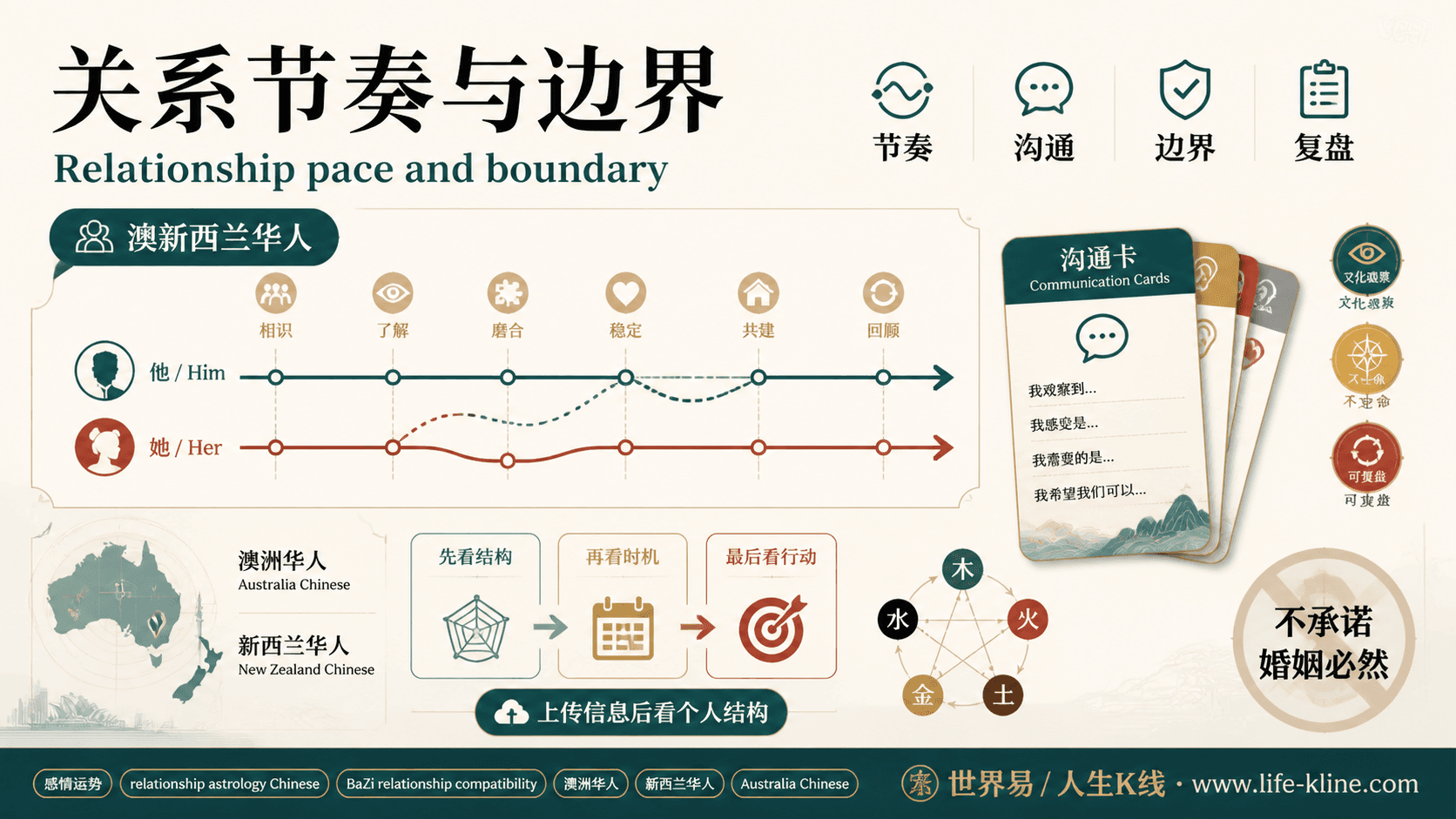
把这篇文章落到自己身上验证:先看结构,再进入个人分析,不做泛泛阅读。
Why This Decision Is Especially Difficult at This Life Stage
The youth initial formation period (18-25 years old) is a crucial phase in life when self-identity gradually solidifies and professional direction begins to clarify, marking the start of independent living. Young people at this stage often face internal and external conflicts of identity, needing to meet family and societal expectations while desiring to establish independent intimate relationships. Therefore, partner selection becomes a complex and sensitive decision involving emotional needs, future planning, and practical considerations.
Society generally expects youths to establish a stable emotional foundation during this period, but young people’s self-development is still immature, often accompanied by confusion and restlessness, making emotional fluctuations likely to affect rational decision-making. Additionally, economic independence is often insufficient, with intertwined responsibilities and financial pressures challenging the stability of relationships.
In metaphysics, the Da Yun and Liu Nian changes corresponding to this stage reflect the rhythm and boundaries of individual energy. The Day Master’s strength, pattern characteristics, and the relationship between Yong Shen (favorable element) and Ji Shen (unfavorable element) directly influence behavioral patterns and tendencies in emotional relationships. If the metaphysical rhythm is not aligned with the real environment, emotional decisions may become conflicted and confused; conversely, alignment helps clarify priorities, define boundaries, and improve mate selection quality.
Thus, partner selection during youth is not only an expression of emotional resonance but also a reflection of metaphysical energy flow. Understanding the rhythm and boundary signals of the natal chart is key to overcoming practical difficulties, achieving self-growth, and establishing healthy intimate relationships.
Three Core Dimensions of Metaphysical Judgment
The strength of the Day Master reflects the vigor of an individual’s inner self-energy. A relatively strong Day Master indicates strong subjective initiative, with a tendency to actively control the pace of relationships when making decisions. Conversely, a relatively weak Day Master may show dependence or passivity, easily influenced by external factors. At the youth stage, this trait determines the initiative and firmness in mate selection.
The pattern and Yong Shen reveal the core energy structure of the natal chart. A Zheng Yin (Proper Seal) pattern often represents support and protection, beneficial for relationship stability; a Yang Ren (Goat’s Blade) pattern indicates a strong and impulsive personality, with partner choices emphasizing self-expression and independence. The Yong Shen corresponds to the Five Elements energy that needs balancing or supplementing in relationships, while the Ji Shen represents stress sources to avoid. Identifying these helps find suitable interaction modes in partnerships.
Da Yun and Liu Nian reflect temporal trends in the natal chart. The youth period is a key stage of energy transition in life. A stable or auspicious Da Yun provides a stable environment for relationships, while the Liu Nian indicates current emotional fluctuations. The interaction between Da Yun and Liu Nian determines the timing and risk management in mate selection, serving as an important reference for action timing.
Three Real Natal Chart Case Studies
Case 1: This male’s natal chart has a relatively strong Day Master Geng Metal (庚, Gēng), with a Zheng Yin pattern. His Yong Shen are Fire and Wood, and Ji Shen is Earth. He is currently in the 9th year of the Xin Hai (辛亥, Xīn Hài) Da Yun, which is generally stable, with the Liu Nian being Bing Wu (丙午, Bǐng Wǔ), characterized by adaptability. Positioned in the youth initial formation period, facing dual pressures of self-identity and independent living, his strong Day Master indicates a strong initiative and decisiveness in partner selection. The Zheng Yin pattern supports his pursuit of stable and protective relationships, but the presence of Ji Shen Earth warns to be cautious of material or practical pressures affecting the relationship. In mate selection, priority should be given to assessing whether the partner respects and supports his independence, avoiding the impact of practical burdens on emotional quality. The suggested evaluation sequence is to first confirm if the partner can provide emotional support, then examine how both handle practical pressures, and finally focus on the alignment of their values.
Case 2: This female’s natal chart has a relatively strong Day Master Bing Fire (丙, Bǐng), with a Yang Ren pattern. Her Yong Shen are Water and Metal, and Ji Shen is Wood. She is currently in the 7th year of the Da Yun Geng Zi (庚子, Gēng Zǐ), a very auspicious cycle, with the Liu Nian being Bing Wu (丙午, Bǐng Wǔ), which supports momentum. The Yang Ren pattern shows a strong and self-aware personality; at youth, she values self-expression and independent space in partner selection. The Yong Shen Water and Metal suggest a need for wisdom and flexibility to mediate conflicts, while the Ji Shen Wood warns against overly dominant or interfering partners. The auspicious Da Yun provides a favorable emotional environment, but the fiery Liu Nian may amplify emotional fluctuations. The recommended judgment order is to first assess the partner’s tolerance and complementarity, then evaluate mutual emotional management abilities, and finally consider the compatibility of future development goals.
Case 3: This female’s natal chart has a relatively strong Day Master Jia Wood (甲, Jiǎ), also with a Yang Ren pattern. Her Yong Shen is Fire, and Ji Shen is Water. She is currently in the 4th year of the Ren Shen (壬申, Rén Shēn) Da Yun, which is stable, with the Liu Nian being Bing Wu (丙午, Bǐng Wǔ), indicating adaptability. Although her age exceeds the youth initial formation period, viewing her chart from the 18-25 age perspective, the strong Jia Wood Day Master shows vitality and growth motivation in relationships. The Yang Ren pattern reinforces her independence and resilience. The Yong Shen Fire indicates a need for emotional passion and drive, while the Ji Shen Water warns to avoid negative emotional interference. The stable Da Yun provides a foundation for emotional relationships, while Liu Nian changes require flexible responses to shifts. In partner selection, priority should be given to whether the partner can stimulate her growth potential, then assess their ability to transform Water (negative emotions) with Fire (passion) during conflicts, and finally verify their preparedness to face uncertainties together.
These three cases all demonstrate the profound influence of metaphysical structure on partner selection during youth, helping individuals recognize internal drives and external environmental interactions to guide rational decisions.
Common Misjudgments and Blind Spots at This Stage
Many youths often neglect the alignment between their metaphysical rhythm and real environment in partner selection, overly relying on emotional impulses or superficial attraction, ignoring the guidance of Yong Shen and Ji Shen in the natal chart, which leads to amplified conflicts within relationships.
Another blind spot is ignoring the changes in Da Yun and Liu Nian. The youth period experiences frequent energy fluctuations; failure to grasp the influence of Da Yun and Liu Nian on emotional rhythms can easily result in wrong decisions at critical moments, missing the optimal period for nurturing relationships.
At the same time, social expectations and self-growth needs during youth often conflict. Without a deep understanding of the Day Master’s strength and pattern characteristics, youths may excessively compromise or force matters in partner selection, making it difficult to establish truly compatible relationships.
Therefore, youths must avoid emotional and one-sided perceptions in partner selection, comprehensively evaluating with metaphysical rhythm to prevent misjudgments and enhance relationship stability and growth potential.
Practical Judgment Sequence
Step one: Confirm your own natal chart’s Day Master strength and pattern type to clarify the core characteristics of your inner energy. A relatively strong Day Master should focus on self-leadership and boundary management, while a relatively weak Day Master should pay attention to dependence and support needs.
Step two: Analyze the Yong Shen and Ji Shen to identify the Five Elements that need balancing or avoidance in relationships. Combine this with Da Yun and Liu Nian to assess the stability and volatility of the current emotional environment, determining the suitable rhythm and timing for mate selection.
Step three: Integrate social expectations, economic conditions, and responsibility pressures in real life to judge when to act proactively and when to maintain observation and self-adjustment. When Da Yun is stable and Liu Nian auspicious, relationships can be moderately advanced; when Da Yun or Liu Nian conflict, proceed cautiously and avoid impulsiveness.
Overall, rationally evaluating the metaphysical rhythm and real conditions, and gradually establishing boundaries and trust, is key to successful partner selection during youth.
FAQ
Question 1: How to identify which signals in my natal chart are key for mate selection? Answer: Focus on the Day Master’s strength, pattern type, and Yong Shen/Ji Shen, combined with the current Da Yun and Liu Nian, to recognize the direction of supportive energy and sources of pressure. These form the basis for identifying important signals in partner choice.
Question 2: If the Da Yun and Liu Nian are unfavorable during youth, should one avoid relationships? Answer: Not necessarily avoid, but proceed cautiously, emphasizing inner growth and emotional management. Act at appropriate times to prevent impulsive behavior that could damage relationships.
Question 3: How to handle conflicts between family/society expectations and personal metaphysical needs in partner selection? Answer: It is necessary to establish clear boundaries and priorities based on understanding metaphysical rhythm, balancing external expectations with internal needs, gradually achieving self-identity and relationship stability.
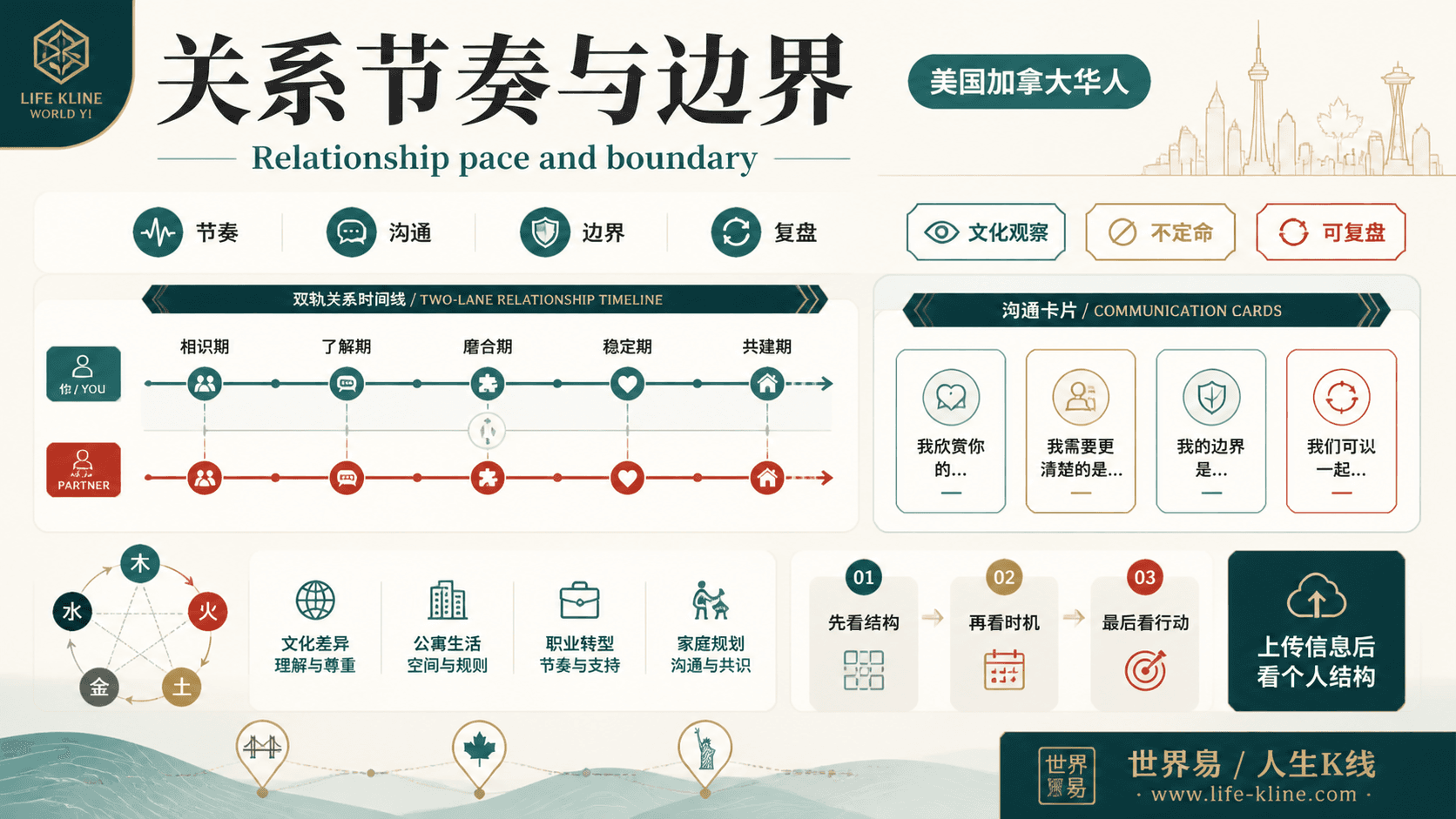
关系节奏与边界|美国加拿大华人
这张图把《Analysis of the Metaphysical Rhythm and Boundary Signals in Partner Selection During the Youth Initial Formation Period》里的命理概念转成关系、边界和应用场景,适合先看图建立结构,再回到知识文章正文理解细节。
关系节奏与边界不应被写成固定结论。更适合美国加拿大华人的读法,是把传统术语翻译成结构、时机、环境、行动和复盘。
查看图片解读