Astrological Analysis and Practical Guidance on Youth’s Elder Care and Distance Decisions During Initial Identity Formation
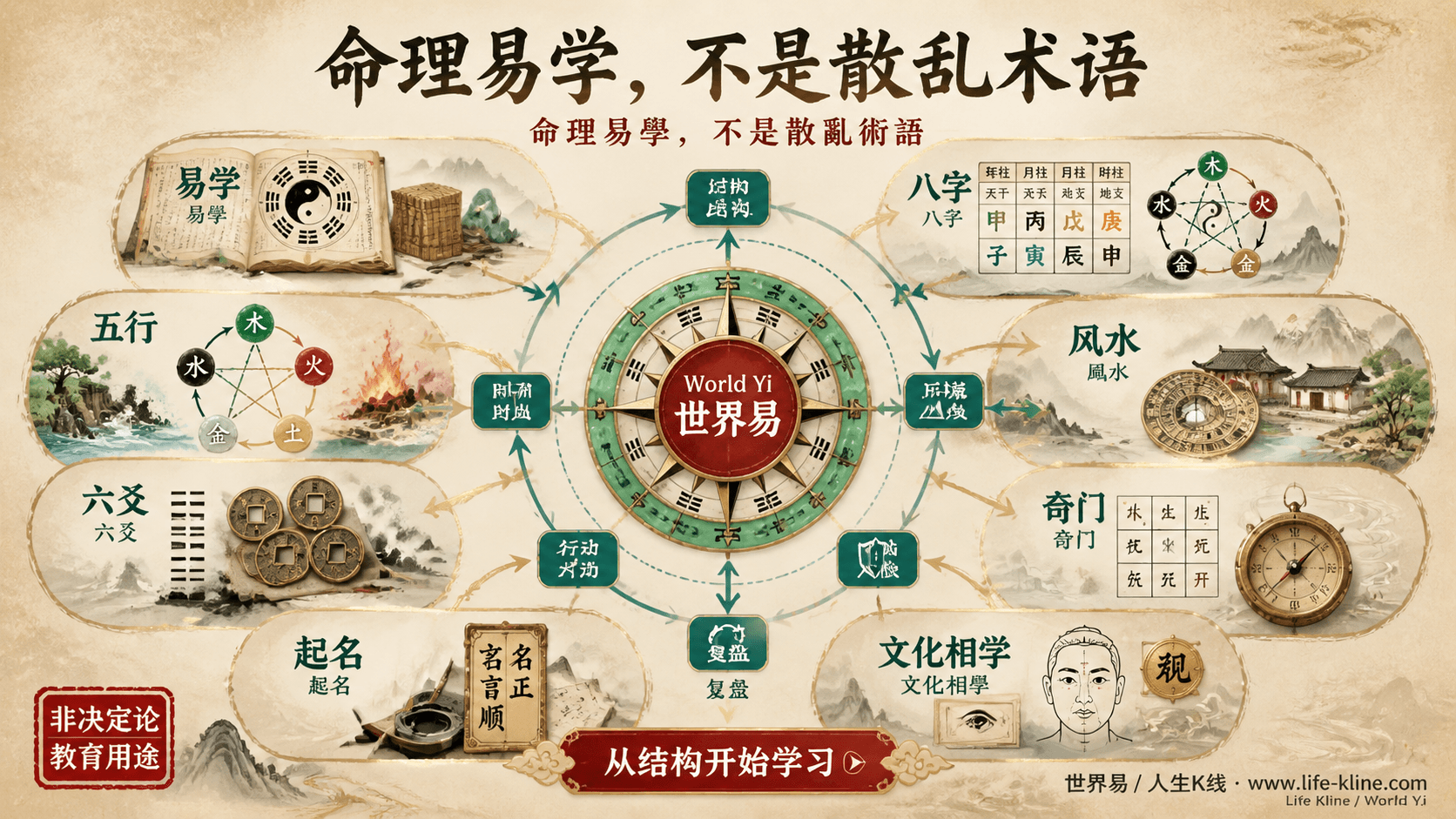
把这篇文章落到自己身上验证:先看结构,再进入个人分析,不做泛泛阅读。
Why This Decision Is Especially Difficult at This Life Stage
The youth initial identity formation period is a critical transitional phase from family dependence to social independence. Individuals aged 18 to 25 generally face pressures of identity recognition, career direction establishment, and first experiences of independent living. At this time, parents gradually enter their elder years, and elder care responsibilities begin to emerge. However, youths themselves are often in the rising stage of their careers, with limited time and energy, resulting in insufficient capacity and psychological readiness for family caregiving.
Social expectations often emphasize that young people should undertake elder care obligations, while simultaneously expecting them to quickly become independent, achieving economic self-sufficiency and professional growth. This dual pressure makes elder care versus maintaining appropriate distance a focal point of conflict, easily causing inner turmoil and family disputes.
From a metaphysical perspective, the Yong Shen and Day Master strength during youth directly affect the ability and attitude toward family elder care. If the chart’s Yong Shen is strong and the Da Yun (decade luck cycle) is stable, youths are more likely to take on close caregiving responsibilities; conversely, they may need to maintain appropriate distance, seek external support, or delay direct care.
Therefore, youth decisions on elder care and distance are not only about the allocation of practical resources but also a complex interplay of metaphysical energies and social role expectations. Understanding the BaZi dimension helps clarify responsibility boundaries and timing for action.
Three Core Dimensions of BaZi Judgment
First, the strength of the Day Master is the foundational factor in judging a youth’s capacity to undertake elder care responsibilities. A relatively strong Day Master indicates abundant personal energy, strong self-motivation, and good stress-handling ability; a relatively weak Day Master suggests careful assessment of personal resources to avoid overburdening leading to physical and mental exhaustion.
Second, pattern types such as Yang Ren (羊刃, Yang Blade) pattern or Pian Yin (偏印, Partial Seal) pattern reflect personality traits and internal drive. Yang Ren pattern often shows firmness and decisiveness, suitable for proactively taking elder care responsibilities but requiring attention to emotional management and coordination; Pian Yin pattern tends to be gentle and dependent, possibly needing external assistance to balance caregiving with personal growth.
Third, the configuration of Yong Shen (favorable elements) and Ji Shen (unfavorable elements) reveals energy support and obstacles in elder care decisions. Yong Shen represents elements that harmonize the Day Master’s environment and provide assistance. Whether the Yong Shen is Water, Metal, or Fire, Wood, the practical family environment and care needs must be considered to judge advantages and disadvantages. Meanwhile, the interaction between Da Yun and Liu Nian (annual fortune) reflects the timing and difficulty of actions. Stable Da Yun suits maintenance and steady progress, while auspicious Da Yun benefits active assumption of responsibilities and breakthroughs.
By integrating these three dimensions, one can scientifically determine the optimal path for youth in elder care and distance decisions, respecting metaphysical laws while accommodating practical needs.
Three Real BaZi Chart Cases
Case 1: The female Day Master is Bing Fire (丙火, Bing Huo), relatively strong, with a Yang Ren pattern. The Yong Shen is Water and Metal, and the current Da Yun is Ding Hai (丁亥, Ding Hai), a stable period. Placed in the youth initial identity formation context, she faces conflicts between family elder care and rising career. Due to the strong Fire Day Master, she has strong inner motivation; the Yang Ren pattern endows her with a strong sense of responsibility and action. The Yong Shen Water and Metal help regulate emotions and rationality, and the stable Da Yun supports maintaining status quo without reckless advancement. Therefore, she is suitable for close caregiving but needs to pay attention to emotional regulation to avoid overwork. The recommended judgment sequence is to first evaluate the synergy of the current Liu Nian and Da Yun, then combine with actual family needs to choose the timing for proactively undertaking care responsibilities while maintaining personal growth pace.
Case 2: The male Day Master is Jia Wood (甲木, Jia Mu), relatively weak, with a Pian Yin pattern. The Yong Shen is Water, and the current Da Yun is Yi You (乙酉, Yi You), also a stable period. In the youth initial identity formation stage, his internal energy is relatively insufficient. The Pian Yin pattern shows strong dependency and gentleness, possibly feeling significant pressure in elder care responsibilities. The Yong Shen Water helps nourish the Day Master, but Ji Shen such as Fire and Earth may bring environmental pressure and obstacles. Combined with the stable Da Yun, he is more suitable for maintaining some distance in caregiving, seeking external resources to support parents rather than providing full-time close care. Practically, it is advised to first assess the match between personal energy and family needs, and adjust caregiving methods timely to avoid excessive depletion of personal resources leading to negative cycles.
Case 3: The female Day Master is Geng Metal (庚金, Geng Jin), relatively strong, with a Yang Ren pattern. The Yong Shen is Fire and Wood, and the current Da Yun is Yi Si (乙巳, Yi Si), a very auspicious cycle with smooth affairs. In the youth initial identity formation period, her chart shows strong action ability and resource integration capacity. The Yang Ren pattern enhances her sense of responsibility, and the Yong Shen Fire and Wood promote vitality and interpersonal support. The auspicious Da Yun provides a favorable external environment for her elder care decisions, enabling her to proactively undertake close caregiving while balancing personal development. The judgment sequence should prioritize confirming whether the Da Yun and Liu Nian continue to be favorable, then evaluate the specific conditions of family members, thereby formulating a flexible caregiving plan that maximizes mutual benefits for individual and family.
These three cases demonstrate different manifestations of BaZi characteristics in youth elder care and distance decisions, combining stage-specific real pressures and metaphysical energies to assist individuals in making more reasonable choices.
Common Misjudgments and Blind Spots at This Stage
One common misjudgment in youth elder care decisions is treating personal career development and caregiving responsibilities as completely opposing forces, ignoring the balancing role of Day Master strength and Yong Shen support in BaZi. This often leads to excessive self-blame or avoidance of responsibility. The actual situation should adjust responsibility levels according to the chart to achieve dynamic balance.
Another blind spot is neglecting the influence of Da Yun and Liu Nian on timing of actions, blindly taking drastic measures during unfavorable Da Yun periods, resulting in counterproductive outcomes. Reasonable use of Liu Nian and Da Yun information to select appropriate timing for elder care involvement can effectively improve results and reduce setbacks.
Additionally, some youths overly rely on absolute interpretations of BaZi results, ignoring the interplay of family environment, health status, and other practical factors. BaZi is an auxiliary decision-making tool that must be combined with multidimensional real-world information to avoid oversimplified conclusions.
In summary, scientifically recognizing the limitations and advantages of BaZi and avoiding extreme decisions is key to youth elder care and distance issues.
Practical Judgment Sequence
First, assess the Day Master strength and pattern type to determine the primary energy and psychological inclination for bearing elder care responsibilities. A relatively strong Day Master and firm pattern suit proactive assumption, while a weak Day Master and gentle pattern favor seeking external support and maintaining distance.
Second, combine Yong Shen and Ji Shen to judge whether the current chart conditions are favorable for adjusting the environment and personal state. When Yong Shen is strong, active close caregiving can be promoted; when Yong Shen is constrained, caregiving intensity should be cautiously controlled to avoid adverse effects.
Finally, focus on the interaction of Da Yun and Liu Nian to choose the timing for action. Stable Da Yun phases are suitable for maintaining and steady progress, auspicious Da Yun phases are ideal for seizing opportunities and active assumption, while adverse luck periods suggest moderate waiting or strategy adjustment.
By following this sequence, youths can scientifically balance elder care and distance, avoiding blind overcommitment causing physical and mental overload, as well as evasion of family responsibilities, achieving concurrent personal growth and family harmony.
FAQ
Question 1: How can youths determine if they are suitable for close caregiving of parents? Answer: First evaluate the Day Master strength and pattern type; a strong Day Master and firm pattern indicate better capacity. Then combine Yong Shen support and current Da Yun and Liu Nian to confirm whether resources and timing are favorable. Make a comprehensive judgment before deciding on close caregiving.
Question 2: If the chart shows Yong Shen is constrained, how should youths adjust their elder care strategy? Answer: When Yong Shen is constrained, reduce the intensity of direct caregiving, maintain appropriate distance from parents, and seek external assistance such as from relatives or professional services to avoid overinvestment that may impair personal development.
Question 3: What specific impacts do Da Yun and Liu Nian have on elder care decisions? Answer: Da Yun reflects long-term trends; stable Da Yun suits maintenance, auspicious Da Yun benefits active actions. Liu Nian indicates annual fortune fluctuations. Combining both helps grasp the best timing for elder care and avoid impulsive decisions.
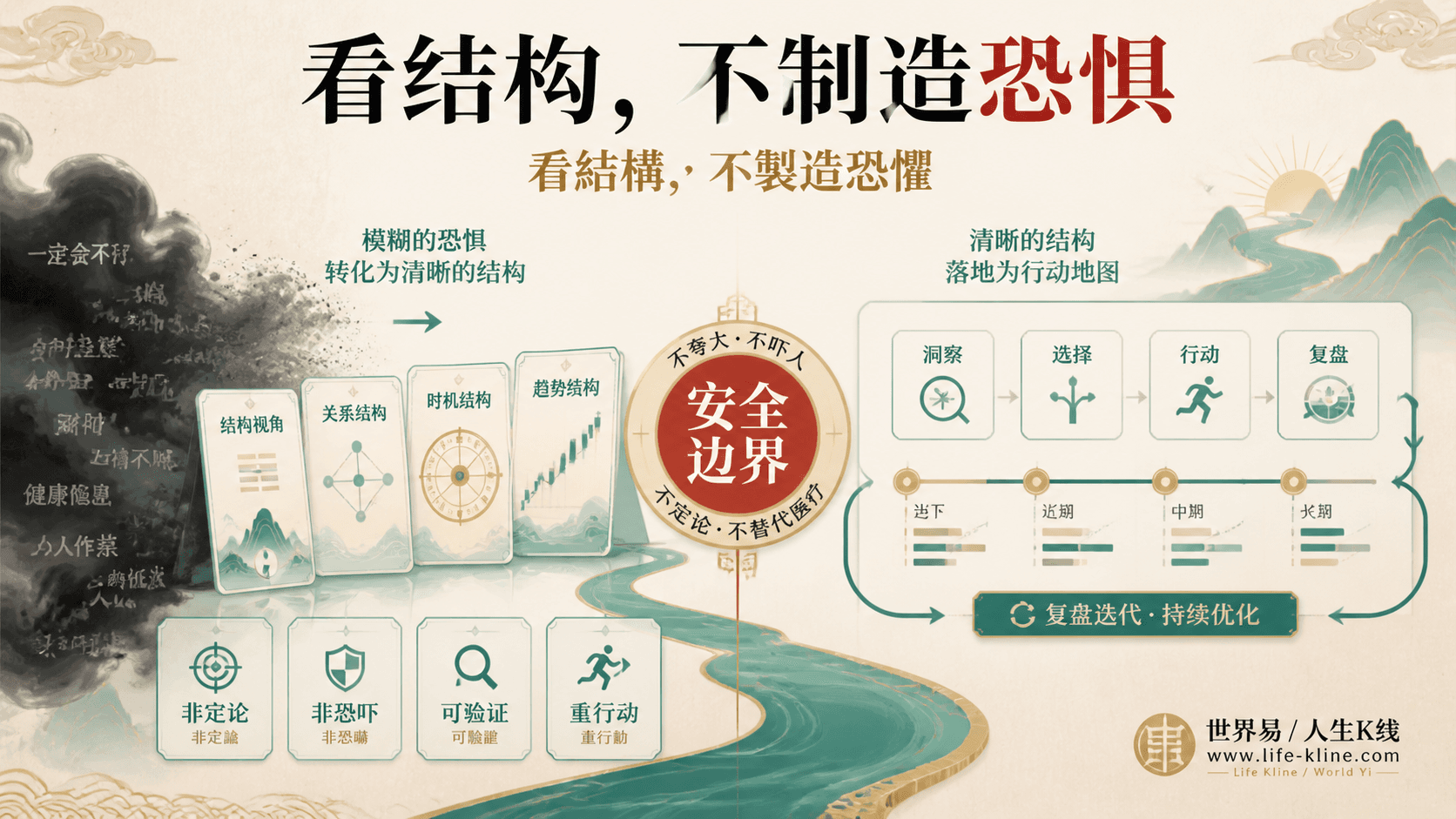
不是宿命论的判断边界
这张图把《Astrological Analysis and Practical Guidance on Youth’s Elder Care and Distance Decisions During Initial Identity Formation》接回世界易的判断语言:结构、时位、环境、行动与复盘,避免只停留在概念阅读。
说明世界易和命理分析只做结构化判断,不做恐吓和决定论。
查看图片解读