Timing a Career Move in the UK and Europe: What Bazi Adds to a CV
European hiring cycles, notice periods, and visa clocks already constrain your options. A timing model is useful only where it narrows the window further — not where it argues with your contract.
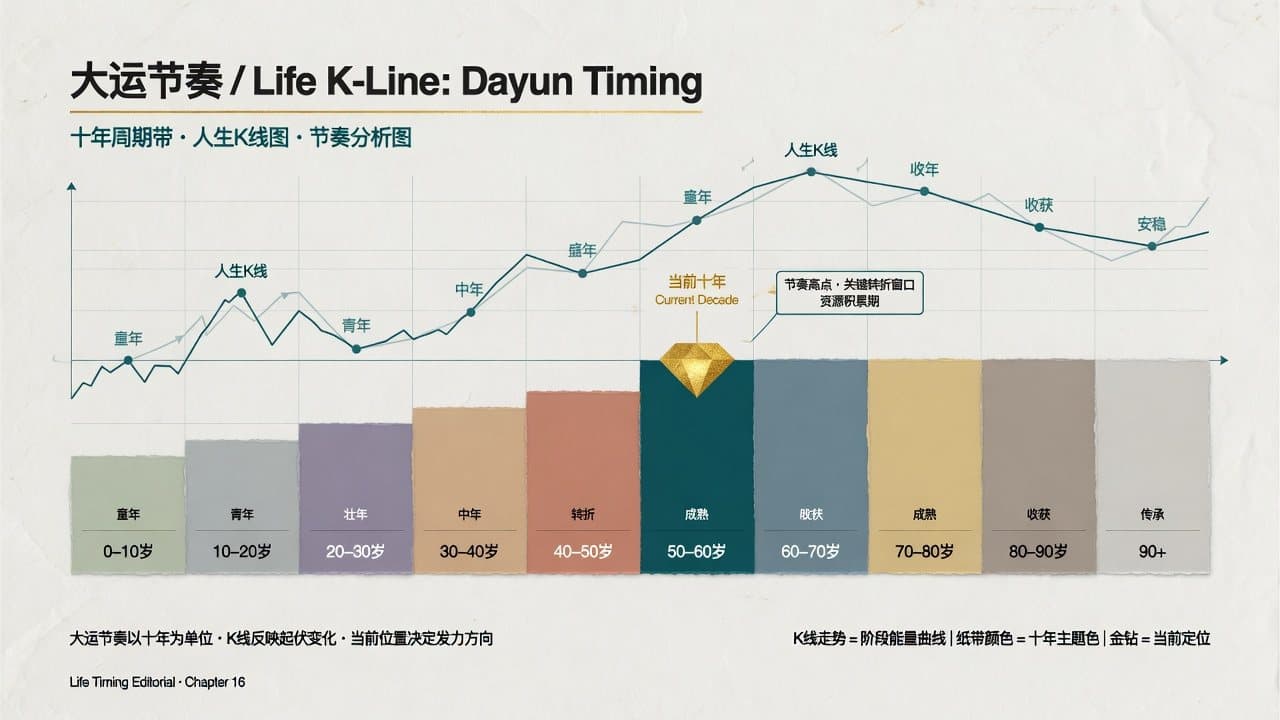
大运节奏带:把抽象判断拆成可看见的结构关系。
Reality sets the floor
In most of Europe the practical window for a move is defined by notice periods and hiring seasons, not by a chart. Autumn and January are heavy hiring months; August is not.
A timing read is only useful after those constraints are drawn. It helps you choose between two viable windows, not invent one that does not exist.
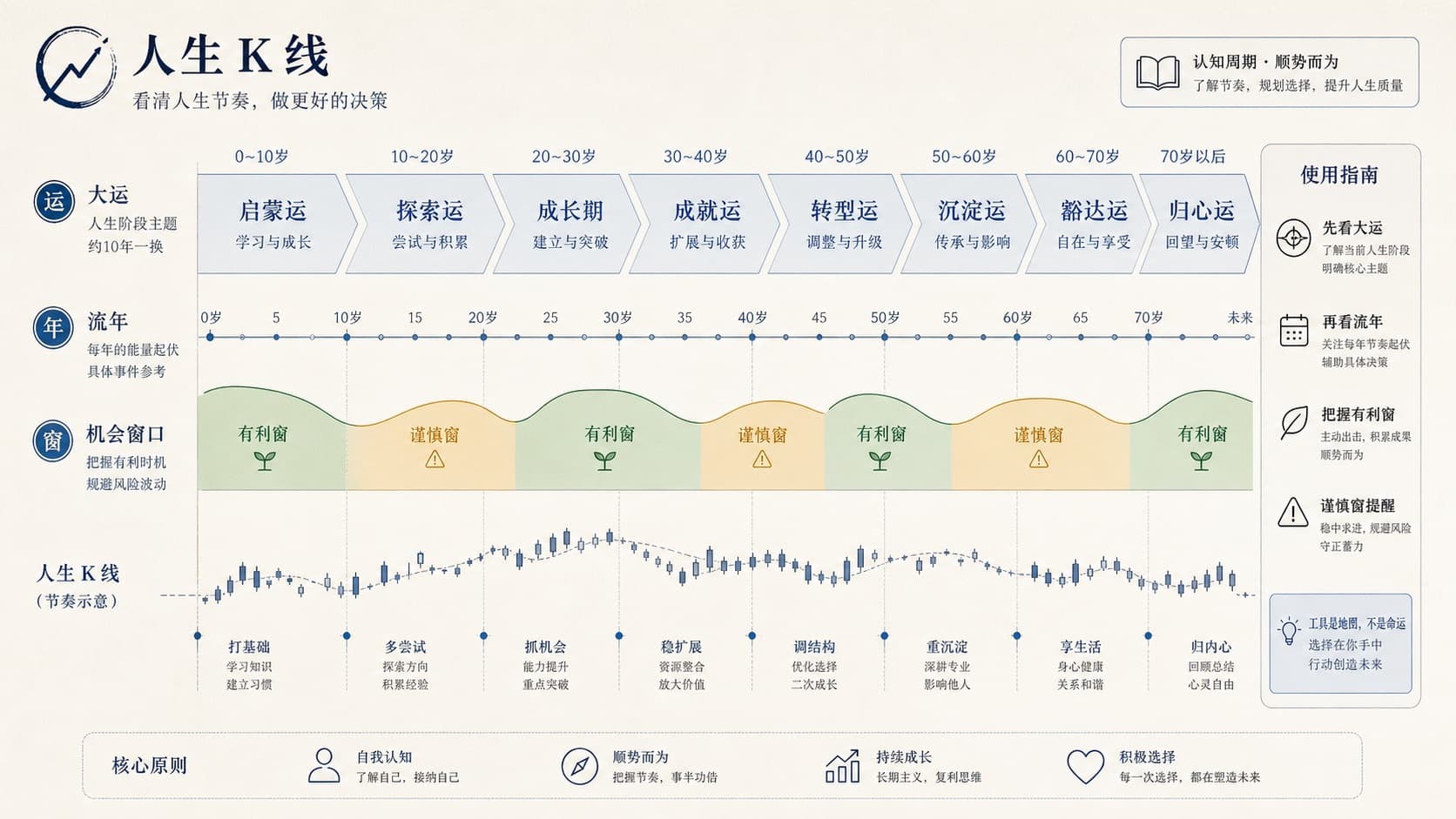
大运与流年窗口:把抽象判断拆成可看见的结构关系。
What the chart does add
When two offers or two start dates are genuinely open, the chart narrows which one to take. The useful output is a ranked set of months, not a single lucky day.
It also flags years where the cost of a wrong move is higher — typically years where the chart's useful elements are weak and outside pressure is strong. In those years, negotiating a later start date is often worth more than a better title.
The visa clock is the real constraint
For readers on work visas, the deadline is administrative and the chart cannot move it. Treat any timing advice that ignores your visa expiry as noise.
The honest use is sequencing: which of the available moves protects your status, and which one bets it. That is a question about risk tolerance, and the chart can describe your tolerance, not change your deadline.
本文含 2 张图解(封面/结构/时位/行动或风险)。图解用于建立判断框架,不构成宿命结论; 个人决策请结合测算报告与工具验证。