Astrological Analysis and Practical Guide for Teachers' Job Change and Career Transition Timing
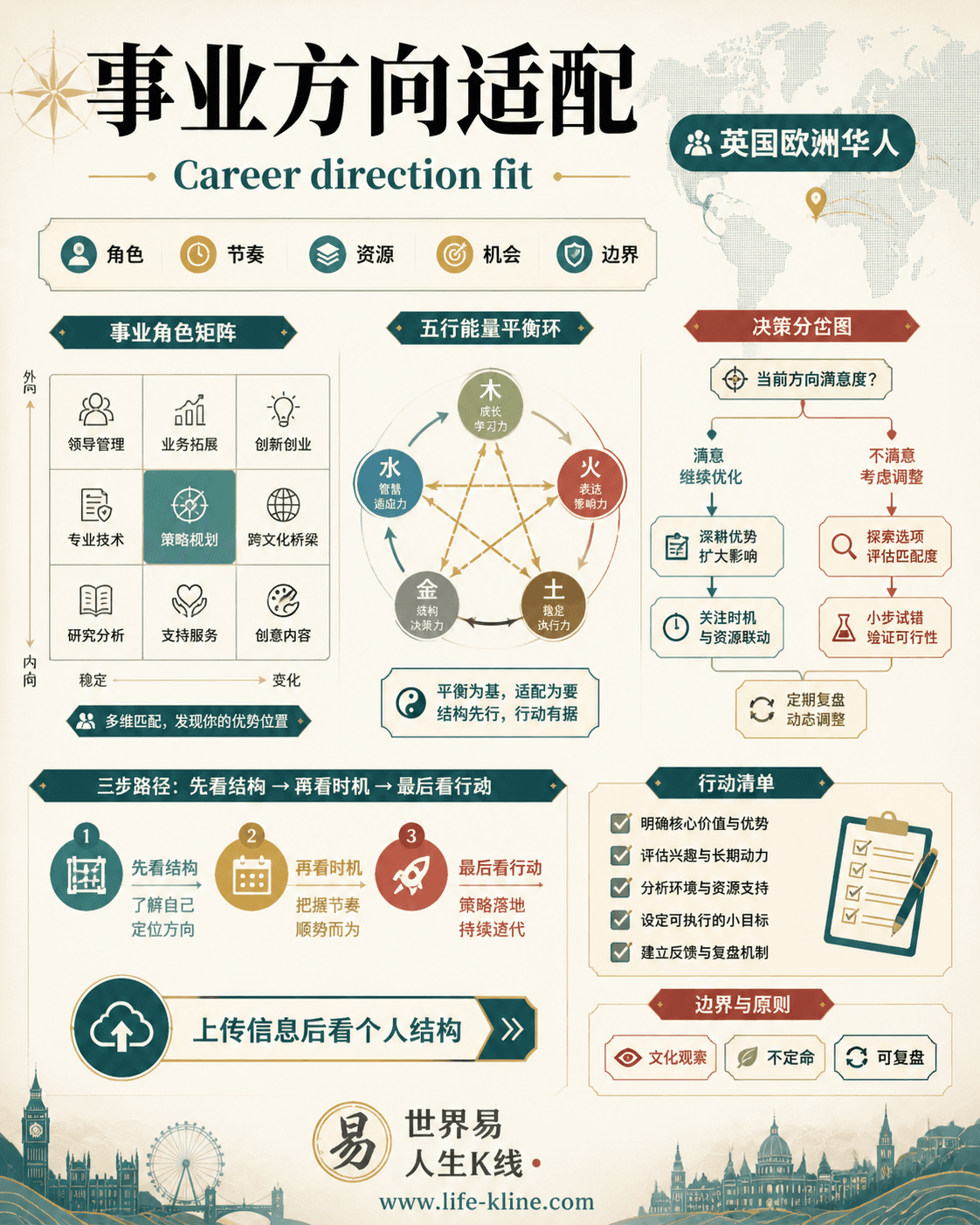
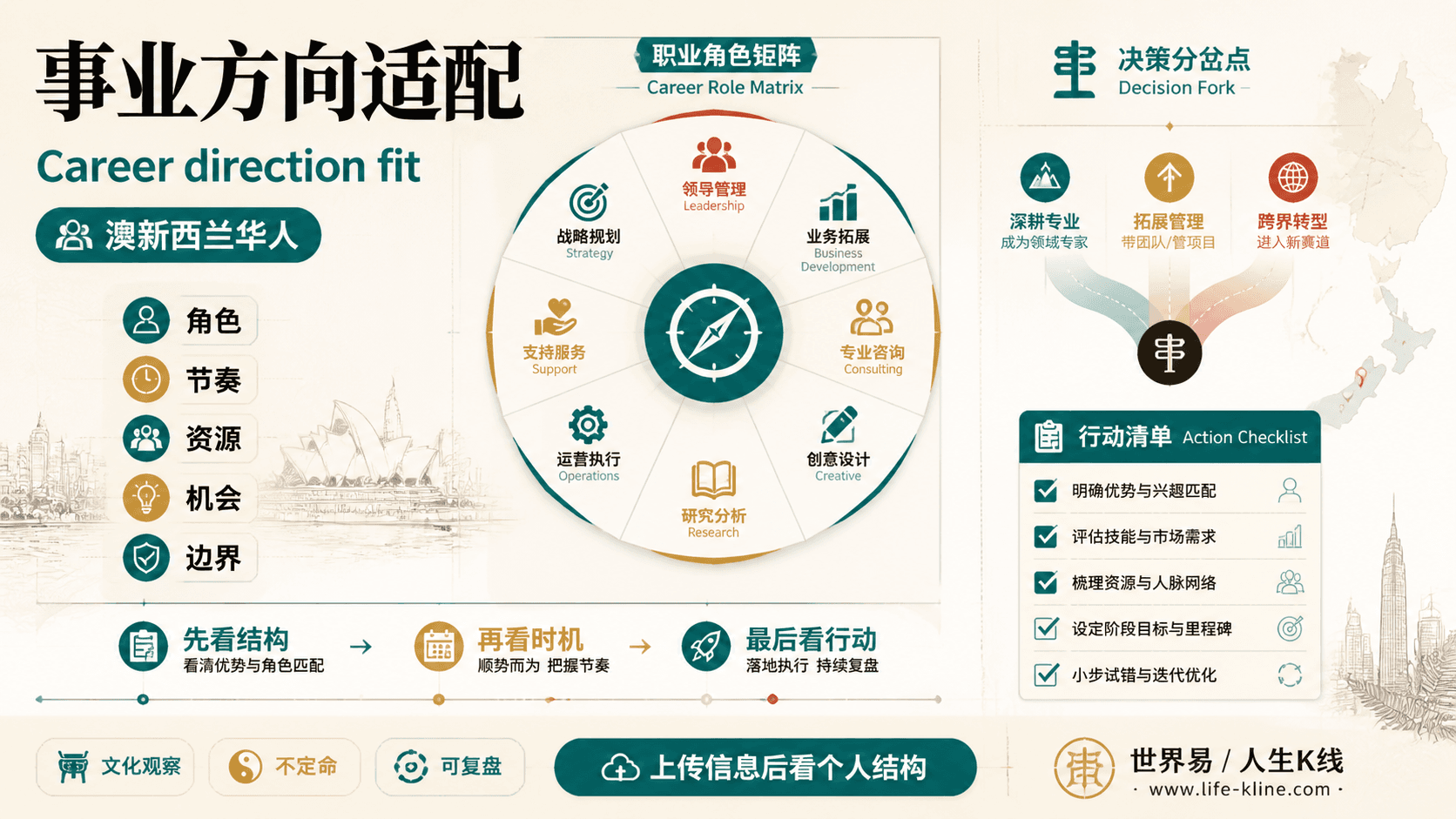
把这篇文章落到自己身上验证:先看结构,再进入个人分析,不做泛泛阅读。
Why This Decision Is Especially Difficult in This Profession
The teaching profession features a stable work rhythm, clear summer and winter vacation cycles, and strong group management responsibilities. These factors make job change and career transition decisions particularly challenging. The existing stable income structure and rhythm tend to cultivate a sense of dependence, and transitions often come with income fluctuations and career uncertainties, requiring great caution in decision-making.
Moreover, teachers undertake significant emotional labor in their daily work, with expression and output abilities being their core competencies. Job changes or transitions inevitably disrupt the existing work environment and interpersonal networks, bringing psychological pressure and adaptation costs, which further affect risk assessment in decision-making.
From an astrological perspective, the common Ten Gods main lines for teachers are Zheng Yin (Proper Seal) and Shang Guan (Hurting Officer), representing support and creativity energies respectively. Changes in Da Yun and Liu Nian directly influence the strength of these energies, determining whether an individual has the internal conditions for a smooth transition. Choosing the wrong timing may suppress the Yong Shen (favorable element), thereby affecting career stability and development.
Therefore, when facing job change and career transition, teachers must comprehensively consider the industry's stable rhythm and the personal astrological Yong Shen changes to find the optimal window that both leverages advantages and avoids Ji Shen (unfavorable element) interference.
Three Core Dimensions of Astrological Judgment
First, the strength of the Day Master and the pattern type form the foundation for evaluating transition potential. Day Masters that are relatively strong or balanced usually have stronger self-regulation and adaptability when facing career changes, while weaker Day Masters need to rely on the support of the Yong Shen to stabilize their aura.
Second, the configuration of Yong Shen and Ji Shen determines how Da Yun and Liu Nian affect an individual's career. In the teaching profession, Zheng Yin often reflects supportive power, while Shang Guan relates to expression and innovation. Suitable Yong Shen can increase the success rate of transitions, whereas Ji Shen are interference factors to be avoided.
Finally, the interaction between Da Yun and Liu Nian is key to judging the timing of job changes and transitions. Stable Da Yun favor maintaining the status quo, with higher risks in transitions; if the Liu Nian can stimulate the Yong Shen while suppressing the Ji Shen, it signals a good opportunity for active action. Otherwise, patience is advised.
These three dimensions interact to construct the astrological framework for teachers' job changes and transitions, helping individuals accurately identify favorable timings and potential risks.
Three Real BaZi Chart Cases
Case 1: This female teacher's Day Master is Yi Wood (乙, Yi), with a Shi Shen (Eating God) pattern, a relatively weak Day Master. Water is the Yong Shen, while Fire and Earth are Ji Shen. She is currently in the Xin Hai Da Yun (辛亥, ages 38-47, favoring stability) and the Bing Wu Liu Nian (丙午). In the teaching profession, the weak Yi Wood Day Master receives some support from Zheng Yin during the stable Xin Hai Da Yun, but interference from Ji Shen Fire and Earth appears in the Bing Wu Liu Nian. Since the Da Yun favors maintaining status quo, the risk of transition is high. It is recommended to focus on stability during this period, with the Liu Nian's adaptive capacity supporting internal adjustments rather than job changes. The judgment sequence is to first confirm whether the Da Yun is stable, then assess whether the Liu Nian stimulates the Yong Shen; if the Liu Nian both stimulates the Yong Shen and suppresses the Ji Shen, small-scale transition attempts can be considered.
Case 2: This male teacher's Day Master is Jia Wood (甲, Jia), with a Zheng Cai (Proper Wealth) pattern and a relatively strong Day Master. Metal is the Yong Shen, and Water is the Ji Shen. He is currently in the Yi Mao Da Yun (乙卯, ages 36-45, favoring stability) and the Bing Wu Liu Nian (丙午). The strong Jia Wood Day Master gives him strong self-drive and adaptability. The Yi Mao Da Yun is stable and conducive to maintaining status quo, while the Bing Wu Liu Nian brings some opportunities for adaptive responses. In the teaching profession, this combination means maintaining stability while cautiously utilizing new opportunities brought by the Liu Nian for transition. The recommendation is to first confirm whether the Metal Yong Shen is supported during the Liu Nian and to avoid excessive influence from the Ji Shen Water, ensuring the relative safety of the transition timing.
Case 3: This male teacher's Day Master is Gui Water (癸, Gui), with a balanced pattern and Shi Shen pattern. Metal is the Yong Shen, Earth is the Ji Shen. He is currently in the Geng Xu Da Yun (庚戌, ages 47-56, favoring stability) and the Bing Wu Liu Nian (丙午). The balanced Gui Water Day Master with Shi Shen pattern has good expressive and output abilities. The Geng Xu Da Yun is stable and favors maintaining status quo, while the Bing Wu Liu Nian brings indications of change. The teaching profession's stable rhythm and emotional labor provide some support, but if the Ji Shen Earth is too heavy, it may hinder transition. Transition should be cautious at this time, focusing on assessing whether the Liu Nian effectively stimulates the Metal Yong Shen. If conditions are not met, patience is advised. The judgment sequence prioritizes confirming the Liu Nian performance of the Metal Yong Shen combined with the stability of the Da Yun to decide whether to act.
These three cases fully demonstrate the interaction between astrological structures and industry characteristics in the teaching profession, emphasizing the decisive influence of Da Yun and Liu Nian combinations on job change and transition timing.
Common Misjudgments and Blind Spots in This Profession
One common misjudgment in teachers' job change and transition decisions is over-reliance on short-term Liu Nian changes while neglecting the overall trend of Da Yun. When Da Yun is stable, even if Liu Nian brings some benefits, blind action may still cause career fluctuations, especially in the teaching industry where stability is highly valued, increasing risk.
Another blind spot is ignoring the Ji Shen. If the impact of Ji Shen Fire, Earth, or Water in the teaching profession is not fully considered, it may increase emotional labor burdens or hinder expression and output, affecting transition outcomes. Ji Shen interference is often misinterpreted as external environmental changes, leading to delayed strategic adjustments.
Additionally, the special nature of group management and emotional labor in the teaching profession means that transitions involve not only career changes but also interpersonal relationships and psychological adaptation. Astrological analysis that does not incorporate industry characteristics easily overlooks these soft factors, resulting in incomplete decision-making.
Therefore, in job change and transition decisions, teachers should avoid blindly interpreting single astrological indicators or short-term Liu Nian effects, and instead make comprehensive judgments combining Da Yun trends and industry characteristics.
Practical Judgment Sequence
Step one: Confirm the individual's Day Master strength and pattern type to clarify the internal energy structure. In the teaching profession, weaker Day Masters should focus on whether the Yong Shen is effectively stimulated, while stronger or balanced Day Masters pay more attention to the suppression of Ji Shen.
Step two: Combine the current Da Yun nature to judge the overall fortune trend. Stable Da Yun favor maintaining status quo, meaning job changes or transitions carry higher risks during this period and internal adjustments or skill accumulation should be prioritized. If the Da Yun shows signs of turning, active preparation for transition is advisable.
Step three: Analyze the specific impact of Liu Nian on Yong Shen and Ji Shen. If the Liu Nian can stimulate the Yong Shen and suppress the Ji Shen, it is a good opportunity to proceed with transition actions. If the Liu Nian increases Ji Shen influence, it is better to observe and avoid hasty decisions.
By integrating the above sequence, teachers considering job change and career transition should first judge the major trend from Da Yun, then fine-tune timing with Liu Nian, and finally compare the status of Yong Shen and Ji Shen to ensure decisions align with personal astrological structure and accommodate the stable rhythm and emotional labor demands of the profession.
FAQ
Question 1: Why is Da Yun more important than Liu Nian in the teaching profession? Answer: Da Yun determines the overall fortune trend over a longer period. The teaching profession emphasizes stability and continuity, so the stability of Da Yun directly affects the risk tolerance for transitions. Although Liu Nian has short-term effects, the foundational role of Da Yun should not be overlooked.
Question 2: How to judge whether the Yong Shen is stimulated by Liu Nian? Answer: By analyzing the Sheng-Ke (generating and overcoming) relationships between the Liu Nian Heavenly Stems and Earthly Branches and the Yong Shen. If the Liu Nian supports and nurtures the Yong Shen while restraining the Ji Shen, it indicates the Yong Shen is stimulated, favorable for transition actions; otherwise, caution is needed.
Question 3: How to balance emotional labor and astrological changes during teachers' job changes and transitions? Answer: Teachers should combine astrological timing judgments with attention to emotional management and interpersonal adjustments. Astrology provides timing guidance, while emotional labor regulation ensures psychological resilience throughout the transition process; the two complement each other.
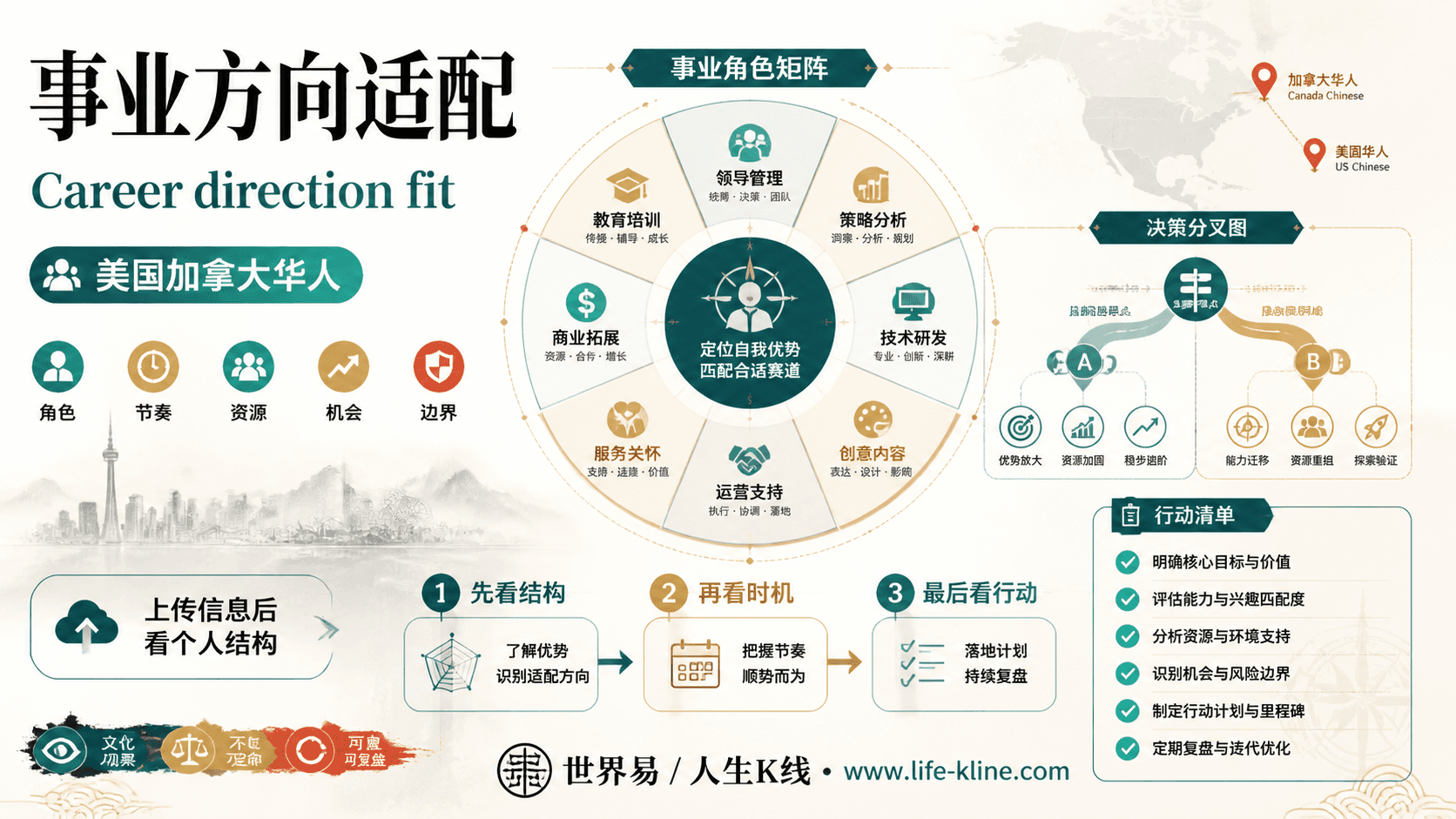
事业方向适配|美国加拿大华人
这张图把《Astrological Analysis and Practical Guide for Teachers' Job Change and Career Transition Timing》里的命理概念转成关系、边界和应用场景,适合先看图建立结构,再回到知识文章正文理解细节。
事业方向适配不应被写成固定结论。更适合美国加拿大华人的读法,是把传统术语翻译成结构、时机、环境、行动和复盘。
查看图片解读