Judging the Timing of Intervention in Long-term Care of Children with Special Needs: A Metaphysical Analysis
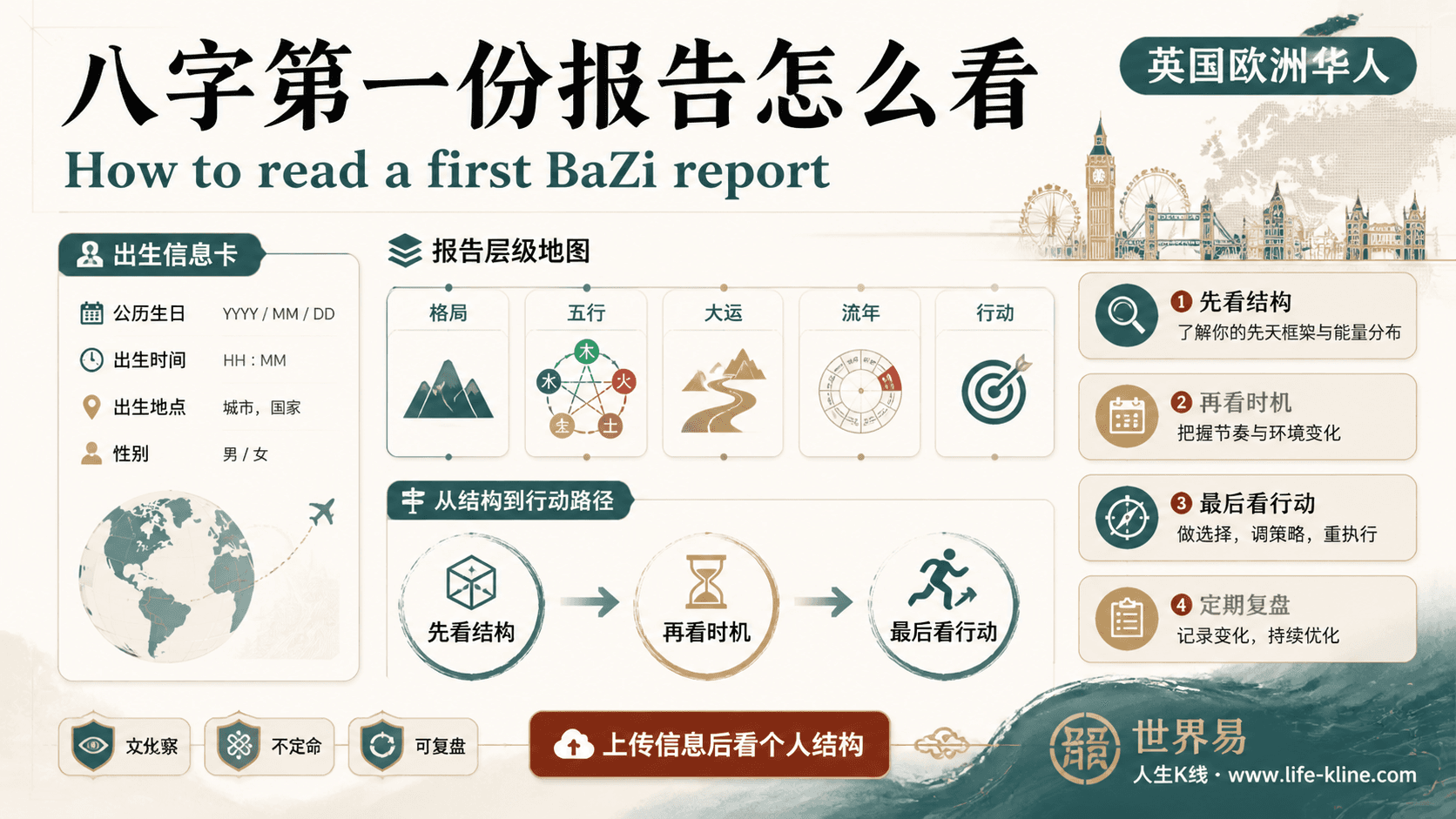
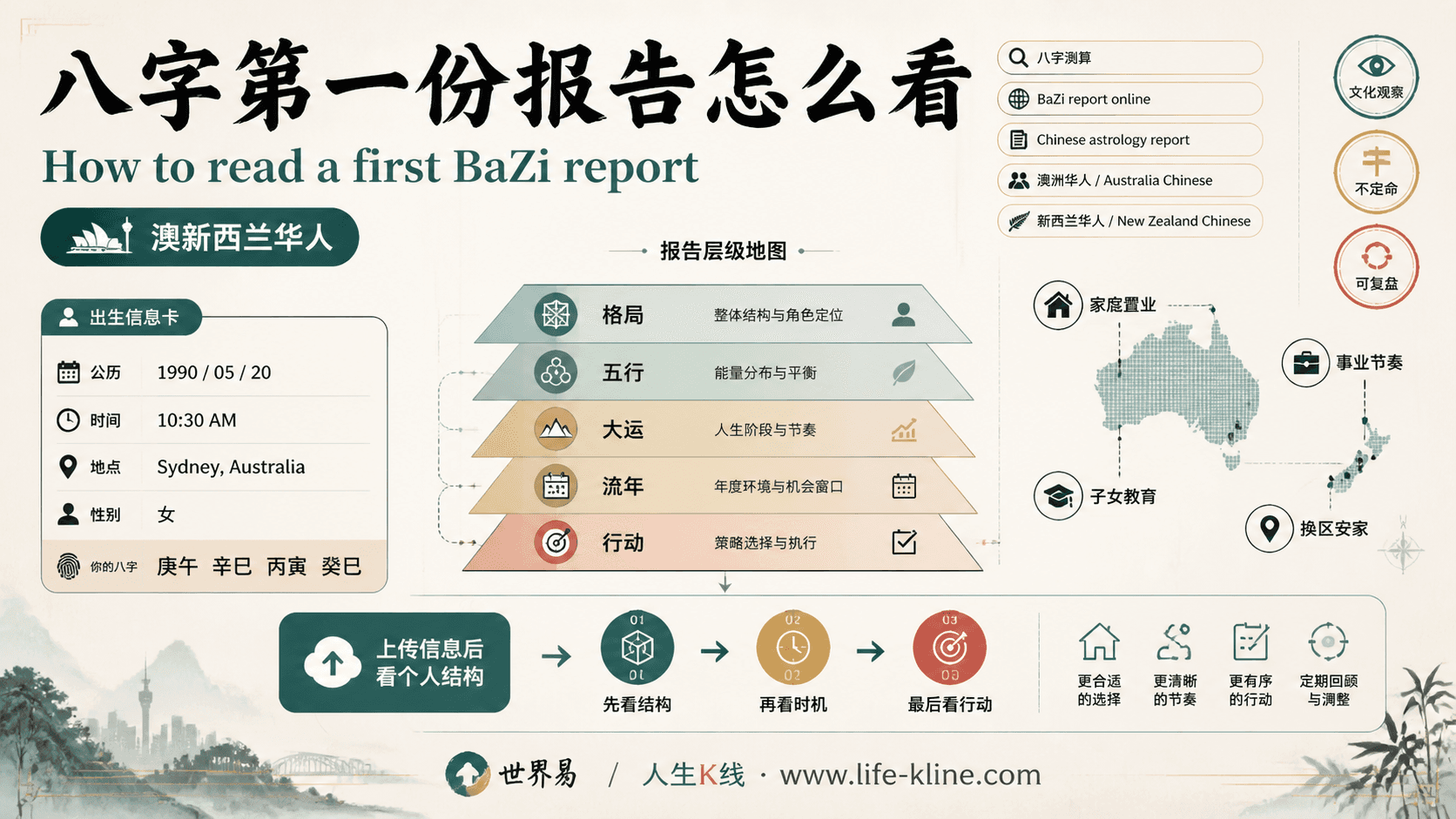
把这篇文章落到自己身上验证:先看结构,再进入个人分析,不做泛泛阅读。
Why This Decision Is Especially Difficult in This Scenario
The long-term care of children with special needs or chronic illnesses is essentially a protracted battle of resources and psychological endurance. Parents must continuously invest large amounts of time, money, and emotional resources, while often facing marital pressures and scarce social support, which easily leads to psychological burnout and strained parent-child attachment. In this context, judging whether to 'intervene now' or 'observe further' becomes an extremely challenging decision, because premature intervention may cause resource waste and escalate family anxiety, whereas delayed action may miss critical intervention windows.
From a psychodynamic perspective, the quality of attachment and autonomy development between parent and child involves complex interactions. Parents' expectations and anxieties toward children with special needs often lead to either overprotection or emotional detachment, both extremes being detrimental to the child's growth and mental health. Additionally, intergenerational expectations and educational pressures amplify the uncertainty of the decision.
From the perspective of metaphysical structure, the strength of the Day Master, the configuration of Yin stars (Zheng Yin/Pian Yin) and Bi Jian/Jie Cai reflect the attachment and support systems between parent and child; Guan Sha (Zheng Guan/Qi Sha) represent authority and rule constraints; Shi Shen and Cai stars reflect the child's expression and resource flow. The clashes and harmonies in Da Yun and Liu Nian represent the rhythm of life stage changes. Only by considering all these factors simultaneously can one better grasp the rhythm of intervention, avoiding blind actions or passive waiting.
Therefore, the difficulty in this scenario lies in balancing parenting psychological pressure and actual needs, using metaphysical rhythms to assist in judging the timing of intervention, so as neither to easily exacerbate family conflicts nor to miss the child's critical recovery period.
Three Core Dimensions of Metaphysical Judgment
Firstly, the strength of the Day Master and Shi Shen (child stars) reflects the child's own life energy and self-expression ability. A relatively strong Day Master usually indicates sufficient internal motivation, suitable for proactive intervention, while a weaker Day Master may require more protection and buffering, making intervention decisions more cautious.
Secondly, Yin stars (Zheng Yin and Pian Yin) and Bi Jian/Jie Cai symbolize attachment and support systems. Strong Yin stars suggest robust spiritual and material support in the parent-child relationship, whereas excessive Bi Jian/Jie Cai may indicate competition or dispersed resources, increasing difficulty in family coordination. The balance between Yin stars and Bi Jian/Jie Cai significantly influences the timing of intervention.
Thirdly, Guan Sha represent authority, rules, and external pressures, while Shi Shen reflect the child's creativity and emotional expression. Excessive Guan Sha may cause authoritarian suppression in caregiving, requiring vigilance against psychological backlash; strong Shi Shen facilitates emotional release and self-regulation. The clashes and harmonies in Da Yun and Liu Nian reveal environmental pressures or opportunities, helping to judge whether to actively intervene or temporarily observe.
Three Real BaZi Chart Case Studies
Case 1: Male, aged 20-25, Day Master Yi Wood (乙木, Yi Mu) relatively strong, Yang Ren pattern, currently in Da Yun Jia Chen (甲辰), Liu Nian Bing Wu (丙午). Yong Shen are Metal and Earth, Ji Shen is Water. This chart shows a relatively strong Day Master with a powerful Yang Ren pattern, indicating the child has strong internal vitality and self-driving force. The current Da Yun is stable and the Liu Nian adaptive. In caregiving, the child demonstrates strong autonomy and resistance; if parents intervene forcibly too early, conflicts may intensify, causing psychological burnout and attachment tension. Therefore, it is recommended to monitor the child's emotional and behavioral changes carefully, focusing on key behavioral signals, and avoid blind intervention. When intervening, professional psychological counseling should be coordinated, with gradual adjustment of caregiving strategies.
Case 2: Female, aged 25-30, Day Master Ding Fire (丁火, Ding Huo) relatively weak, Zheng Guan pattern, currently in Da Yun Yi Mao (乙卯), Liu Nian Bing Wu (丙午). Yong Shen is Wood, Ji Shen are Earth and Metal. This chart shows a relatively weak Day Master with a clear authority structure reflected by Zheng Guan. Yong Shen Wood supports vitality, and the current Da Yun is auspicious, favoring overall smoothness. Under this structure, the child may exhibit strong rule consciousness and passive compliance but lack inner energy, prone to psychological pressure and self-doubt. Parents tend to have strong control desires. The timing of intervention should focus on supporting the child's autonomous expression and avoid provoking rebellion due to excessive authority. It is recommended to intervene promptly when noticing the child's emotional low mood or self-isolation, combined with family therapy to ease tension.
Case 3: Female, aged 40-45, Day Master Ding Fire (丁火, Ding Huo) relatively weak, Pian Cai pattern, currently in Da Yun Yi Chou (乙丑), Liu Nian Bing Wu (丙午). Yong Shen is Wood, Ji Shen are Earth and Metal. This chart shows a relatively weak Day Master with a Pian Cai pattern, indicating the child relies heavily on external resources and experiences significant environmental changes. The current Da Yun is stable but lacks obvious auspicious momentum; the Liu Nian requires flexible adaptation. In caregiving, the child may show emotional fluctuations and unstable resource needs, with parents facing considerable psychological pressure and insufficient social support. Intervention at this time should be cautious, emphasizing observation of subtle emotional and behavioral changes to avoid over-intervention leading to resource exhaustion. It is recommended to combine professional medical and psychological support, gradually optimizing the caregiving environment while maintaining patience and flexibility.
These three cases illustrate that the strength of the Day Master, patterns, and the coordination between Yong Shen and Ji Shen directly affect the quality and quantity of parent-child interaction and the choice of intervention timing. Combined with Da Yun and Liu Nian, deciding whether to 'act now' or 'observe further' must integrate specific behavioral signals and psychological states, along with professional consultation, avoiding absolute judgments based solely on metaphysics.
Common Misjudgments and Blind Spots in This Scenario
Many parents easily fall into the trap of 'over-intervention' in caring for children with special needs, believing that active intervention is always necessary, neglecting the child's natural life rhythm and self-regulation ability. This misjudgment often leads to child resistance and family tension, exacerbating psychological burdens.
On the other hand, excessive waiting and observation can also cause missing critical intervention windows, especially when the child exhibits obvious negative emotions or behavioral withdrawal. Delayed action may worsen the condition and psychological problems, increasing overall family stress.
Ignoring the dynamic influence of Liu Nian and Da Yun in metaphysical analysis is another common blind spot. Many parents focus only on fixed patterns, overlooking risks and opportunities brought by environmental changes, resulting in caregiving strategies lacking flexibility and difficulty adapting to the child's changing needs.
Furthermore, relying solely on metaphysical judgment without integrating professional psychological counseling and medical resources is a major misjudgment in caregiving decisions. Metaphysics can only serve as an auxiliary reference and cannot replace professional diagnosis and treatment, especially when self-harm, depression, or violent tendencies appear; professional help must be sought immediately.
Practical Judgment Sequence
Step one: Assess the child's current life energy and emotional state, combining the metaphysical strength of the Day Master and Shi Shen to evaluate the child's self-expression and stress resistance. If the Day Master is relatively strong and Shi Shen active, it tends to favor temporary observation and avoiding over-intervention; otherwise, more careful attention is needed.
Step two: Analyze the status of Yin stars (Zheng Yin/Pian Yin) and Bi Jian/Jie Cai to judge the stability of the parent-child attachment and support system. Strong and coordinated Yin stars indicate good family support and allow moderate waiting; if Bi Jian/Jie Cai are excessive and unbalanced, indicating dispersed resources and internal conflicts, intervention and adjustment of the parent-child relationship should be prioritized.
Step three: Combine Guan Sha and Liu Nian/Da Yun to identify the influence of authority pressure and environmental changes on caregiving decisions. When Liu Nian clashes or Guan Sha are excessive, carefully evaluate the psychological backlash that intervention may trigger, choosing to wait or intervene gradually at appropriate times.
In summary, in practice, metaphysics should be used as a rhythmic aid, closely monitoring the child's emotional and behavioral changes, and timely integrating professional psychological counseling and family therapy. When negative signals appear, blind waiting is inadvisable; active external support should be sought. During stable periods, the intervention rhythm can be appropriately relaxed to protect family psychological health.
FAQ
Question 1: What specific guidance do Yong Shen and Ji Shen in metaphysics provide for caregiving decisions? Answer: Yong Shen represents elements favorable to the child's physical and mental development, while Ji Shen are unfavorable factors. Judging whether the Yong Shen is supported helps assess the child's vitality and whether family resources match, thus deciding the urgency and method of intervention.
Question 2: If the BaZi chart shows a weak Day Master, does it mean immediate intervention is always necessary? Answer: Not necessarily. A weak Day Master indicates lower vitality but should be judged comprehensively with Yin stars, Bi Jian/Jie Cai, and the dynamics of Liu Nian and Da Yun. If family support is good and the Liu Nian is stable, observation may be preferred; if accompanied by negative behaviors or emotions, timely intervention combined with professional support is advised.
Question 3: When psychological burnout and marital tension occur, how can metaphysics assist in alleviation? Answer: Metaphysics can help identify caregiving rhythms and key nodes, reminding parents to avoid blind aggression or passive waiting. By adjusting caregiving strategies, balancing Yin stars and Bi Jian/Jie Cai ratios, and considering changes in Liu Nian and Da Yun, resource allocation can be optimized to promote understanding and support between spouses, reducing psychological stress.
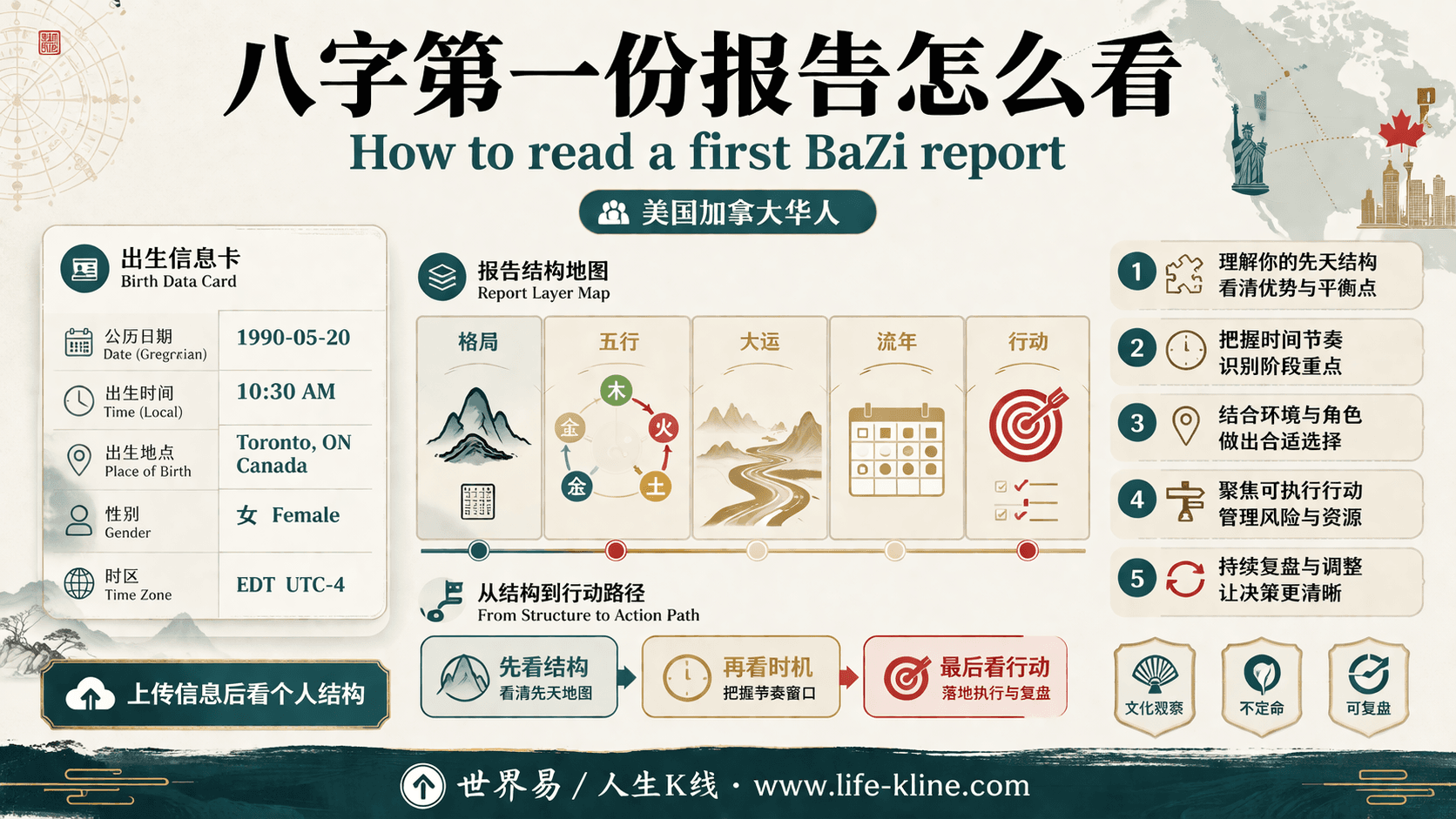
八字第一份报告怎么看|美国加拿大华人
这张图把《Judging the Timing of Intervention in Long-term Care of Children with Special Needs: A Metaphysical Analysis》里的命理概念转成关系、边界和应用场景,适合先看图建立结构,再回到知识文章正文理解细节。
八字第一份报告怎么看不应被写成固定结论。更适合美国加拿大华人的读法,是把传统术语翻译成结构、时机、环境、行动和复盘。
查看图片解读