BaZi Analysis and Practical Guidance on Bilingual Education Path Choices for Chinese Families in Singapore and Malaysia
把这篇文章落到自己身上验证:先看结构,再进入个人分析,不做泛泛阅读。
Why This Scenario Is Especially Difficult for Overseas Chinese
Chinese families in Singapore and Malaysia face multiple practical constraints when choosing bilingual education paths. The education systems in the two regions each have unique characteristics, with varying levels of promotion and environmental support for English and mother tongues (such as Mandarin and dialects), requiring families to flexibly adjust their language cultivation rhythms. Additionally, cross-border work and lifestyle rhythms increase the difficulty of family accompaniment, as physical distance and time differences between parents and children often cause disconnection, affecting the stability of the language environment.
The complexity brought by cultural differences in language choices should not be overlooked. In the Singapore-Malaysia region, English serves as the official language and primary communication tool, while the inheritance of mother tongues like Mandarin is valued but faces challenges. Families must balance bilingual usage in daily life and education systems to avoid imbalanced language development in children. Traditional Chinese family values emphasize investment in children's education, but the fast-paced modern lifestyle and diverse options make ideal accompaniment models difficult to realize.
BaZi structures play a special role in this context. The strength of the Day Master, patterns, and Yong Shen reflect the parents' personalities and overall family stability, while Da Yun and Liu Nian symbolize external environmental changes and adaptability. BaZi analysis helps families identify their strengths and potential risks in language cultivation rhythms, enabling scientific adjustment of accompaniment strategies to improve bilingual growth quality.
Therefore, Chinese families in Singapore and Malaysia must integrate practical environment factors with BaZi characteristics when making bilingual education decisions, scientifically planning accompaniment and growth rhythms to achieve stable language development amid complex and changing socio-cultural backgrounds.
Three Core Dimensions of BaZi Analysis
First, the strength of the Day Master determines the dominant ability and emotional stability of family members, especially parents, when facing bilingual education. A relatively weak Day Master often requires more external resources and environmental support, while a strong Day Master shows greater autonomous regulation ability. Combined with patterns, different energy expressions arise from Zheng Guan (Proper Officer) pattern, Qi Sha (Seven Killings) pattern, and Yang Ren (Yang Blade) pattern, influencing decision-making styles and execution.
Second, the choice of Yong Shen (favorable element) reflects the most needed element in the BaZi chart, guiding families on focal points in language cultivation. For example, Yong Shen of Metal, Water, or Wood corresponds respectively to rationality, fluidity, and growth forces. Families should design language environments and educational rhythms around Yong Shen characteristics, avoiding adverse effects from Ji Shen (unfavorable elements) that may cause parent-child tension or fragmented language environments.
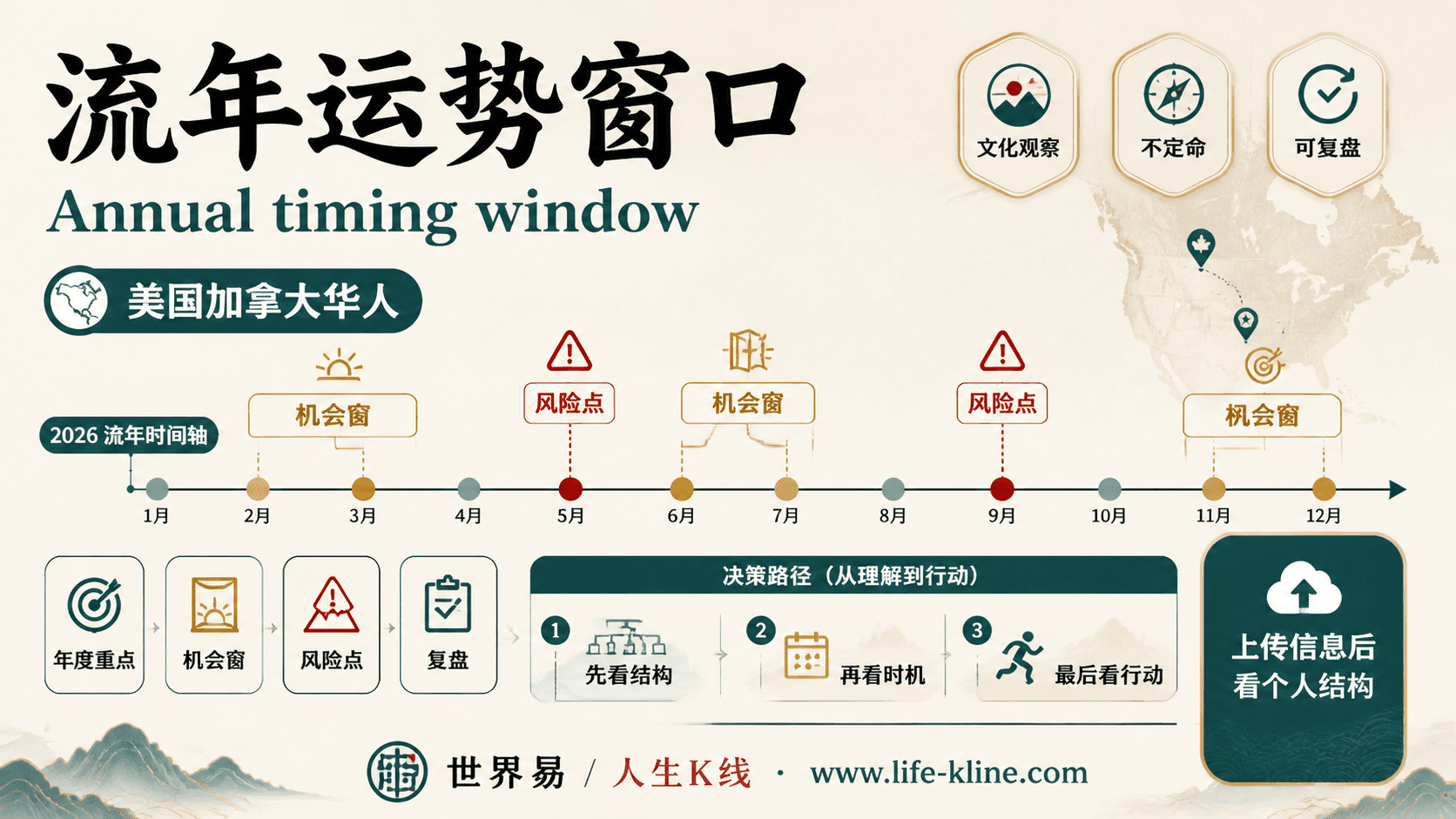
Lastly, Da Yun (decade luck cycles) and Liu Nian (annual fortune) reflect the impact of environmental changes on the family. Stable and auspicious Da Yun bring smooth accompaniment and growth atmospheres, while Liu Nian may bring random challenges or opportunities. Understanding Da Yun and Liu Nian interactions helps families judge when to increase educational investment or when to focus on consolidation and adjustment, ensuring continuous stability in bilingual education paths.
Additionally, the BaZi representation of the children's palace relates to their language reception ability and adaptability. Combined with the parents' Day Master and patterns, this forms a complete family language ecosystem to achieve the optimal rhythm and effect of bilingual education.
Three Real BaZi Case Studies
Case 1: Female, 45-50 years old, Day Master Gui Water (癸, Gui) relatively weak, Zheng Guan (Proper Officer) pattern, Yong Shen is Metal. Current Da Yun is Gui Chou (癸丑, Gui-Chou) from age 45-54, a stable luck cycle. This chart shows parents with a tendency toward steadiness and reliance on rational support. In the Singapore-Malaysia bilingual environment, the relatively weak Gui Water Day Master makes her prone to pressure in language settings. The Zheng Guan pattern emphasizes rules and order, aiding in establishing an orderly language learning plan. Metal as Yong Shen suggests the family should focus on rational arrangement of learning resources and time, avoiding emotional fluctuations caused by Ji Shen elements Fire and Wood. The stable Da Yun favors consolidation, reminding to avoid aggressive changes in bilingual education rhythms. It is recommended that this family prioritize evaluating the stability of the current language environment and adjust accompaniment rhythms to ensure the continuity of the child's language acquisition, especially focusing on teaching tools and environment optimization related to Metal elements.
Case 2: Male, 45-50 years old, Day Master Ding Fire (丁, Ding) relatively weak, Qi Sha (Seven Killings) pattern, Yong Shen is Wood. Current Da Yun is Ding Mao (丁卯, Ding-Mao) from age 39-48, an auspicious luck cycle. This chart indicates a father with a proactive but somewhat insufficient strength personality. The Qi Sha pattern carries challenge and breakthrough energy. Yong Shen Wood represents growth and vitality, suitable for emphasizing natural growth and interaction in the language environment. Ji Shen elements Earth and Metal warn against excessive constraints and rigid environments. Being in an auspicious Da Yun with smooth career and financial progress, the family may face more external pressures and time conflicts. In the Singapore-Malaysia bilingual context, the father should focus on creating more organic language communication opportunities for the child, avoiding discontinuity caused by busy work schedules. It is advised to prioritize adjusting work and family time allocation, leveraging the characteristics of Yong Shen Wood to create an open and lively language environment supporting the child's natural bilingual development.
Case 3: Female, 20-25 years old, Day Master Ji Earth (己, Ji) relatively strong, Yang Ren (Yang Blade) pattern, Yong Shen are Wood and Water. Current Da Yun is Gui Mao (癸卯, Gui-Mao) from age 18-27, a very auspicious luck cycle. This chart shows strong self-regulation ability and resilience to environmental changes. The Yang Ren pattern emphasizes individual strength, suitable for actively controlling the language learning rhythm. The Yong Shen combination of Wood and Water guides the family to balance language growth and fluidity, avoiding impulsiveness or anxiety caused by Ji Shen Fire. The auspicious Da Yun favors actively expanding language environments. In the Singapore-Malaysia bilingual environment, this female is more suited to proactive learning and cross-cultural communication strategies. Family support should focus on flexible and diverse language application scenarios. It is recommended to determine learning priorities and rhythms, encourage autonomy while maintaining emotional connection with the family, achieving a balance between stable accompaniment and efficient growth.
Common Misconceptions Among Overseas Chinese in This Scenario
Many Chinese families in Singapore and Malaysia tend to overlook how the parents' own BaZi structures affect accompaniment rhythms in bilingual education path choices, blindly pursuing high-intensity language input while neglecting overall family stability, resulting in parent-child tension and discontinuous language acquisition.
Some families overemphasize English proficiency while neglecting mother tongue cultural inheritance, causing children to develop imbalanced language use, leading to cultural identity confusion and psychological stress. The adverse influences of Ji Shen in BaZi are not properly mitigated, exacerbating internal family conflicts.
Other parents fail to adjust accompaniment strategies based on changes in Da Yun and Liu Nian, ignoring the impact of external environments on the family language setting. This leads to blindly pushing education plans during unfavorable Liu Nian periods, producing counterproductive effects and increasing family burdens and educational costs.
Practical Judgment Sequence
First, clarify the parents' Day Master strength and Yong Shen to assess the advantages and shortcomings in emotional management and resource allocation among family members, ensuring the language education rhythm aligns with the family's overall energy.
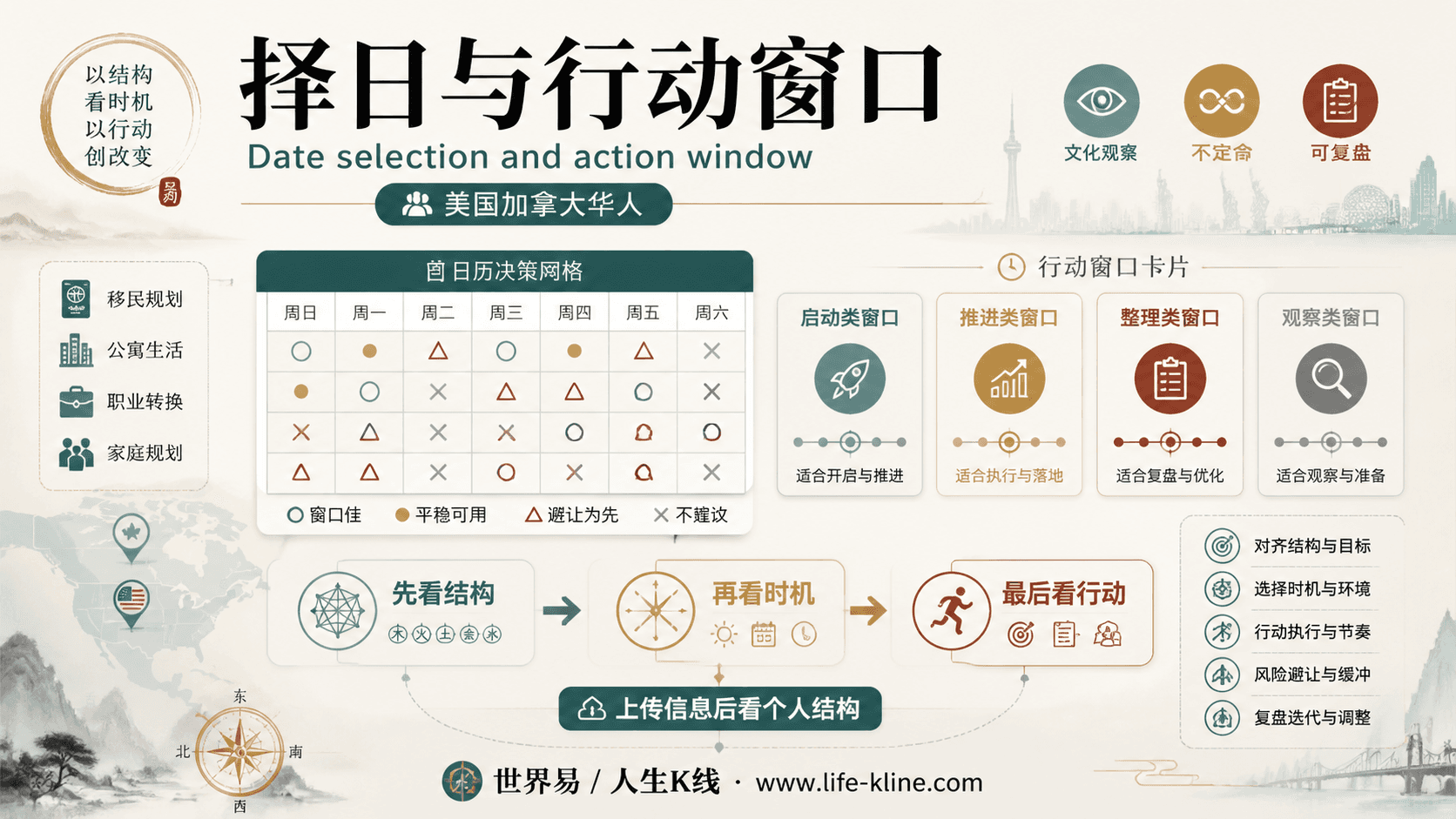
Second, combine Da Yun and Liu Nian to judge the stability and trends of the family environment in the current and coming years, reasonably planning the progression and adjustment points of language learning to avoid excessive pressure during unfavorable Da Yun or conflicting Liu Nian periods.
Finally, integrate the children's palace and the overall family BaZi pattern to design a bilingual environment suited to the child's personality and language reception ability, flexibly adjusting family accompaniment rhythms to ensure continuity in language acquisition and psychological safety.
FAQ
Question 1: How can parents with a relatively weak Day Master better accompany their children’s bilingual growth? Answer: Parents with a weak Day Master should focus on leveraging the energy of their Yong Shen to create a stable and rational language environment, reasonably allocate time, avoid emotional fluctuations affecting the child, and prioritize continuity and quality of accompaniment.
Question 2: How to determine the appropriate timing to adjust bilingual education rhythms based on Da Yun and Liu Nian? Answer: When Da Yun is stable and auspicious, it is suitable to actively advance language learning plans. During Liu Nian periods with conflicts or unfavorable influences, focus on consolidation and adjustment, avoiding drastic changes that may cause adaptation difficulties for the family and child.
Question 3: What impact does Ji Shen have on bilingual education path choices? Answer: Ji Shen represents elements that may bring negative effects, such as emotional instability or resource depletion. Families should avoid environments and behavioral patterns corresponding to Ji Shen, adjust language environments and accompaniment methods to reduce negative interference, and promote steady bilingual development.
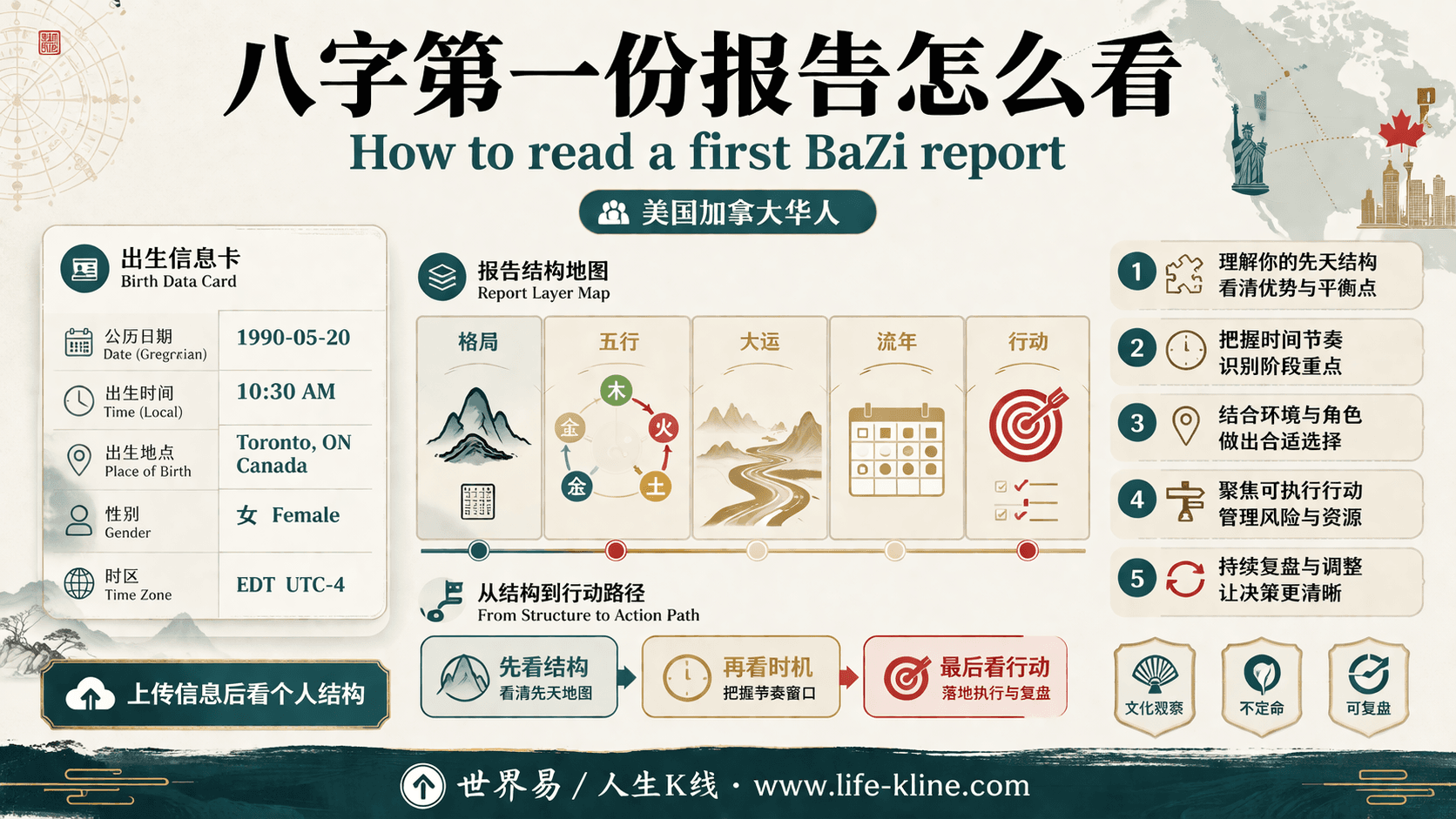
八字第一份报告怎么看|美国加拿大华人
这张图把《BaZi Analysis and Practical Guidance on Bilingual Education Path Choices for Chinese Families in Singapore and Malaysia》里的命理概念转成关系、边界和应用场景,适合先看图建立结构,再回到知识文章正文理解细节。
八字第一份报告怎么看不应被写成固定结论。更适合美国加拿大华人的读法,是把传统术语翻译成结构、时机、环境、行动和复盘。
查看图片解读