Analysis of Distance Adjustment Decisions in Parent-Child Economic and Emotional Role Reversal
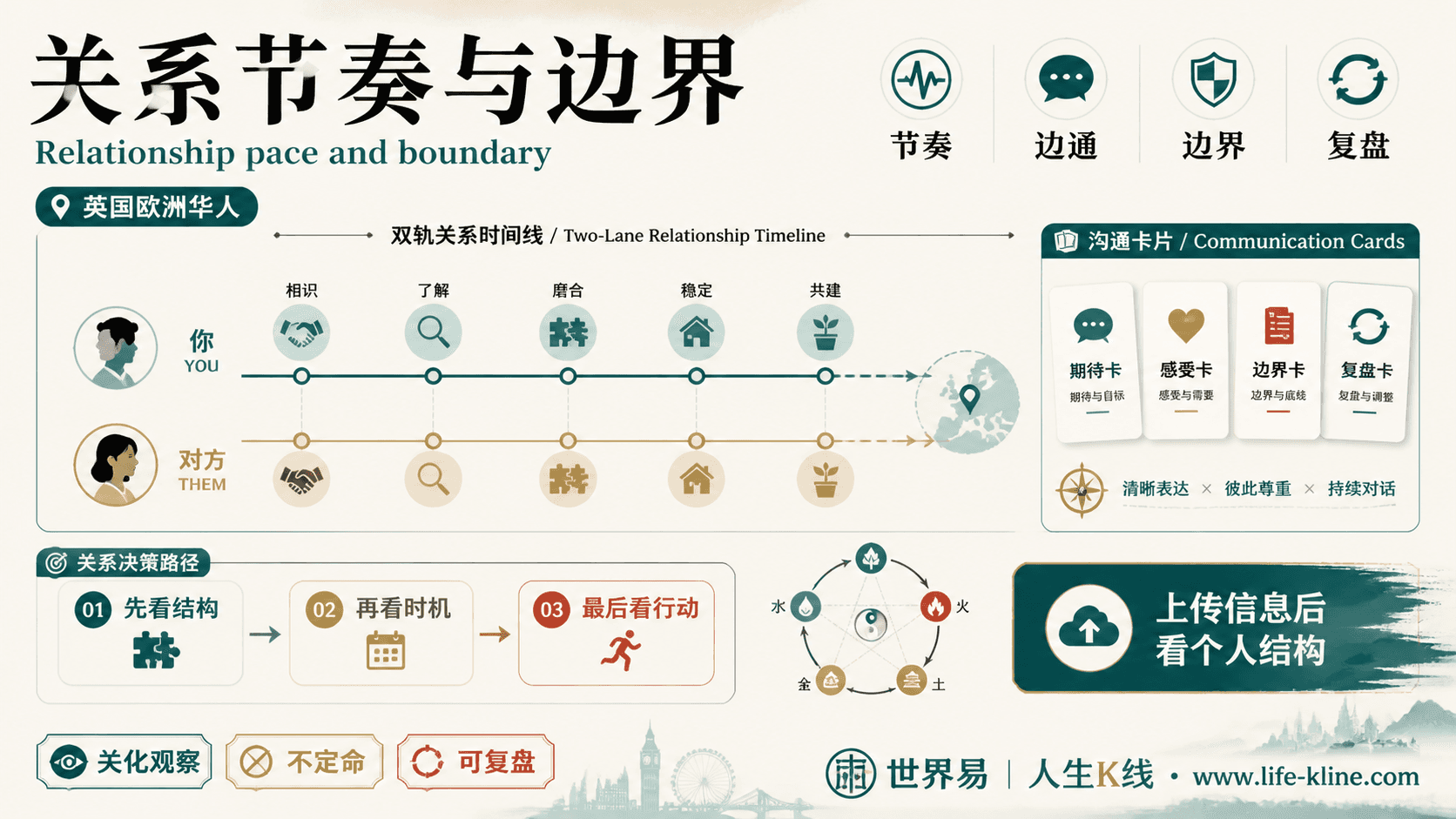
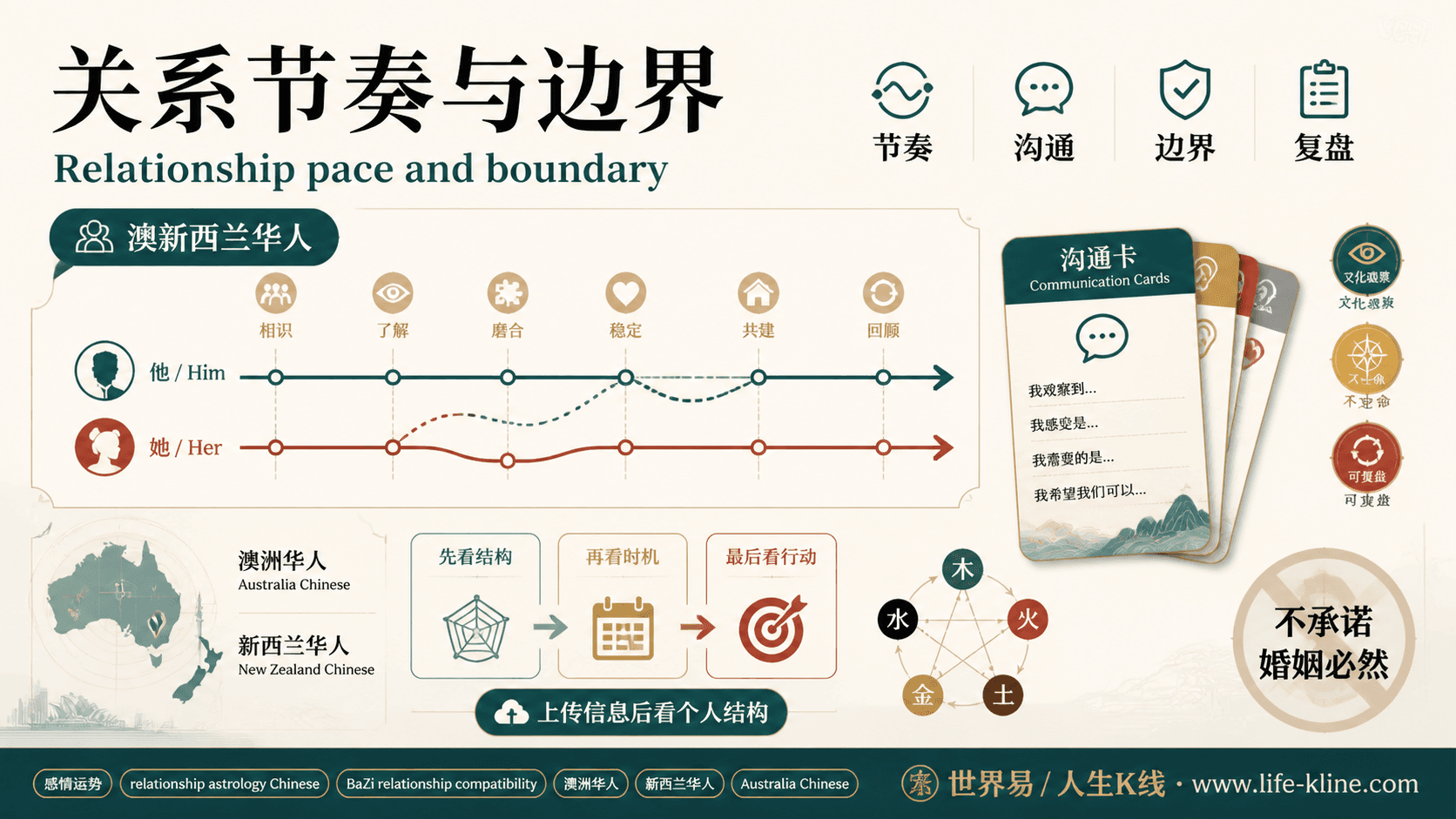
把这篇文章落到自己身上验证:先看结构,再进入个人分析,不做泛泛阅读。
Why This Decision Is Especially Difficult in This Scenario
Parents’ economic and emotional dependence on their adult children causes severe blurring of power and boundaries within family dynamics. Children often become trapped in long-term financial support pressure and emotional burdens, making it difficult to freely choose between creating distance or actively approaching. Cultural expectations frequently reinforce children’s sense of obligation towards parents, intensifying self-blame and internal conflict, while neglecting the impact on their own nuclear family and their partner’s opinions, leading to multiple relational conflicts.
On the psychological level, the reversal of attachment roles forces children to assume psychological responsibilities that should belong to parents, creating emotional blackmail or invisible obligations. This easily triggers anxiety, exhaustion, and boundary confusion. At this time, the BaZi structures of Yin Stars (印星, representing parents/support), Bi Jian/Jie Cai (siblings/peers competition), and Guan Sha (authority pressure) correspond to different psychological resource allocations and external pressures, serving as rhythmic tools to help identify risks and potentials in family relationships.
In the BaZi chart, Yin Stars symbolize parents, authority, and support; if overly strong, they may reinforce dependence and control. Bi Jian/Jie Cai represent siblings or peers and competition; if too strong, they may exacerbate self-resource depletion. Guan Sha relates to authority pressure and external discipline, influencing how children face family power structures. Proper interpretation of these structures, combined with the trends in Da Yun (decade luck cycle) and Liu Nian (annual fortune), helps clarify the optimal timing for distancing or approaching.
Integrating family dynamics and BaZi structures, the difficulty of this decision lies in preventing one’s own nuclear family from being squeezed or chronically overexerted, while also considering parents’ psychological needs and emotional security. It is essential to avoid blind severance or excessive sacrifice, requiring flexible distance adjustments guided by psychological counseling and family therapy alongside BaZi rhythmic insights.
Three Core Dimensions of BaZi Judgment
First, the relationship between the Day Master (日主) and Yin Stars (印星) is central. Yin Stars represent the parental role and supportive power. If Yin Stars are strong and generate or assist the Day Master, it indicates strong parental dependence, and children may face significant emotional or economic pressure. Conversely, if Yin Stars are subdued or weak, children tend to have stronger autonomous boundaries. The strength of Yin Stars also reflects the parents’ health and emotional stability, affecting whether children are suitable to approach for comfort or need to distance for self-protection.
Second, Bi Jian/Jie Cai stars symbolize peer resources and competition. If relatively strong, resource dispersion and overconsumption are likely, especially evident when financially supporting the family. In charts with strong Bi Jian/Jie Cai, children often struggle to sustain parental dependence pressures alone and are prone to emotional exhaustion. Priority should be given to creating some distance to protect personal stability.
Third, Guan Sha stars relate to authority pressure and external discipline, reflecting the degree of parental control and strictness of family rules. A strong Guan Sha presence may exacerbate blurred family boundaries and emotional blackmail. Key moments for adjusting closeness occur when Guan Sha is combined or clashed in the Liu Nian or Da Yun cycles. Judging these in combination with Yong Shen (用神, favorable element) and Ji Shen (忌神, unfavorable element) allows more precise identification of when active approaching may facilitate healing or when distancing is necessary to avoid harm.
Additionally, the interaction of Da Yun and Liu Nian reveals the current environmental rhythm. Stable Da Yun favors maintaining the status quo and avoiding intense conflicts; unfavorable luck cycles require caution to prevent major incidents and prioritize self-safety. Applying these three dimensions comprehensively, together with professional psychological support, enables a fuller grasp of timing and strategies for distancing or approaching.
Three Real BaZi Case Studies
Case 1: This female’s BaZi chart has a relatively strong Day Master 癸 (Gui) Water, with a Bi Jian pattern. The Yong Shen is Metal, and the Ji Shen is also Metal. The current Da Yun is 丙辰 (Bing Chen), and the Liu Nian is 丙午 (Bing Wu), indicating overall stable fortune, suitable for maintaining status quo. The Bi Jian pattern combined with a strong Day Master shows strong inner self-awareness and good self-resource integration. Yin Stars exist but are not overly strong, implying parental dependence is present but not overwhelming. Under this structure, if parental emotional or economic dependence becomes excessive, she is more likely to rationally and consciously create distance to prevent self-exhaustion. However, with stable Liu Nian, if parental needs are mild, active approaching to repair relationships can be positively received. It is recommended to first assess the actual intensity of parental dependence and her own energy, combined with psychological counseling, to gradually adjust distance and avoid abrupt decisions.
Case 2: This female’s BaZi chart has a relatively weak Day Master 壬 (Ren) Water, with a Shi Shen (食神) pattern. The Yong Shen is Metal, and the Ji Shen are Wood and Fire. The current Da Yun is 戊申 (Wu Shen), and the Liu Nian is 丙午 (Bing Wu), indicating stable fortune, suitable for maintaining status quo. The weak Day Master with coexisting Yin Stars and Guan Sha indicates she bears considerable authority and emotional pressure within the family, with obvious parental dependence possibly accompanied by emotional blackmail. The Shi Shen pattern brings some desire for expression, but the Ji Shen Wood and Fire suggest potential conflicts and consumption in the family environment. When approaching, attention must be paid to Guan Sha’s emotional suppression; excessive closeness may escalate psychological burdens. A gradual approach is advisable, while strengthening personal boundaries to avoid emotional entanglement with parents. Professional guidance and clear boundaries involving partner and own family are key.
Case 3: This male’s BaZi chart features a balanced Day Master 甲 (Jia) Wood, with a Cong Cai (从财) pattern. The Yong Shen are Earth and Fire, and the Ji Shen are Water and Wood. The current Da Yun is 癸亥 (Gui Hai), and the Liu Nian is 丙午 (Bing Wu). The Gui Hai Da Yun is relatively weak, requiring vigilance against major changes. The Day Master in Cong Cai pattern indicates heavy parental or family economic dependence, with his own resources easily depleted. Guan Sha is not strong, but Ji Shen Water and Wood suggest risks of emotional and external conflicts. Under this structure, economic and emotional pressures may cause him to oscillate between distancing and approaching. During unfavorable Da Yun periods, caution is needed to avoid major conflicts or psychological burdens from excessive closeness. Priority should be given to self-safety and stability, waiting for more favorable Da Yun and Liu Nian before considering moderate repair. Throughout, professional psychological support is essential to prevent being drawn into a vortex of depletion.
Common Misjudgments and Blind Spots in This Scenario
A common misjudgment is treating BaZi structures as deterministic, believing that a strong Yin Star necessarily means one must approach parents, or a weak Yin Star means one must distance, ignoring the complexity and variability of emotional interactions among family members. BaZi can only provide rhythmic references; specific decisions must integrate real-life conditions and psychological assessments to avoid mechanical application.
Another blind spot is neglecting the feelings of one’s partner and nuclear family, over-focusing on parental dependence at the expense of one’s own and spouse’s boundaries, causing long-term psychological trauma and relational deterioration. When Bi Jian/Jie Cai are strong in the chart, special caution is needed to prevent resource dispersion and exhaustion, avoiding dual emotional and financial overextension.
There is also misunderstanding regarding Guan Sha stars; many assume Guan Sha always represents negative authority pressure. In reality, Guan Sha can, when properly combined or clashed, bring necessary family rules and clear boundaries, beneficial for creating healthy distance. Ignoring the interaction of Liu Nian and Da Yun and only looking at static BaZi structures is another blind spot.
Finally, neglecting professional psychological counseling and family therapy support, relying solely on BaZi for major decisions, can lead to pitfalls. Especially in cases involving emotional blackmail, PUA (psychological manipulation), or violence, BaZi cannot replace essential professional intervention. Prioritizing professional help is crucial.
Practical Judgment Sequence
Step one: Identify the specific manifestations and intensity of parental dependence, combining BaZi Yin Stars, Bi Jian/Jie Cai, and Guan Sha structures. Judge whether these are strengthened or weakened in the current Da Yun and Liu Nian, clarify whether personal resources are sufficient, and whether there are obvious signs of psychological exhaustion or financial overextension.
Step two: Review the psychological boundaries and emotional carrying capacity of oneself and one’s partner, assessing the internal family support system. If the chart shows strong Bi Jian/Jie Cai and obvious Ji Shen, prioritize distancing and strengthening self-protection, combined with psychological counseling to clarify emotional dependence and responsibility boundaries.
Step three: Observe the Guan Sha star’s combinations and clashes in the Liu Nian. If there is a beneficial combination and the Da Yun is stable, consider moderate active approaching to initiate repair and improve family relations, alleviating parental dependence’s emotional pressure. Maintain dynamic adjustments during this process to avoid self-exhaustion from excessive closeness.
The entire process should be integrated with professional psychological counseling or family therapy to identify emotional blackmail and potential trauma, ensuring personal safety and avoiding impulsive actions. BaZi rhythms serve as auxiliary references and should not be used for independent decision-making.
FAQ
Question 1: Does a strong Yin Star in BaZi necessarily mean one must actively approach parents? Answer: A strong Yin Star indicates significant parental influence and possible dependence, but does not necessarily require children to actively approach. It must be combined with fortune trends (Liu Nian, Da Yun) and real family circumstances to judge whether repair is beneficial or distancing is needed for self-boundary protection.
Question 2: How can one avoid emotional and financial exhaustion with a BaZi chart strong in Bi Jian/Jie Cai? Answer: Strong Bi Jian/Jie Cai means resources are easily consumed. Children should first assess their own energy, set reasonable boundaries, and if necessary, create distance. Psychological counseling helps clarify responsibilities and prevents long-term exhaustion leading to psychological breakdown.
Question 3: Can BaZi provide help when facing parental emotional blackmail and PUA behaviors? Answer: BaZi can only provide rhythmic references and cannot replace professional intervention. Emotional blackmail and PUA fall under psychological trauma and require priority access to psychological counseling, family therapy, or legal assistance to ensure personal safety.
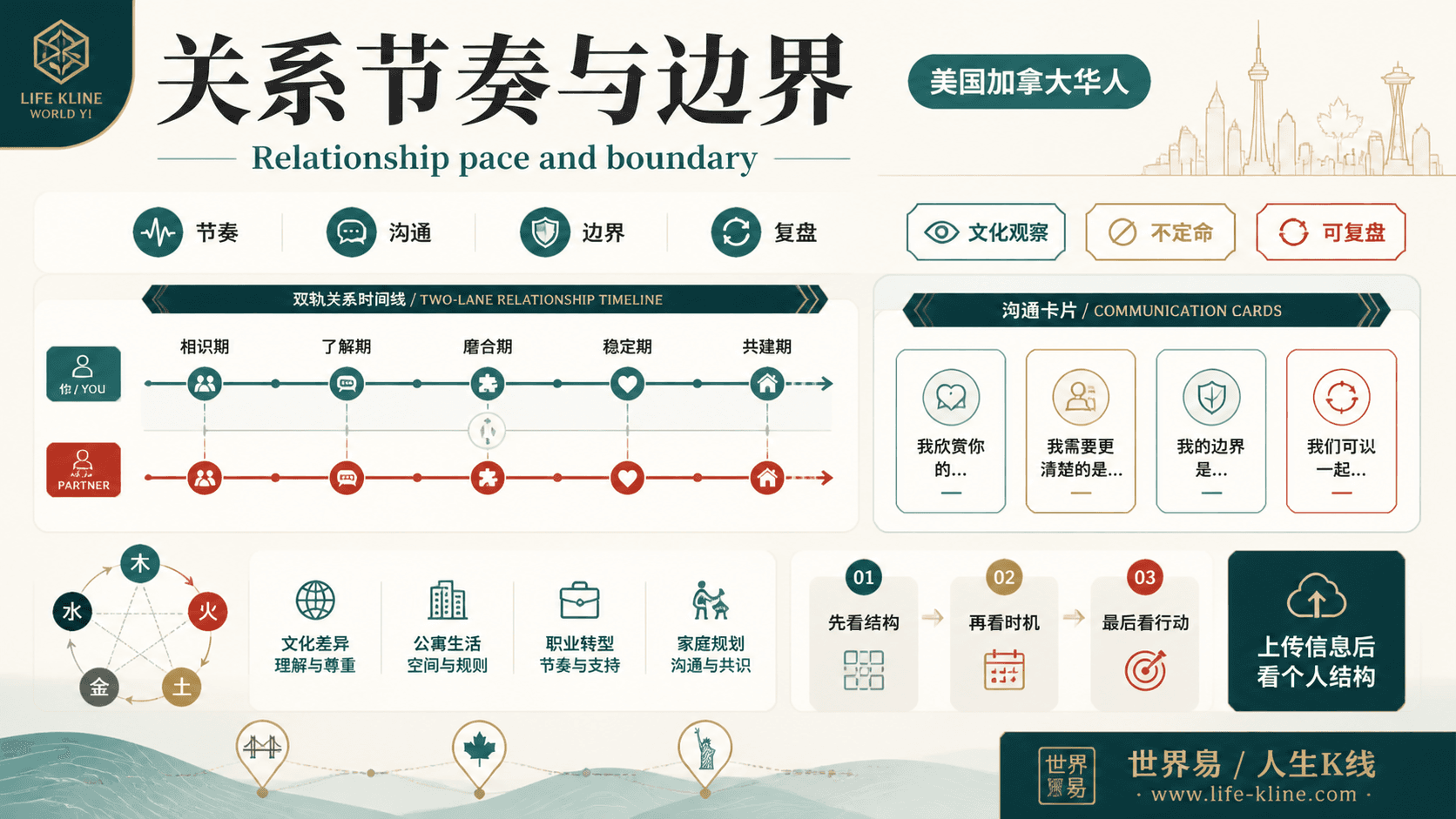
关系节奏与边界|美国加拿大华人
这张图把《Analysis of Distance Adjustment Decisions in Parent-Child Economic and Emotional Role Reversal》里的命理概念转成关系、边界和应用场景,适合先看图建立结构,再回到知识文章正文理解细节。
关系节奏与边界不应被写成固定结论。更适合美国加拿大华人的读法,是把传统术语翻译成结构、时机、环境、行动和复盘。
查看图片解读