Detailed Analysis and Practical Application of the Pian Cai (Indirect Wealth) Pattern in BaZi
把这篇文章落到自己身上验证:先看结构,再进入个人分析,不做泛泛阅读。
Concept Definition
The Pian Cai (Indirect Wealth) pattern is an important structure in BaZi metaphysics. Its formation condition is that the Month Branch or the revealed stems contain the same-element Five Element that the Day Master (Ri Zhu) controls. Here, the “Day Master” refers to the dominant Five Element in the natal chart, while the “same-element Five Element that is controlled” refers to elements of the same Five Element category that the Day Master can overcome. Therefore, the Pian Cai pattern emphasizes the controlling relationship between wealth manifestations and the Day Master, reflecting the source of wealth and the balance of the Day Master’s strength.
According to metaphysical principles, the core of the Pian Cai pattern lies in the Month Branch revealing or directly manifesting the same-element Five Element that the Day Master controls. This formation creates a controlling yet harmonious relationship between the wealth star and the Day Master. The Pian Cai pattern often brings flexible and diverse wealth opportunities, embodying the liquidity and adaptability of wealth.
Metaphysical Characteristics and Symbolic Meaning
The Pian Cai pattern has distinct favorable and unfavorable features in BaZi. It favors a strong Day Master combined with Pian Cai, meaning when the Day Master is robust, the effect of Pian Cai can be positively expressed, bringing increased wealth luck. Additionally, the Pian Cai pattern prefers Shi Shen (Eating God) and Shang Guan (Hurting Officer) generating wealth, where Shi Shen and Shang Guan represent creativity and expression, which can nurture Pian Cai, providing continuous vitality to wealth. Independent star positions refer to the Pian Cai star appearing clearly and separately in the chart, enhancing its influence and clarity.
The pattern disfavors Jie Cai (Rob Wealth) competing for wealth and excessive wealth with a weak Day Master. Jie Cai competing for wealth indicates similar wealth stars contending for resources, causing wealth loss or instability; excessive wealth with a weak Day Master means the wealth stars are too strong while the Day Master is insufficiently powerful to support the wealth energy, leading to fluctuations and losses in wealth luck. The Pian Cai pattern symbolizes a flexible and changeable wealth model, suitable for multifaceted development but requiring careful balance between the self and wealth.
Practical Configuration and Interpretation
In practical application, the Pian Cai pattern is generally suitable for careers in financial investment, trade, and businesses involving liquid assets. The financial investment field requires flexible use of capital, and the liquidity and variability of the Pian Cai pattern perfectly match this characteristic; the trade industry emphasizes the circulation and transformation of resources, with the controlling and wealth-generating relationship of Pian Cai reflecting the vitality of transactions.
Moreover, individuals with the Pian Cai pattern often possess the ability to handle side businesses or part-time jobs, demonstrating versatility across multiple fields. For example, if the Month Branch reveals Wood while the Day Master is Earth, Wood controls Earth and both belong to the Wood element category, forming the Pian Cai pattern. This is suitable for operating trade or investment activities. If the Day Master is strong and Shi Shen/Shang Guan generate wealth, the wealth luck of the Pian Cai pattern will be more stable.
It is important to note that if the configuration includes Jie Cai competing for wealth or excessive wealth with a weak Day Master, financial caution is advised to avoid losses caused by financial disputes or overspending. When making comprehensive interpretations, priority should be given to evaluating the strength of the Day Master and the manifestation of wealth stars to determine the actual effect of the Pian Cai pattern.
Common Misconceptions
Many people mistakenly believe that the Pian Cai pattern only relates to the amount of wealth. In fact, the Pian Cai pattern emphasizes the nature of wealth and its relationship with the Day Master. Pian Cai does not merely refer to wealth itself but represents wealth luck characterized by strong liquidity and variability. Additionally, the Pian Cai pattern is not simply about having abundant wealth stars but requires a combination of a strong Day Master and Shi Shen/Shang Guan generating wealth to exert a positive effect.
Another misconception is neglecting the taboos of Jie Cai competing for wealth and excessive wealth with a weak Day Master. The Pian Cai pattern is not better with more wealth stars; excessive wealth stars can weaken the Day Master, causing imbalance in wealth luck. Therefore, BaZi analysis should comprehensively consider the relationship between the self and wealth, avoiding a one-sided pursuit of the number of wealth stars while ignoring internal balance.
FAQ
Question: What exactly does “the same-element Five Element that the Day Master controls” mean in the Pian Cai pattern? Answer: This refers to the Five Element that the Day Master can overcome but shares the same elemental category as the Day Master, meaning they belong to the same Five Element type but are in a controlling relationship. This relationship characterizes the special formation of Pian Cai.
Question: What career directions are suitable for the Pian Cai pattern? Answer: Individuals with the Pian Cai pattern are suitable for careers in financial investment, trade, liquid assets, and versatile side jobs due to their wealth luck’s liquidity and diversity, fitting flexible and adaptable work environments.
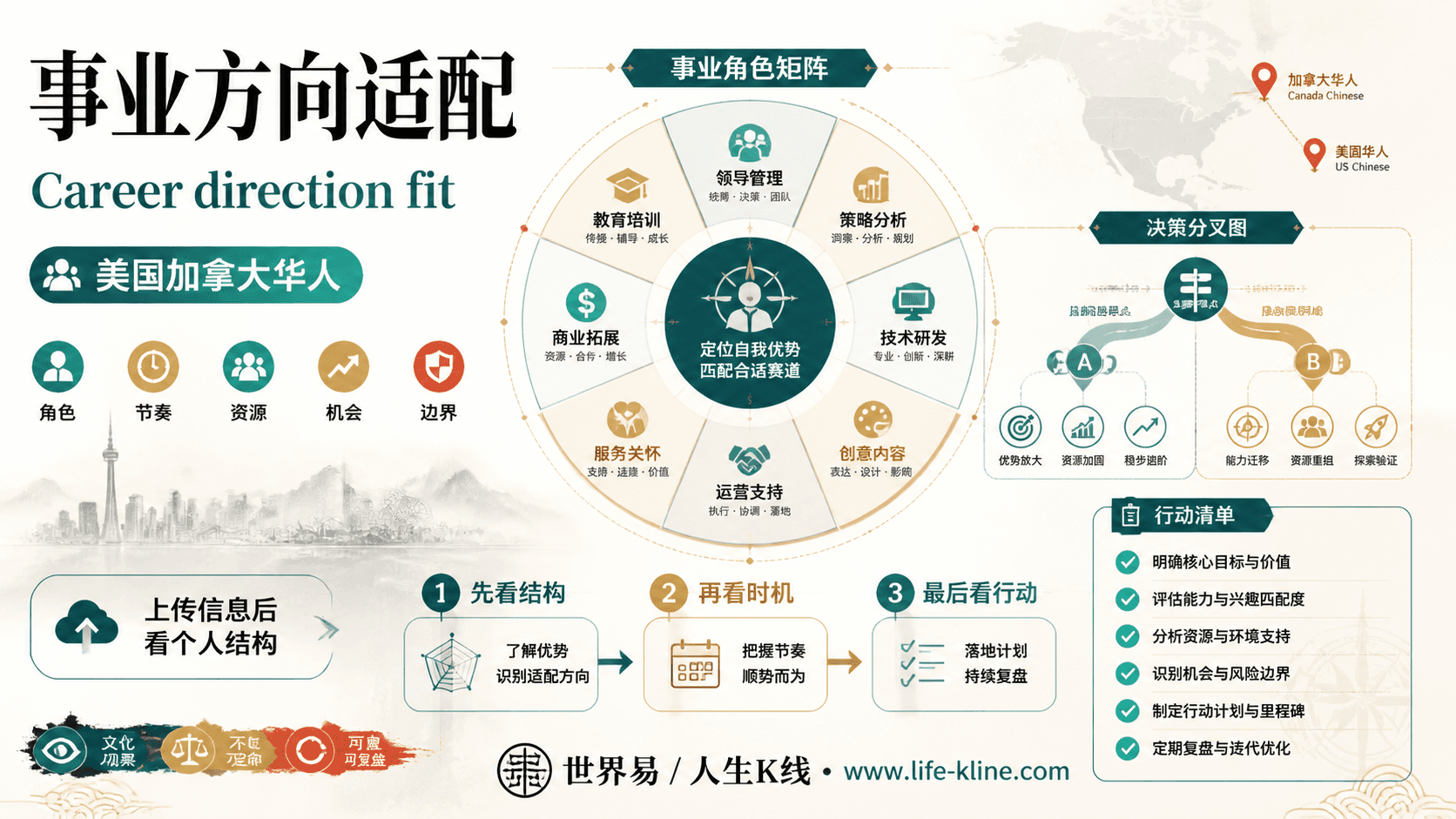
事业方向适配|美国加拿大华人
这张图把《Detailed Analysis and Practical Application of the Pian Cai (Indirect Wealth) Pattern in BaZi》里的命理概念转成关系、边界和应用场景,适合先看图建立结构,再回到知识文章正文理解细节。
事业方向适配不应被写成固定结论。更适合美国加拿大华人的读法,是把传统术语翻译成结构、时机、环境、行动和复盘。
查看图片解读