Analysis of Investing in Maintaining or Gradually Withdrawing from Estranged Old Friendships
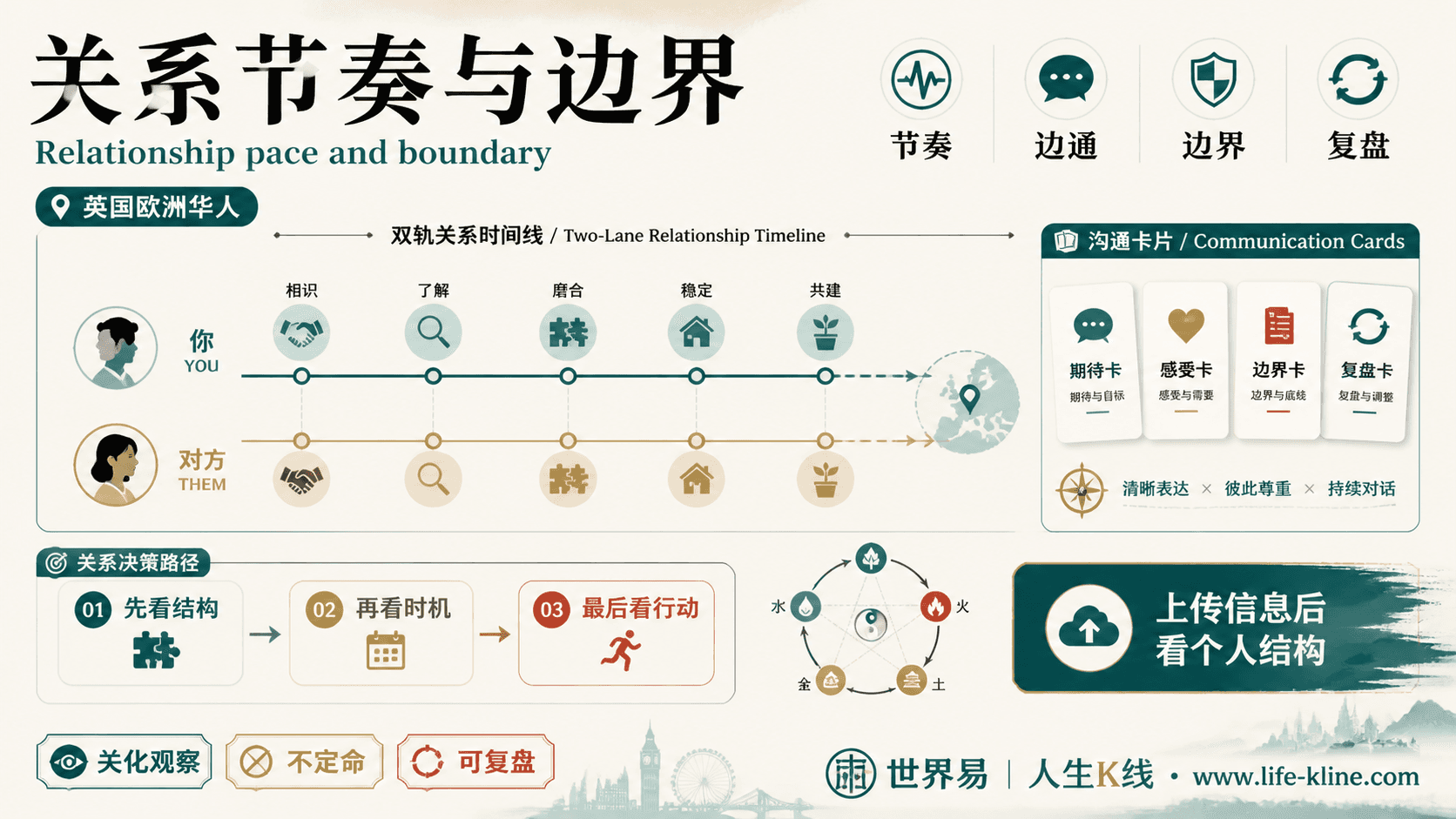
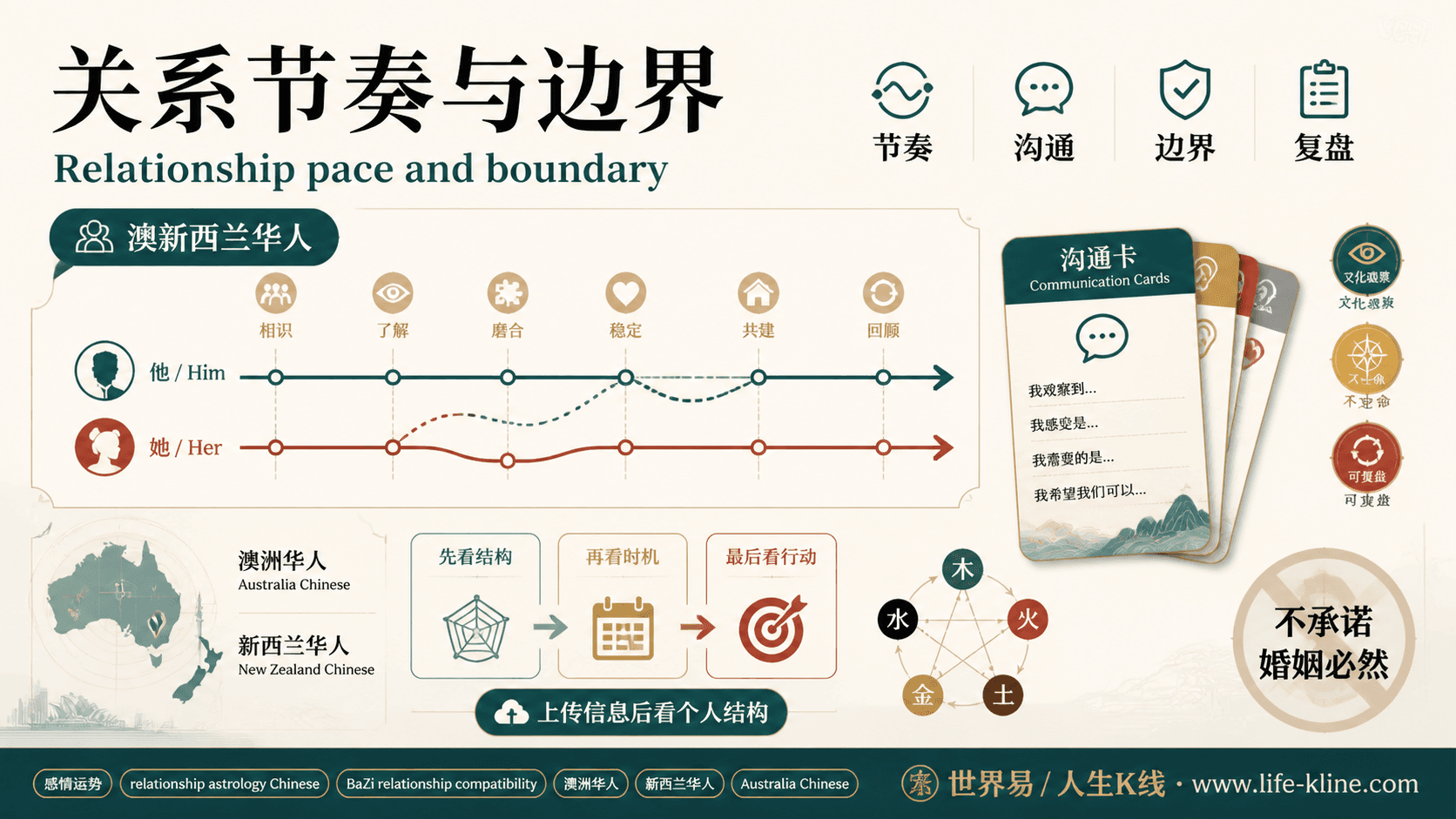
把这篇文章落到自己身上验证:先看结构,再进入个人分析,不做泛泛阅读。
Why This Decision Is Especially Difficult in This Scenario
Estrangement between old friends often originates from mismatched life stages, divergent values, and loss of common topics, causing a rhythm divergence in previously stable relationships. In social dynamics, maintaining friendships relies on reciprocity and trust; however, when both parties’ life focuses and psychological needs are out of sync, forced maintenance not only consumes emotional resources but may also increase psychological burdens.
Against this backdrop, the decision to increase investment or gradually withdraw involves complex psychological games. Individuals often oscillate between emotional dependence and rational boundaries, easily falling into social anxiety and self-doubt. Furthermore, social comparison psychology intensifies sensitivity to relationship status, potentially leading to over-interpretation or overlooking key signals.
In BaZi structures, Bi Jian (representing friends and competitors), Yin Star (representing support and recognition), and Shi Shan (representing expression and communication) serve as important entry points to understanding this social rhythm divergence. These Ten Gods combinations in the chart reveal not only an individual’s social energy and modes of expression but also their active or passive positions within relationships.
Therefore, in the complex scenario of estranged old friends, metaphysical rhythm aids in judging the timing and intensity of investment and withdrawal, helping individuals manage social resources more rationally, reduce unnecessary emotional consumption, and avoid missing potential reconciliation opportunities due to blind relationship decline.
Three Core Dimensions of Metaphysical Judgment
First, the relationship between the Day Master and Bi Jian is the foundation of social decision-making. Bi Jian represents friends, competitors, and similar-energy self-expression. A strong Bi Jian pattern often indicates an individual’s proactive social engagement with a higher initiative and need to maintain friendships. Conversely, a weak Bi Jian may manifest as insufficient social initiative, prone to estrangement.
Second, the Shi Shan stars correspond to modes of expression and emotional release, serving as key factors in regulating communication rhythm among friends. Those with strong Shi Shan are often good at expression and relationship adjustment, but excessive strength may lead to over-externalization of emotions, intensifying conflicts. Yin Star represents recognition and support, acting as a lubricant in friendships. Individuals with strong Yin Star are more likely to gain understanding and support, facilitating maintenance.
Third, the influence of Liu Nian (annual fortune) and Da Yun (decade luck cycle) on social rhythm cannot be ignored. Auspicious luck phases (such as when the Yong Shen is strong) favor proactive repair and increased investment, whereas in inauspicious luck or when the Ji Shen is prevailing, relationship pressures and frictions increase, making observation and gradual withdrawal more suitable to avoid escalating conflicts. Especially the interaction between Liu Nian and Da Yun determines current social energy release and endurance capacity.
Overall, the interplay of Bi Jian, Shi Shan, and Yin Star structures in BaZi forms important rhythm signals for social decision-making. Bi Jian reflects the ability to actively maintain friendships, Shi Shan relates to expression and emotional communication, and Yin Star provides potential for support and recognition. Reasonably interpreting the strength and flow of these energies helps determine whether to increase investment in or appropriately retreat from old friendships.
Three Real BaZi Case Studies
Case 1: This female’s Day Master is 丁火 (Ding Fire), relatively weak, with a Zheng Yin (Proper Seal) pattern. Her Yong Shen is Metal, and Ji Shen is Earth. She is currently in the 庚子 (Geng Zi) Da Yun, an auspicious phase, with the Liu Nian being 丙午 (Bing Wu), following the favorable trend. The Zheng Yin pattern indicates her social style emphasizes gaining recognition and support; Metal as Yong Shen suggests her social strategy relies on rationality and boundary awareness. The Geng Zi Da Yun brings career and financial progress, with relatively abundant social resources. In the context of estranged old friends, she tends to maintain relationships through steady support and rational emotional communication. However, due to a weak Day Master, excessive proactive investment may lead to energy depletion. It is recommended she prioritize observing the other party’s responsiveness, moderately increase investment when openness and response signals appear, and otherwise gradually withdraw to avoid negative effects from forced maintenance.
Case 2: This young female’s Day Master is 甲木 (Jia Wood), relatively weak, with a Bi Jian pattern. Her Yong Shen is Water, and Ji Shen are Fire and Earth. She is currently in the 丙戌 (Bing Xu) Da Yun, an inauspicious phase requiring caution against major changes, with the Liu Nian being 丙午 (Bing Wu), necessitating prudence. The Bi Jian pattern reflects her strong need for friend homogeneity and autonomy, but Yong Shen Water indicates emotional and communication fluctuations. Both Da Yun and Liu Nian show pressure, unstable social environment, prone to rhythm mismatches and emotional conflicts. In estranged old friend scenarios, she may choose gradual withdrawal due to self-protection tendencies but might also impulsively maintain due to strong Bi Jian. It is advised she carefully examine whether her emotional expression is excessive, use rational communication to ease relations timely, and pay attention to the other party’s feedback to avoid irrational investment worsening the relationship.
Case 3: This male’s Day Master is 丁火 (Ding Fire), relatively weak, with a Jie Cai (Rob Wealth) pattern. His Yong Shen is Wood, and Ji Shen are Earth and Metal. He is currently in a stable 癸巳 (Gui Si) Da Yun, with Liu Nian being 丙午 (Bing Wu), overall tending toward maintenance and adaptive responses. The Jie Cai pattern means he shows a certain competitiveness and initiative in friendships; Wood as Yong Shen strengthens his action capacity and growth desire. Socially, he tends to actively express and participate, but due to a weak Day Master, he may feel energy insufficient. In decisions regarding estranged old friends, he should flexibly adjust investment intensity according to actual interaction rhythm, neither blindly increasing nor prematurely giving up. It is recommended he maintain a certain level of proactive communication while paying attention to mutual rhythm coordination, decisively adjusting strategy when obvious cold signals appear to avoid emotional burdens.
These three cases illustrate different social investment and withdrawal rhythms and strategies in estranged old friend scenarios under varying Day Master strengths, patterns, and Yong Shen. Zheng Yin pattern leans toward rational support, Bi Jian pattern toward high autonomy and impulsiveness, and Jie Cai pattern toward proactive flexibility. Their respective BaZi structures reveal different social decision risks and mitigation paths.
Common Misjudgments and Blind Spots in This Scenario
First, misjudgments caused by emotional exaggeration. During social rhythm divergence, individuals often interpret the other party’s silence or reduced interaction as a complete severance signal, neglecting natural estrangement due to phase rhythm mismatches and life pressures. Although Bi Jian and Shi Shan structures in BaZi can indicate initiative and expression strength, they should not be regarded as absolute social state markers.
Second, underestimating the psychological burden caused by forced maintenance. Some people with strong Yin Star or strong friendship recognition tend to ignore the other party’s boundary needs, forcibly investing time and emotion, which leads to relationship tension and emotional exhaustion. The Yong Shen and Ji Shen relationships indicated by BaZi remind us of the importance of maintaining personal rhythm.
Third, ignoring the rhythm influence of Liu Nian and Da Yun. The quality of social relationships is significantly affected by Da Yun and Liu Nian. Mistakenly basing decisions on short-term emotional fluctuations may cause missed adjustment opportunities. For example, caution is advised during inauspicious luck phases; blind investment often increases relationship burdens.
Fourth, one-sided understanding of BaZi structures. Strong Bi Jian does not necessarily mean one must actively maintain relationships; strong Shi Shan does not imply unobstructed emotional expression; strong Yin Star does not guarantee the other party’s support. It is essential to combine actual interactions and mutual rhythms to avoid decision errors caused by a single metaphysical perspective.
Practical Judgment Sequence
Step one: Assess the interaction state between your own Day Master and Bi Jian. A strong Day Master with moderate Bi Jian indicates sufficient social initiative and resources, allowing consideration of moderately increasing investment. A weak Day Master or excessively strong Bi Jian calls for caution against emotional exhaustion from overinvestment; prioritize observing the other party’s feedback.
Step two: Examine the expression function of Shi Shan stars. If Shi Shan is balanced and the Liu Nian supports communication, it is recommended to adopt open expression and rational communication strategies to promote relationship repair. When Shi Shan is restrained or Ji Shen prevails, avoid emotional impulsiveness, adopt a steady social rhythm, and gradually withdraw if necessary.
Step three: Combine Liu Nian and Da Yun to judge overall rhythm. Auspicious luck periods are suitable for proactive repair and increased investment; inauspicious phases are better for maintaining distance, observing changes, and avoiding conflict escalation. Throughout the process, continuously monitor mutual interaction rhythms and emotional signals, adjusting strategies flexibly.
Overall, investing in maintenance and gradually withdrawing are not mutually exclusive. Metaphysical rhythm provides a scientific reference for adjusting investment intensity and pace. Decisions should integrate actual social signals, maintain emotional health, and seek professional psychological support if needed to handle old friend relationships rationally yet warmly.
FAQ
Question 1: Does strong Bi Jian in BaZi necessarily mean one should actively maintain friendships? Answer: Strong Bi Jian represents strong social initiative but should not be mechanically interpreted as a must to actively maintain. One should consider Day Master strength, Liu Nian and Da Yun, and mutual interaction rhythms to balance investment and personal endurance, avoiding blind investment that leads to emotional exhaustion.
Question 2: When old friends become estranged, does weak Shi Shan mean communication difficulties and that one should give up maintaining the relationship? Answer: Weak Shi Shan may cause limited expression but is not the sole reason to give up. One can adjust communication methods, adopt more rational or indirect expression strategies, and pay attention to Yin Star support to gradually improve relationship rhythm rather than directly giving up.
Question 3: How to judge the investment rhythm in old friend relationships when Liu Nian conflicts with Da Yun? Answer: When Liu Nian conflicts with Da Yun, overall energy fluctuates greatly, so a cautious strategy is recommended to avoid intense investment. It is more important to observe the other party’s attitude and interaction frequency, adjust investment intensity timely, maintain flexibility and adaptability, and reduce psychological burden.
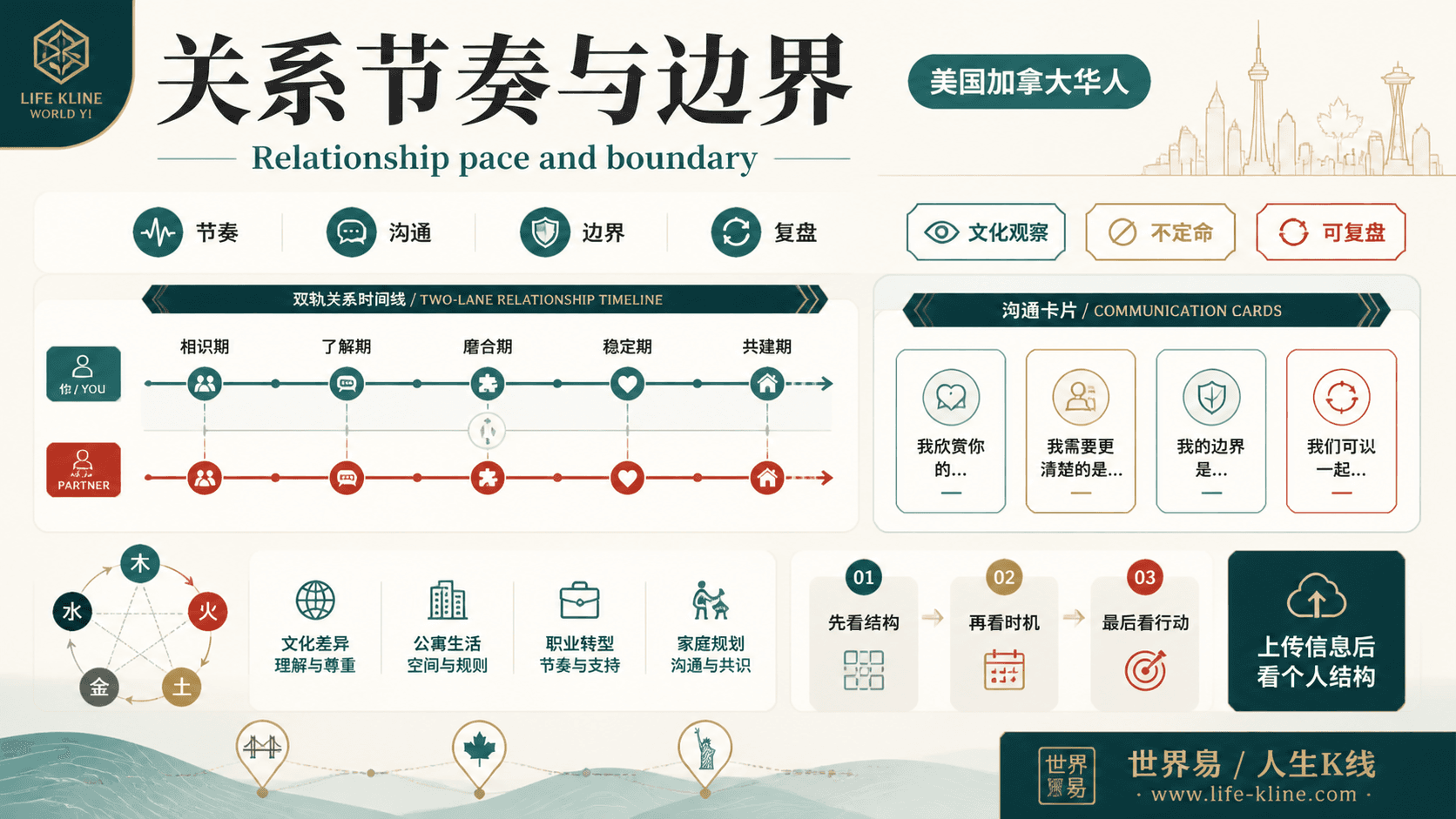
关系节奏与边界|美国加拿大华人
这张图把《Analysis of Investing in Maintaining or Gradually Withdrawing from Estranged Old Friendships》里的命理概念转成关系、边界和应用场景,适合先看图建立结构,再回到知识文章正文理解细节。
关系节奏与边界不应被写成固定结论。更适合美国加拿大华人的读法,是把传统术语翻译成结构、时机、环境、行动和复盘。
查看图片解读