Decision-Making Under Emotional Drain from Narcissistic Parents: A Metaphysical Perspective
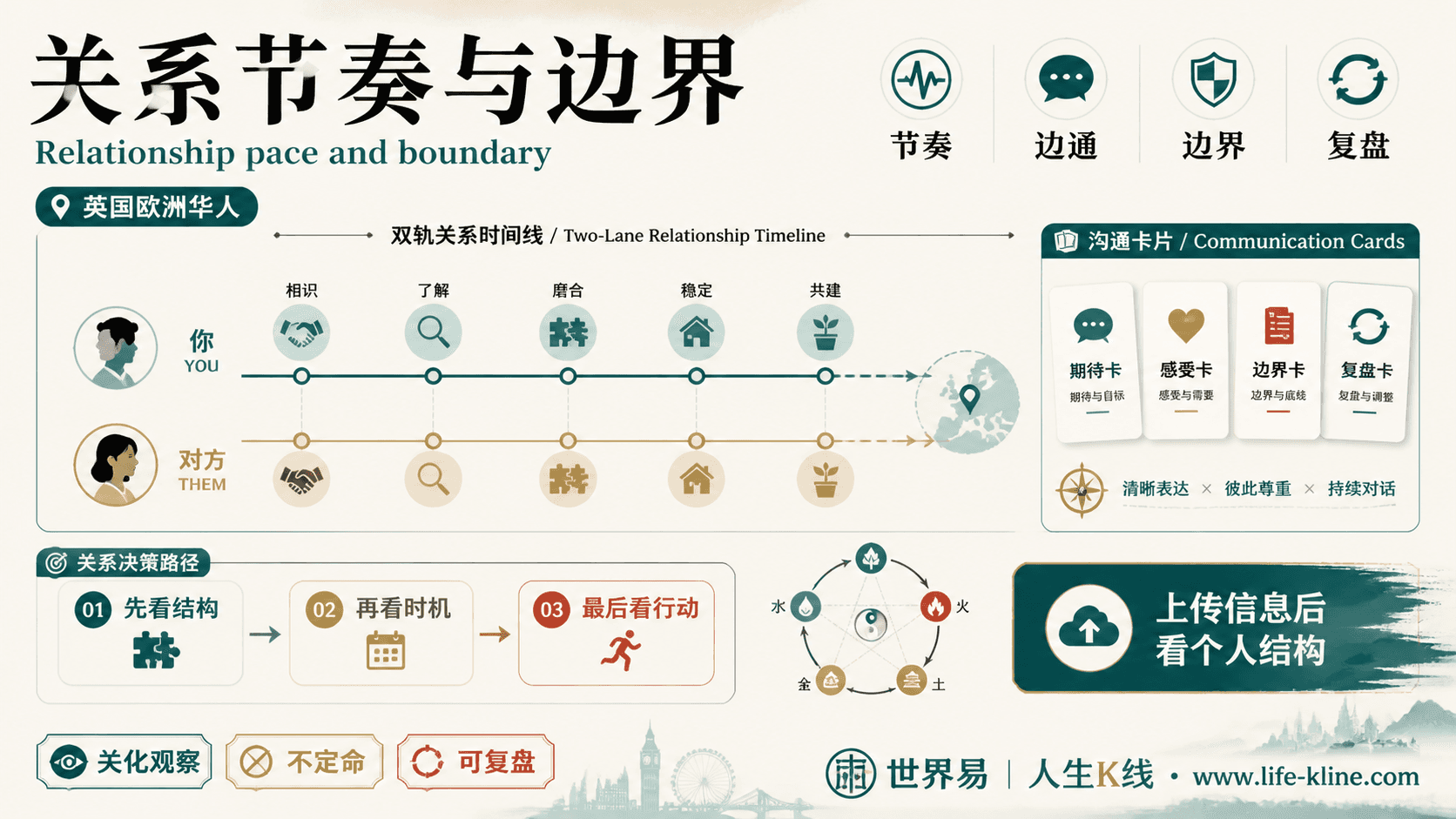
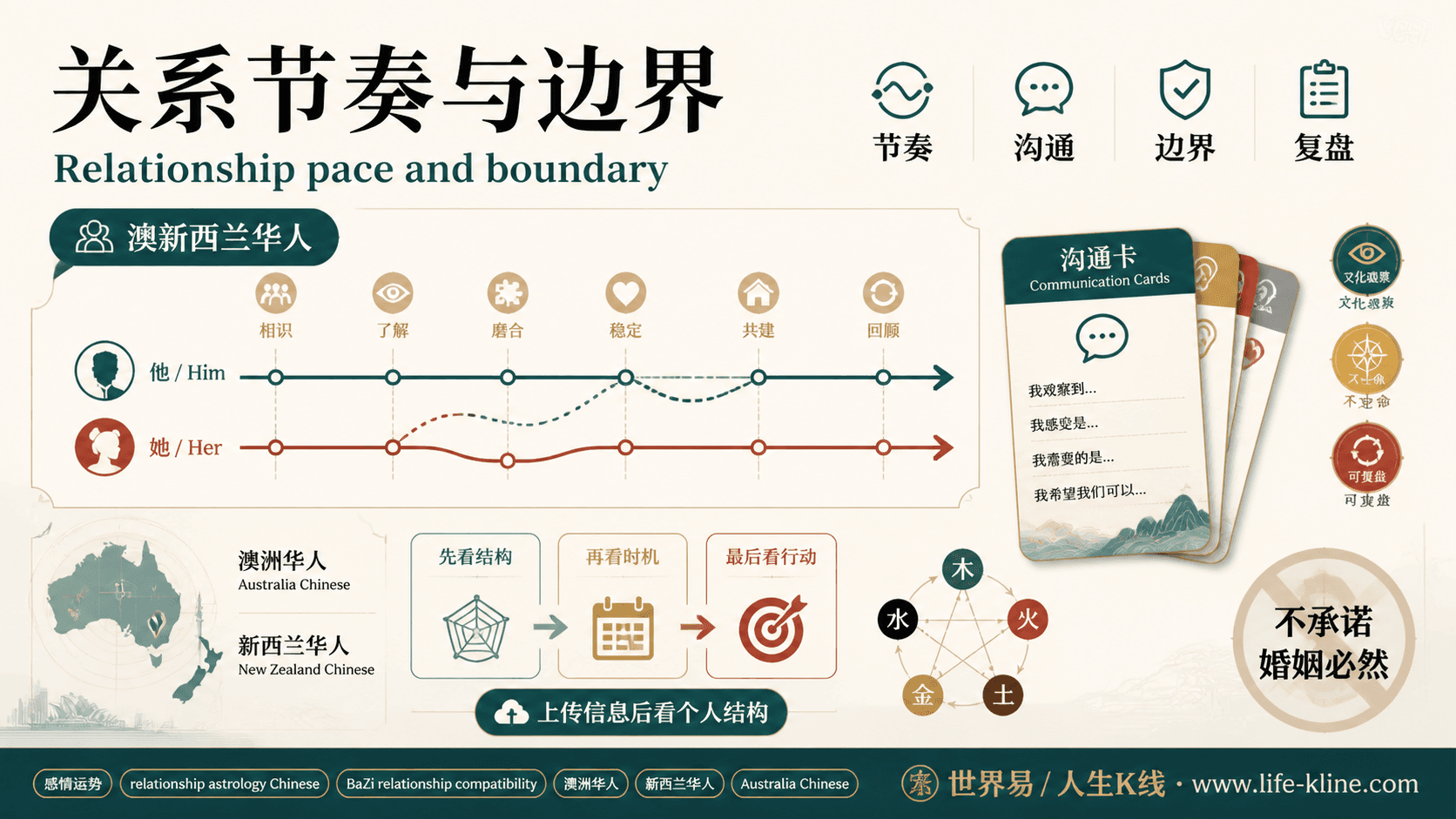
把这篇文章落到自己身上验证:先看结构,再进入个人分析,不做泛泛阅读。
Why This Decision Is Especially Difficult in This Scenario
Narcissistic parents often consume emotional nourishment, placing their children in a position of being instrumentalized and denied, resulting in long-term emotional exhaustion. In such family dynamics, children face not only blurred boundaries but also cycles of comparison and diminished self-worth, leading to accumulating inner anxiety and conflicts.
Against this backdrop, the decision whether to immediately address family conflicts or to continue observing becomes exceptionally complex. Emotional blackmail and cultural expectations often make it difficult for children to clearly express their own needs, fearing that mishandling may escalate conflicts or even cause family breakdown.
In BaZi, the strength of the Day Master, the pattern type, and the combination of Yong Shen (favorable elements) and Ji Shen (unfavorable elements) can reflect an individual's energy state and stress tolerance within family relationships. Particularly, the Yin stars (Zheng Yin/Pian Yin) represent emotional support; Bi Jian and Jie Cai symbolize self-protection; Zheng Guan and Qi Sha reflect authoritative oppression; and Cai stars (Pian Cai/Zheng Cai) relate to resource flow—all are important clues for assessing emotional and behavioral responses.
Therefore, in scenarios involving narcissistic parents and emotional nourishment depletion, the BaZi structure not only highlights risk points but also assists in discerning when to proactively set boundaries and when to patiently observe, enabling a more rational and stepwise approach to handling complex family relationships.
Three Core Dimensions of Metaphysical Judgment
First, the relationship between the Day Master and Yin stars (Zheng Yin/Pian Yin) reflects the state of self and emotional support systems. A weak Day Master combined with insufficient Yin stars often indicates a lack of stable emotional backing, making one more vulnerable to control and denial from narcissistic parents, signaling the need for cautious handling to avoid emotional exhaustion.
Second, the presence of Bi Jian and Jie Cai represents support and competition from siblings or peers. A strong Bi Jian or a Bi Jian pattern indicates a relatively strong self-protection awareness and competitiveness, suggesting suitability for earlier boundary-setting; conversely, a weak Bi Jian may suggest maintaining observation temporarily to avoid escalating conflicts.
Third, the combination of Zheng Guan/Qi Sha and Cai stars reflects authoritative pressure and the flow of material or emotional resources. Strong Zheng Guan/Qi Sha forming clashes or combinations with the Day Master implies obvious authoritative oppression within the family, requiring more cautious handling to prevent conflict escalation. Cai stars relate to giving and taking of emotional and material resources; when restricted, they may indicate severe emotional nourishment depletion, necessitating timely boundary-setting.
The interaction between Da Yun (decade luck cycles) and Liu Nian (annual fortune) should not be overlooked. Da Yun represents long-term trends, while Liu Nian reflects short-term states. Favorable and smooth Da Yun usually suits proactive action; Liu Nian clashes or combinations warn of emotional volatility, advising stabilization first and careful planning of handling pace.
Three Real BaZi Chart Case Studies
Case 1: This female subject has a weak Day Master of Geng Metal (庚, Geng), classified as a Bi Jian pattern, with Yong Shen being Fire and Ji Shen being Water and Wood. She is currently in the Yi You Da Yun (乙酉, ages 44-53, a stable luck cycle favoring maintenance) and experiencing the Bing Wu Liu Nian (丙午). The Bi Jian pattern in her Four Pillars symbolizes a strong self-awareness, but the weak Day Master lacks sufficient energy to fully resist external pressures. The Yong Shen Fire represents inner warmth and motivation. Although the current Da Yun is stable, the presence of Ji Shen Water and Wood suggests potential emotional setbacks. Within the family dynamics of narcissistic parents, she tends to feel denied and emotionally drained. This chart indicates that short-term intense conflicts are inadvisable; observing and steadily setting boundaries while maintaining internal Fire energy is recommended to avoid emotional collapse. Psychological counseling is advised to strengthen self-boundaries and gradually clarify family positions.
Case 2: This male subject has a relatively strong Day Master Ren Water (壬, Ren), classified as a Yang Ren (羊刃) pattern, with Yong Shen being Earth and Fire, and Ji Shen being Metal. He is currently in the Yi You Da Yun (乙酉, ages 24-33, a stable luck cycle favoring maintenance) and experiencing the Bing Wu Liu Nian (丙午). The Yang Ren pattern reflects the strong and aggressive nature of the Ren Water Day Master, indicating a strong self-protection awareness within the family. Yong Shen Earth and Fire help stabilize the Day Master, reducing the impact of emotional blackmail. Ji Shen Metal warns of external authoritative pressure. Combined with narcissistic parental dynamics, he possesses strong resistance and handling ability but must be cautious of emotional outbursts. The chart suggests suitability for proactive expression and boundary-setting but emphasizes the importance of emotional management. Family therapy and rational communication are recommended to avoid relationship deterioration due to impulsiveness.
Case 3: This male subject has a relatively strong Day Master Ji Earth (己, Ji), classified as a Yang Ren (羊刃) pattern, with Yong Shen being Wood and Water, and Ji Shen being Fire. He is in the Jia Yin Da Yun (甲寅, ages 51-60, a highly auspicious and smooth luck cycle) and experiencing the Bing Wu Liu Nian (丙午). The relatively strong Day Master and Yang Ren pattern indicate substantial inner strength, and the favorable Da Yun suggests an overall energy field conducive to resolving family conflicts. Yong Shen Wood and Water represent emotional nourishment and spiritual regulation, while Ji Shen Fire warns against intense emotions. In the context of emotional nourishment depletion from narcissistic parents, this chart shows considerable capacity for proactive handling. It is suitable to take positive boundary-setting actions during the auspicious Da Yun period. Professional counseling is advised to reinforce psychological boundaries while maintaining emotional stability to prevent conflict escalation.
Common Misjudgments and Blind Spots in This Scenario
Many children, due to emotional manipulation by narcissistic parents, easily fall into extremes of either 'total endurance' or 'premature severance.' Excessive endurance leads to long-term depletion of personal resources, emotional accumulation without release, and increased psychological burden; premature severance may trigger intense family conflicts and deeper emotional wounds.
Ignoring the balance of Day Master strength and the interplay of Yong Shen and Ji Shen in BaZi, relying solely on Liu Nian and Da Yun for decision-making, may result in mistimed actions that overlook individual capacity and emotional rhythms, causing actions to be either too hasty or too delayed.
The complexity of family culture and emotional attachment is often underestimated. Some children vacillate between cultural expectations and self-protection, neglecting the importance of professional psychological counseling. Sole reliance on metaphysical aids can lead to subjective assumptions and failure to respond scientifically.
Additionally, misinterpretation of the Zheng Guan/Qi Sha and Cai star combinations in BaZi may overlook subtle influences of family authoritative pressure and resource flow, resulting in decisions that ignore real-world power structures and emotional exchange mechanisms.
Practical Judgment Sequence
Step one: Thoroughly analyze the BaZi chart focusing on Day Master strength, pattern type, and Yong Shen/Ji Shen, integrating the current Da Yun and Liu Nian to assess emotional and psychological endurance, and clarify whether one is in a phase of energy accumulation or depletion.
Step two: Combine this with specific signals from family interactions, such as the frequency of emotional denial, intensity of emotional blackmail, and degree of boundary erosion, to judge whether urgent boundary-setting risks exist. If BaZi indicates a weak Day Master and obvious Ji Shen, it is advisable to first stabilize emotions and observe gradually, avoiding impulsive handling.
Step three: When personal emotions are relatively stable and the Da Yun and Liu Nian environment is supportive, cooperate with professional psychological counseling or family therapy to develop feasible communication and boundary-setting strategies. At this stage, BaZi signals such as Zheng Guan, Qi Sha, and Cai stars can assist in gauging communication strength and pacing, achieving rational handling.
Throughout the process, BaZi serves as a rhythm reference and cannot replace professional psychological counseling. In cases involving PUA (psychological abuse), violence, or similar, seeking professional help to ensure personal safety must be the priority.
FAQ
Question 1: Does a weak Day Master in BaZi necessarily mean one must endure? Answer: A weak Day Master suggests insufficient personal energy and vulnerability to external influences, but whether to endure depends on the comprehensive assessment of Yong Shen, Ji Shen, Da Yun, and Liu Nian. It is not a single indicator. When emotional exhaustion is severe, timely professional help should be sought rather than blind endurance.
Question 2: What is the difference between Bi Jian and Yang Ren patterns, and how do they affect family decisions? Answer: Bi Jian patterns mainly reflect self-protection and competitiveness, suitable for steady boundary-setting; Yang Ren patterns indicate a strong Day Master with high stress resistance but also emotional volatility. Decision-making requires attention to emotional management and communication style.
Question 3: How to effectively combine BaZi and psychological counseling to handle emotional drain from narcissistic parents? Answer: BaZi provides a reference for individual energy and rhythm, while psychological counseling helps identify and heal emotional wounds. The combination allows grasping the timing for action and scientifically addressing inner conflicts, achieving gradual boundary-setting and emotional self-protection.
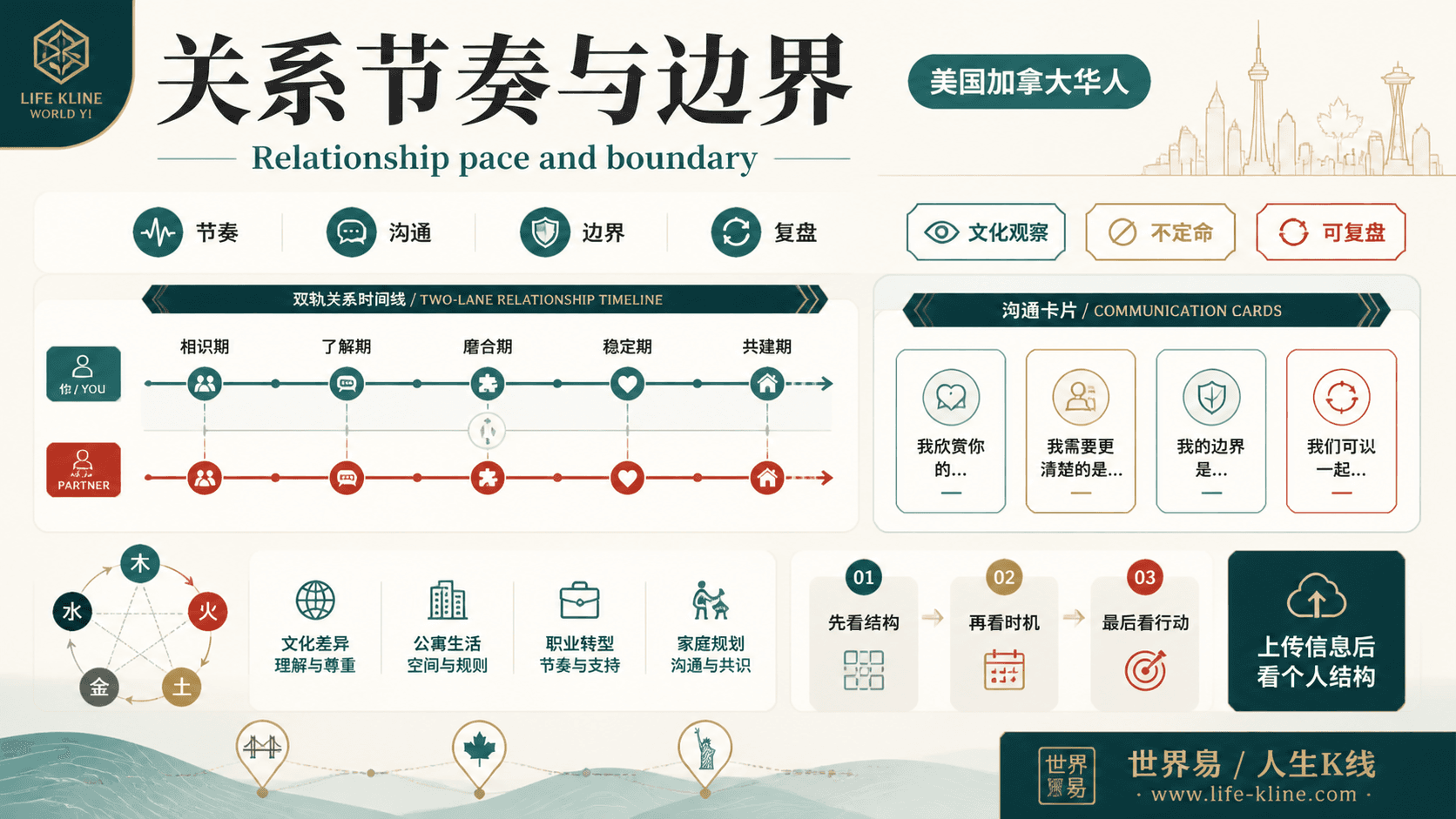
关系节奏与边界|美国加拿大华人
这张图把《Decision-Making Under Emotional Drain from Narcissistic Parents: A Metaphysical Perspective》里的命理概念转成关系、边界和应用场景,适合先看图建立结构,再回到知识文章正文理解细节。
关系节奏与边界不应被写成固定结论。更适合美国加拿大华人的读法,是把传统术语翻译成结构、时机、环境、行动和复盘。
查看图片解读