Metaphysical Analysis and Decision-Making Guidance for Midlife Career Reorientation
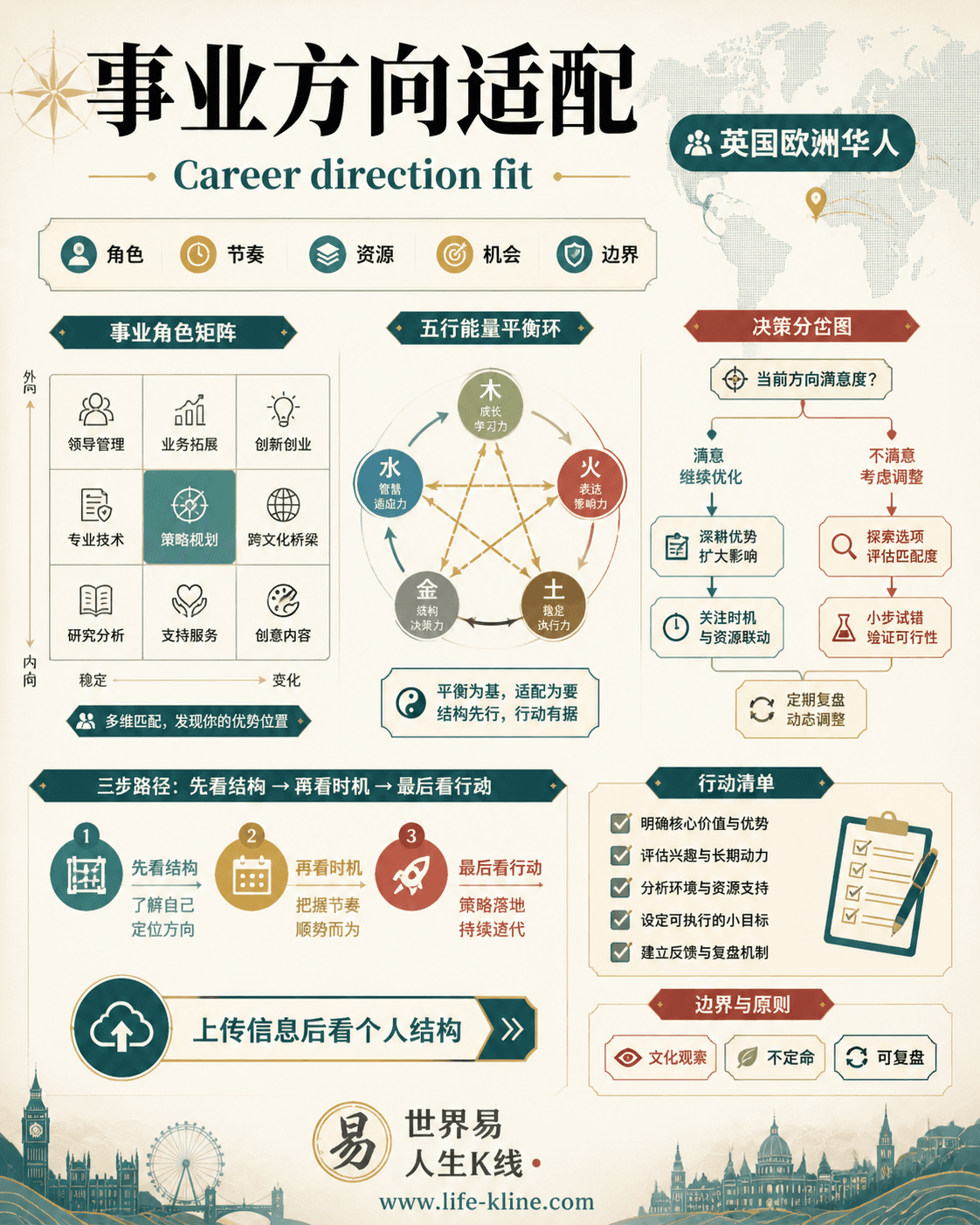
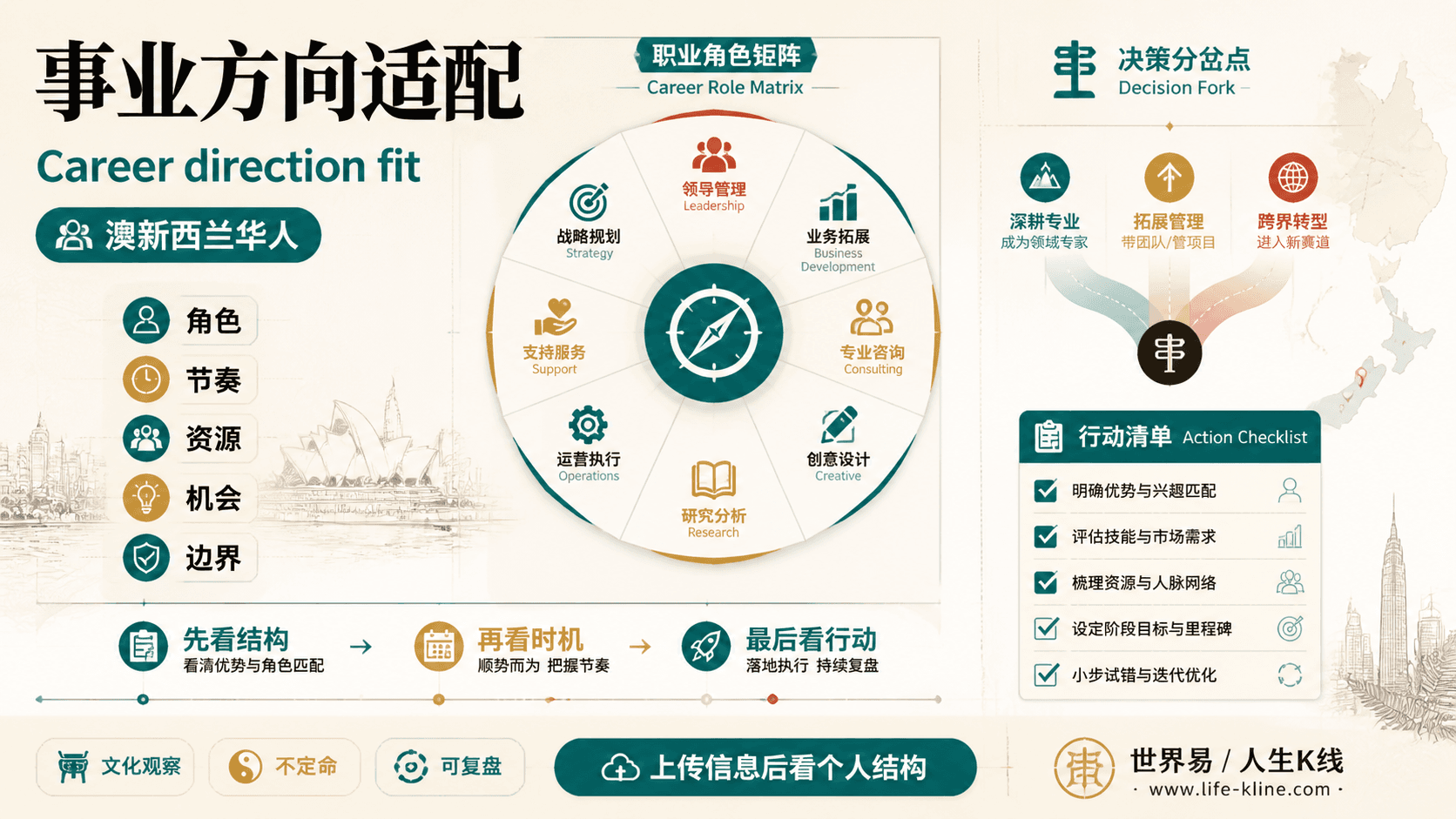
把这篇文章落到自己身上验证:先看结构,再进入个人分析,不做泛泛阅读。
Why This Decision Is Especially Difficult at This Life Stage
The midlife turning period is typically a critical phase where career bottlenecks emerge. Between ages 38 and 52, many face the reality of a career ceiling alongside emerging health warnings. Relationships with children mature, and family responsibilities become heavier. At this time, a second career reorientation not only concerns personal career planning but also involves family economic stability and emotional support, greatly increasing the complexity of decision-making.
From a societal perspective, middle-aged individuals are expected to bear more responsibilities and contributions. Workplace competition remains fierce, but natural declines in physical strength and energy make adapting to new environments and updating skills particularly challenging. Changing career tracks often means confronting the unknown and uncertainty, sharply increasing pressure and risk, which easily leads to anxiety and confusion.
From a metaphysical perspective, the interplay of Da Yun (decade luck cycle) and Liu Nian (annual fortune) during midlife determines the flow and trend of energy changes. The strength of the Day Master, the nature of the structure, and the regulating effect of the Yong Shen (favorable element) all amplify or suppress an individual's capacity to endure and adapt to career shifts. Especially when the Da Yun is in a stable or maintenance phase, rash changes often encounter resistance; conversely, when the Liu Nian brings opportunities and support, it can be regarded as a favorable time for reorientation.
Therefore, the decision for a second career reorientation is not only a response to current realities but also a precise interpretation of metaphysical information and acting accordingly. Ignoring metaphysical indications and acting blindly easily leads to career setbacks and physical and mental exhaustion.
Three Core Dimensions of Metaphysical Judgment
First, the strength of the Day Master and the type of structure determine the individual's basic energy framework and ability to cope with environmental changes. For example, a relatively strong Day Master usually has strong self-drive and stress resistance, while a weaker Day Master requires the Yong Shen to regulate and balance their state. Structures such as Bi Jian (Peer), Yang Ren (Yang Blade), and Pian Cai (Indirect Wealth) each have different personality traits and behavioral characteristics that influence decision strategies during reorientation.
Second, the relationship between the Yong Shen (favorable element) and Ji Shen (unfavorable element) reflects the Five Elements that the person currently needs to harmonize or avoid. The sufficiency of the Yong Shen directly affects the success and smoothness of the career shift. For instance, if the Yong Shen is Metal and the current Da Yun is Metal-strong, then shifting to related fields is more advantageous; otherwise, caution is advised.
Finally, the interaction between Da Yun and Liu Nian reflects the energy changes over time. Da Yun represents medium- to long-term trends, while Liu Nian reflects the specific environment of the year. When in a stable Da Yun suitable for maintaining status quo, career shifts should be cautious, and timing and direction must align with Liu Nian energies to avoid adverse effects. If Da Yun and Liu Nian show signals of adaptability or turning points, this is an important reference for adjusting direction.
By integrating these three dimensions, metaphysical judgment can provide a scientific basis for midlife career shifts, guiding when to act or maintain, how to optimize resource allocation, and maximizing the success rate of career transformation.
Three Real Natal Chart Cases
Case 1: Female natal chart with a relatively strong Day Master Jia Wood (甲, Jia), structure is Bi Jian (Peer) pattern, Yong Shen is Metal, Ji Shen is Water. Currently in the 10th year of the Ji Mao (己卯, Ji Mao) Da Yun, which is a stable phase suitable for maintaining status quo. The Liu Nian is Bing Wu (丙午, Bing Wu), which favors adaptability. Given the midlife pressures, the Jia Wood Day Master shows strong willpower and initiative, but the Bi Jian structure may bring competition and consumption. The Yong Shen Metal is not prominent in the current Da Yun, indicating caution is needed when considering reorientation. She faces a career ceiling and health warnings; the focus during reorientation should be on the regulating effect of the Yong Shen Metal, avoiding overexertion. It is recommended to first assess the support of Metal elements in her current career field and the opportunities of the Liu Nian to confirm if the Yong Shen is sufficient before deciding to shift; otherwise, maintaining the status quo to consolidate existing achievements is advised.
Case 2: Male natal chart with a relatively strong Day Master Wu Earth (戊, Wu), structure is Yang Ren (Yang Blade) pattern, Yong Shen are Wood and Water, Ji Shen is Fire. Currently in the 3rd year of the Xin You (辛酉, Xin You) Da Yun, a stable phase suitable for maintaining status quo. The Liu Nian is Bing Wu (丙午, Bing Wu), offering some room for adaptability. The strong Wu Earth Day Master and Yang Ren structure represent strong self-drive and courage to face challenges. The Yong Shen Wood and Water suggest a need for nourishment and balance from these elements, while the Ji Shen Fire indicates avoiding overheated environments or pressures. During midlife career shifts, this chart shows strong willingness to act, but the stable Da Yun suggests avoiding rash moves. It is recommended to first evaluate the energy status of the Yong Shen Wood and Water to confirm sufficient support for transformation, while paying attention to health and avoiding Fire-related harm, gradually planning and steadily advancing the reorientation.
Case 3: Female natal chart with a relatively weak Day Master Ji Earth (己, Ji), structure is Pian Cai (Indirect Wealth) pattern, Yong Shen is Fire, Ji Shen are Metal and Water. The age range is 20-25 years old, currently in the 9th year of the Xin Wei (辛未, Xin Wei) Da Yun, a stable phase suitable for maintaining status quo. The Liu Nian is Bing Wu (丙午, Bing Wu), favoring adaptability. Although not in midlife, her Pian Cai structure and weak Day Master indicate a strong need for Fire, while Metal and Water should be avoided. Applying this to a midlife reorientation scenario, if this female enters midlife, special attention should be paid to the status of the Yong Shen Fire, reasonably allocating resources and maintaining physical strength. For a second career shift, the chart suggests avoiding drastic changes that damage the Yong Shen Fire; a steady approach is recommended—first consolidating the Pian Cai foundation before considering transformation.
In summary, all three cases are in stable Da Yun phases. Reorientation decisions should center on the sufficiency of the Yong Shen, combined with current Liu Nian opportunities, to reasonably arrange timing of action. This ensures that the shift is not an escape from temporary fatigue but a rational choice supported by metaphysical factors.
Common Misjudgments and Blind Spots at This Stage
The most common misjudgment during midlife reorientation is mistaking temporary fatigue and bottlenecks as signals that a complete career change is necessary. Fatigue and pressure are often temporary adjustment periods that can be alleviated through rest and internal resource optimization, rather than immediate career switching. Ignoring the stable state of the Yong Shen and Da Yun and acting prematurely often leads to dual damage to career and health.
Another blind spot is neglecting the interaction between Liu Nian and Da Yun. Da Yun represents long-term trends, while Liu Nian reflects the environment of the year. Lack of understanding of their coordination leads to errors in timing decisions. For example, being in a maintenance Da Yun but encountering an unfavorable Liu Nian increases the risk of rash career shifts; conversely, missing opportunities when Liu Nian brings favorable energy results in lost chances.
Furthermore, over-reliance on structural labels while neglecting the strength of the Day Master and the specific status of the Yong Shen also causes judgment errors. Although structure provides indications, the Day Master and the regulation by the Yong Shen are key to whether reorientation succeeds. Lack of consideration for physical health and family responsibilities also makes reorientation plans unrealistic, increasing pressure on family and self.
Therefore, midlife career reorientation requires avoiding emotional and one-dimensional analyses, integrating metaphysical insights with real-life conditions to formulate rational and steady transformation strategies.
Practical Judgment Sequence
First, confirm the strength of the Day Master and the type of structure to understand your energy foundation and personality traits, clarifying the internal driving forces and potential obstacles for career reorientation. Next, focus on examining the status of the Yong Shen and the influence of the Ji Shen, judging whether the current Da Yun supports the Yong Shen's function. When the Da Yun is stable and suitable for maintaining status quo, it is recommended to mainly maintain and wait for favorable changes brought by Liu Nian.
Third, analyze in detail the interaction between Liu Nian and Da Yun to identify whether there is an opportunity window for adaptability. If the Liu Nian energy aligns with the Yong Shen and the Da Yun shows no significant clashes, the timing for reorientation is relatively appropriate, and a detailed action plan can be formulated; otherwise, adjust the pace and avoid hasty moves.
Finally, combine metaphysical judgment with real health status, family responsibilities, and economic foundation to comprehensively assess the feasibility and risks of reorientation. It is advised that midlife career shifters first consolidate existing resources, reasonably plan the transformation path, and advance in stages to avoid the negative effects of drastic one-time changes.
FAQ
Question 1: When shifting careers in midlife, how to distinguish between temporary fatigue and a metaphysically indicated inevitable change? Answer: First observe the status of the Yong Shen and the coordination of Da Yun and Liu Nian. When the Yong Shen is sufficient and Da Yun is stable, it is mostly temporary fatigue and maintaining status quo with adjustments is advisable; if the Yong Shen is damaged and Liu Nian brings turning opportunities, it may signal an inevitable change.
Question 2: Does being in a maintenance Da Yun mean no career changes should be made? Answer: A maintenance Da Yun does not absolutely forbid changes but suggests that actions should be cautious. It is best to choose timing that aligns with the Yong Shen and is supported by Liu Nian to avoid blind rashness causing negative consequences.
Question 3: How to integrate family responsibilities and health conditions to make more reasonable career reorientation decisions? Answer: Metaphysical analysis should be combined with real conditions. If health warnings are obvious or family responsibilities are heavy, priority should be given to stability, planning transformation in phases to avoid impulsive decisions that increase physical, mental, and family pressures. This ensures decisions align with metaphysical trends and practical needs.
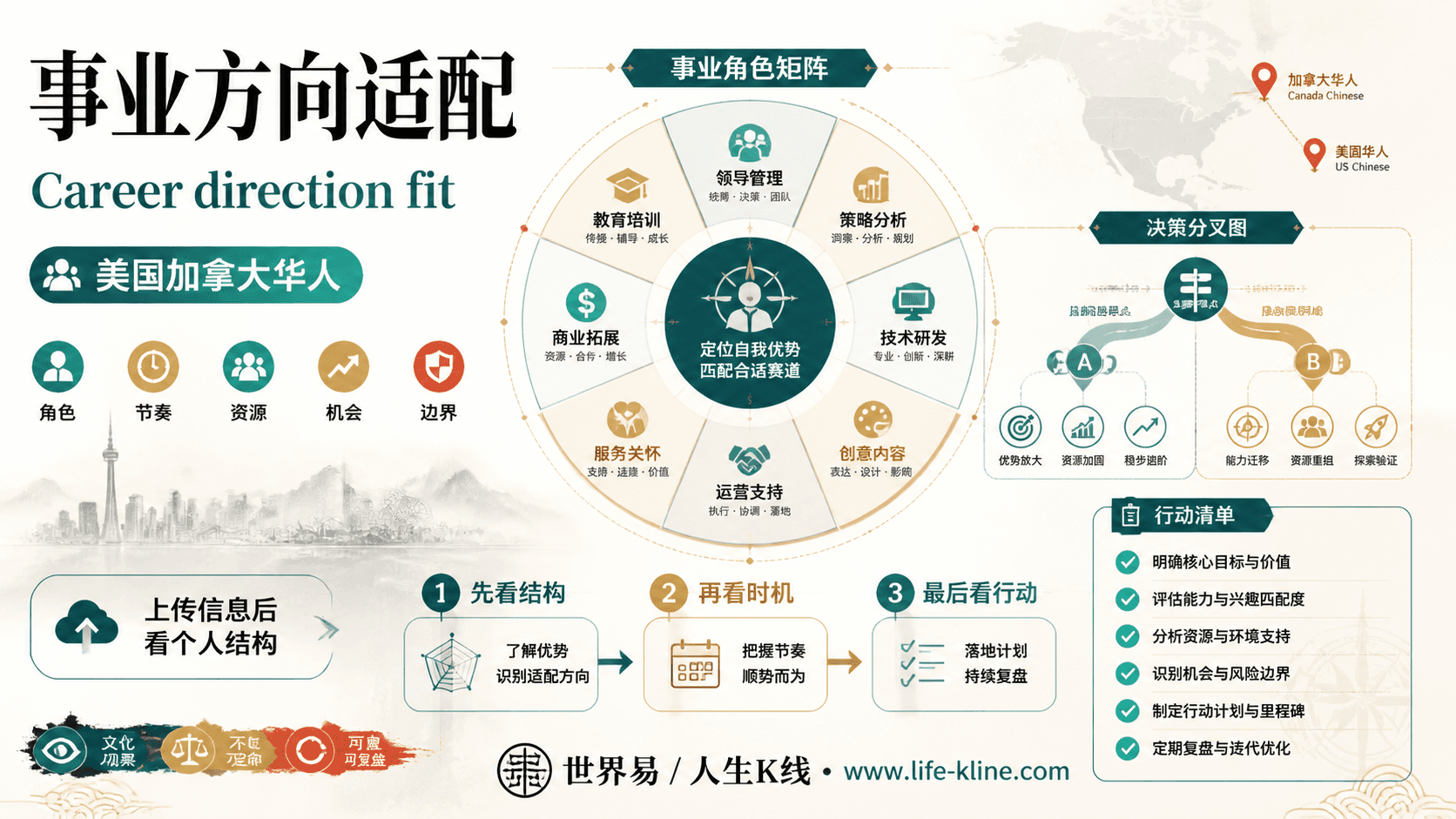
事业方向适配|美国加拿大华人
这张图把《Metaphysical Analysis and Decision-Making Guidance for Midlife Career Reorientation》里的命理概念转成关系、边界和应用场景,适合先看图建立结构,再回到知识文章正文理解细节。
事业方向适配不应被写成固定结论。更适合美国加拿大华人的读法,是把传统术语翻译成结构、时机、环境、行动和复盘。
查看图片解读