Metaphysical Analysis and Practical Guide for Judging Relationship Suitability During Long-Term Single Phases
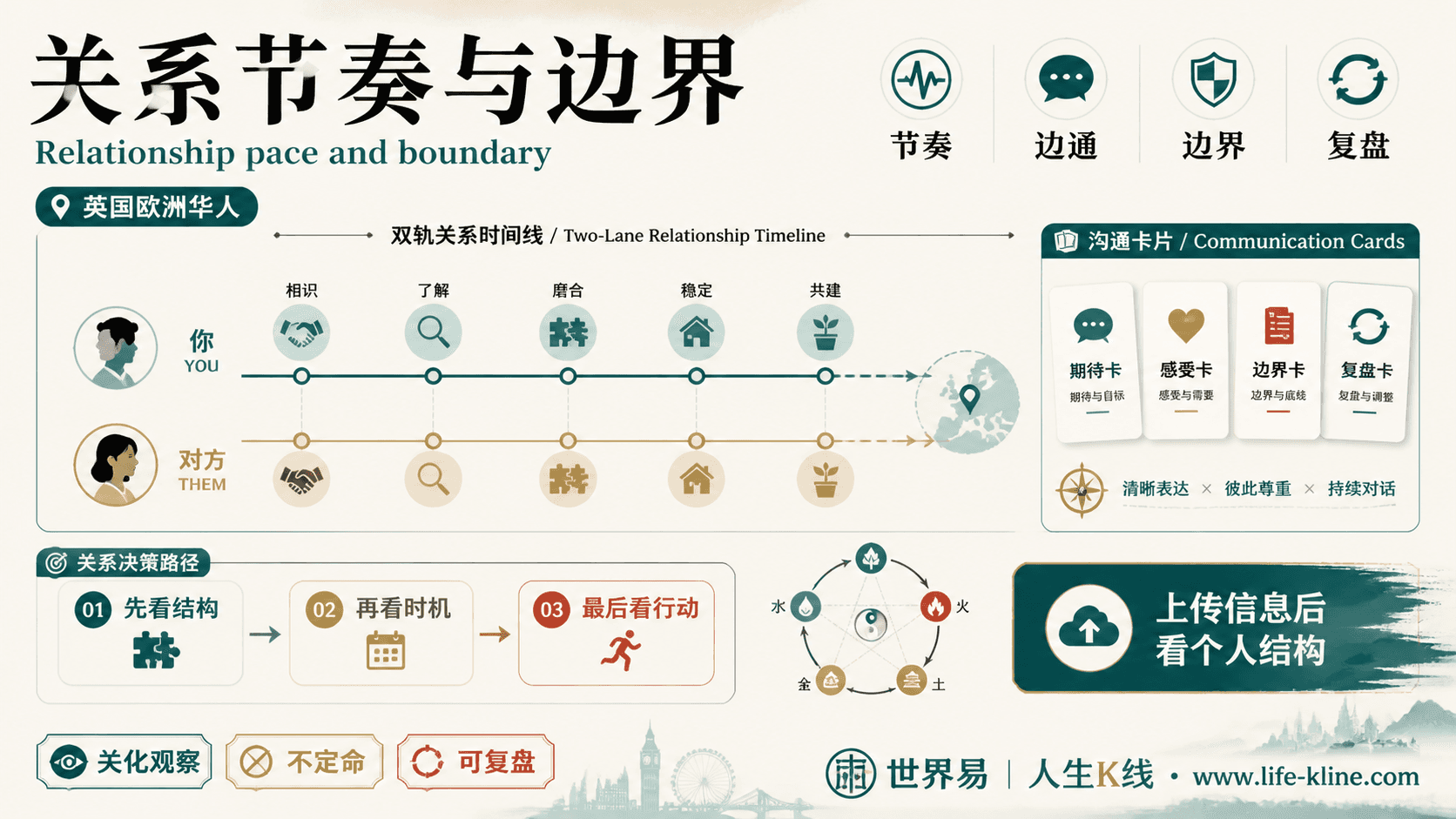
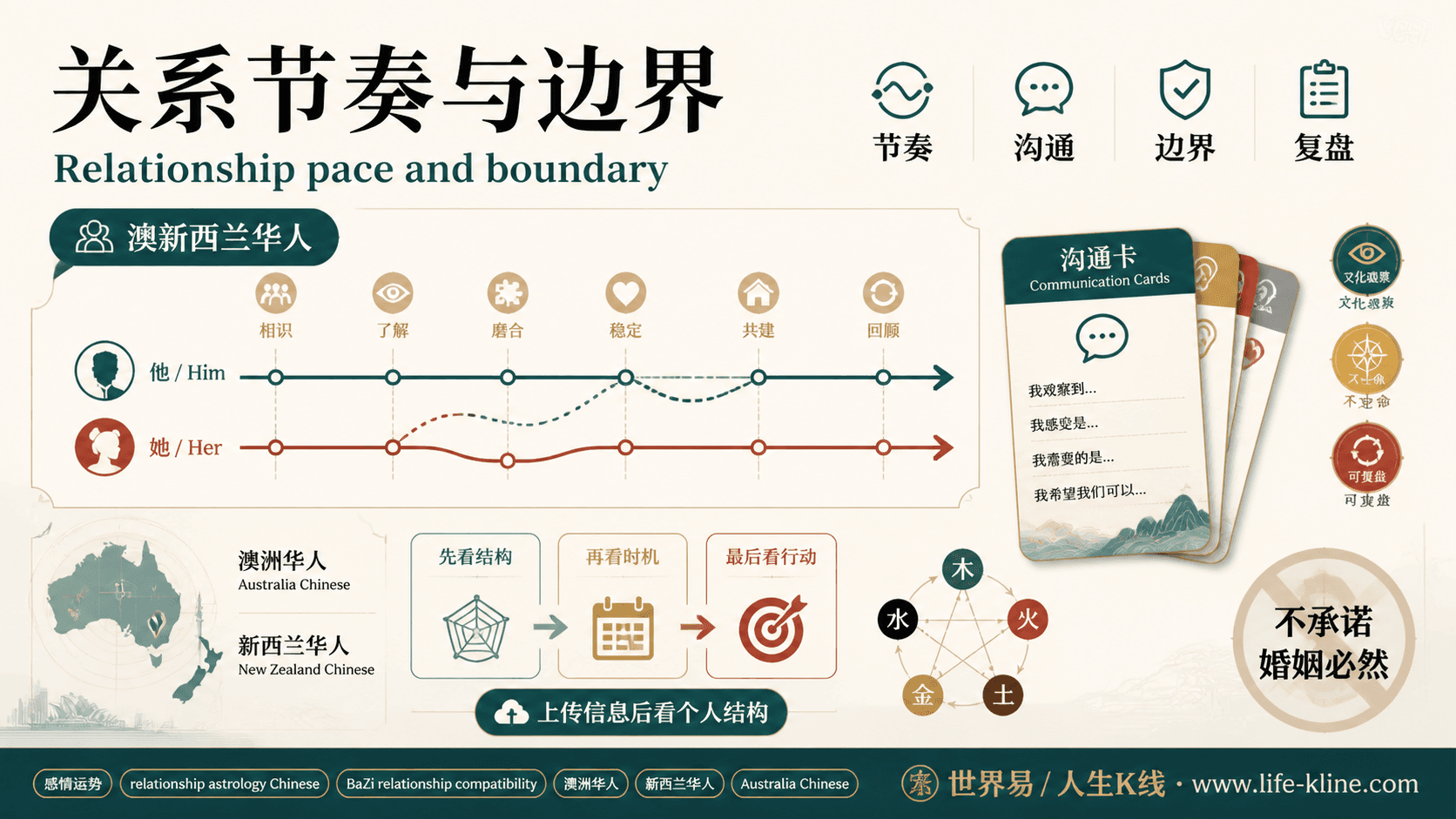
把这篇文章落到自己身上验证:先看结构,再进入个人分析,不做泛泛阅读。
Why This Decision Is Especially Difficult at This Marriage and Romance Stage
During long-term single phases, individuals often face the practical limitation of relatively fixed social circles, with limited opportunities for new high-quality relationships. Meanwhile, partner selection criteria may continuously adjust with age and experience, causing internal conflicts alongside external pressures. Society generally expects marriage and romantic milestones to be completed within the appropriate age range, especially when confronted with traditional expectations regarding bride price, property, and family demands about child custody and gender roles, which significantly increase decision difficulty.
The stances of both families are particularly critical at this stage. Parents may urge marriage, hoping for rapid relationship stabilization, even making specific demands regarding bride price or property. In BaZi, the condition of the spouse palace and spouse star often reflects the strength of family influence and potential conflicts. If the chart shows frequent clashes and combinations, real-world family disputes and expectation differences will further amplify decision challenges.
Additionally, the psychological state of long-term singles often intertwines passivity and proactivity, holding both adherence to ideal partners and compromises with reality. Judging when to actively advance a relationship and when to pause and observe becomes a key focus combining metaphysical analysis and practical strategy. The interaction between the BaZi pattern and current Liu Nian (annual fortune) and Da Yun (decade luck cycle) directly affects emotional energy flow and relationship stability. Decisions must integrate metaphysical signals with real-world conditions.
Overall, the difficulty in marriage and romance decisions lies in respecting personal partner standards and the guidance of Yong Shen (favorable element), while adapting to social pressure and family expectations. This balance helps avoid blind advancement or excessive hesitation, harmonizing internal and external conflicts for steady progress.
Three Core Dimensions of Metaphysical Judgment
First, the strength of the Day Master is the foundation for judging whether to advance a romantic relationship. A relatively strong Day Master usually indicates strong self-awareness and clear partner criteria but may also cause relationship obstacles due to self-centeredness. A relatively weak Day Master relies more on external resources and support; when advancing relationships, careful timing is necessary to avoid passive loss of control.
Second, the position and condition of the spouse palace and spouse star are core signals. If the spouse palace is affected by combinations, clashes, or penalties, it often indicates contradictions or instability in the partner relationship. The strength of the spouse star and the choice of Yong Shen directly reflect attraction to the partner and relationship harmony. For example, if the Yong Shen is Fire, it represents passion and energetic guidance; if it is Earth, it signifies steadiness and reliability. However, if Fire is the Ji Shen (unfavorable element), emotional entanglements may exist.
Third, the interaction between Liu Nian and Da Yun is crucial for timing judgments in romantic relationships. A stable Da Yun suits maintaining and steady advancement, auspicious luck favors active expansion of relationships, and if the Liu Nian clashes or combines with Da Yun, strategy adjustments are necessary. Specifically, for long-term singles, observing the coordination between the current Da Yun and Liu Nian helps determine when it is a good time to advance relationships and when to remain cautious.
Integrating these three dimensions, BaZi not only reveals an individual's inner emotional drives and partner preferences but also reflects the influence of real environments and timing, providing a scientific reference framework for marriage and romance decisions.
Three Real BaZi Chart Cases
Case 1: The male chart’s Day Master is Ji Earth (己土), relatively strong, with a Zheng Cai (Direct Wealth) pattern. Both Yong Shen and Ji Shen are Fire. Currently in the 3rd year of the Yi Chou (乙丑) Da Yun, which is stable and suitable for maintaining status quo. The Liu Nian is Bing Wu (丙午), bringing possibilities for flexible adaptation. The spouse palace is strongly influenced by Fire, representing coexistence of passion and conflict in relationship advancement. Given the fixed social circle and stable partner criteria in reality, this chart requires focusing on the activation effect of Fire as Yong Shen when judging relationship suitability. If the external environment and Liu Nian’s Fire element harmonize and can effectively mitigate the disruptive Ji Shen Fire, proactive advancement is suitable; otherwise, steady patience is advised to avoid relationship breakdown due to intensified conflict.
Case 2: The female chart’s Day Master is Xin Metal (辛金), balanced, with a Qi Sha (Seven Killings) pattern. Yong Shen is Earth, Ji Shen is Fire. Currently in the 3rd year of the Gui Hai (癸亥) Da Yun, stable and suitable for maintaining status quo. The Liu Nian is also Bing Wu (丙午). Fire in the spouse palace is Ji Shen, indicating potential emotional and conflict risks in the partner relationship. At the age range of 50-55, the social circle is relatively fixed and partner criteria tend to stabilize, but social and family pressure remains significant. This chart suggests that when judging suitability, focus should be on whether the Yong Shen Earth can effectively suppress the Ji Shen Fire. If Da Yun and Liu Nian support the Yong Shen’s function, moderate advancement can be considered; if Fire is too strong, pausing and prioritizing resolving internal and external conflicts is recommended to avoid blindly entering new relationships.
Case 3: The female chart’s Day Master is Xin Metal (辛金), relatively strong, with a Pian Cai (Indirect Wealth) pattern. Yong Shen are Fire and Wood, Ji Shen is Earth. Currently in the 6th year of the Ren Wu (壬午) Da Yun, an auspicious luck cycle, with Liu Nian Bing Wu (丙午) aligning well. The spouse palace has abundant Fire and Wood elements, representing rich emotional resources and strong motivation to advance relationships. In the real context of a 25-30-year-old woman facing the contradiction between fixed social circles and shifting partner criteria, this chart shows favorable signals for actively advancing relationships, especially with auspicious Da Yun and Liu Nian. However, attention to Ji Shen Earth is necessary to prevent obstacles from material conditions or family constraints. It is recommended to seize the auspicious luck timing and actively expand romantic connections after confirming supportive real conditions.
These three cases illustrate how different ages, genders, and Yong Shen/Ji Shen configurations affect decisions to advance relationships during long-term single phases. Combined with real marriage and romance pressures and metaphysical signals, they help readers rationally analyze when to advance and when to wait.
Common Misjudgments and Blind Spots at This Stage
First, overreliance on a single metaphysical signal while ignoring the actual status of social resources and family support. Long-term singles who disregard the limitations of fixed social circles and blindly advance relationships based solely on Yong Shen risk unstable relationships or intensified conflicts.
Second, neglecting the interaction between Liu Nian and Da Yun, resulting in mistimed judgments. Many only consider the auspiciousness of Da Yun but fail to assess whether Liu Nian harmonizes with Da Yun or whether Liu Nian’s clashes might trigger emotional fluctuations, thus missing the best window to advance or misjudging when to pause.
Third, insufficient understanding of the Day Master’s strength and Ji Shen’s role during shifting partner criteria. A relatively strong Day Master without adjusting partner expectations may cause stubbornness that hinders relationship advancement; a relatively weak Day Master requires cautious selection, as premature relationship entry increases risks, but excessive conservatism may miss good opportunities.
Fourth, insufficient consideration of the spouse palace and spouse star’s clash and combination status, overlooking the importance of family environment and partner support to relationship stability. When the spouse palace suffers severe clashes and penalties, real family conflicts and emotional issues tend to magnify. Without preemptive resolution, relationship advancement is unlikely to last.
Practical Judgment Sequence
First, assess the Day Master’s strength and pattern, along with the Yong Shen and Ji Shen configuration. Clarify the baseline emotional energy status to judge whether there is internal motivation to proactively advance relationships or if maintaining and waiting is needed. Second, focus on the spouse palace and spouse star’s condition to evaluate potential relationship stability and family support, avoiding blind entry into relationships with obvious clashes and combinations.
Third, combine the current Da Yun and Liu Nian to analyze whether the timing favors advancement. When Da Yun is stable and Liu Nian is harmonious, active pursuit is suitable; if Liu Nian clashes with Da Yun, adopt a cautious attitude and prioritize resolving internal conflicts and real obstacles. Finally, integrate the real social circle and shifting partner criteria to comprehensively judge the practical feasibility of the relationship, avoiding idealization or blind compromise, and rationally adjust the action plan.
Overall, judgments should be dynamically adjusted, paying attention to the synchronization of metaphysical signals and real changes to ensure relationships advance at the appropriate time and avoid missed opportunities due to rashness or hesitation.
FAQ
Question 1: How do Yong Shen and Ji Shen specifically affect relationship advancement during long-term single phases? Answer: Yong Shen represents the favorable Five Element in the chart that supports emotional drive and relationship vitality, suitable for proactive advancement when strong. Ji Shen symbolizes obstacles and conflicts; if Ji Shen is strong and difficult to resolve, it is advisable to pause relationship development and prioritize adjusting internal and external environments.
Question 2: When Da Yun and Liu Nian clash or combine, is it always unsuitable to advance relationships? Answer: Da Yun and Liu Nian clashes or combinations indicate emotional and environmental fluctuations and uncertainties. Blind advancement is not recommended at such times. Instead, observe the nature and duration of the clash or combination, adjust strategies reasonably, and wait for more stable timing before acting.
Question 3: How to reasonably use metaphysical knowledge in decision-making considering fixed social circles and shifting partner criteria? Answer: Fixed social circles limit relationship options, while shifting partner criteria reflect changing inner needs. By combining BaZi judgment of emotional drives and obstacles, rationally evaluate real resources and inner demands, and formulate flexible partner selection strategies that avoid excessive idealization or compromise, ensuring decisions are scientific and practical.
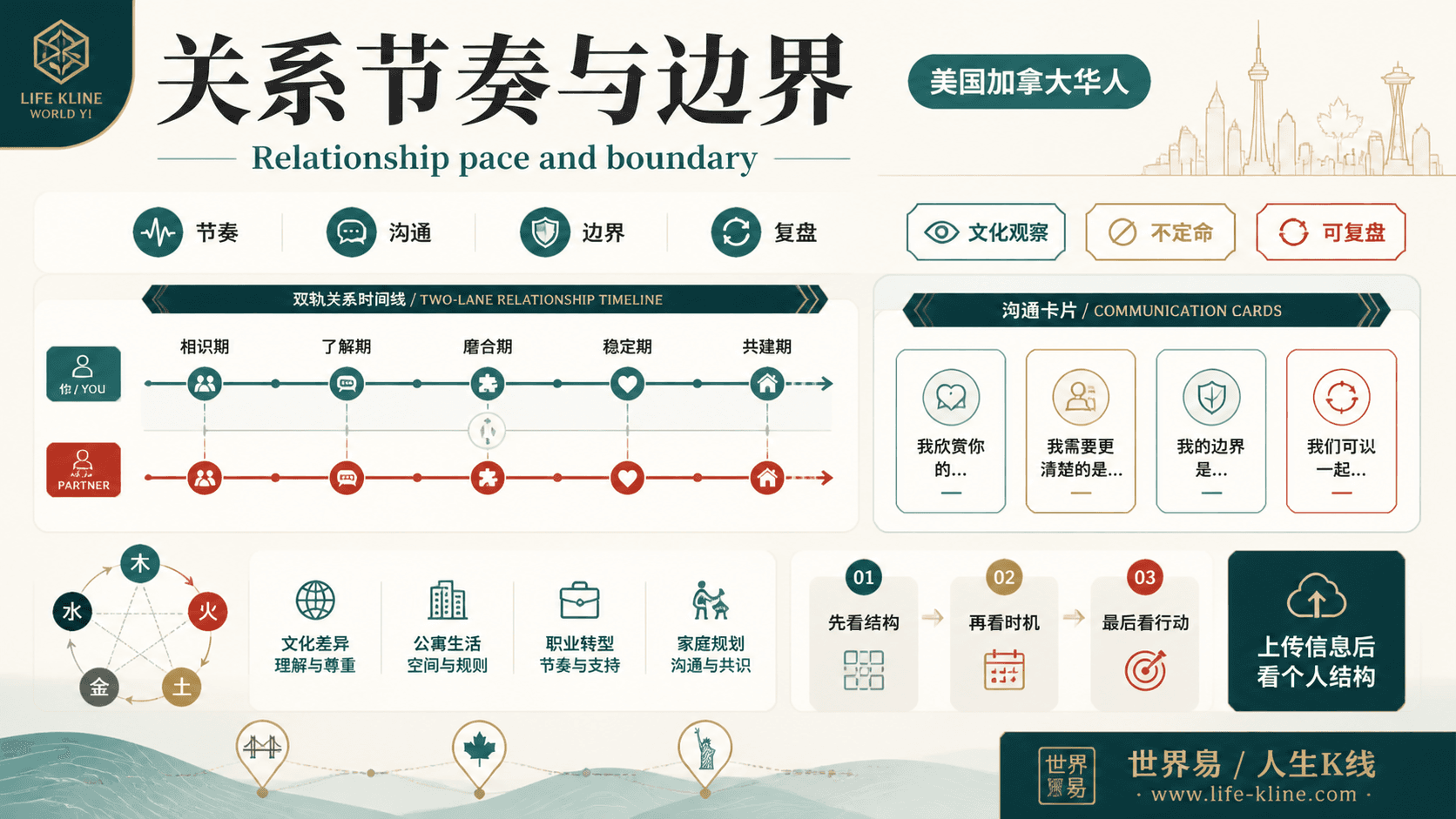
关系节奏与边界|美国加拿大华人
这张图把《Metaphysical Analysis and Practical Guide for Judging Relationship Suitability During Long-Term Single Phases》里的命理概念转成关系、边界和应用场景,适合先看图建立结构,再回到知识文章正文理解细节。
关系节奏与边界不应被写成固定结论。更适合美国加拿大华人的读法,是把传统术语翻译成结构、时机、环境、行动和复盘。
查看图片解读