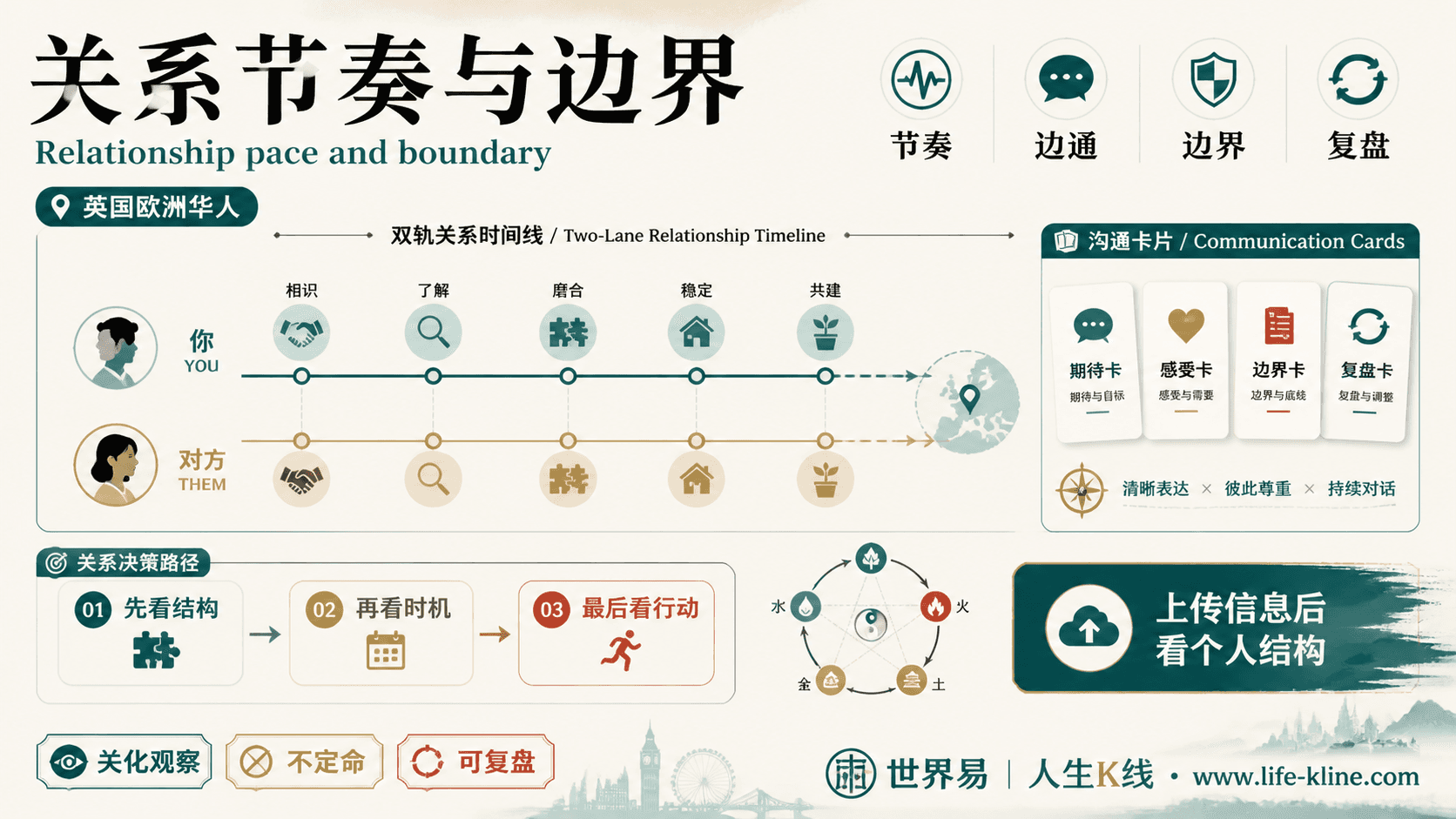
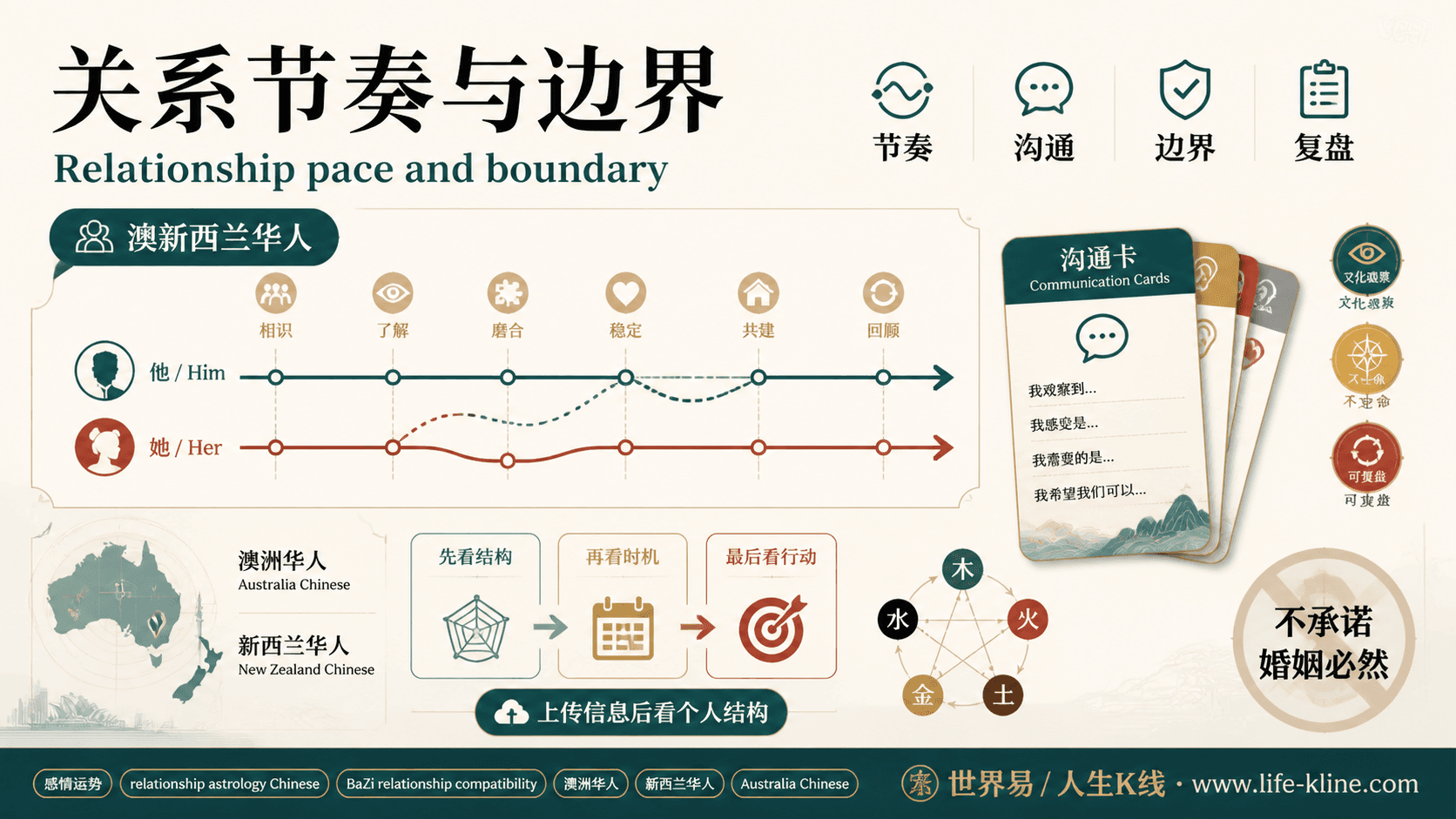
Persistence and Adjustment Decisions in Left-Behind and Long-Distance Parent-Child Reconnection: A Metaphysical Perspective
把这篇文章落到自己身上验证:先看结构,再进入个人分析,不做泛泛阅读。
Why This Decision Is Especially Difficult in This Scenario
The core difficulty in left-behind or long-distance separated parent-child reconnection lies in the intertwining of attachment gaps and compensatory psychology. Due to long-term separation, the emotional bonds between parents and children are broken, and both parties often experience intense friction and generation gaps when reuniting under the same roof. Parents want to make up for the lost companionship but face the challenge of their children’s increasing autonomy, creating a strong conflict between attachment needs and the need for independent development in parenting dynamics.
From a parenting psychology perspective, parents may exacerbate their controlling tendencies due to overcompensation, while children may show resistance or avoidance, forming a vicious cycle. Meanwhile, intergenerational expectations and educational pressures further amplify family tensions. Deciding whether to persist with the original plan or reset goals becomes extremely complex, involving emotional, authority, and communication dimensions.
BaZi structures play an important auxiliary role here. Different Day Master strengths, Yong Shen patterns, and Da Yun and Liu Nian interactions respectively reflect parents’ and children’s emotional endurance, adaptability to changes, and decision-making rhythm. Metaphysics can indicate whether it is appropriate to maintain the status quo or adjust the plan promptly during peak conflicts, thus avoiding intensified harm and relationship breakdown.
Therefore, combining parenting dynamics and metaphysical rhythms, parents need to accurately judge when persistence can stabilize the parent-child relationship and when adjustment can prevent long-term negative accumulation. This decision is not only an emotional balance but also a scientific management of resources and psychological resilience.
Three Core Dimensions of Metaphysical Judgment
First, the relationship between the Day Master and the children’s stars (Shi Shen - Output/Expression stars) is key to measuring parent-child interaction vitality. The Day Master’s strength determines the parents’ emotional stability and inner energy, while Shi Shen represents the children’s expression and autonomy tendencies. If the Day Master is relatively weak and Shi Shen is strong, parents tend to feel stressed and should cautiously handle conflicts, possibly leaning toward adjusting the plan to avoid rupture.
Second, the Yin stars (Pian Yin/Zheng Yin - Resource stars) are closely related to parent-child attachment. Yin stars symbolize nurturing support and emotional reliance. Charts with strong Yin stars manifest strong attachment needs and psychological endurance during parent-child reconnection. Parents have greater psychological support when persisting with the original plan. However, if Yin stars are overly strong causing excessive dependence, compensatory psychology may intensify, increasing the risk of friction.
Third, the Guan Sha stars (Qi Sha/Zheng Guan - Authority stars) symbolize authority and norms, reflecting the family’s capacity to bear and exert authority roles. The interaction of Guan Sha with Da Yun and Liu Nian determines parents’ adaptability and decisiveness when facing parent-child friction. When Guan Sha is strong and the annual fortune supports it, parents are more suitable to persist with the original plan and reinforce rules; otherwise, flexible adjustments are needed to ease conflicts.
Additionally, the Da Yun and Liu Nian interactions provide a temporal rhythm reference. Stable luck cycles favor maintaining the status quo, while turbulent years suggest going with the flow. Annual fortune’s adaptive guidance indicates that during ‘wall-hitting’ periods, parents should flexibly adjust parenting strategies according to metaphysical rhythms rather than blindly persisting or easily giving up.
Three Real BaZi Chart Cases
Case 1: The Day Master is Xin Metal (辛), relatively weak, belonging to the Qi Sha pattern. The Yong Shen is Metal, and the Ji Shen (unfavorable elements) are Water and Wood. Currently in the Gui You (癸酉) Da Yun, with Liu Nian Bing Wu (丙午). Overall, the decade luck is stable, favoring maintaining the status quo. This pattern reflects parents’ limited inner energy, easily influenced by external Water and Wood elements, leading to emotional fluctuations. The Qi Sha pattern carries authoritative impact, but the weak Day Master limits sustained stress endurance. In left-behind parent-child reconnection, such parents face strong compensatory psychology and emotional ups and downs when encountering attachment gaps, with a high risk of severe friction. The judgment recommendation is that if conflicts are frequent and Yin stars support is insufficient, adjusting the plan is advisable to avoid emotional exhaustion. However, if Da Yun and Liu Nian are stable and both parties show signs of easing, moderately persisting with the original plan is acceptable, emphasizing emotional management and professional intervention.
Case 2: The Day Master is Wu Earth (戊), relatively strong, with a Zheng Yin pattern. The Yong Shen are Wood and Water, and the Ji Shen is Fire. Currently in the Ren Zi (壬子) Da Yun, with Liu Nian Bing Wu (丙午). The Da Yun is auspicious and all matters proceed smoothly. The Zheng Yin pattern symbolizes strong attachment support and nurturing energy. The relatively strong Day Master indicates parents’ inner stability and strong psychological endurance. The Ren Zi Da Yun is very auspicious, and the annual fortune is favorable, indicating that parents are suitable to continue persisting with the original plan at this stage to consolidate authority and nurturing support in the parent-child relationship. When conflicts arise, parents can rely on the nurturing power of Yin stars combined with appropriate communication strategies to avoid blind adjustments of goals. If severe attachment gap signals appear, professional consultation should be sought promptly to adjust communication methods rather than completely abandoning the existing plan.
Case 3: The Day Master is Gui Water (癸), relatively strong, with a Zheng Cai (Proper Wealth) pattern. The Yong Shen is Wood, and the Ji Shen is Metal. The Da Yun is Gui Si (癸巳), and Liu Nian is Bing Wu (丙午). The Da Yun is stable, favoring maintaining the status quo. The relatively strong Day Master and Zheng Cai pattern indicate parents’ expectations lean toward material and resource support and possess certain emotional regulation abilities. The Yong Shen Wood points to growth and support, while the Ji Shen Metal suggests possible authority conflicts between parents and children. Under this structure, when facing parent-child friction, if parents tend to insist on the original plan, it may provoke children’s resentment, so attention to communication adjustment is necessary. The judgment sequence recommendation is: first assess whether children show obvious resistance signals such as anxiety or avoidance; if yes, timely adjustment of the plan is required; otherwise, during stable Da Yun and Liu Nian, parents can continue to persist by providing resources and emotional support to promote parent-child relationship repair.
Common Misjudgments and Blind Spots in This Scenario
A common misjudgment in left-behind and long-distance parent-child reconnection is that parents excessively amplify compensatory psychology, mistakenly believing that more intervention and control will better repair the parent-child relationship, resulting in the opposite effect. In BaZi, when Yin stars are overly strong, such situations often occur where parents over-rely on emotional investment and neglect children’s autonomy needs, escalating friction.
Another blind spot is ignoring the rhythm changes of Da Yun and Liu Nian, blindly persisting or frequently adjusting plans. Metaphysics indicates that stable Da Yun favors maintaining the status quo, while turbulent Liu Nian suggest going with the flow. Neglecting this leads to parenting decisions lacking rhythm and increases uncontrollable risks in the parent-child relationship.
Furthermore, many parents have a simplistic understanding of Guan Sha’s authoritative role, mistakenly believing authority must be enforced rigidly, ignoring Guan Sha’s interaction with other Ten Gods that supports flexible communication. This misjudgment aggravates parent-child friction and misses opportunities to smooth relationships.
Finally, parents often overly rely on metaphysics as the sole decision basis, neglecting the psychological health needs of minors and youths. BaZi can only serve as an auxiliary reference. When signs of self-harm, depression, or violence appear, professional psychological consultation and family therapy must be prioritized.
Practical Judgment Sequence
Step one: Parents should combine the Day Master strength and Yong Shen in BaZi to assess their psychological endurance and children’s expression needs, judging whether to maintain the status quo or adjust. If the Day Master is weak and Yong Shen support is insufficient, priority should be given to emotional regulation to avoid intensifying conflicts, tending toward adjusting the plan.
Step two: Combine Da Yun and Liu Nian interaction rhythms to confirm whether the current phase is suitable for persistence. When Da Yun is stable and favors maintaining the status quo, the original plan can continue under professional guidance; during turbulent Liu Nian with significant impact, flexible adjustments are needed to avoid head-on conflicts.
Step three: Observe the expression of authority and attachment between parent and child. When authority (Guan Sha) or Yin stars are overly strong, be alert to excessive compensatory psychology. If necessary, introduce third-party professional intervention to adjust communication methods and goals to avoid rigidity.
In summary, decisions should not be made hastily but involve dynamic observation of parent-child interaction signals, timely adjustments according to metaphysical rhythms, always prioritizing the psychological health of minors and youths to ensure balanced scientific parenting and emotional repair.
FAQ
Question 1: Does a weak Day Master in BaZi necessarily mean parents must adjust their parenting plan in the parent-child relationship? Answer: A weak Day Master indicates limited parental emotional endurance and higher stress during parent-child friction, requiring cautious evaluation about persistence. However, it is not absolute. Combined with Yong Shen and Da Yun and Liu Nian overall judgment, if support is sufficient, moderate persistence is possible. The key is dynamic adjustment and professional support.
Question 2: Are parents with strong Guan Sha stars more suitable to persist with the original plan? Answer: Guan Sha represents authority. When strong, parents have advantages in establishing rules and authority, suitable for persisting with parenting principles. However, if Guan Sha is too strong or lacks flexible communication, conflicts may intensify. It is recommended to balance authority and emotional support by combining Yin stars and Shi Shen information to avoid relationship deterioration due to rigidity.
Question 3: When facing severe emotional breakdowns or violent tendencies in parent-child relationships, does BaZi judgment still have reference value? Answer: Severe psychological health issues should prioritize professional psychological consultation or family therapy. BaZi serves only as an auxiliary rhythm reference and cannot replace professional medical treatment. Parents should promptly engage professional treatment to ensure children’s physical and mental safety, with BaZi judgment integrated into overall professional intervention.
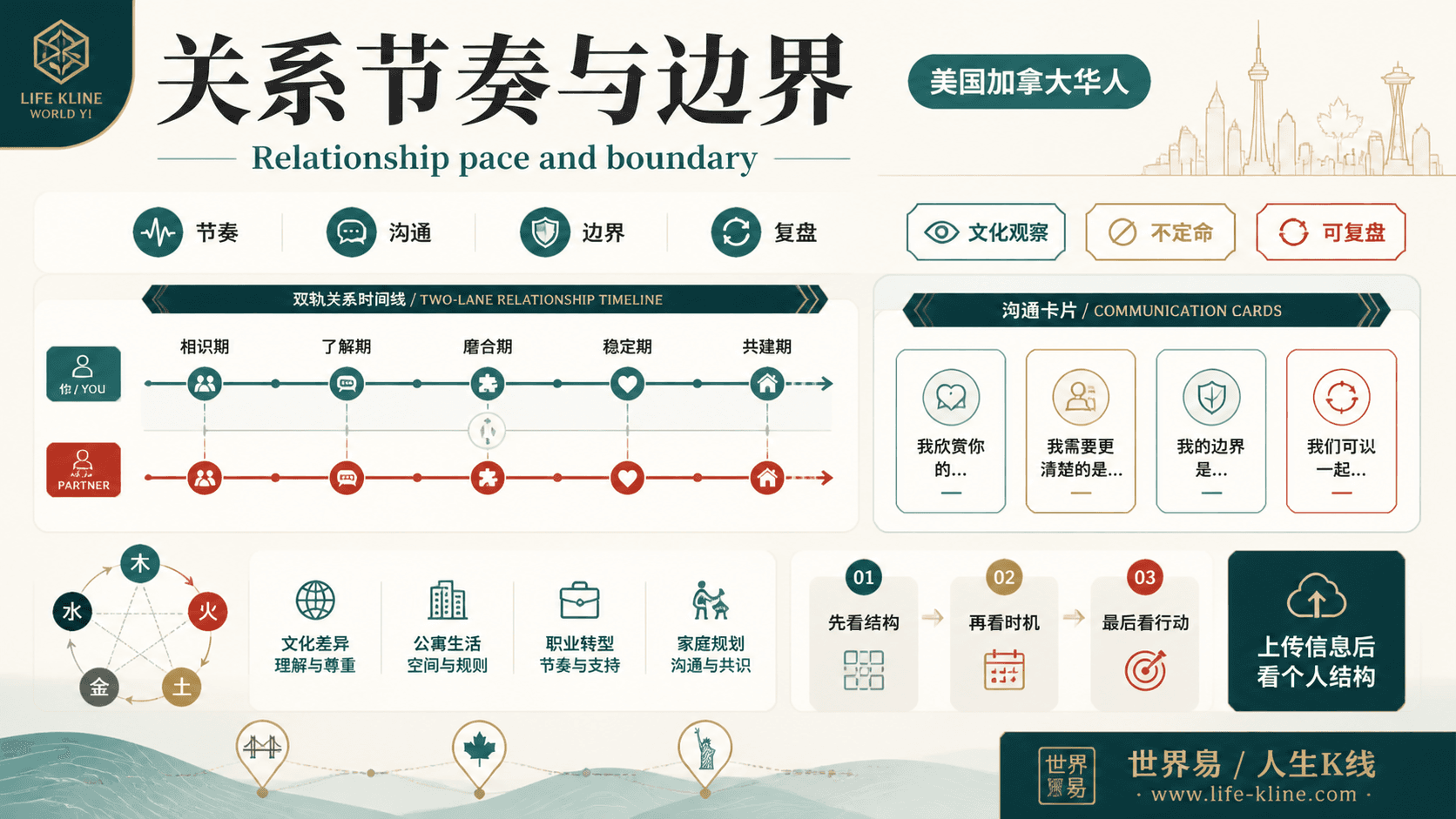
关系节奏与边界|美国加拿大华人
这张图把《Persistence and Adjustment Decisions in Left-Behind and Long-Distance Parent-Child Reconnection: A Metaphysical Perspective》里的命理概念转成关系、边界和应用场景,适合先看图建立结构,再回到知识文章正文理解细节。
关系节奏与边界不应被写成固定结论。更适合美国加拿大华人的读法,是把传统术语翻译成结构、时机、环境、行动和复盘。
查看图片解读