Reconnecting Left-Behind and Long-Distance Parent-Child Relationships: Metaphysical Decision Analysis on Intervention Timing
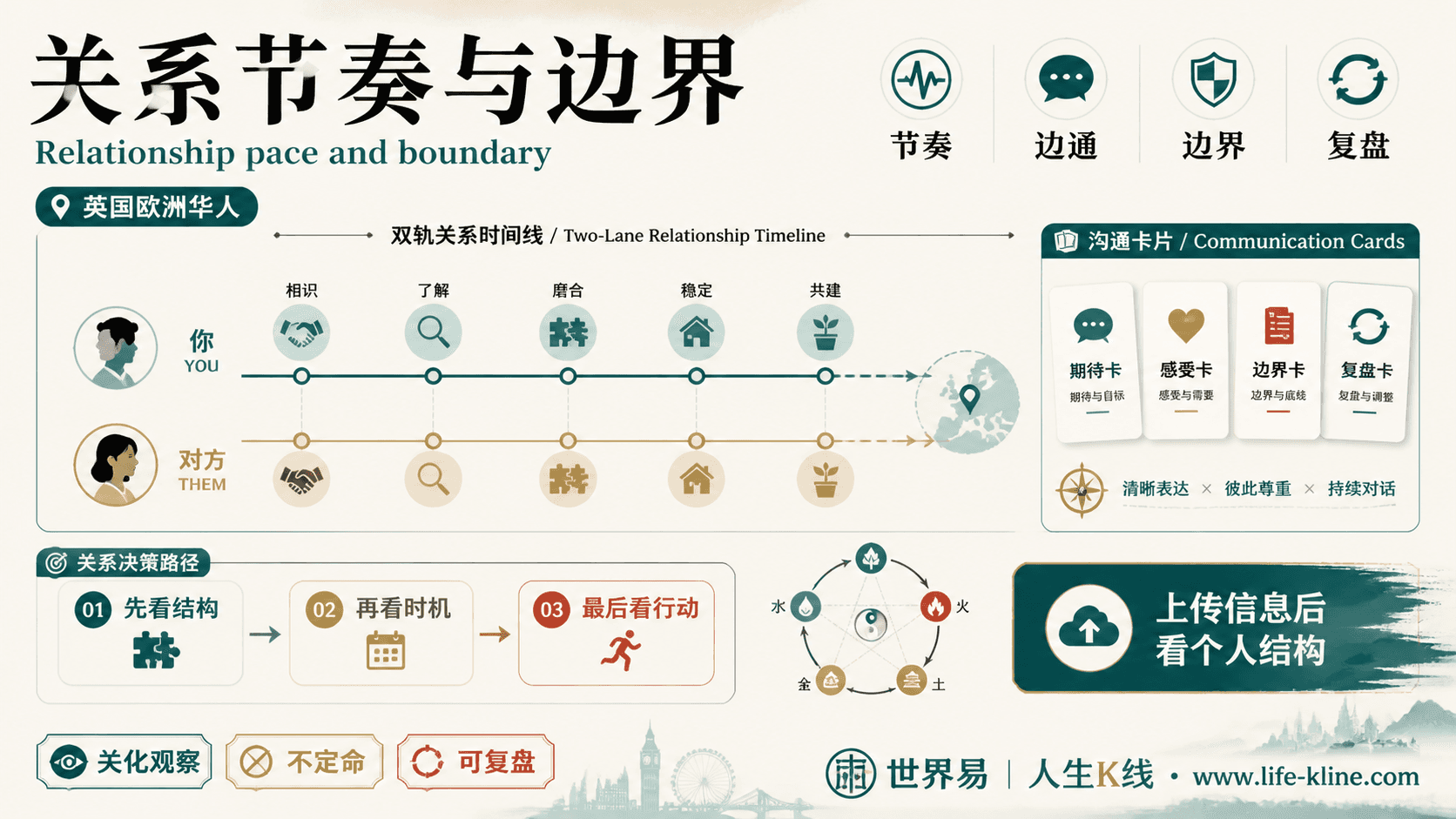
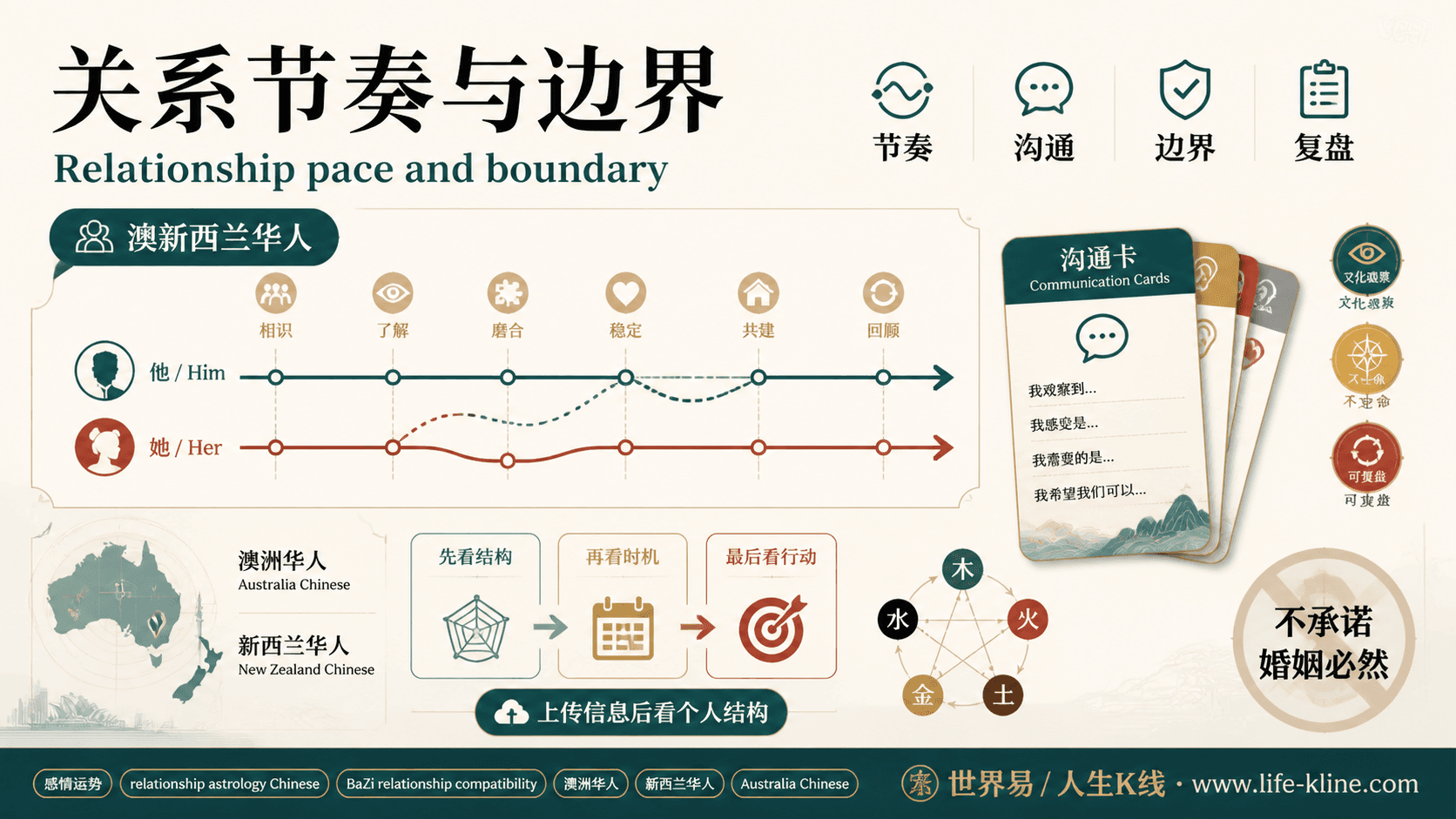
把这篇文章落到自己身上验证:先看结构,再进入个人分析,不做泛泛阅读。
Why This Decision Is Especially Difficult in This Scenario
In left-behind and long-distance separated environments, parent-child relationships often face attachment gaps. Children experience emotional deprivation due to lack of daily companionship, while parents may develop compensatory psychology. Over-intervention or emotional projection easily triggers intergenerational conflicts. The friction upon returning to cohabitation is often intense, involving both dependency needs and autonomy resistance, making it difficult for parents to grasp the right timing to intervene.
In parenting dynamics, the lack of attachment security causes children to be sensitive or resistant when parents intervene, while parental anxiety and expectations exacerbate emotional tension. Psychological biases such as confirmation bias may lead parents to intervene prematurely, neglecting the child's emotional readiness, or to miss the repair window by waiting too long.
Differences in metaphysical structures are particularly critical in this context. The strength of the Day Master, pattern types, and the combination of Yong Shen (favorable elements) and Ji Shen (unfavorable elements) reflect an individual's internal energy balance and coping mechanisms under stress. The interactions of Da Yun (decade luck cycles) and Liu Nian (annual fortune) manifest the periodic emotional and behavioral rhythms, determining sensitive and buffering periods for intervention or observation.
Therefore, the decision difficulty lies in neither intervening blindly to aggravate friction nor ignoring warning signs to delay relationship repair. It is necessary to combine metaphysical rhythms with psychological dynamics to scientifically identify signals for when 'to act or to talk' versus 'to continue observing,' thereby maximizing the promotion of parent-child reconciliation and growth.
Three Core Dimensions of Metaphysical Judgment
The relationship between the Day Master and Shi Shen (Eating God) is an important dimension to observe children's self-expression and emotional release. When the Day Master is relatively strong, Shi Shen (representing the child's star) can flourish, showing strong self-expression and emotional fluctuations. Intervention at this time requires caution; if the Liu Nian activates a strong Shi Shen, it indicates intense child emotions, suitable for delicate communication guidance to avoid harsh pressure.
Yin stars (Pian Yin/Zheng Yin) are closely related to attachment mechanisms, representing the parents' protective and nurturing power. When Yin stars are strong, children feel a stronger sense of attachment security, and parental intervention is more easily accepted. Conversely, weak or clashed Yin stars indicate obvious attachment gaps; intervention should moderate expectations, focus on emotional repair, and avoid rashly pushing relationship progress.
Guan Sha stars (Qi Sha/Zheng Guan) symbolize authority and discipline and are focal points of intergenerational conflicts. When Guan Sha stars are strong and clash or combine with the Day Master, it reflects strong parental authority that can intensify generational gaps and friction. If the Liu Nian and Da Yun trigger Guan Sha clashes or penalties, it indicates tense relationships; it is recommended to observe first and seek external support to avoid escalation of direct conflict. Conversely, moderate Guan Sha stars make intervention more guiding and constructive.
Additionally, the cycles of Da Yun and Liu Nian reflect dynamic changes in the parent-child relationship. Stable Da Yun favor maintaining the status quo; if Liu Nian shows no obvious clashes, steady progress in observation and communication is appropriate. Conversely, if Liu Nian triggers Ji Shen, increased vigilance is needed, and intervention should be appropriately delayed to allow buffering time for both parties. Integrating these dimensions forms a systematic judgment framework that helps accurately grasp intervention timing.
Three Real BaZi Case Studies
Case 1: Female, 35-40 years old, Day Master Gui Water (癸, Gui) relatively strong, Shang Guan (Hurting Officer) pattern, Yong Shen Earth and Fire, Ji Shen Metal. Current Da Yun is Geng Chen (庚辰), Liu Nian is Bing Wu (丙午). The Hurting Officer pattern indicates a strong child star with intense emotions and expression at this stage. Yong Shen Earth and Fire suggest the need for a stable and warm environment. The Geng Chen Da Yun is stable, and the Bing Wu Liu Nian brings moderate changes. Under this structure, if the child shows repeated emotional or conflict signals, parents should intervene timely with gentle but firm communication; if the child's emotions are stable, continued observation is advised to avoid over-intervention.
Case 2: Female, 55-60 years old, Day Master Jia Wood (甲, Jia) relatively weak, Jie Cai (Rob Wealth) pattern, Yong Shen Water, Ji Shen Fire and Earth. Current Da Yun is Ji Mao (己卯), Liu Nian is Bing Wu (丙午). The Jie Cai pattern highlights competition between peers, showing the child’s tug-of-war between autonomy and dependence. Yong Shen Water emphasizes the importance of emotional nourishment. Da Yun and Liu Nian are relatively stable and adaptable, indicating that observation is currently preferable to capture subtle changes in the child's independence desires. Parental intervention should be based on emotional support, avoiding authoritative suppression, and waiting for clearer emotional and attitudinal signals from the child.
Case 3: Male, 55-60 years old, Day Master Bing Fire (丙, Bing) relatively weak, Shi Shen (Eating God) pattern, Yong Shen Wood, Ji Shen Earth and Metal. Current Da Yun is Gui Si (癸巳), Liu Nian is Bing Wu (丙午). The Shi Shen pattern indicates the child has expressive and creative abilities, but the weak Day Master may lead to insufficient energy and emotional volatility. Yong Shen Wood supports vitality and growth. The current Da Yun and Liu Nian are stable and complementary, suggesting moderate intervention is possible, especially when the child shows signs of growth or improvement, strengthening positive guidance; if conflicts escalate, it is recommended to pause intervention and adjust strategies with family therapy.
All three cases emphasize the dynamic integration of metaphysics and actual parent-child interaction. Decisions to intervene or observe should depend on the child's emotional expression, attachment security, and intergenerational interaction status, combined with professional psychological interventions to scientifically adjust parenting strategies.
Common Misjudgments and Blind Spots in This Scenario
A common misjudgment is premature intervention, where parents, driven by anxiety and compensatory psychology, ignore the child's autonomous rhythm, leading to intensified parent-child tension and new attachment gaps. This risk is especially pronounced when Guan Sha stars are strong or Hurting Officer stars are intense in the metaphysical chart, requiring careful timing.
Another blind spot is prolonged observation without timely intervention, missing critical repair windows. When Liu Nian triggers Ji Shen or Yong Shen is damaged, it often signals subtle changes in the relationship. Failure to recognize this may cause emotional problems to accumulate in the child, affecting psychological health.
Additionally, ignoring the dynamic changes in Da Yun and Liu Nian rhythms and applying fixed patterns simplistically to parent-child issues can lead to decision errors. Real parenting dynamics are complex and variable; interpreting metaphysical signals from a single perspective makes it difficult to fully control intervention timing.
Finally, relying solely on metaphysical judgment without integrating professional psychological counseling and family therapy easily leads to one-sided conclusions. Parenting involves the psychological health of minors and youths; metaphysics should only serve as auxiliary reference and must not replace professional interventions.
Practical Judgment Sequence
Step 1: Assess the child's current emotional state and attachment behaviors, combining metaphysical indicators such as Day Master strength, Shi Shen, and Yin stars to identify signs of emotional volatility or attachment insecurity. If emotions are intense and Yin stars are weak, prioritize initiating professional psychological counseling to avoid rash intervention.
Step 2: Analyze the impact of Da Yun and Liu Nian on Guan Sha and Ji Shen to evaluate the risk of authority conflicts in the parent-child relationship. If Guan Sha clashes or penalties are obvious, suspend direct confrontation, prioritize observation, and seek family therapy support to gradually ease intergenerational conflicts.
Step 3: Based on the status of Yong Shen and interactions with Liu Nian, judge the child's growth motivation and autonomy willingness. When Yong Shen is strong and Da Yun is stable, moderate intervention is suitable to promote relationship repair through constructive communication. If Yong Shen is damaged or Liu Nian activates Ji Shen, extend the observation period and wait for emotional stabilization.
The entire judgment process must be dynamically adjusted, integrating professional psychological advice and avoiding decisions based solely on metaphysics. Specific intervention actions should respect the child's autonomy and emotional readiness, gradually advancing parent-child reconnection.
FAQ
Question 1: Which metaphysical signals most clearly indicate the timing to 'intervene'? Answer: Generally, when the Day Master is relatively strong and Shi Shen is flourishing, Yin stars are moderate, and Da Yun/Liu Nian show no Ji Shen clashes, it indicates active child self-expression and a stable attachment foundation, suitable for communication-based intervention to repair the relationship. Intervention effects are better when Liu Nian brings positive changes.
Question 2: What risks may arise from an excessively long observation period? Answer: Prolonged observation may cause continued lack of attachment security, accumulation of emotional problems, and even behavioral abnormalities or psychological disorders. When Ji Shen is active or Yong Shen is damaged in the metaphysical chart, it signals increased risk, necessitating timely integration of professional psychological intervention and adjustment of intervention strategies.
Question 3: How to avoid metaphysical judgment becoming 'fatalistic,' negatively affecting the parent-child relationship? Answer: Metaphysics should be used as an auxiliary tool to understand interaction rhythms and potential risks. Parents should combine actual observations with professional psychological counseling, respect the child's personality and developmental needs, avoid restricting expectations or behaviors based on metaphysical conclusions, and maintain an open and flexible parenting attitude.
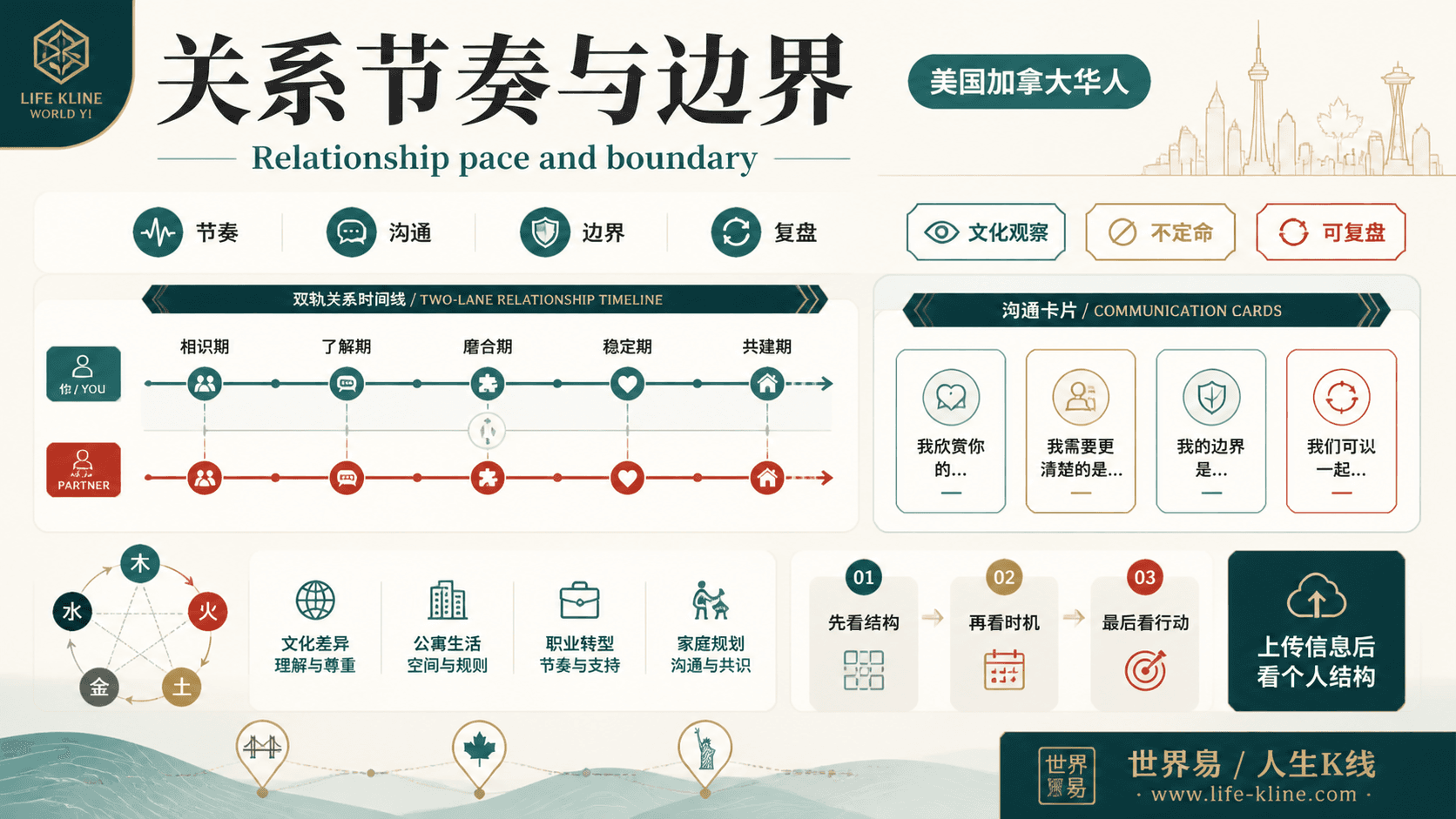
关系节奏与边界|美国加拿大华人
这张图把《Reconnecting Left-Behind and Long-Distance Parent-Child Relationships: Metaphysical Decision Analysis on Intervention Timing》里的命理概念转成关系、边界和应用场景,适合先看图建立结构,再回到知识文章正文理解细节。
关系节奏与边界不应被写成固定结论。更适合美国加拿大华人的读法,是把传统术语翻译成结构、时机、环境、行动和复盘。
查看图片解读