Frost's Descent: A Critical Time Node in BaZi Metaphysics
As the last solar term of autumn, Frost's Descent marks the establishment of the month pillar Xu Earth. It serves as the true dividing line for BaZi chart casting and the start of Da Yun, based on the Sun's ecliptic longitude at 210 degrees, not the Lunar New Moon. This node signifies the gradual rise of Water energy and the onset of frost, profoundly influencing metaphysical patterns.
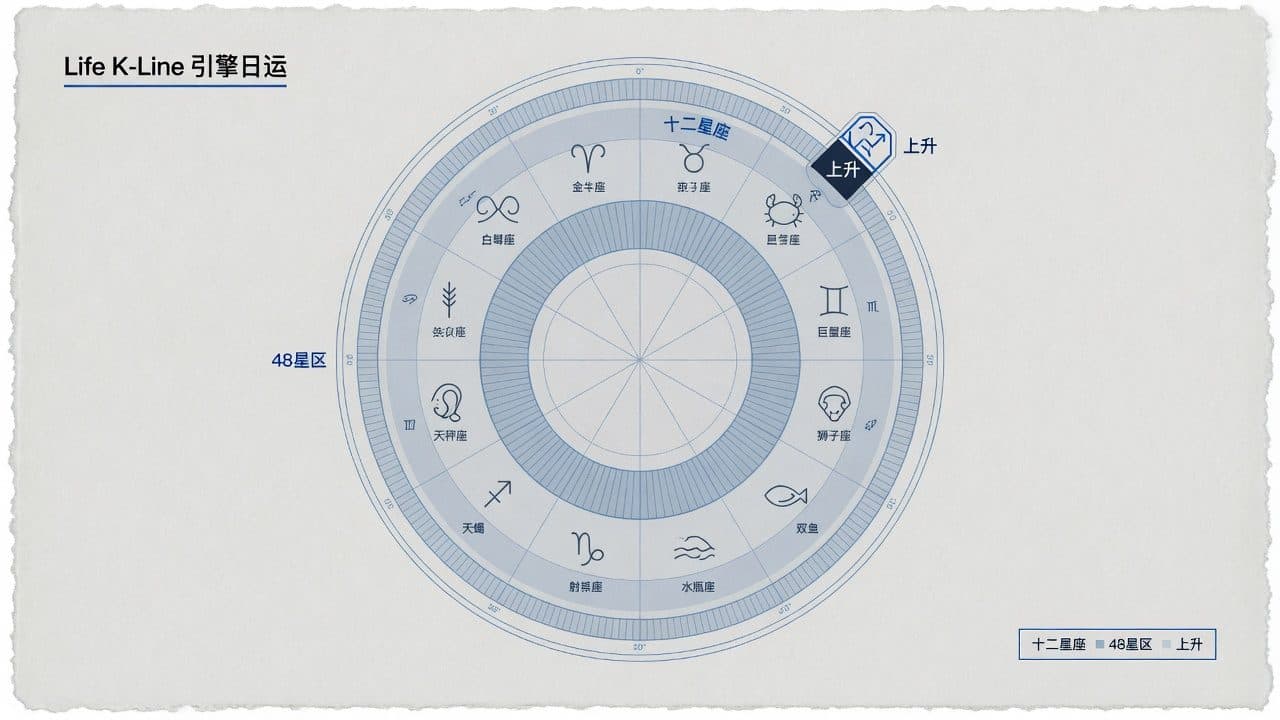
星座百科总览:把抽象判断拆成可看见的结构关系。
Concept Definition
Frost's Descent is the nineteenth of the twenty-four solar terms, located at the end of autumn and serving as the final day of the season. In terms of time, it typically occurs on October 23rd or 24th of the Gregorian calendar. This node has a specific coordinate in the Sun's orbital trajectory, where the Sun's ecliptic longitude reaches 210 degrees. At this point, the energy transformation of the solar term is complete, entering the next phase.
In practical BaZi metaphysics, Frost's Descent is an extremely important dividing line. It is the true basis for determining the month pillar and calculating the start and end dates of Da Yun. Traditional chart casting methods must strictly follow the time point of the solar term to divide months, rather than simply using the first day of the Lunar month as the starting point. This division method based on the solar ecliptic ensures the precision and scientific nature of metaphysical calculations.
The name Frost's Descent originates from the phenological characteristics; at this time, the weather gradually cools, cold air moves south, dew condenses into frost, hence the name. From an energy state perspective, this is the transition period when the energy of autumn is waning and the energy of winter is beginning. Water energy starts to gradually become prosperous, and nature exhibits obvious characteristics of retraction and settling. This natural phenomenon was viewed by ancients as a concrete manifestation of the increase and decrease of heaven and earth's Yin and Yang, projected into human fortune changes.
Traditional Metaphysical Significance
In the traditional metaphysical system, Frost's Descent marks the formal switch of the month pillar from You Earth to Xu Earth. The month pillar represents the core attribute of the month's energy, and the determination of the month pillar directly determines the foundation of the BaZi chart. When the Sun's ecliptic longitude runs to 210 degrees, the energy field of the Xu month is fully established, and the energy field of the previous You month is completely ended. This switch is like a key point in the change of seasons, determining the strength and attribute of the overall Five Elements energy field of that month.
As the conclusion of autumn, the metaphysical significance of Frost's Descent lies in representing the settling and preparation after harvest. At this time, the killing energy of metal reaches its peak, followed by the imminent turn to the prosperous water of winter. For metaphysical patterns, fortune changes around Frost's Descent are often accompanied by drastic changes or turning points. It is both the completion of the previous stage's work and the beginning of new challenges in the next stage. The behavior pattern and psychological state of the Day Master will be profoundly influenced by the energy conversion of the seasonal energy.
Ancient classics often regard Frost's Descent as a key node of Yin-Yang transformation. At the end of autumn, all things wither, but it is not the end, but rather to prepare for the winter's accumulation. In metaphysical judgments, Frost's Descent days are often regarded as moments of alternating good and bad fortune. If the Day Master travels luck or experiences events on this day, special attention needs to be paid to the balance of Five Elements and emotional regulation. Because Water energy gradually becomes prosperous, the originally hot metal formation might be affected by moisture, leading to subtle changes in personality or fortune.
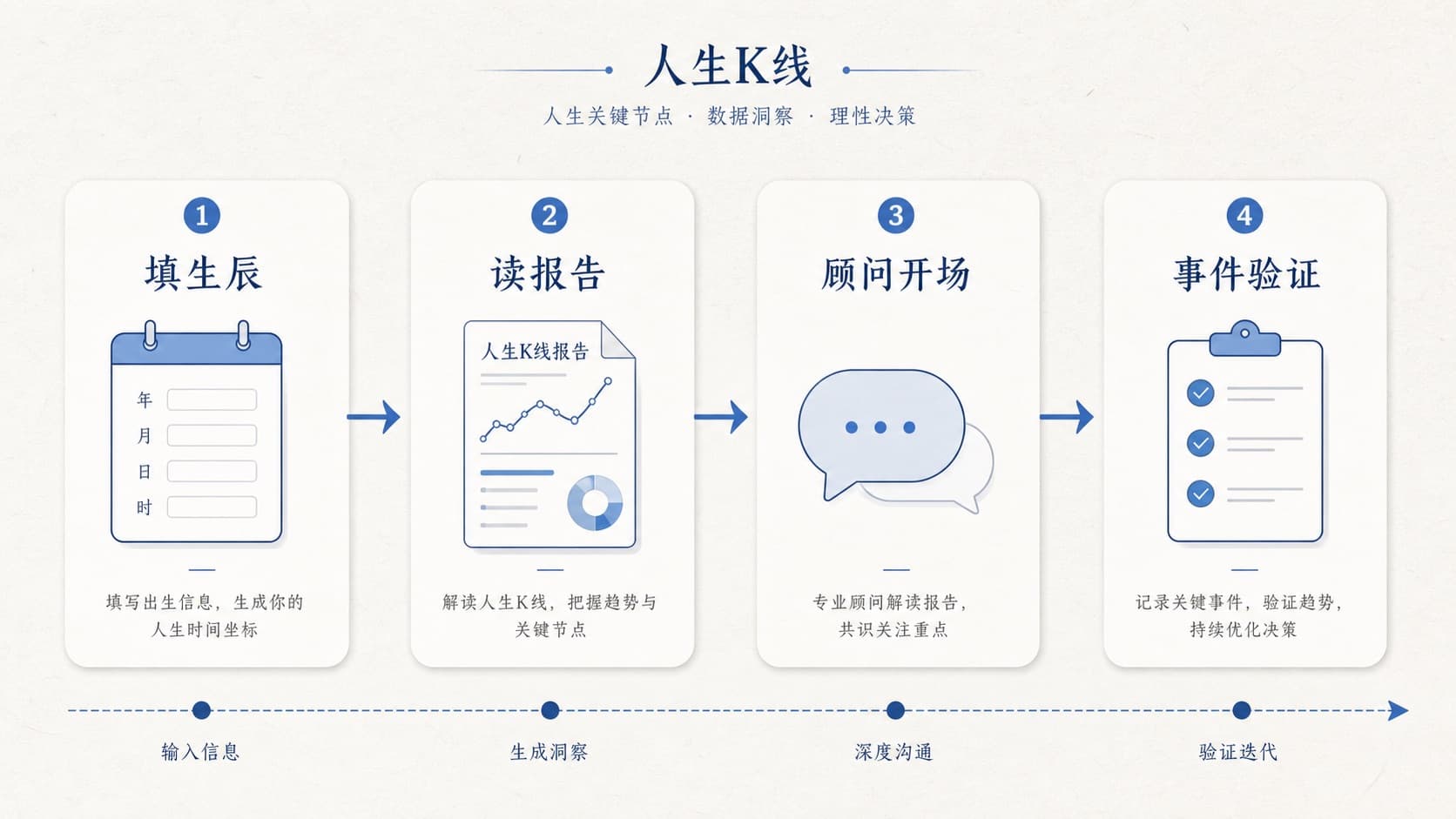
从生辰到可执行判断:把抽象判断拆成可看见的结构关系。
Practical Configuration and Interpretation
In practical BaZi chart casting, the relationship between solar terms and the month pillar must be strictly distinguished. When casting the month pillar, the exact time of the solar term handover should be used as the standard, not the first day of the Lunar month. For example, although the ninth Lunar month may have passed the first few days, if the Sun's ecliptic longitude has not yet reached 210 degrees, the month pillar still belongs to the You month. Conversely, once this Frost's Descent time point is passed, regardless of the Lunar date, the month pillar immediately becomes the Xu month. This rule is the basic iron law of metaphysics and cannot be violated.
The start and judgment of Da Yun and Liu Nian also completely depend on this Frost's Descent time point. The day of changing Da Yun usually falls after the solar term handover, and the division of annual fortune also uses the solar term as the boundary. If someone is born before Frost's Descent, even if it is close to the end of the year, their month pillar still belongs to the previous month; if born after Frost's Descent, even if it is just past the first day, the month pillar belongs to the new month. This precise day boundary division avoids errors caused by the Lunar朔日 (New Moon), ensuring the accuracy of fortune deduction.
In configuration scenarios, the Frost's Descent node has reference significance for selecting auspicious times, moving residences, or making major decisions. Since Water energy gradually becomes prosperous, activities that excessively drain Water energy should not be conducted at this time, or one needs to be especially careful about damp and cold objects. In metaphysical analysis, if the original chart has strong metal, after Frost's Descent Water energy assists metal, which may cause mixed official/killing or financial fluctuations. If the original chart has strong fire, one needs to be wary of health or career twists caused by the clash of metal and water. Therefore, making major personal adjustments before and after Frost's Descent requires comprehensive consideration of the original chart pattern and solar term energy.
Common Misconceptions
The most common misconception is believing that the first day of the Lunar month is the start of a new month, thereby incorrectly casting the month pillar. Many non-professionals habitually use the Lunar year and month as the standard, ignoring the decisive role of solar terms in metaphysics. In reality, the month in BaZi is divided based on the position of the Sun on the ecliptic, not the朔日 (New Moon) of the lunar calendar. This confusion can lead to deviations in the Five Elements distribution of the entire BaZi pattern, thereby affecting the judgment of Da Yun and Liu Nian.
Another misconception is treating Frost's Descent merely as an ordinary solar term while ignoring its key status in the start of Da Yun. Some people believe that solar terms only affect climate or agriculture and are unrelated to personal fate. However, in the metaphysical system, the switch of the month pillar is directly related to the strength and weakness of the Day Master's Five Elements. Mistakenly believing that chart casting can be done without following solar terms can cause the Day Master to lose accurate fortune guidance during life turning points, leading to incorrect decisions.
FAQ
Question: Why is BaZi chart casting based on solar terms rather than the first day of the Lunar month? Answer: Because BaZi is built upon the Five Elements energy system based on the Sun's ecliptic trajectory. The month pillar represents the overall heaven and earth energy field of that month, which must be bounded by the Sun reaching a specific ecliptic degree (such as 210 degrees at Frost's Descent) to accurately reflect the Five Elements' strength and weakness.
Question: Will the specific date of Frost's Descent handover change? Answer: The specific date of Frost's Descent handover will fluctuate between October 23rd and 24th of the Gregorian calendar, depending on the exact moment of the Sun's run that year, but the rule as a metaphysical dividing line remains unchanged; it must be based on the actual handover time rather than a fixed date.
本文含 2 张图解(封面/结构/时位/行动或风险)。图解用于建立判断框架,不构成宿命结论; 个人决策请结合测算报告与工具验证。