Rain Water Solar Term: Month Building Yin Wood and BaZi Divisions
Rain Water is the second solar term of spring, with the month building as Yin Wood, the Sun at 330 degrees, and Earth Qi nourishing all things. This solar term is the true dividing line for arranging the month pillar and starting the Da Yun, where the Earthly Branch Yin Wood is strongest, not based on the lunar calendar's first day, making it a critical node for metaphysical calculations.
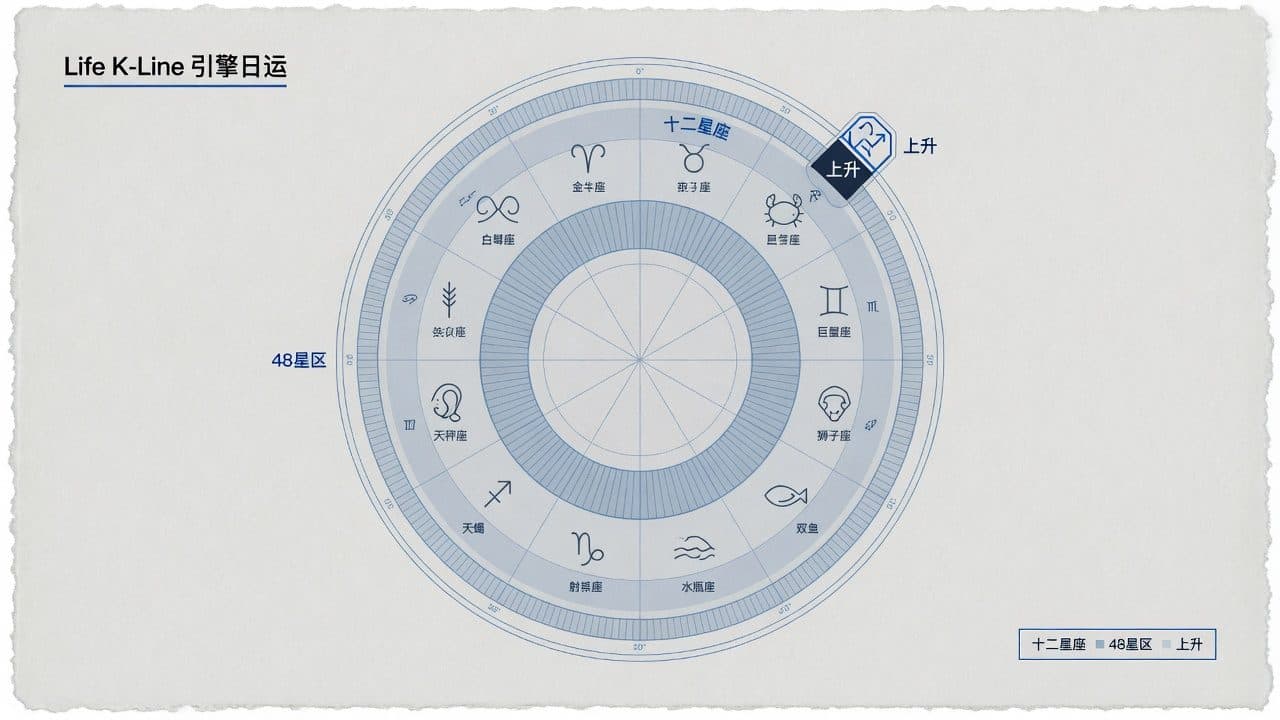
星座百科总览:把抽象判断拆成可看见的结构关系。
Concept Definition
Rain Water is the third of the Twenty-Four Solar Terms, located before Jing Zhe and after Li Chun. It is the second solar term of spring, marking the turning point where winter ends and spring begins, with ice and snow melting. In terms of time, the Rain Water solar term usually occurs on February 18, 19, or 20 of the Gregorian calendar, established when the Sun travels to the ecliptic longitude of 330 degrees. At this time, the character 'rain' in the solar term name does not merely refer to rainfall phenomena but symbolizes the rising Yang energy, representing the physiological change in nature from Yin to Yang.
In the architecture of the metaphysical system, Rain Water holds a high status as the true dividing point for determining the month pillar and starting the luck cycle. BaZi metaphysics emphasizes the 'Month Let' (Yue Ling), and the definition of the Month Let must strictly follow the solar term switch rather than the first day of the lunar month. This means that a person born after Li Chun but before Rain Water has a different Heavenly Stem and Earthly Branch for their month pillar compared to someone born after Rain Water but before Jing Zhe. The moment Rain Water solar term is established is the absolute boundary between the end of the previous month and the start of the next, determining the attribute of the foundation of the destiny chart.
From the perspective of the Five Elements of the Earthly Branches, when the Rain Water solar term is established, the Month Building is Yin. Yin represents the Tiger, belonging to Yang Wood, and is the third of the twelve Earthly Branches. At this time, the Earthly Branch Yin Wood is strongest, representing the bursting forth of life force and the beginning of vitality. Although the lingering power of the cold winter still exists, Earth Qi begins to nourish the earth, and all things prepare to sprout under the nourishment of dew and rain. This state of Earth Qi nourishment makes the Rain Water solar term play a key role in the flow of Five Elements, connecting the cold earth of winter with the vitality of spring.
Traditional Metaphysical Significance
The core significance of Rain Water in metaphysics lies in establishing the starting point of the month pillar. Ancient texts state: 'The Month Builder is the establishment and removal of the month, that is, the location of the Month Let.' When arranging a BaZi chart, determining which month belongs to which pillar depends entirely on whether the solar term has passed. For example, from Li Chun to Rain Water is the Yin Month, and from Rain Water to Jing Zhe is still the Yin Month, but the Qi of the Month Building has completely entered the state of Yin Wood being in command. If the first day of the lunar month were used as the standard, it would lead to chaos in the Month Let, causing deviations in the judgment of the strength of the entire destiny chart. Therefore, the status of Rain Water as a dividing line cannot be shaken.
The Earthly Branch Yin Wood corresponding to the Rain Water solar term is strongest, meaning that at this time the Wood Qi has formed momentum. In metaphysical analysis, the Month Let serves as the main guideline; the guideline is the Month Let. When the Month Building is Yin, Wood is the official or seal in command. For destiny charts where Wood Qi is weak, the days after the Rain Water solar term will make the foundation of Wood more solid. At the same time, the fact that the Month Building is Yin Wood also suggests that during this period, a person's mental state and career development often present an upward momentum, like trees sprouting branches and leaves, full of vitality and hope.
The Rain Water solar term also reflects the characteristic of Earth Qi nourishment, which corresponds to the generation of the Wealth Star in metaphysics. Earth represents Wealth; in spring when Wood is strong, Wood can generate Fire, and Fire can generate Earth. The Earth Qi nourishment under the Rain Water solar term helps the circulation and growth of the Wealth Star. For destiny charts where the Yong Shen (favorable element) is Wood or Fire, the Wood Qi prosperity and Earth Qi nourishment brought by the Rain Water solar term are often key periods for improving luck. This traditional metaphysical significance deeply reveals the potential impact of solar term changes on an individual's destiny trajectory.
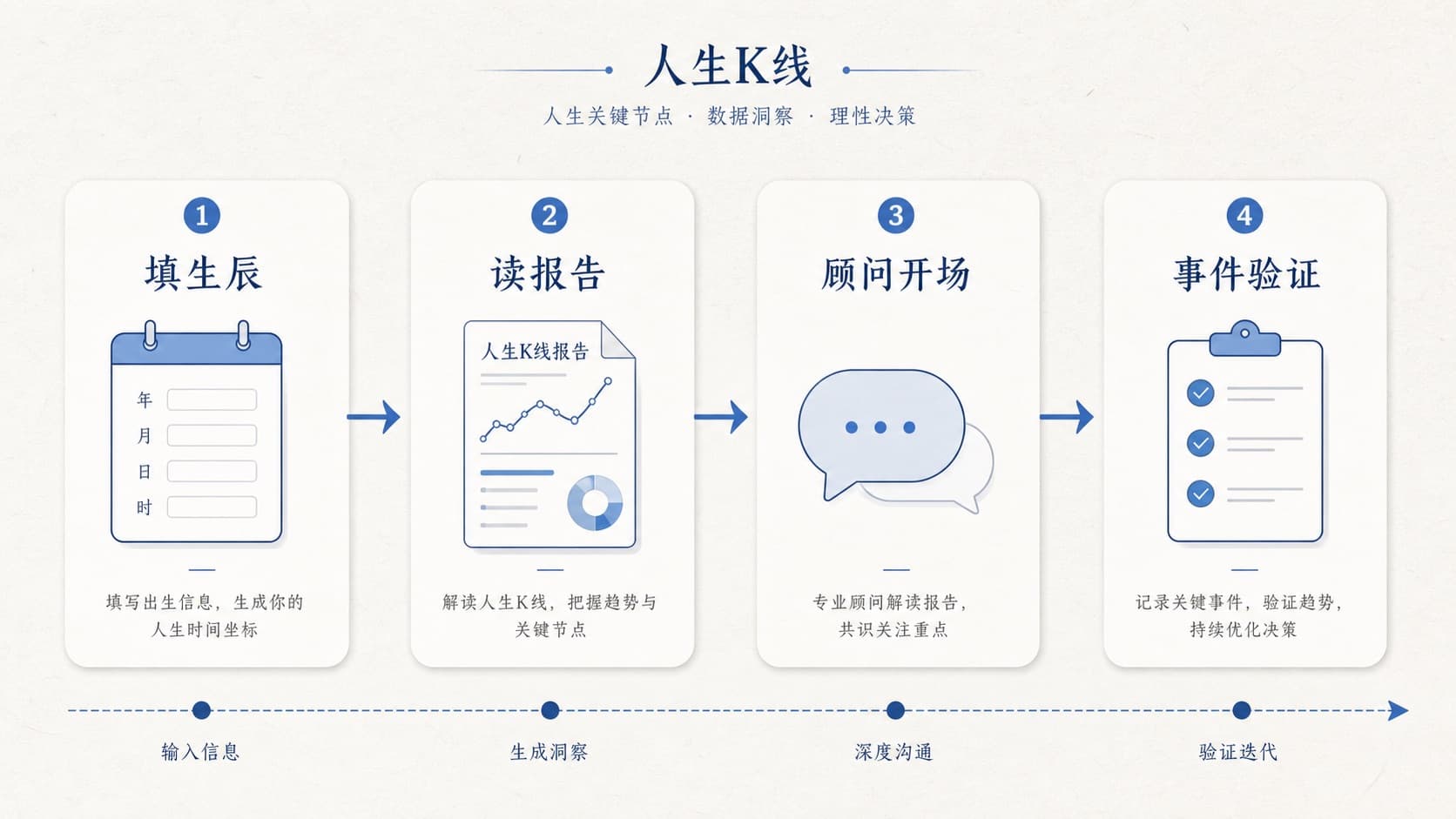
从生辰到可执行判断:把抽象判断拆成可看见的结构关系。
Practical Configuration and Interpretation
In practical BaZi configuration, the Rain Water solar term is the true dividing line for starting the Da Yun (decade luck cycle). The timing of Da Yun transfer must be precisely calculated to the moment of the solar term, not simply the lunar date. A person born just before the Rain Water solar term has a different Da Yun transfer time than someone born just after. This slight time difference can cause a fundamental change in the Heavenly Stem and Earthly Branch of the arranged Da Yun, thereby affecting the judgment of fortune and misfortune for the ten-year Da Yun cycle. Therefore, when arranging the Da Yun, one must strictly rely on the Gregorian date and the Sun's ecliptic longitude to determine the exact moment of the Rain Water solar term, ensuring the accuracy of the Da Yun starting day.
When arranging the month pillar, the Rain Water solar term is the key to distinguishing month attributes. If someone is born on February 19 of the Gregorian calendar, when the Sun's ecliptic longitude has reached 330 degrees and the Rain Water solar term has passed, their month pillar belongs to the month corresponding to the next solar term. Conversely, if born on February 18 and the solar term has not yet passed, they still belong to the month pillar of the previous month. This configuration rule ensures that the time dimension of metaphysical analysis is precise and error-free. In actual operations, one needs to consult an exact table of solar term moments, convert the birth time into precise minutes after the solar term, and thus determine if the Month Building is Yin and if the Qi of the Month Let has completely transferred.
For the interpretation of annual luck (Liu Nian), days after the Rain Water solar term have their Five Elements Qi field dominated by Yin Wood being in command. If the annual luck Heavenly Stem and Earthly Branch combine or generate with the Month Building Yin Wood, it usually indicates smoothness; if they clash or conflict, one must be wary of changes. For example, if the annual luck encounters Shen Metal, Metal controls Wood. Although the Month Building Yin Wood is strong at this time, it is controlled by the annual luck, which may trigger pressure in career or injury to the body. In scenarios of luck configuration, days after the Rain Water solar term are suitable for project layout related to Wood, such as culture, education, and forestry. At the same time, one must pay attention to the nourishing role of Earth Qi, avoiding the situation where Wood is too strong and controls Earth, leading to damage to the Wealth Star, requiring a balance of Five Elements power.
Common Misunderstandings
One common misunderstanding is using the first day of the lunar month as the standard for dividing months and the month pillar. Many people are accustomed to looking at dates on the lunar calendar, believing that the first day is the start of a new moon, and thus incorrectly determine the month pillar. In fact, the switch of the month pillar in BaZi metaphysics strictly follows the solar terms, with Rain Water being the true starting point of a new month. This confusion leads to errors in the Month Let, which in turn leads to the misjudgment of the entire BaZi pattern. For example, misjudging a destiny chart born before Rain Water as after Rain Water would incorrectly assume that the Month Building has not fully entered Yin Wood, thereby underestimating the power of Wood Qi.
Another misunderstanding is believing that the Rain Water solar term only symbolizes rain, while ignoring its actual role as a metaphysical dividing point. In modern society, although rain may just be a common weather phenomenon, in metaphysical charting, it represents a switch in energy states. Some fortune tellers may focus too much on specific weather conditions while ignoring the hard rules of Rain Water solar term in BaZi charting. In reality, regardless of whether it rains on that day, as long as the Sun's ecliptic longitude reaches 330 degrees, the Rain Water solar term is established, and the fact that Yin Wood is strongest in the Month Building does not change. Metaphysical charting must take this as the standard.
FAQ
Q: What specific date is the Rain Water solar term? A: The Rain Water solar term usually occurs on February 18, 19, or 20 of the Gregorian calendar, with the specific date fluctuating slightly due to the speed of the Sun's ecliptic longitude movement, generally between February 18 and 20. It is the true dividing line for arranging the BaZi month pillar and starting the Da Yun.
Q: Why is BaZi charting based on the Rain Water solar term and not the first day of the lunar month? A: Because the Month Building and Month Let in BaZi metaphysics must reflect the real trajectory of the Sun's movement and the changes in Five Elements Qi field. The solar term is a key node of the twenty-four equal divisions of the Sun's ecliptic, determining when the Month Building Yin Wood becomes strongest, while the first day of the lunar month is merely a marker of the lunar calendar and has no direct correspondence with the Five Elements Qi field.
Q: What specific impact does the Rain Water solar term have on the BaZi destiny chart? A: When the Rain Water solar term is established, the Month Building is Yin, and the Earthly Branch Yin Wood is strongest, with Earth Qi nourishing. This marks that Wood Qi has officially taken command. For the Five Elements configuration of the destiny chart, it means the energy of Wood significantly increases, being an important time node for judging the direction of a person's luck.
本文含 2 张图解(封面/结构/时位/行动或风险)。图解用于建立判断框架,不构成宿命结论; 个人决策请结合测算报告与工具验证。