Lichun: The True Starting Point of the BaZi Chart in Metaphysics
As the first solar term of spring, Lichun marks the transition of the Heavenly Stem-Earthly Branch month pillar from Chou to Yin, with the Sun's ecliptic longitude reaching 315 degrees. It is the critical node for establishing the month pillar in BaZi charting and determining the start of luck cycles.
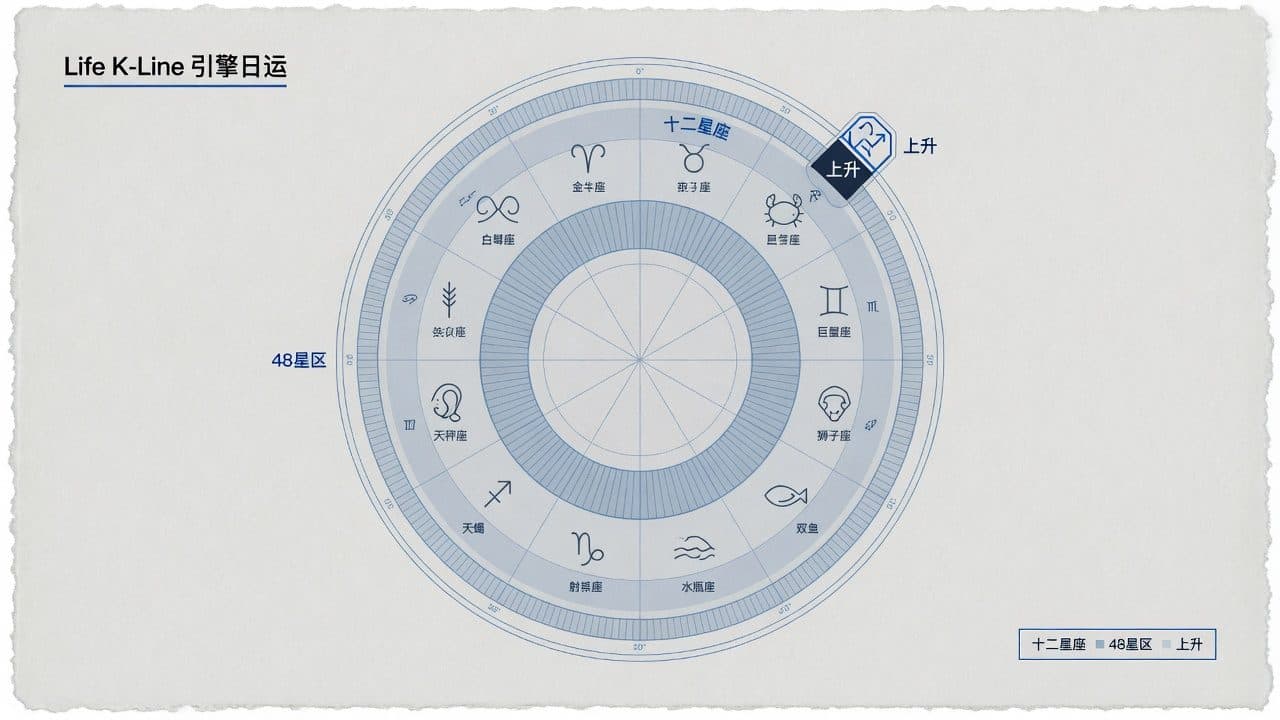
星座百科总览:把抽象判断拆成可看见的结构关系。
Concept Definition
Lichun is the first of the 24 Solar Terms, ranking as the head of spring. In the system of the Heavenly Stem and Earthly Branch calendar, the accurate meaning of Lichun is that the Heavenly Stem-Earthly Branch month pillar formally transitions from Chou (Chǒu) Earth to Yin (Yín) Wood. This transition marks a change in time coordinates, with the Sun running to the ecliptic longitude of 315 degrees, representing a precise moment where astronomy and calendar intersect. Its time range usually falls around February 3rd, 4th, or 5th of the Gregorian calendar, with the specific date fine-tuning based on the Sun's orbital trajectory for that year.
From a professional perspective of metaphysical charting, Lichun holds an irreplaceable starting status. It is regarded as the true starting point of a new year's BaZi chart, and all subsequent fortune-telling calculations are recalculated based on this boundary. This node not only divides the succession of seasons but also establishes a new Heavenly Stem-Earthly Branch cycle in the dimension of time. The natural law of 'all things beginning to sprout' reaches its theoretical height in metaphysics at this moment, symbolizing the restart of life energy.
Traditional Metaphysical Significance
In the traditional metaphysical system, Lichun is revered as the key node for the sprouting of all things, representing the initial awakening and germination of life force. At this time, the cosmic energy begins to shift from cold to warm, and the Five Elements attribute transitions from the cold Water of winter to the generating Wood of spring. This shift in the energy field directly influences the direction of a person's fortune. Metaphysicists believe that after Lichun, the generative power of Wood energy gradually increases, which serves as an important signal for those whose Yong Shen (favorable god) in their BaZi chart is Wood to see their fortune begin to recover.
Metaphysically, Lichun is not only a change of season but also an absolute standard for time boundaries. As the true starting point of the BaZi chart, it determines the attribution of the month pillar. This concept emphasizes the continuity and rhythm of time, entering the first stage of growth after Lichun. This natural law was perceived by ancients and integrated into the metaphysical system to explain the internal logic of how human affairs and fortune change with the celestial timing.
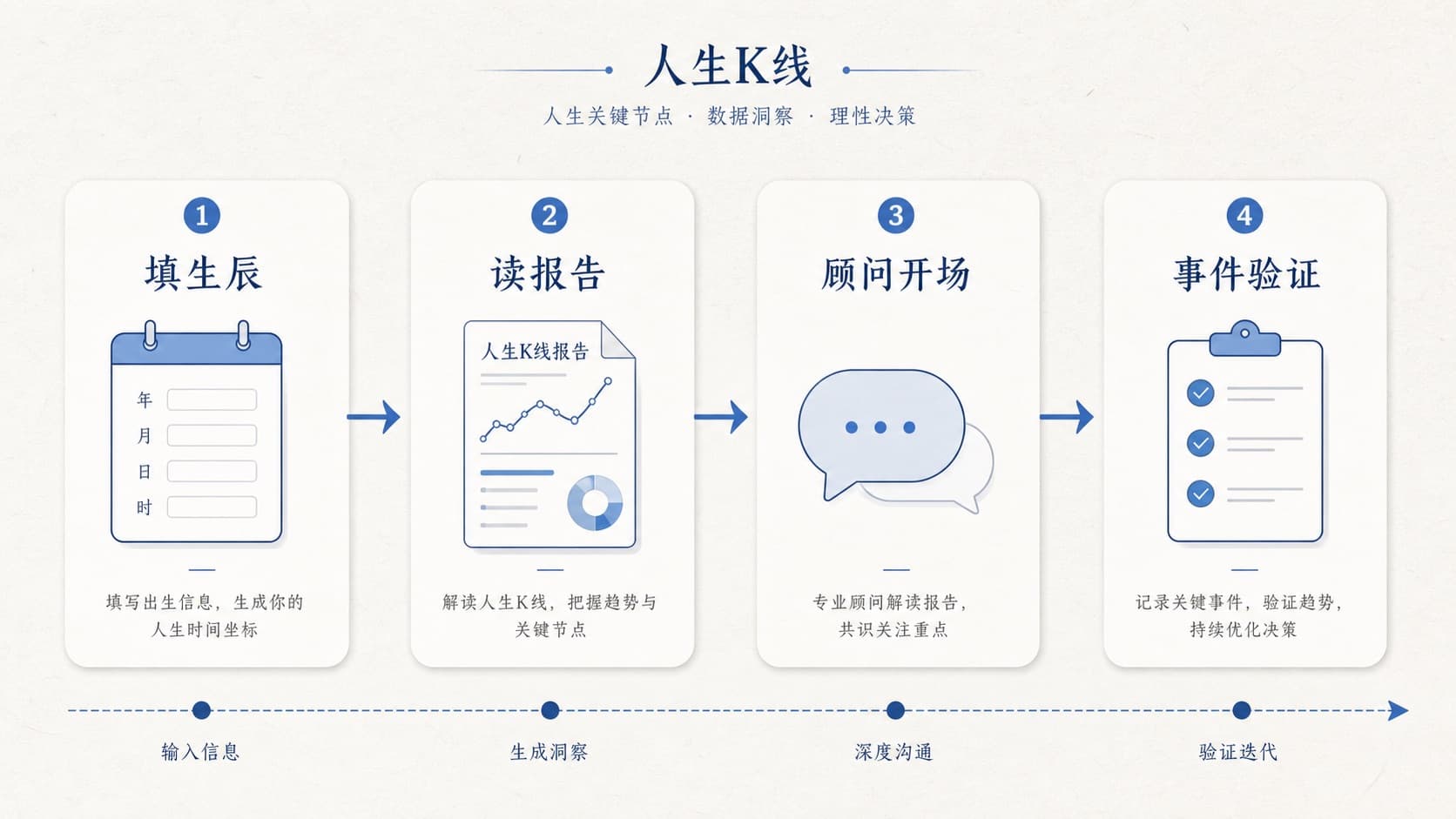
从生辰到可执行判断:把抽象判断拆成可看见的结构关系。
Practical Configuration and Interpretation
In the practical operation of BaZi charting, Lichun is the sole standard for establishing the month pillar. Whether arranging the Da Yun (decade luck cycle) or determining the Liu Nian (annual fortune), one must strictly use the exact time of the solar term exchange as the dividing line, and absolutely cannot use the first day of the lunar calendar as the boundary. If Lichun occurs on February 2nd of the Gregorian calendar, then those born before that day still belong to the Yin month of the previous year, while those born after that day belong to the Mao (Mǎo) month of the next year. This rule ensures the precision of metaphysical analysis, avoiding deviations caused by the floating dates of the lunar calendar.
Since the specific Gregorian date of Lichun fluctuates by 1 to 2 days each year, precise calculation of the solar term moment is required in practical application. Metaphysicians must refer to the perpetual calendar to determine the exact hour of Lichun, thereby defining the switching point of the month pillar. For the chart owner, knowing their Lichun time helps in judging the month let (month pillar) they belong to, thus accurately analyzing the strength and weakness state within their BaZi chart. This precise division based on the Sun's ecliptic longitude of 315 degrees reflects the scientific nature of traditional metaphysics.
Common Misconceptions
Many beginners easily confuse Lichun with the Lunar New Year, mistakenly believing that the Spring Festival is the beginning of a new year. In fact, the first day of the first lunar month in BaZi metaphysics is merely one day within a certain Heavenly Stem-Earthly Branch month and does not possess the function of dividing the month pillar and Da Yun. The true conversion of the Year Pillar and Month Pillar must strictly follow the nodes of the 24 Solar Terms, and as the first solar term of spring, the status of Lichun is unshakable.
Another common misconception is that the time of Lichun remains fixed. In reality, the specific Gregorian date of Lichun fluctuates forward or backward depending on the moment the Sun's ecliptic longitude reaches 315 degrees. Some years may see it on February 3rd, while others on February 5th. This fluctuation directly relates to the attribution of the chart owner's month pillar; if this detail is ignored, it leads to a misjudgment of the entire BaZi pattern, so one must act based on real solar term data.
FAQ
Q: Is Lichun calculated according to the lunar calendar or the Gregorian calendar? A: In BaZi metaphysics, Lichun is determined by the solar term moment when the Sun's ecliptic longitude reaches 315 degrees. Although the Gregorian date fluctuates by 1-2 days, it serves as the true boundary for arranging the month pillar and starting the Da Yun, and it is not calculated from the first day of the lunar calendar.
Q: Why is Lichun regarded as the true starting point of the BaZi chart? A: Because Lichun marks the transition of the Heavenly Stem-Earthly Branch month pillar from Chou to Yin, symbolizing 'all things beginning to sprout'. Metaphysically, this is treated as the true starting point of a new year, and all fortune-telling calculations are recalculated based on this boundary.
本文含 2 张图解(封面/结构/时位/行动或风险)。图解用于建立判断框架,不构成宿命结论; 个人决策请结合测算报告与工具验证。