Jingzhe: Core Time Nodes in BaZi Chart Casting and Moon Pillar Conversion Rules
Jingzhe, the third solar term of spring, marks the transition of the Moon Pillar from Yin to Mao, reaching the peak of Wood energy. It serves as the true dividing line for BaZi chart casting, Da Yun initiation, and True Solar Time calculations, based on the Sun's ecliptic longitude at 345 degrees rather than the lunar first day, holding decisive significance for metaphysical deduction.
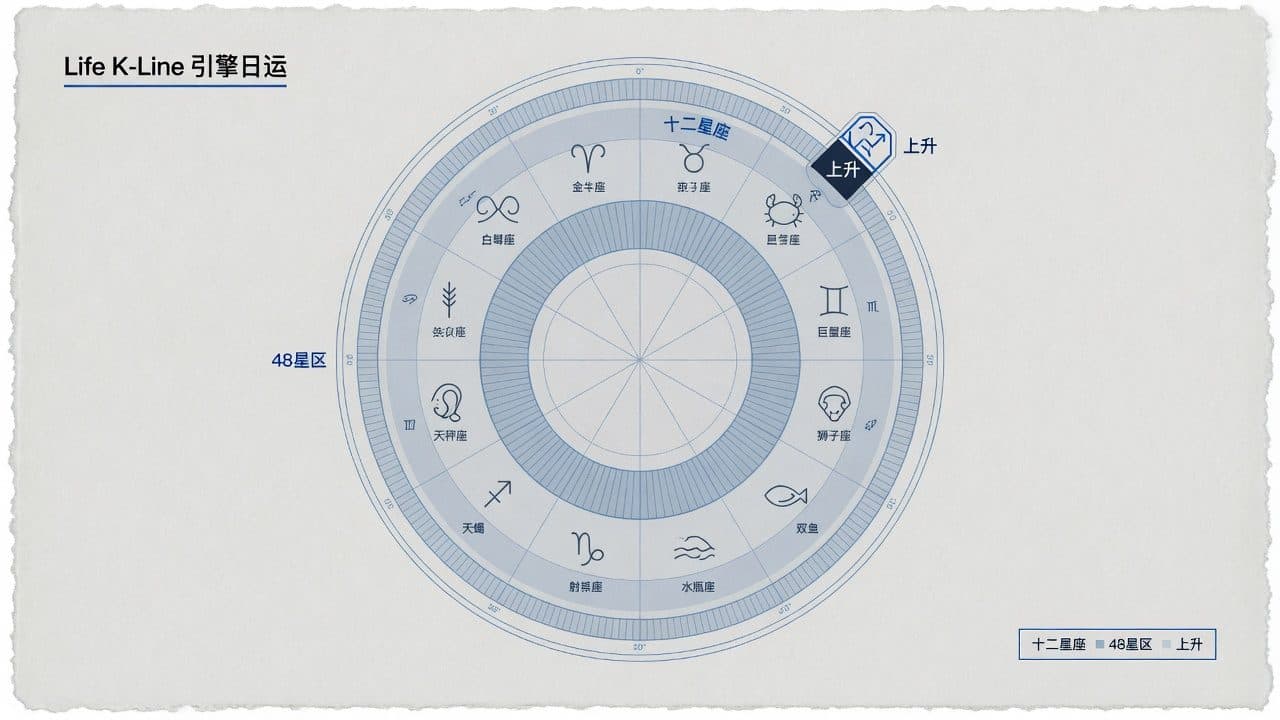
星座百科总览:把抽象判断拆成可看见的结构关系。
Concept Definition
Jingzhe is the third solar term among China's traditional 24 solar terms, occurring between March 5th and 7th of the Gregorian calendar. It is not only a node marking changes in natural phenomena but also a critical ruler for dividing time coordinates within the metaphysical system. Jingzhe marks the beginning of the second spring, when the Sun travels to the ecliptic longitude of 345 degrees, Yang energy rises, all things revive, spring thunder strikes suddenly, awakening all living things.
Within the metaphysical system, Jingzhe holds an irreplaceable status. It serves as the precise dividing line for BaZi chart casting, Da Yun initiation, and annual fortune calculation. The flow of time and space in metaphysics does not rely on the natural alternation of lunar months but strictly follows the Sun's trajectory along the ecliptic. As the dividing point, Jingzhe determines the ownership of the Month Pillar and decides whether an individual has entered a new ten-year Da Yun cycle.
The criteria for defining Jingzhe are very specific; when the Sun's ecliptic longitude reaches 345 degrees, it is Jingzhe, which is also the exact moment when the Moon Pillar transitions from the Yin month to the Mao month. At this time, Wood energy enters the Mao month, reaching its most vigorous state. This concept originates from ancient observations of celestial movements and, after a thousand years of inheritance, has become an unpassable statutory standard for modern BaZi chart casting.
Traditional Metaphysical Significance
Traditional metaphysics divides a year into twelve months, with two solar terms in each month, where the birth month and death month are opposites. As the starting point of the Mao month, Jingzhe means the formal establishment of Wood energy. In months dominated by Jia or Yi Day Masters, Wood energy is given command and is strong; the BaZi patterns at this time often present a vigorous and upward-expanding trend. With Wood energy in the Mao month being strong, if the BaZi is weak in Wood, it needs support; if Wood is too strong, it needs to be drained or restrained. This is an important basis for judging the strength of the Five Elements.
In metaphysics, Jingzhe is not only the beginning of the month but also the switch for Da Yun flow. The handover of Da Yun strictly follows solar terms, not the lunar first day. This means people born before Jingzhe still belong to the Yin month, while those born after Jingzhe belong to the Mao month. A tiny time difference can lead to a complete change in the Month Pillar, thereby affecting the overall height of the entire BaZi pattern. Therefore, a one-day fluctuation in the date of Jingzhe can change a person's destiny trajectory.
The Moon Pillar corresponding to Jingzhe is Mao, belonging to the Wood element, with the East direction. Mao is one of the four correct positions, serving as the source and destination of Wood energy. At this time, spring thunder awakens hibernation, symbolizing life force transforming from latency to explosion. In Six Lines prediction, if the Moon Pillar is Mao Wood, and Mao Wood is the Yong Shen in the hexagram, matters are likely to succeed; if it is the Ji Shen, obstacles need to be guarded against. The seasonal characteristics of Jingzhe make patterns like Wood-Fire Brightness or Wood-Earth Conflict particularly obvious, requiring comprehensive analysis combined with specific BaZi.
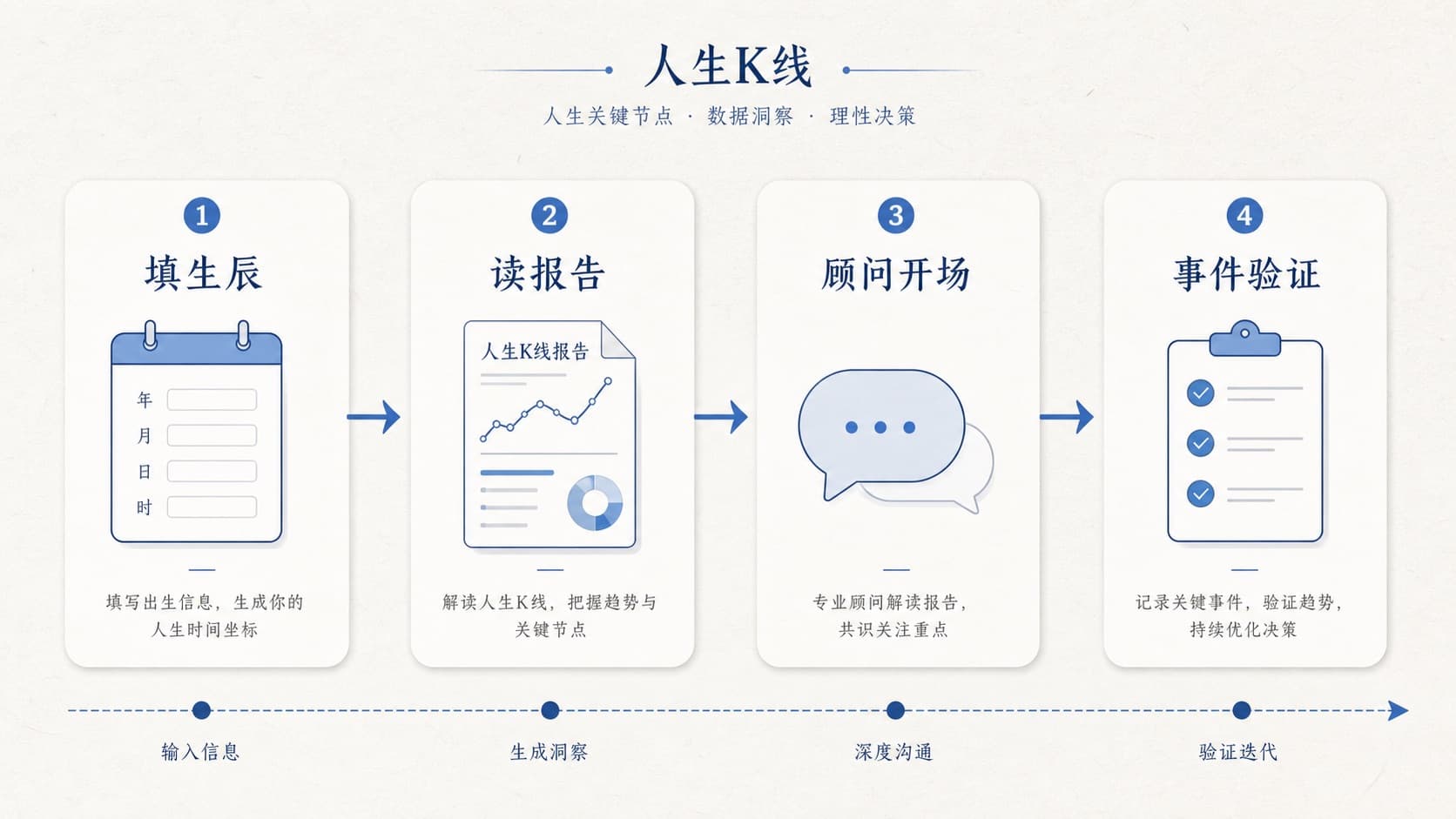
从生辰到可执行判断:把抽象判断拆成可看见的结构关系。
Practical Configuration and Interpretation
In practical application, casting BaZi must strictly follow the principle of Jingzhe as the dividing line for the Month Pillar. Although Gregorian dates are close to solar terms, BaZi chart casting relies on the time of solar term handover, and Gregorian dates may fluctuate by 1 to 2 days. For example, someone born just before Jingzhe still has the Yin Wood Month Pillar, while someone born just after Jingzhe has the Mao Wood Month Pillar. This precise time cutting is the cornerstone ensuring the accuracy of metaphysical deduction and cannot be confused by lunar dates.
When initiating Da Yun, Jingzhe also plays a decisive role. The handover points of Da Yun usually fall on the day of the solar term or shortly before/after, depending on the deviation between the Gregorian calendar and the solar term. If the Da Yun handover day coincides with Jingzhe, True Solar Time must be calculated precisely to determine if it is the tail of the Yin month or the head of the Mao month. The direction of Da Yun flow, often depending on the strength of the Month Let, may lead to increased pressure or a turning point in fortune if the original chart is weak in Self and Jingzhe Wood is strong.
In terms of configuration scenarios, the Jingzhe Moon Pillar of Mao Wood suits individuals who like Wood and Fire for development. At the time of peak Wood energy, it is conducive to industries such as education, culture, and forestry. If Wood is already extremely strong in the BaZi, one should not proceed with a Wood Da Yun but should instead proceed with Fire or Earth Da Yun to drain and generate wealth. The seasonal characteristics of Jingzhe remind the chart owner to move rather than stay still and to expand outward. For judging annual fortune, if the Liu Nian clashes or combines with the Jingzhe Moon Pillar, it often predicts major changes in people and matters for that year, requiring early planning.
Common Misconceptions
The biggest misconception is taking the lunar first day as the dividing point for the Month Pillar. Many beginners habitually cast charts according to lunar months, believing the first day of the month changes the month. However, metaphysical facts show that the Month Pillar follows the switch of solar terms, not the lunar first day. Jingzhe usually occurs on March 5th or 6th of the Gregorian calendar, while lunar dates need to be checked against specific years, often differing by several days. This cognitive bias can lead to errors in casting the Month Pillar, making the entire BaZi pattern completely wrong.
Another misconception is ignoring the fluctuation of solar term dates. The specific date of Jingzhe fluctuates by 1 to 2 days every year, depending on the precise moment the Sun reaches the 345-degree ecliptic longitude. The Gregorian date of Jingzhe is not fixed in different years. If casting charts mechanically using a fixed Gregorian date while ignoring the actual solar term time of the year, it will also lead to errors in judging the Month Let. One must consult the solar term table for the year and use the precise solar term moment as the basis for casting.
FAQ
Question: Will minor differences in the date of Jingzhe affect the BaZi? Answer: Yes. In metaphysics, the Month Pillar follows solar terms; people born before or after Jingzhe have different Month Pillars, so even if they differ by one day, the BaZi pattern may be completely different, and casting must strictly follow the solar term moment.
Question: Is Jingzhe the second lunar month? Answer: No. Jingzhe is a solar term name, corresponding to around March 5-7 of the Gregorian calendar, with the Moon Pillar in Mao and Wood element. Lunar months are humanly divided and have no direct correspondence with solar terms; casting cannot mix them.
Question: Must Da Yun handover happen on the day of Jingzhe? Answer: Da Yun handover usually falls on the day of the solar term, but it depends on True Solar Time and specific casting software algorithms. As the dividing point, Jingzhe is the key basis for judging whether to enter the Mao month Da Yun.
本文含 2 张图解(封面/结构/时位/行动或风险)。图解用于建立判断框架,不构成宿命结论; 个人决策请结合测算报告与工具验证。