Xiao Xue: Detailed Explanation of the Winter Second Solar Term and BaZi Month Pillar Boundary
As the second solar term of winter, Xiao Xue marks the arrival of the first snow and the hidden Yang energy. It is a critical boundary point for BaZi charting, where the month pillar is determined by the solar term rather than the lunar New Year, with the Sun at 240 degrees of ecliptic longitude and the month building set to Hai.
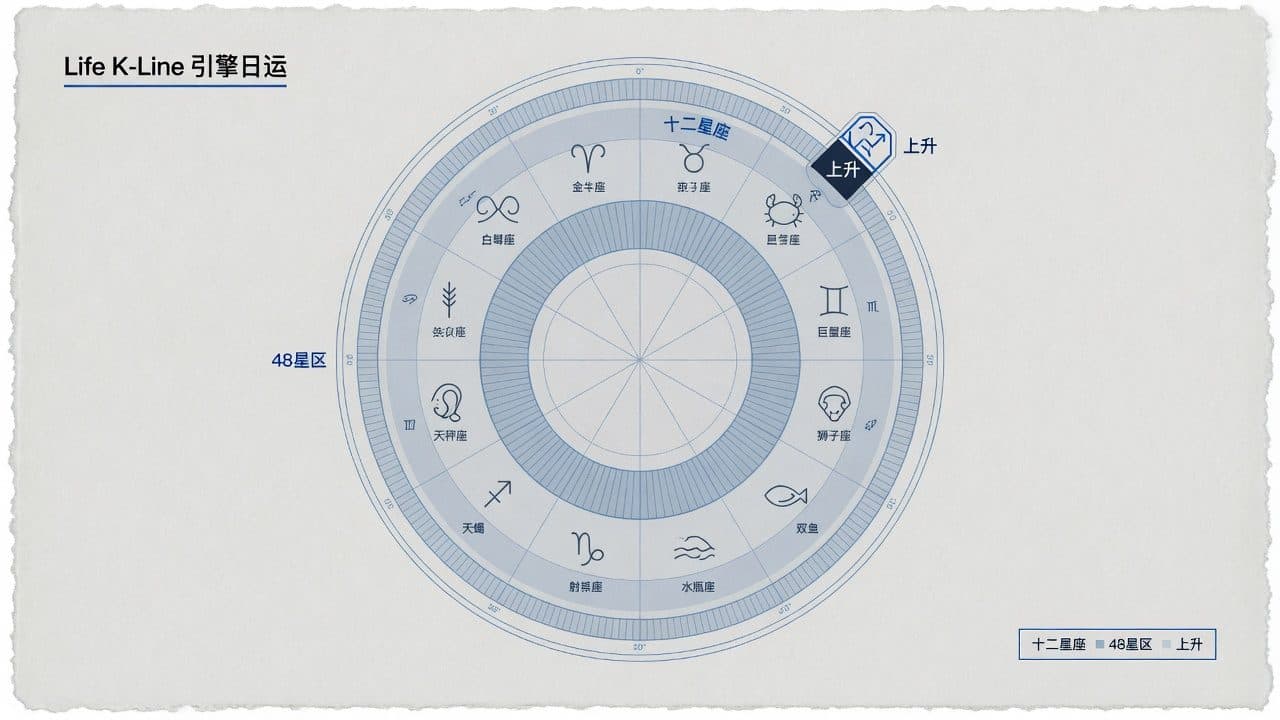
星座百科总览:把抽象判断拆成可看见的结构关系。
Concept Definition
Xiao Xue is the twenty-first of the twenty-four solar terms, ranking as the second solar term of winter. In terms of time, it typically appears on either November 22nd or 23rd of the Gregorian calendar. From an astronomical perspective, at this time, the Sun's ecliptic longitude runs to 240 degrees, marking the Earth's revolution to a specific position and entering a new cycle of day-night length changes.
Xiao Xue is not only a node of phenological changes but also a point of time coordinate replacement. As one of the twenty-four solar terms equidistant on the solar ecliptic, it precisely defines the transition of seasons. On this day, Yang energy hides and Yin energy grows, and all things in nature begin to contract. For the metaphysics system, Xiao Xue is not only the season when the first snow may appear but also an impassable checkpoint on the time axis.
Xiao Xue possesses dual attributes within the calendar system. On one hand, it is a node reflecting climate changes in natural astronomy; on the other hand, it is a time segmentation point in metaphysics charting. Although the Gregorian date is relatively fixed, specific moments may fluctuate due to leap seconds and calendar micro-adjustments. In BaZi metaphysics, this slight time difference is regarded as an absolute boundary dividing different time segments, which must not be confused.
Traditional Metaphysical Significance
Within the BaZi metaphysics system, Xiao Xue holds an extremely special status; it is the true boundary point for determining the month pillar and establishing the Da Yun. Metaphysics emphasizes the handover of solar terms rather than simple lunar date conversions. This rule ensures the precise division of the time energy field, enabling the BaZi chart to accurately reflect an individual's life state during a specific time period.
At the time of Xiao Xue, the month building is fixed at Hai. The month building represents the ruling Five Element energy of the season. With Hai Water in power, water energy gradually strengthens. At this time, the Sun is at 240 degrees of ecliptic longitude; although Yang energy has not completely faded, it has largely withdrawn, and Yin cold energy rises. This conversion of heaven and earth energies directly determines the attribute of the month pillar's Five Elements, thereby influencing the strength of the Day Master and the height of the pattern.
Traditional metaphysics holds that the month pillar is determined by solar term transitions, absolutely not by the lunar first day. This principle corrects the folk misconception that the first day of the lunar month marks the new moon. The lunar first day is merely the starting point of the Heavenly Stem and Earthly Branch cycle, while BaZi charting requires the moment the Sun runs to a specific ecliptic degree. Therefore, the last day before Xiao Xue and the first day after Xiao Xue have different month pillars.
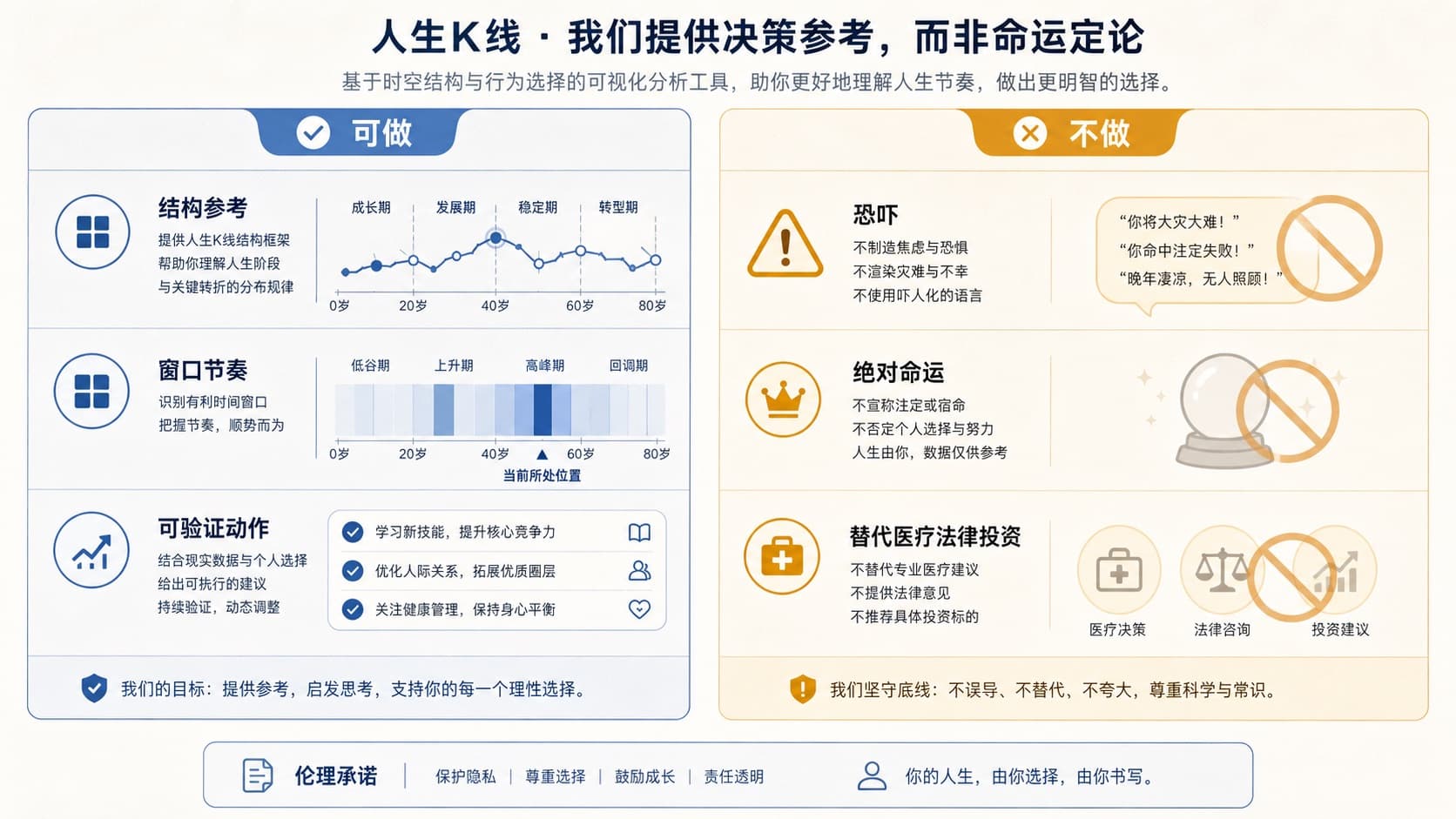
判断边界:参考不是定论:把抽象判断拆成可看见的结构关系。
Practical Configuration and Interpretation
In BaZi practical configuration, determining Xiao Xue as the boundary point lies in the handover of Da Yun. The Da Yun changes every ten years, and its starting time depends entirely on the solar term. If a person is born before Xiao Xue, their month pillar corresponds to the Heavenly Stems and Earthly Branches of the previous solar term; if born after Xiao Xue, the month pillar changes to the one corresponding to Xiao Xue, namely the Hai month.
For chart analysis, the power of the month building Hai Water peaks around Xiao Xue. At this time, the water force is vast. If the Day Master likes Water, the fortune around Xiao Xue is often smooth, favorable for flow, wisdom, or development in the North; if the Day Master dislikes Water, caution must be exercised against the negative impact of damp cold energy. The energy fluctuation during the solar term handover often corresponds to a turning point in life stages.
The rule that Gregorian dates fluctuate by 1 to 2 days is crucial in practical charting. This means one cannot rigidly stick to a fixed date but should find the exact moment the Sun reaches 240 degrees of ecliptic longitude. This flexibility ensures the rigor of charting while avoiding errors caused by mechanicalism. When interpreting, the metaphysician must precisely calculate the solar term moment, using it as the absolute basis for starting the Da Yun and establishing the month pillar.
Common Misconceptions
The most common misconception is treating the lunar first day as the starting point for BaZi charting. Many people habitually use the first day as the start of the new moon, believing the month pillar changes accordingly. However, BaZi charting follows the Sun's ecliptic degree, not the Yin calendar's new moon. The month pillar change before and after Xiao Xue depends only on whether the ecliptic 240 degree is crossed, not on whether the first day arrives.
Another misconception is ignoring the impact of solar term fluctuations. Due to the difference between the astronomical tropical year and the calendar year, the specific moment of Xiao Xue may vary. If a fixed Gregorian date is forcibly used to divide, it may lead to errors in month pillar attribution. One must base the birth time on the precise solar term moment, dividing it into before or after Xiao Xue, to correctly establish the fact that the month building is Hai.
Some also mistakenly believe Xiao Xue refers only to the weather phenomenon, ignoring its core function in metaphysics. Although Xiao Xue indeed implies the first snow, in the metaphysics system, it is first a time coordinate. Viewing Xiao Xue merely as a climate description while ignoring its role as a boundary for charting the month pillar and starting the Da Yun is the root cause of charting errors.
FAQ
Q: If born on Xiao Xue, is the month pillar definitely the Hai month? A: Not necessarily. The determination of the month pillar depends on the specific moment of birth. If born before the Xiao Xue solar term, the month pillar remains the one of the previous month; only if born after the Xiao Xue solar term does the month pillar change to the Hai month. The solar term moment must be calculated precisely.
Q: Why does BaZi charting not use the lunar first day as the standard? A: Because the lunar first day is the cycle starting point of the Yin calendar, while BaZi is based on the Sun's trajectory. The month pillar represents the seasonal energy; the transition of seasons is decided by the Sun's ecliptic degree. At Xiao Xue, the Sun is at 240 degrees of ecliptic longitude, the month building is Hai, and this is the true state of the metaphysics energy field.
本文含 2 张图解(封面/结构/时位/行动或风险)。图解用于建立判断框架,不构成宿命结论; 个人决策请结合测算报告与工具验证。