Detailed Encyclopedia of Da Xue Solar Term in Metaphysics: Sub Month Water Peak Division
Da Xue is the third solar term of winter, with the month building on Zi, the Sun's ecliptic longitude at 255 degrees, marking the peak of water energy entering the Zi month. As the true dividing line for BaZi monthly pillar arrangement and starting Da Yun, Da Xue has replaced the first day of the lunar calendar as the critical node for month pillar switching, holding decisive significance for metaphysical analysis.
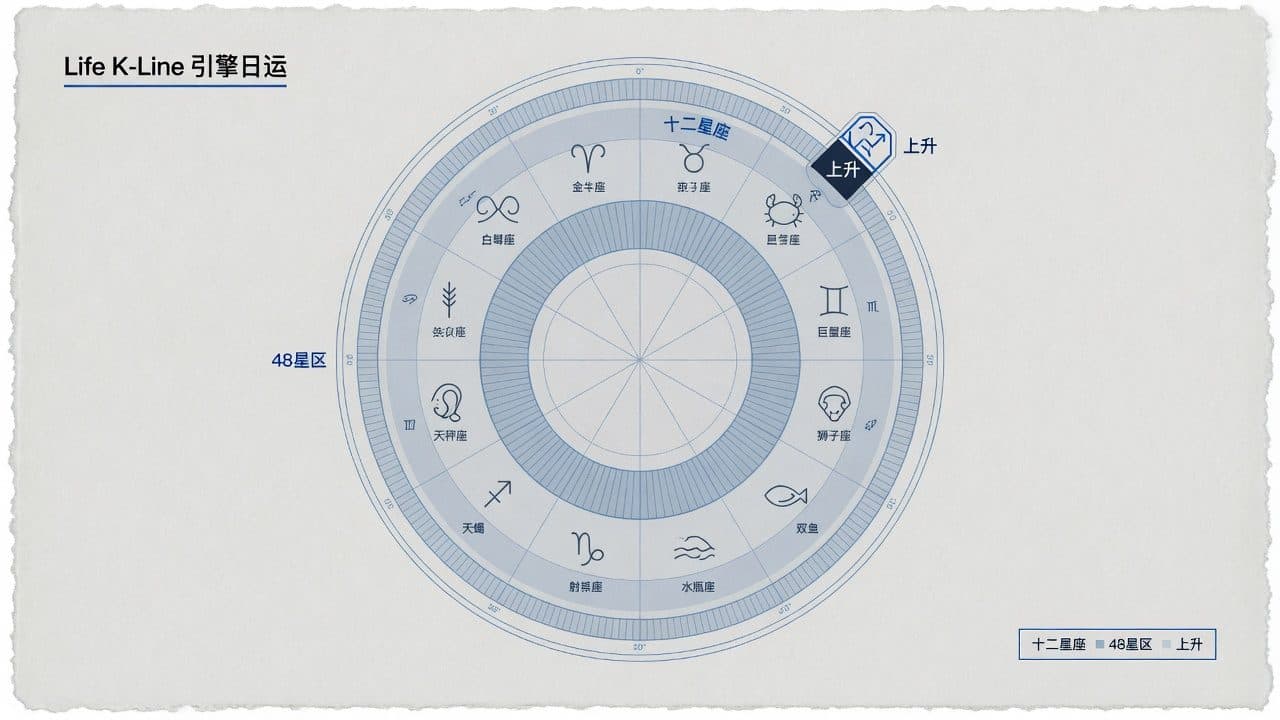
星座百科总览:把抽象判断拆成可看见的结构关系。
Concept Definition
Da Xue is the third solar term of the twenty-four solar terms, belonging to the solar ecliptic system divided into twenty-four equal parts. Its specific time is between December 6th and 8th of the Gregorian calendar each year, at which time the Sun's ecliptic longitude runs to 255 degrees. In terms of time division, Da Xue marks the formal arrival of the severe cold season after Han Lu, with the natural world exhibiting significant characteristics of heaven and earth closing and all things returning to silence.
From the perspective of metaphysical pillar arrangement, Da Xue holds an extremely special status. It is the true dividing point for arranging the monthly pillar in BaZi and starting Da Yun. Although the Lunar New Year usually occurs around Li Chun, the replacement of the monthly pillar must strictly follow the solar term switching of the solar calendar, meaning that only after Da Xue does the monthly pillar formally enter the Zi month. This rule makes Da Xue an indispensable objective time node in metaphysical analysis, unaffected by the first day of the lunar calendar.
From the macroscopic perspective of water energy operation, Da Xue means water energy enters the peak state of the Zi month. Zi month is the northern water earth, corresponding to winter, and at the time of Da Xue, yang energy is hidden and yin energy is at its peak, reaching the strongest point of water energy in the year. This change in natural energy is regarded by metaphysicians as a key basis for judging the strength and direction of the five elements, directly affecting the subsequent derivation direction of the life chart pattern.
Traditional Metaphysical Significance
In the traditional metaphysical system, the Zi month represented by Da Xue has profound philosophical connotations. With the month building on Zi, it means that the Zi water in the earthly branches holds the command, becoming the提纲 (guiding god) for that month. At this time, the qi of heaven and earth intersects harmoniously, the water power is vast, and for the BaZi life chart, the Zi month often represents extreme cold and purity, while also containing the potential for endless life.
As the moment when water energy enters the peak of the Zi month, its significance lies in establishing the baseline for five elements generation and control. In the Zi month, water is strong, wood is prosperous, fire is imprisoned, earth is dead, and metal is in its birth place. This specific relationship of strength and weakness determines the contrast of five element forces in the life chart. For example, those born in the Zi month, if the water power in the BaZi is already too strong, one must consider warming the chart, while if the water is weak, one needs support, which entirely depends on the regulation of the water energy peak state by Da Yun and Liu Nian.
In terms of ancient text origins, the Zi month is often regarded as a place of hiding essence. Although 'one yang is born in the winter solstice,' though after the Winter Solstice, at the time of Da Xue, water energy has already reached its vertex, accumulating energy for the vitality of the coming year. This logic of energy conversion has been inherited by metaphysicians of all generations, believing that the trend of fortune after Da Xue is often closely linked to the characteristics of the Zi month, serving as an important window period for observing the turning point of a person's fortune.
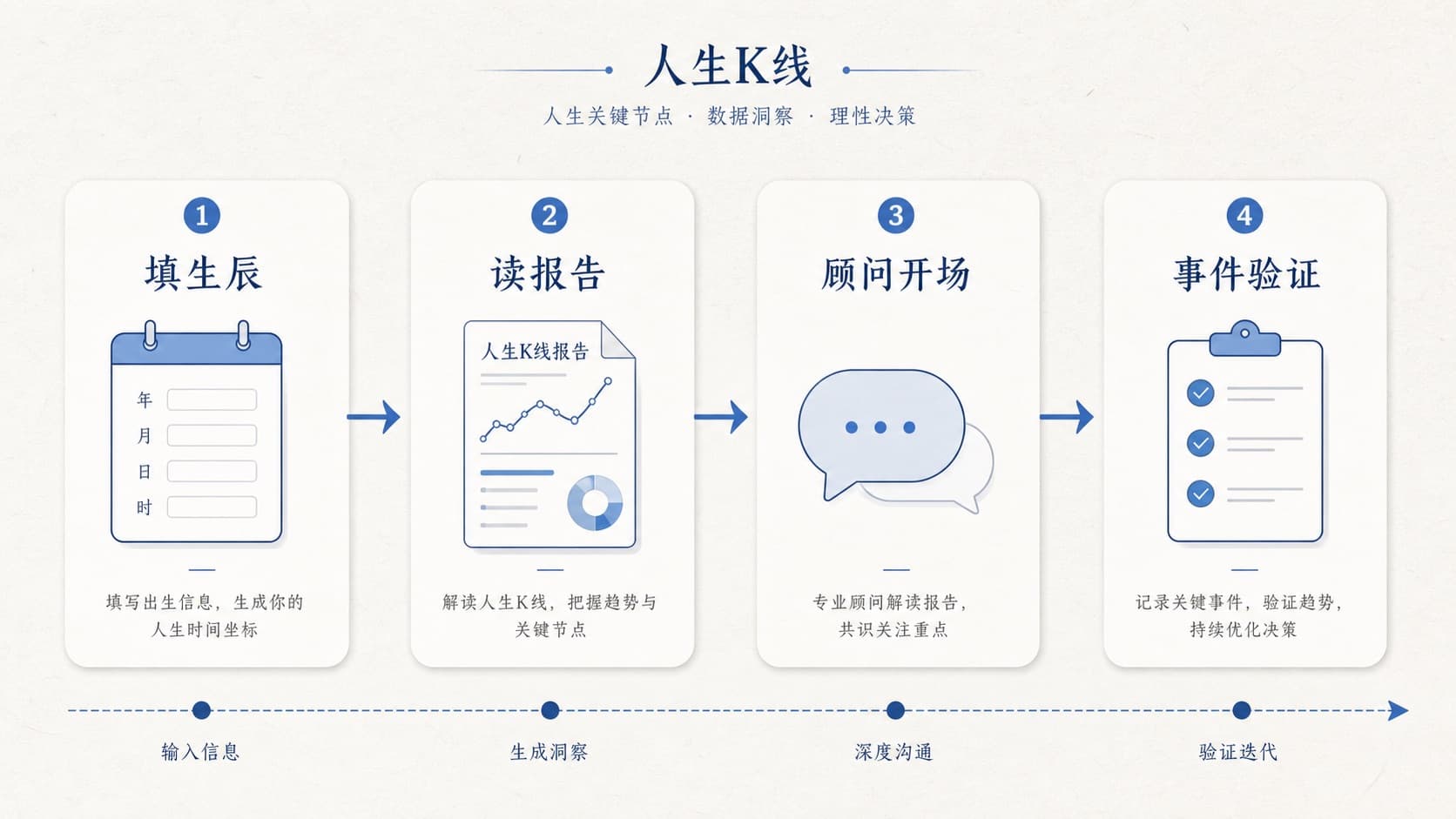
从生辰到可执行判断:把抽象判断拆成可看见的结构关系。
Practical Configuration and Interpretation
In practical metaphysical configuration, one must strictly follow the rule of Da Xue as the standard for monthly pillar switching. When the Gregorian date enters the range of the Da Xue solar term, regardless of whether the first day of the lunar calendar has passed, the monthly pillar immediately changes to the Zi month. This rule ensures the objectivity and accuracy of metaphysical analysis, avoiding pillar arrangement errors caused by the ambiguity of lunar calendar dates.
For the analysis of starting Da Yun, Da Xue is also one of the key nodes for judging the direction of flow and counter-flow. The method of arranging Da Yun depends on the strength of the month command, and the strength and weakness state of the Zi month established by Da Xue directly determines the starting position and nature of Da Yun. If the life master encounters Da Xue during the Da Yun handover, one needs to pay special attention to the impact brought by the peak of water energy, analyzing its influence on the life master's character and career, which often reveals the deep power hidden in the life chart.
During specific interpretation, one needs to combine the energy characteristics of the Sun's ecliptic longitude at 255 degrees. At this time, water energy is strongest; if the BaZi likes water, the fortune during the Da Xue season is smooth, while if one dislikes water, one needs to proceed with caution. Meanwhile, since water energy enters the peak, if there is wood energy in the life chart that is drained to exhaustion by water or fire energy that is killed by water, it needs to be balanced through Da Yun and Liu Nian. This requires the analyst to have keen insight to accurately capture the good and bad signals brought by the change in water energy.
Common Misconceptions
The most common misconception is mistakenly taking the first day of the lunar calendar as the time point for monthly pillar switching. Many beginners, when arranging BaZi, habitually use the Lunar New Year or the first day of the lunar calendar as the dividing line for months, while ignoring the importance of solar terms. In fact, the replacement of the monthly pillar must be based on the solar terms of the solar calendar; only after Da Xue does it become the Zi month, a rule that is an unshakable objective fact in any metaphysical school.
Another misconception is believing that Da Xue is merely a sign of getting colder, while ignoring its metaphysical significance in the state of water energy peak. Some people only focus on the cold phenomenon at the time of Da Xue, but fail to realize the profound influence of the Zi month water energy reaching its peak on the five element pattern of the BaZi. This one-sided understanding will lead to being unable to correctly judge the strength and weakness of the five elements when analyzing the life chart, resulting in wrong deductions.
FAQ
Q: How is the specific date of the Da Xue solar term determined, and is it fixed every year? A: The approximate date of the Da Xue solar term is usually between December 6th and 8th of the Gregorian calendar each year, with a fluctuation of 1 to 2 days depending on the Sun's ecliptic longitude running to 255 degrees. This is the true dividing line for metaphysical pillar arrangement.
Q: Why is BaZi pillar arrangement based on Da Xue as the boundary rather than the first day of the lunar calendar? A: Because the true dividing line for arranging BaZi monthly pillars and starting Da Yun is the solar term, with the month building on Zi determined by the solar ecliptic operation. Da Xue marks the peak of water energy entering the Zi month, which is an objective astronomical and calendrical node, more precise and scientific than the first day of the lunar calendar, ensuring the rigor of metaphysical analysis.
本文含 2 张图解(封面/结构/时位/行动或风险)。图解用于建立判断框架,不构成宿命结论; 个人决策请结合测算报告与工具验证。