Da Shu: The Final Chapter of Summer and a Turning Point in Metaphysics
Da Shu, the last solar term of summer, marks the transition where the month pillar changes and the Da Yun cycle begins. It is the critical node for determining fortune shifts, relying on solar longitude rather than the lunar first day.
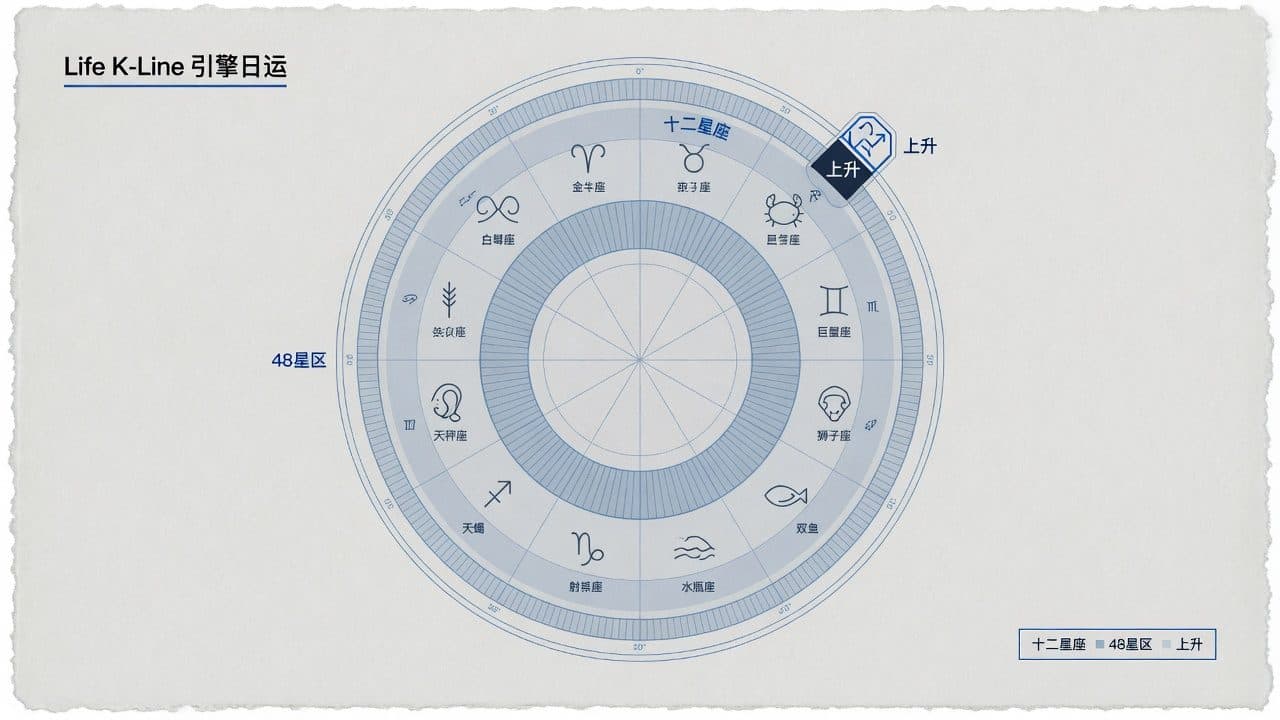
星座百科总览:把抽象判断拆成可看见的结构关系。
Concept Definition
Da Shu is the twelfth solar term of the 24 Solar Terms and the final solar term of summer. According to astronomical almanac, Da Shu occurs between July 22nd and 24th of the Gregorian calendar each year, at which point the sun's ecliptic longitude precisely reaches 120 degrees. In the ancient time system, this day marks the peak of heat, when all things grow to maturity and prepare for the stage of storage.
In terms of the calendar, Da Shu has a unique significance as the key node dividing the 365 days of the year into twenty-four equal parts along the solar ecliptic. For the practice of metaphysics, Da Shu is not merely a climatic concept but a rigid standard for dividing time intervals. It is the true dividing line for casting the BaZi month pillar and initiating the count of Da Yun, with its date determined by the sun's trajectory rather than the change of lunar dates.
From the perspective of solar term attributes, the Da Shu season sees extreme fire energy, yet it is also the turning point for the burial of fire. At this time, during the height of summer, the heat accumulated on the earth's surface reaches its limit before gradually transitioning into the pattern of alternating between伏天 (Three Heat) and autumn. In the metaphysical system, this time node is endowed with a special energy state, meaning work reaches its peak and is about to enter a phase of potential accumulation, serving as an important moment for observing turning points in life fortune.
Traditional Metaphysical Significance
In the traditional metaphysical system, Da Shu corresponds to the month pillar of Wei Earth. Wei Earth belongs to Yin Earth in the twelve Earthly Branches and contains the residual energy of Yi Wood, symbolizing a soil state that has life but is tending towards stillness. During the Da Shu season, solar energy is highly concentrated, and fire enters its tomb (burial), meaning external visible heat reaches its extreme while internal energy begins to converge inward. This characteristic of external heat and internal convergence is often used in BaZi analysis to judge the relationship between a person's external expression and inner potential.
As the final chapter of summer, Da Shu carries the deep meaning of Yin-Yang transformation. At this time, the Three Heat period is in charge, and the human body synchronizes highly with the energy field of nature. Metaphysical classics believe that for those born during Da Shu, the Fire element in their BaZi chart is often most prominent. If the Day Master is Fire, it is like the bright sun shining, with majestic momentum; if the Day Master is Earth, they receive support from Fire, resulting in a deep foundation. The Da Shu month pillar of Wei Earth has a direct generating or controlling influence on the Day Master's Five Elements, determining the basic strength of the chart.
In metaphysics, Da Shu is not only a dividing point of time but also a hub of fortune cycles. It marks the end of the first half of the year or a growth stage, preparing for the storage of the second half. For those born at this time node, the starting point of their Da Yun often shifts at this location. Since the date of Da Shu may float by one or two days in the Gregorian calendar due to leap years or adjustments, this tiny time difference can lead to vastly different auspicious or inauspicious judgments in precise metaphysical deduction. Therefore, one must strictly follow the solar term.
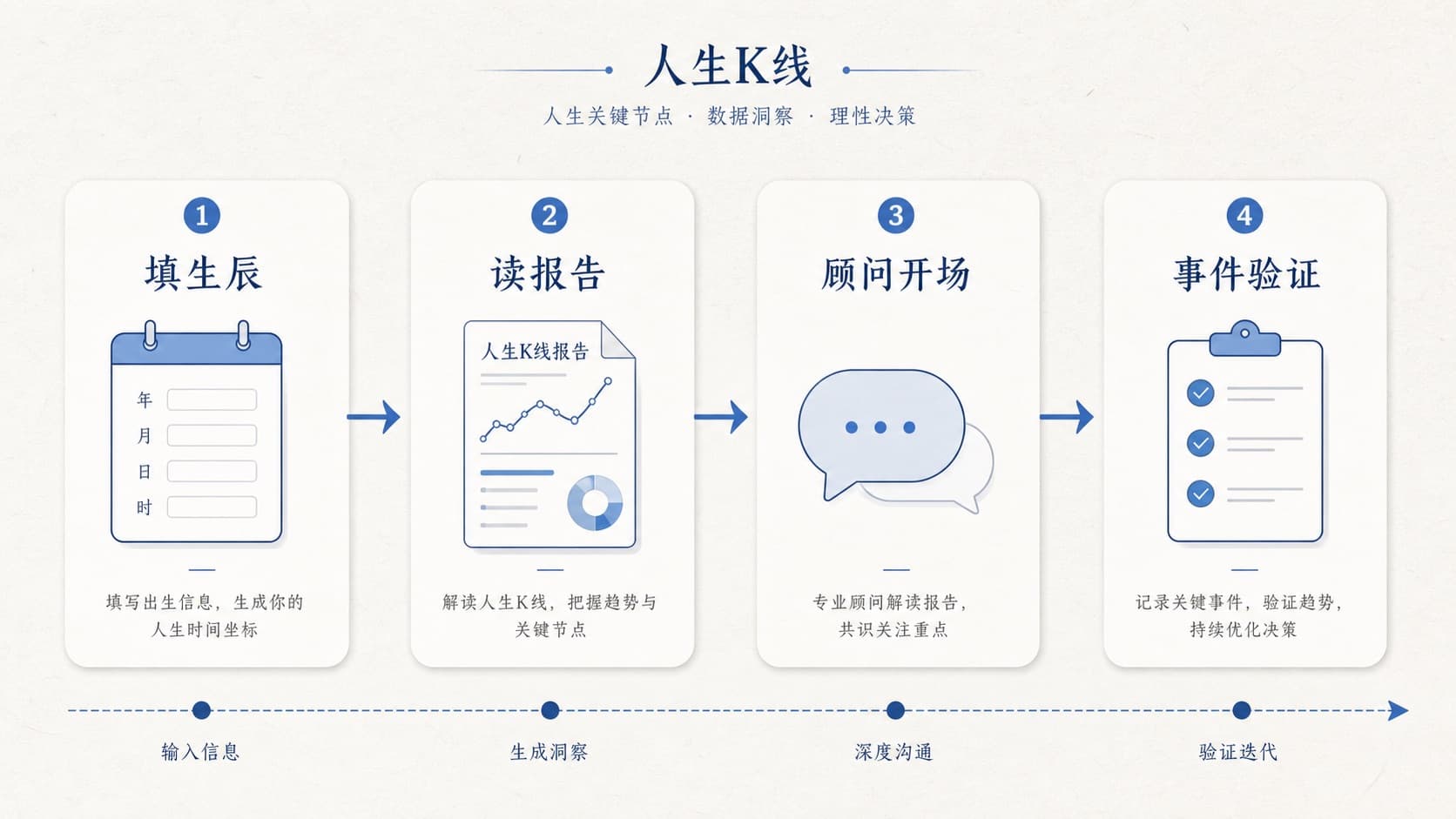
从生辰到可执行判断:把抽象判断拆成可看见的结构关系。
Practical Configuration and Interpretation
In the actual operation of casting BaZi charts, Da Shu is the core basis for establishing the authenticity of the month pillar. Regardless of whether the lunar first day has passed, as long as the sun has not reached the ecliptic degree of Da Shu, the month pillar still belongs to the previous month; once the boundary of Da Shu is crossed, the month pillar switches immediately. This rule is an iron law of BaZi metaphysics and cannot be shaken. For example, if someone is born on the 20th of the seventh lunar month, if the solar term has not passed, the month pillar still belongs to the previous month; if Da Shu has passed, the month pillar changes to the Wei month.
The start of Da Yun also strictly follows the Da Shu solar term dividing line. The handover point of Da Yun is not the lunar first day but the specific time on the day of Da Shu. If born during the Da Shu period, the Da Yun is calculated based on the month pillar of that Da Shu, rather than based on the seventh lunar month. This casting method based on solar terms ensures that the metaphysical model synchronizes with the laws of celestial movement. In practice, the difference in auspicious or inauspicious judgments in many fortune cases often stems from whether the node of Da Shu was accurately grasped.
The practical application of Da Shu is also reflected in the identification of special chart patterns. Since fire enters its tomb and the month pillar is Wei, those born during the Da Shu season often exhibit a pattern of Fire generating Earth in their BaZi chart. If the Day Master is Fire, the fire energy is extremely strong during Da Shu, and one must see if there is Water to adjust the climate or Earth to release the brilliance; if the Day Master is Metal, they face the danger of Fire controlling the self, and one must see if there is an Officer/Teacher star to transform the killing force or Food/Injury stars to release the Fire. Furthermore, the climatic characteristics of the Three Heat period are often used to assist in judging the health fortune of the chart owner, especially the vulnerability of the cardiovascular and digestive systems.
Common Misconceptions
The most common misconception is mistaking the lunar first day for the starting point of BaZi casting. Many beginners habitually change the BaZi month pillar when the lunar month changes, or adjust the Da Yun when the Gregorian date changes, thereby ignoring the precise position of the solar ecliptic. In reality, BaZi casting must follow the principle of solar term switching. As the true dividing point, Da Shu's date floating by one or two days has decisive significance in metaphysics. Using lunar or Gregorian dates instead of solar terms will lead to completely wrong month pillars and Da Yuns, resulting in deviations in the entire metaphysical analysis.
Another misconception is an overly superficial understanding of 'Fire entering its tomb', believing Da Shu is merely a period of high temperature. In reality, 'Fire entering its tomb' means the inward convergence and sedimentation of energy, not simple disappearance. In metaphysical analysis, one cannot simply determine that fire energy is buried just because of Da Shu; the specific BaZi structure must be combined. If the Earth in the chart is heavy and the Fire is dry, Da Shu may indeed trigger dry-heat ailments; however, if the Water in the chart is strong, the Fire energy of Da Shu may be transformed into motivation. Therefore, the entire configuration must be combined, and the solar term attribute cannot be viewed in isolation.
There is also a misconception of ignoring the specific number of days the Da Shu date floats. Although Da Shu is roughly on the 22nd of the seventh lunar month, the specific date may float by one or two days each year. In precise metaphysical deduction, this difference of just one day may lead to the month pillar belonging to a different month, thereby changing the start time of Da Yun. Therefore, in professional casting, one must consult the precise solar term timetable for that year and cannot rely solely on experience estimation. This rigorous attitude towards details is the key distinguishing factor between amateur and professional metaphysical practitioners.
FAQ
Question: Is BaZi casting for Da Shu based on the lunar first day or the solar term? Answer: BaZi casting for Da Shu must be based on the solar term. Da Shu is the true dividing line for casting the month pillar and starting Da Yun. The Gregorian date may float by one or two days and must never be used as the standard for switching based on the lunar first day.
Question: What is the month pillar corresponding to Da Shu, and what is its impact on BaZi? Answer: The month pillar corresponding to Da Shu is Wei Earth. Wei Earth is Yin Earth and contains Yi Wood. During the Da Shu season, fire energy enters its tomb, meaning in BaZi that fire energy reaches its peak and begins to converge inward. It has a direct generating or controlling impact on the Day Master's Five Elements and requires analysis combined with the specific BaZi chart.
Question: Does Da Shu have special health implications in metaphysics? Answer: Da Shu is during the Three Heat period when fire energy is extremely strong. Metaphysically, it may suggest that the chart owner is relatively sensitive regarding the cardiovascular or respiratory systems. If the Fire and Earth in the chart are too strong without Water to adjust the climate, Da Shu season may easily trigger dry-heat discomfort. This needs to be judged comprehensively in combination with Da Yun and Liu Nian (annual fortune).
本文含 2 张图解(封面/结构/时位/行动或风险)。图解用于建立判断框架,不构成宿命结论; 个人决策请结合测算报告与工具验证。