Da Han: Winter Ends, Spring Begins, and the Boundary of the BaZi Month Pillar
Da Han is the final solar term of winter, marking the transition to spring. In BaZi metaphysics, it is the true dividing line for determining the month pillar and the start of the Da Yun cycle, based on solar longitude rather than the Lunar New Year.
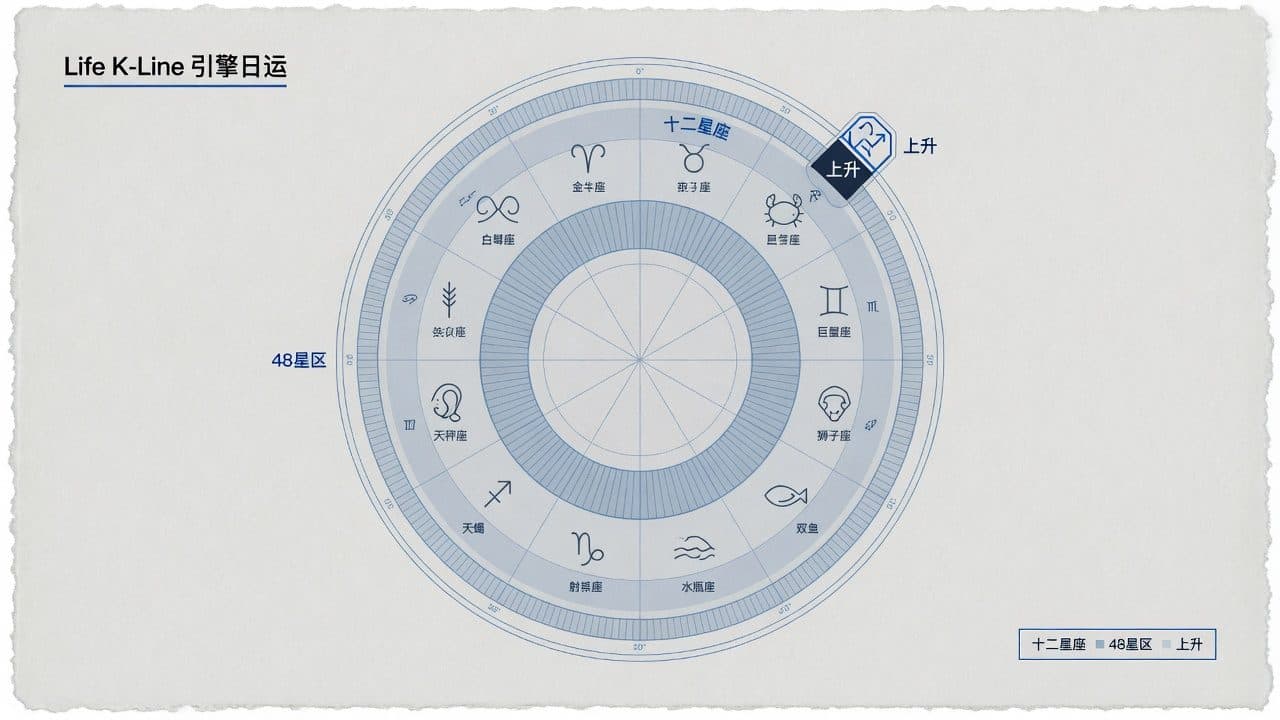
星座百科总览:把抽象判断拆成可看见的结构关系。
Concept Definition
Da Han is the final solar term of the Twenty-Four Solar Terms, occurring between the 20th and 21st of January in the Gregorian calendar. From a temporal perspective, it represents the last day of winter, immediately followed by the beginning of spring. Astronomically, the sun's longitude reaches exactly 300 degrees at this time, marking a specific position on the ecliptic.
From a calendrical structure perspective, the Twenty-Four Solar Terms divide the tropical year into twenty-four equal parts to reflect seasonal changes and climatic characteristics. As the endpoint, Da Han completes the winter cycle and opens the prologue of a new year. Within the calendrical system, it exists independently of the Lunar calendar, determined by the sun's position on the ecliptic, possessing absolute objectivity.
The date of Da Han is relatively fixed in the Gregorian calendar but fluctuates slightly due to the Earth's orbital speed, usually occurring on the 20th or 21st of January. This minor temporal difference is crucial for metaphysical charting, as it directly determines the ownership of the month pillar and the handover point of luck, serving as the key hub connecting the old year and the new year.
Traditional Metaphysical Significance
Within the BaZi metaphysical system, Da Han holds a special status; it is the true dividing line for month pillar division and the start of Da Yun. Traditional charting methods often use the first day of the Lunar month as the boundary, but this does not conform to the rigorous logic of metaphysics. Metaphysics concerns the flow of Qi, and the flow of Qi is determined by the sun's longitude; therefore, the solar term must be used as the standard.
During the Da Han season, the month builder is Chou (Chou). Chou Earth is in command, symbolizing that the cold of winter reaches its extreme, and all things are hidden. At this time, the Qi of heaven and earth transitions from winter to spring. Although it still appears as a harsh winter on the surface, life force begins to germinate internally. This subtle change is viewed in metaphysics as the moment of handover between old and new Da Yun, predicting a turning point in life's fortune.
In ancient texts, Da Han is called 'Winter Ends,' meaning the cycle of the year is completed at this moment. In metaphysical theories, the fortune of each year does not begin on the Lunar New Year, but rather on solar terms like Li Chun or Da Han. Therefore, as the boundary of the year, Da Han has a decisive significance for calculating the annual fortune and judging the start time of the Da Yun cycle.

判断边界:参考不是定论:把抽象判断拆成可看见的结构关系。
Practical Configuration and Interpretation
In practical BaZi configuration, one must strictly follow the principle of using solar term switching as the standard, and absolutely not use the first day of the Lunar month. This means that even on the day of the Lunar New Year, if the Da Han solar term has not arrived, the month pillar must still be inherited from the previous year's month builder. This rule ensures that the chart reflects true celestial changes rather than artificial calendrical labels.
When the Da Han solar term arrives, the month pillar will officially switch, with the month branch changing to Chou (Chou). For charting Da Yun, this is also the point for recalculating the starting formula. If a person is born before the Da Han solar term, their Da Yun may belong to the pattern of the previous year; once crossing the solar term, the Da Yun enters a new cycle. This division precise to the day reflects the rigor of metaphysics.
As the node of 300 degrees solar longitude, Da Han manifests as the extreme of cold in terms of climate. In metaphysical interpretation, this time point often corresponds to a critical point of life's low point or turning point. Those born during this season have a BaZi chart where Earth Qi is most vigorous and carries obvious coldness. One must carefully analyze the Five Elements generation and overcoming relationships to judge their personality characteristics and life trajectory.
Common Misconceptions
The most common misconception is treating the Lunar New Year as the starting point for BaZi charting. Many beginners mistakenly believe that starting from the first day of the first lunar month, the month pillar will change accordingly. In fact, BaZi charting is entirely based on solar terms; the Lunar New Year is merely a folk festival and has nothing to do with the temporal span in metaphysics. This confusion leads to errors in the month pillar, thereby affecting the accuracy of the entire chart.
Another misconception is viewing Da Han merely as a symbol of coldness while ignoring its significance as a boundary of the year. Some people only focus on the climatic characteristics of Da Han but overlook its core function as the dividing point for starting Da Yun in metaphysics. In reality, the metaphysical value of Da Han far exceeds its climatic description; it is the key node connecting the old year to the new year and the old luck to the new luck.
Additionally, some believe that the dates of the Twenty-Four Solar Terms are fixed and do not change. Although Da Han usually occurs on January 21st, it fluctuates by one day annually, possibly the 20th or 21st. This minor temporal difference has a decisive impact in BaZi charting and must be precisely checked against the solar term table for that year; it cannot be generalized.
FAQ
Q: How is the specific date of the Da Han solar term determined? A: Da Han is one of the Twenty-Four Solar Terms, determined by the sun's position on the ecliptic. When the sun's longitude reaches 300 degrees, it is the solar term. The Gregorian date is usually the 20th or 21st of January, fluctuating slightly each year and not based on the first day of the Lunar month.
Q: In BaZi charting, why must Da Han be the boundary rather than the Lunar New Year? A: Because BaZi charting is based on celestial changes, and celestial changes are determined by the sun's longitude. The division of the month pillar and the time point for starting Da Yun must strictly follow solar term switching to ensure the chart reflects true natural laws rather than artificial calendars.
Q: What is the month builder during the Da Han season? What impact does it have on the chart? A: During Da Han, the month builder is Chou (Chou). Chou Earth is in command, symbolizing the extreme cold of winter. In the chart, those born at this time have a BaZi with vigorous Earth Qi and coldness. One must combine specific Five Elements generation and overcoming relationships to judge personality and fortune; usually, it is the key moment for Da Yun handover.
本文含 2 张图解(封面/结构/时位/行动或风险)。图解用于建立判断框架,不构成宿命结论; 个人决策请结合测算报告与工具验证。