Analysis of Optimal Timing and Rhythm in Inheritance Disputes from Metaphysics and Legal Practice
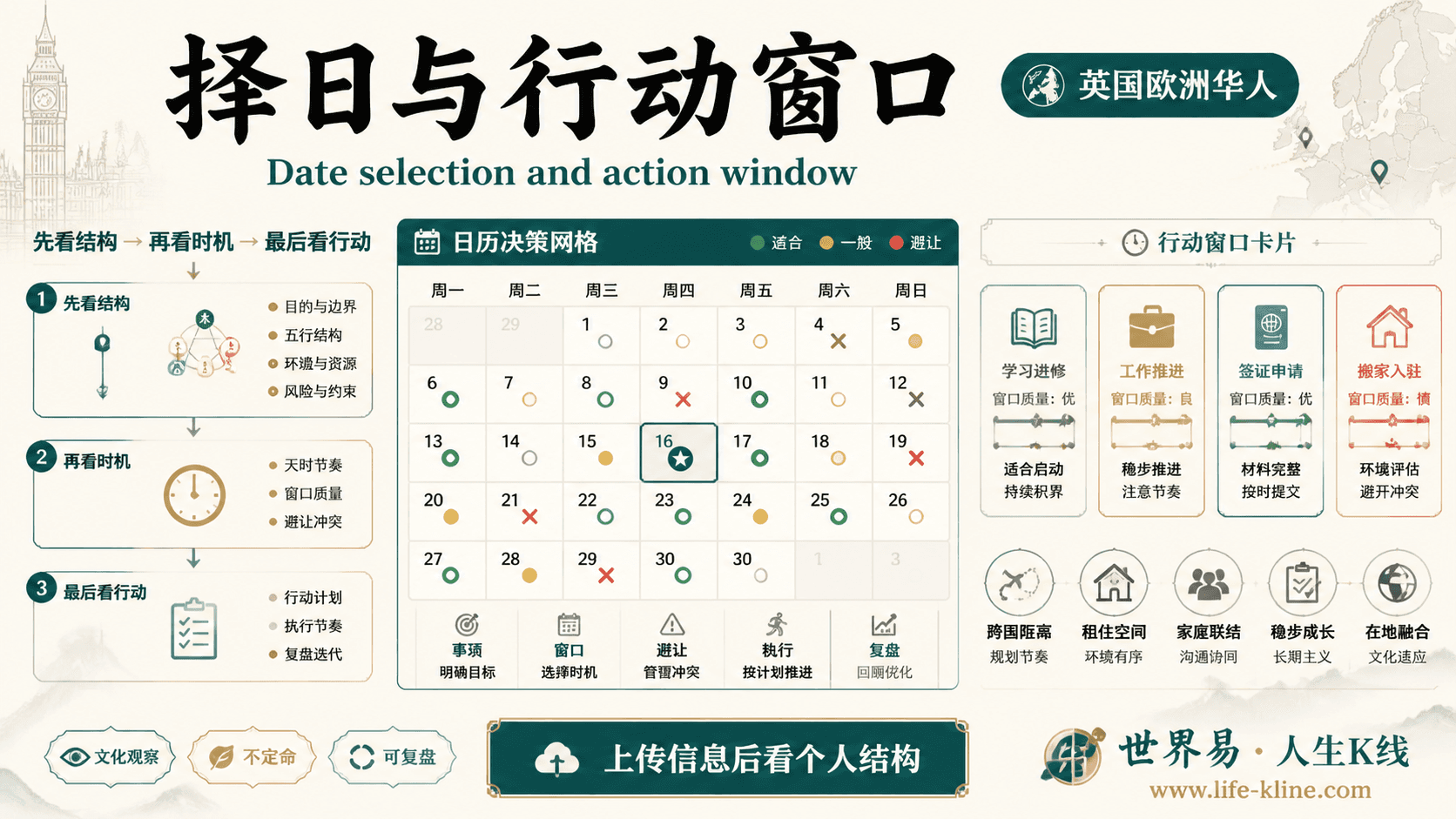
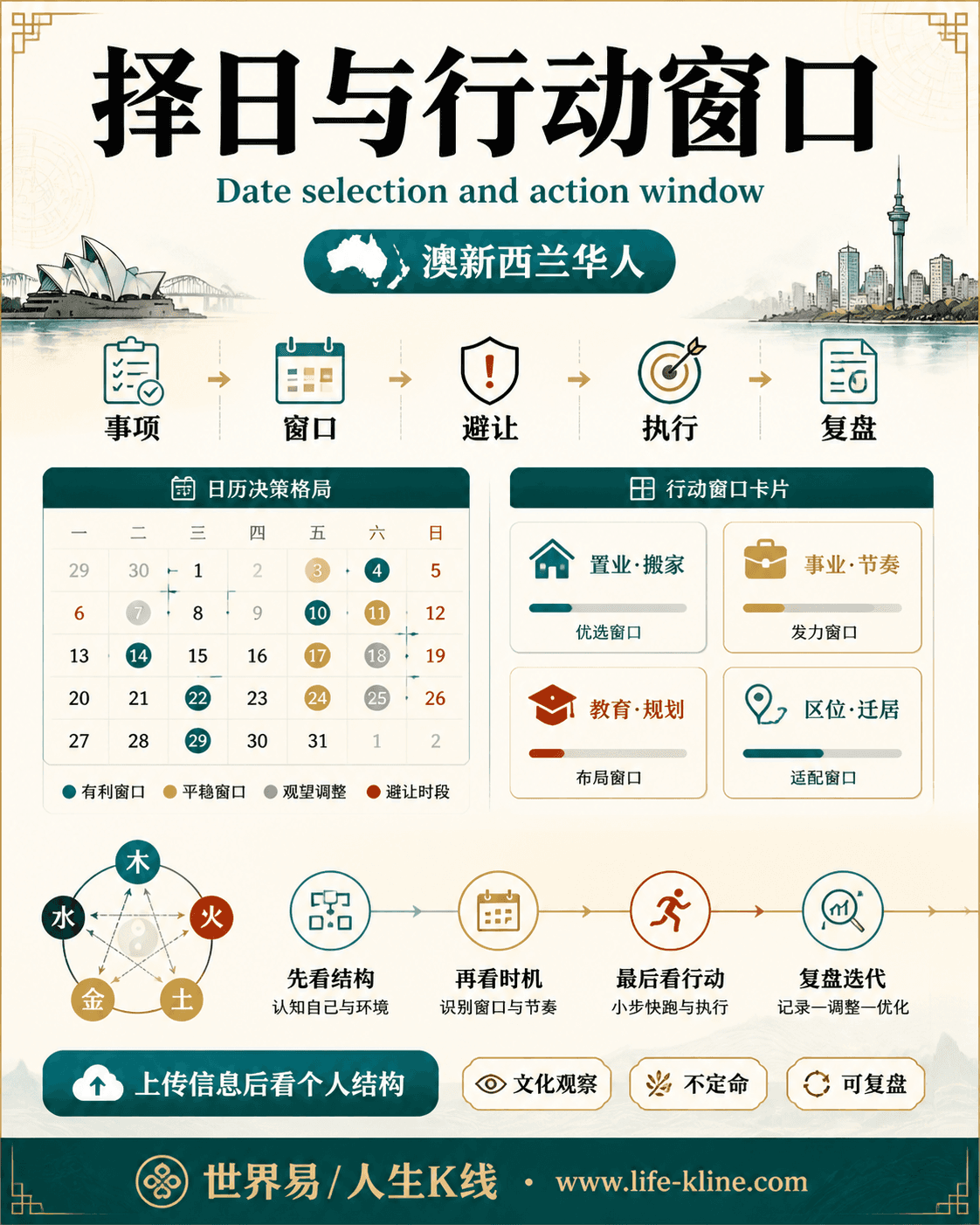
把这篇文章落到自己身上验证:先看结构,再进入个人分析,不做泛泛阅读。
Why This Decision Is Particularly Difficult in This Legal Context
Inheritance and succession disputes often involve multiple stakeholders, such as property division among siblings, rights of remarried spouses, protection of minor heirs, and verification of business succession rights. The legal procedures are complex, with difficulties in evidence collection and enforcement. Especially when the validity of a will is contested, litigation cycles become lengthy, mediation pressure intensifies, and time constraints require parties to scientifically control the timing of filing lawsuits.
In legal practice, the principle of prioritizing early mediation and the limitation of statute of limitations create practical constraints on dispute resolution. Choosing the wrong timing may lead to dismissal of lawsuits or increased difficulty in enforcement. On this basis, metaphysical structures provide parties with auxiliary rhythm references, revealing how Da Yun and Liu Nian affect initiative, indicating when momentum is smooth and when it is advisable to maintain and wait.
Because multiple parties' interests are involved, legal decisions in inheritance disputes must balance reason and law to avoid escalating conflicts that cause mediation failure. Different BaZi charts with combinations of Zheng Guan (Proper Authority), Qi Sha (Seven Killings), Shang Guan (Hurting Officer), Bi Jian (Peer), and others influence the intensity of conflict expression and the ability to reconcile, thereby affecting the timing choice for litigation or mediation.
Therefore, in inheritance disputes, grasping the optimal decision timing depends not only on legal rules and evidence status but also requires integrating metaphysical trends of Da Yun and Liu Nian to scientifically plan the timing of filing, mediation, and appeals, aiming to maximize benefits and efficiently resolve disputes.
Three Core Dimensions of Metaphysical Judgment
First, the strength of the Day Master and the BaZi pattern determine the party’s subjective initiative and coping ability. A relatively weak Day Master often needs support from the Yong Shen to enhance personal strength, while a strong Day Master possesses greater stress resistance and expressive ability. The Shang Guan (Hurting Officer) pattern often shows strong expression desire but may escalate conflicts; the Yang Ren (Sheep Blade) pattern represents vigorous drive but requires moderation; the Shi Shen (Eating God) pattern tends to be conservative and suitable for stable handling.
Second, the interaction between Zheng Guan (Proper Authority) / Qi Sha (Seven Killings) and Shang Guan (Hurting Officer) directly affects the tension level of litigation and mediation. Zheng Guan and Qi Sha symbolize authority and restriction; strong Zheng Guan aids legal procedure progress and evidence persuasiveness. Shang Guan reflects resistance and argument ability; if too strong, it may escalate conflicts and affect mediation atmosphere. Bi Jian (Peers) represents competition among equals, especially evident in sibling inheritance disputes.
Third, the combination of Da Yun (decade luck cycle) and Liu Nian (annual fortune) reflects phase-specific auspicious or inauspicious trends. During auspicious Da Yun periods (e.g., Jia Wu (甲午) or Ren Shen (壬申)) combined with favorable Liu Nian (e.g., Bing Wu (丙午)), actions are more supported, making litigation and mediation timing favorable. Stable or conservative Da Yun (e.g., Wu Zi (戊子)) suggests cautious handling, adapting flexibly and avoiding fierce conflicts. The clash or harmony between Liu Nian and Da Yun advises when to proactively act or when to restrain and wait.
In summary, by integrating the Day Master, BaZi pattern, Yong Shen, and Da Yun/Liu Nian, one can provide scientific auxiliary rhythm references for legal decision-making in inheritance disputes, guiding parties to reasonably arrange the timing of filing, mediation, and appeals.
Three Real BaZi Case Studies
Case 1 (Based on Fact Package 1): The party is a male aged 45-50, with a relatively weak Ding Fire (丁) Day Master, Shang Guan (Hurting Officer) pattern, Yong Shen being Wood, and Ji Shen (unfavorable elements) being Earth and Metal. Currently in the 6th year of Jia Wu (甲午) Da Yun, with Bing Wu (丙午) Liu Nian. The Da Yun is auspicious and the Liu Nian aligns well. The Shang Guan pattern indicates strong expression desire, suitable for active argumentation, but the weak Day Master requires reliance on the Wood Yong Shen to strengthen himself. The Jia Wu Da Yun combined with Bing Wu Liu Nian represents a period of career and financial progress, making legal action timing favorable. It is advisable to seize this advantageous timing to promptly file or actively participate in mediation. It is recommended to first gather sufficient evidence, leverage the current auspicious luck to actively pursue benefits, while reserving space for mediation to avoid excessive aggressiveness causing mediation failure.
Case 2 (Based on Fact Package 2): The party is a female aged 35-40, with a relatively strong Wu Earth (戊) Day Master, Yang Ren (Sheep Blade) pattern, favoring Wood and Water, and disfavoring Fire. Currently in the 6th year of Ren Shen (壬申) Da Yun, with Bing Wu (丙午) Liu Nian. Overall, the Da Yun is auspicious and the Liu Nian aligns well. The Yang Ren pattern shows the party is very driven, with strong claims and action ability, suitable for proactive dispute resolution. However, with Fire as Ji Shen and Bing Wu Liu Nian being Fire-strong, attention to emotional management is necessary to avoid overly aggressive language harming the mediation atmosphere. Legally, it is recommended to utilize the auspicious Ren Shen Da Yun to actively advance litigation or mediation, but control emotions and cooperate with the legal process rhythm to avoid missing reconciliation opportunities due to emotional agitation.
Case 3 (Based on Fact Package 3): The party is a male aged 55-60, with a relatively weak Xin Metal (辛) Day Master, Shi Shen (Eating God) pattern, favoring Wood and disfavoring Water. Currently in the 9th year of Wu Zi (戊子) Da Yun, with Bing Wu (丙午) Liu Nian. The Da Yun is stable, and the Liu Nian requires flexible adaptation. The Shi Shen pattern tends to be conservative, suitable for steady handling of legal disputes, avoiding excessive aggressiveness. The Wu Zi Da Yun is a stable luck cycle; legal procedures should be steadily advanced, avoiding rashness. It is recommended to prioritize mediation at this stage, accumulate evidence, and only file lawsuits when necessary, adjusting strategies flexibly with Liu Nian changes to avoid litigation obstruction or enforcement difficulties due to improper timing.
These three examples illustrate how the Day Master strength, BaZi pattern characteristics, and Yong Shen/Ji Shen combined with Da Yun and Liu Nian trends provide scientific auxiliary guidance for the rhythm of legal actions in inheritance disputes, helping parties reasonably grasp the optimal timing for litigation and mediation.
Common Misjudgments and Blind Spots in This Context
One common misjudgment is filing lawsuits too early, ignoring the principle of mediation priority and evidence sufficiency, resulting in lawsuit dismissal or prolonged cycles, wasting time and costs. Metaphysically, if Zheng Guan or Qi Sha are undeveloped or the Day Master is weak, premature action lacks support and leads to ineffective efforts.
Another blind spot is neglecting the impact of Da Yun and Liu Nian on the party’s momentum and emotions, causing disorder in action rhythm. For example, forcing litigation during years when Ji Shen is strong easily escalates conflicts, misses reconciliation opportunities, and increases enforcement difficulty.
Additionally, some parties overly rely on metaphysics and ignore legal procedural norms, neglecting lawyers’ professional advice and statutory procedures, which may cause procedural risks and additional litigation costs. Metaphysics should only serve as an auxiliary rhythm reference, not replace legal practice.
Finally, ignoring the balance of multiple parties’ interests and overemphasizing personal demands can escalate inheritance disputes. When Bi Jian (Peers) is strong in metaphysics, sibling competition is intense; special attention is needed for reasonable division and emotional management to avoid exhausting litigation resources.
Practical Judgment Sequence
Step one: Conduct a comprehensive assessment of your own metaphysical chart, including Day Master strength, BaZi pattern, Yong Shen and Ji Shen, as well as Da Yun and Liu Nian trends. Combine this with current legal evidence status to evaluate your initiative and endurance for litigation or mediation. If in an auspicious Da Yun and aligned Liu Nian, the action rhythm can be accelerated; if in a stable or conservative Da Yun, it is advisable to proceed cautiously and avoid aggressiveness.
Step two: Prioritize initiating mediation, leveraging the expressive and persuasive abilities brought by Shang Guan or Yang Ren in metaphysics to actively communicate with the other party and seek reconciliation. At this time, avoid emotional loss of control, especially in years when Ji Shen is strong, control anger to reduce conflict risk and ensure a good mediation environment.
Step three: If mediation fails, arrange the timing of filing lawsuits or appeals reasonably according to metaphysical rhythm indications. Avoid impulsiveness; strictly comply with statutory limitation periods, prepare sufficient evidence and legal documents in advance, use auspicious Da Yun and Liu Nian to improve litigation success rates, and reserve space for mediation to prevent escalation.
In summary, in practice, parties should combine metaphysical auxiliary references with strict adherence to legal procedures, scientifically arranging the rhythm of litigation and mediation to achieve efficient and lawful resolution of inheritance disputes.
FAQ
Question 1: How do Da Yun and Liu Nian specifically affect the timing of litigation in inheritance disputes? Answer: Da Yun represents long-term trends, while Liu Nian reflects the annual energy. When an auspicious Da Yun aligns with a favorable Liu Nian, the party’s momentum is strong, and evidence and expression are more persuasive, making it suitable to actively file lawsuits or mediate. Conversely, it is better to adopt a conservative or wait-for-better timing approach.
Question 2: How to adjust legal action rhythm when a Shang Guan (Hurting Officer) pattern encounters a year with strong Ji Shen? Answer: The Shang Guan pattern has strong expression desire, but when Ji Shen is strong, conflicts tend to escalate. It is recommended to control emotions, avoid impulsive litigation, prioritize mediation, protect the reconciliation environment, and consider litigation only after Ji Shen weakens.
Question 3: Can metaphysics replace lawyers’ professional advice and legal procedures? Answer: Metaphysics serves only as an auxiliary rhythm reference tool and cannot replace lawyers’ professional judgment or statutory procedures. All legal actions must follow formal procedures. Metaphysics helps grasp timing and rhythm to ensure higher legal enforcement efficiency.
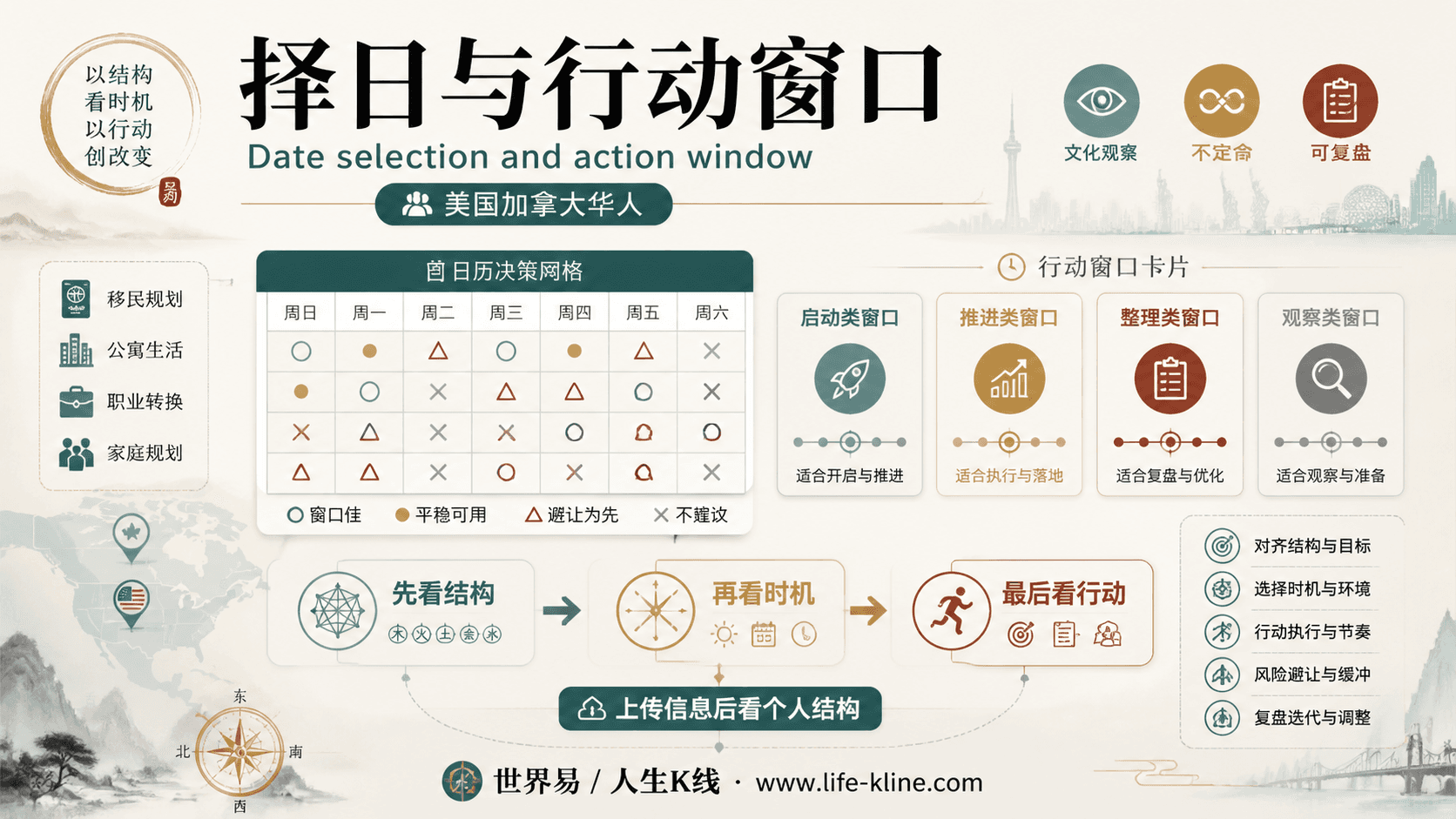
择日与行动窗口|美国加拿大华人
这张图把《Analysis of Optimal Timing and Rhythm in Inheritance Disputes from Metaphysics and Legal Practice》里的命理概念转成关系、边界和应用场景,适合先看图建立结构,再回到知识文章正文理解细节。
择日与行动窗口不应被写成固定结论。更适合美国加拿大华人的读法,是把传统术语翻译成结构、时机、环境、行动和复盘。
查看图片解读