Detailed Explanation of the Huo Shui Wei Ji Hexagram and Its Application in Six Yao Divination
把这篇文章落到自己身上验证:先看结构,再进入个人分析,不做泛泛阅读。
Concept Definition
The Huo Shui Wei Ji hexagram is one of the 64 hexagrams in the I Ching, formed by stacking two trigrams each consisting of three Yao lines. The lower trigram is Kan (Water 坎 kǎn), and the upper trigram is Li (Fire 離 lí), creating a structure with Kan below and Li above. Wei Ji (未济 wèi jì) literally means "not yet completed" or "unfinished matter," reflecting a state where things are still incomplete.
Each hexagram consists of six Yao lines arranged from bottom to top as the first Yao, second Yao, third Yao, fourth Yao, fifth Yao, and top Yao. The arrangement of Huo Shui Wei Ji hexagram reflects water below and fire above, symbolizing the failure of fire and water to blend, implying that although progress exists, the goal has not yet been achieved.
In divination practice, the Huo Shui Wei Ji hexagram often symbolizes matters in an effort stage, with potential for success but requiring caution. Its hexagram meaning emphasizes "incompletion, effort, and potential," reminding people to avoid arrogance and maintain a prudent attitude during action.
Traditional Metaphysical Significance
In traditional metaphysics, the Huo Shui Wei Ji hexagram symbolizes "fire and water not completed, matters not yet accomplished," indicating that things have not yet been fully and satisfactorily completed. This hexagram suggests that in career, relationships, or other affairs, although effort has been made, deficiencies remain that require continued effort and adjustment.
Within the hexagram, Kan (Water) represents obstacles and compliance, while Li (Fire) signifies brightness and enthusiasm. The uncompleted state of fire and water reflects the yin-yang not yet harmonized, implying an unstable current situation that needs careful handling to avoid failure caused by impatience or arrogance.
Ancient texts record that this hexagram signifies an incomplete state, emphasizing "the need for cautious progress and avoidance of arrogance," teaching people to maintain humility and patience when facing difficulties, relying on careful observation and adjustment to gradually approach success.
Practical Configuration and Interpretation
In Six Yao divination, the core of interpreting the Huo Shui Wei Ji hexagram lies in the relationship between the Shi Yao (世爻, the line representing the querent) and Ying Yao (应爻, the responding line), as well as the Sheng-Ke (生克, generative and controlling) relationships of the Yong Shen (用神, favorable element). Shi Ying represents the interaction between the querent and the external environment, while Yong Shen is the key factor in interpreting auspiciousness or inauspiciousness. By analyzing changes in these elements, one can judge the progress and future trend of the current matter.
The Plum Blossom Numerology (Mei Hua Yi Shu) uses the Sheng-Ke relationship between the Ti (体, the main body of the hexagram) and Yong (用, its function or change) to determine fortune. The uncompleted state of fire and water in the Wei Ji hexagram indicates disharmony between Ti and Yong, thus requiring cautious action and strategic adjustment.
In practice, when encountering the Huo Shui Wei Ji hexagram, it is advised that the diviner pay attention to the direction and attitude of their efforts, avoid impatience and blind impulsiveness, and focus on steadily advancing matters. This hexagram often indicates that although things are not yet completed, potential exists, and with persistence and adjustment, gains can eventually be achieved.
Common Misunderstandings
Many mistakenly believe that the Huo Shui Wei Ji hexagram represents absolute failure or bad luck. In fact, the more accurate meaning of this hexagram is "unfinished," emphasizing effort and possibility during the process rather than final failure. Understanding this helps correctly grasp the guidance of the hexagram.
Another common misunderstanding is ignoring the hexagram’s advice to "proceed cautiously and avoid arrogance," leading to blind optimism or rushing for success, which often worsens the situation. The correct attitude is to remain calm and proceed step by step to fully utilize the positive role of the Wei Ji hexagram.
FAQ
Question: What does "Wei Ji" specifically refer to in the Huo Shui Wei Ji hexagram? Answer: Wei Ji literally means "unfinished" or "incomplete matter," referring to things that have not yet been fully accomplished and are in a stage of effort and adjustment.
Question: How is the Huo Shui Wei Ji hexagram applied in Six Yao divination? Answer: Mainly by analyzing Shi Ying (the interacting lines), Yong Shen (favorable element), and Sheng-Ke relationships to judge the progress and auspiciousness of matters, reminding the diviner to remain cautious, avoid arrogance, and advance steadily.
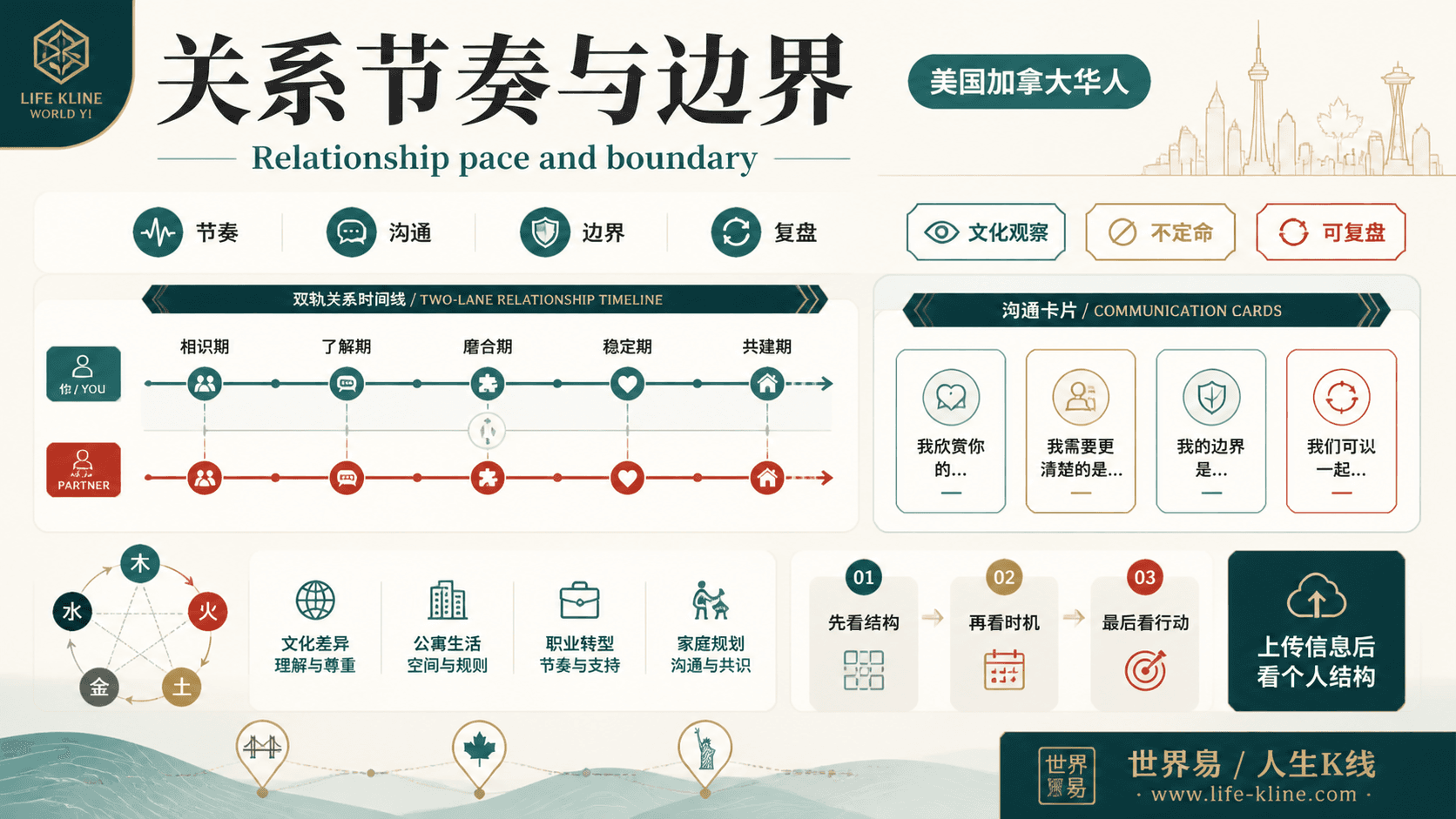
关系节奏与边界|美国加拿大华人
这张图把《Detailed Explanation of the Huo Shui Wei Ji Hexagram and Its Application in Six Yao Divination》里的命理概念转成关系、边界和应用场景,适合先看图建立结构,再回到知识文章正文理解细节。
关系节奏与边界不应被写成固定结论。更适合美国加拿大华人的读法,是把传统术语翻译成结构、时机、环境、行动和复盘。
查看图片解读