Mountain Fire Travel Hexagram: The Gentle Path of Exile
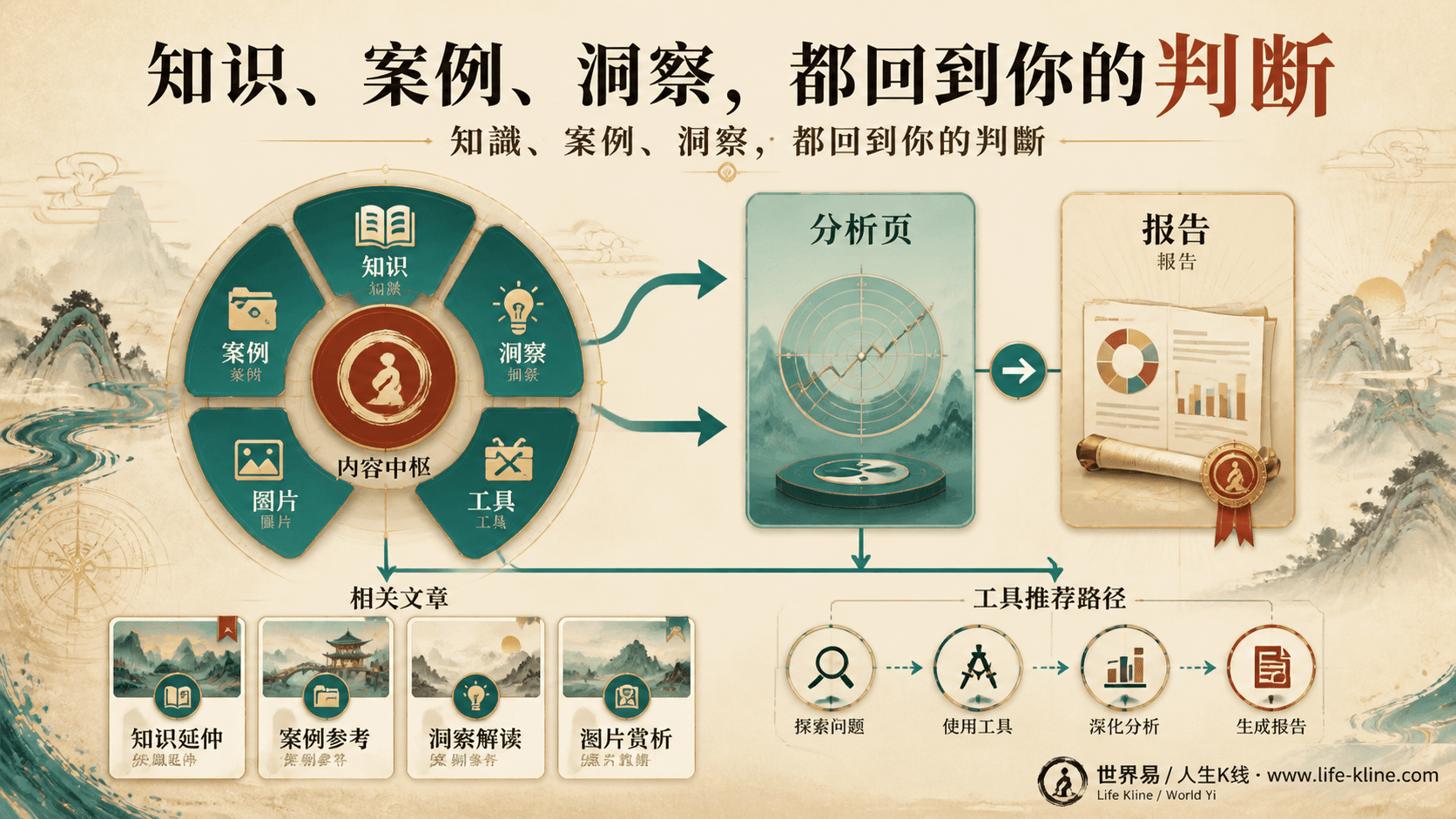
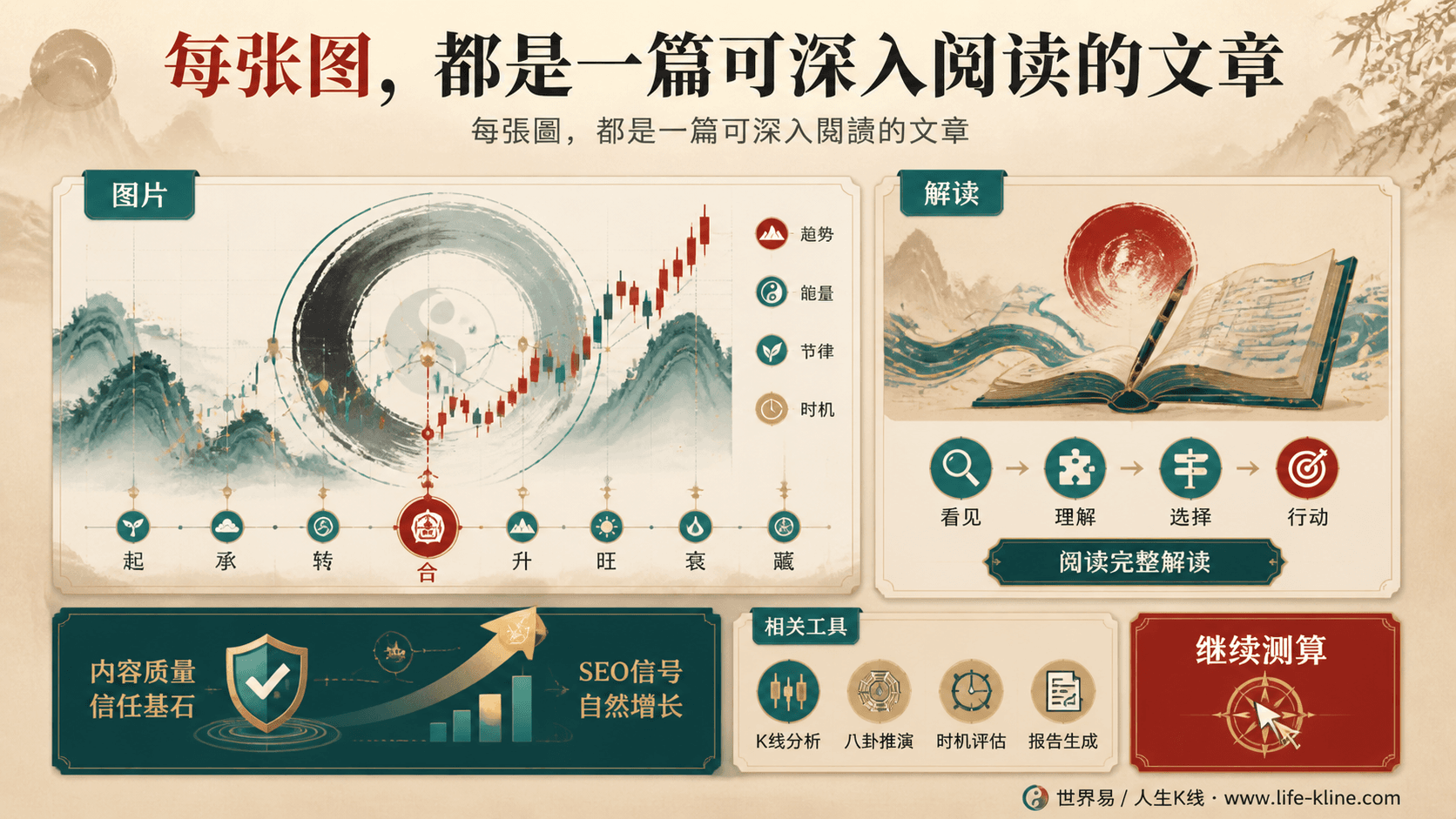
把这篇文章落到自己身上验证:先看结构,再进入个人分析,不做泛泛阅读。
Concept Definition
The Mountain Fire Travel hexagram is the thirty-fourth hexagram in the 64 hexagrams of the I Ching, structured by the superposition of the Gen trigram and the Li trigram, forming a pattern of Gen below and Li above. In the construction logic of the 64 hexagrams, each hexagram is formed by the superposition of two trigrams, totaling six lines arranged from the bottom up as the initial line to the sixth line. Fire is above as Li, and mountain is below as Gen; the nature of fire is to rise upwards while the nature of the mountain is steady, creating a pattern interwoven with dynamics and statics, intuitively presenting the scenario of a traveler rushing around seeking a place to settle.
The literal meaning of the Travel hexagram directly points to its core theme: the traveler is a guest. Here, guest refers to a passerby residing abroad without permanent settlement, encompassing various life states such as travel, relocation, and temporary residence. Whether traveling far for wealth, seeking knowledge, or temporarily fleeing danger to another place, as long as one is in a state not belonging to one's hometown, this hexagram principle applies. It does not merely describe physical movement but also metaphorically reflects the temporariness and uncertainty of a person in social relationships, emphasizing survival wisdom in such a state.
Traditional Metaphysical Significance
In the philosophical system of the 64 hexagrams, the Travel hexagram mainly elaborates on the survival laws of people in foreign lands or unfamiliar environments. Gen represents the mountain, symbolizing stillness, obstruction, and归宿 (destination); Li represents fire, symbolizing brightness, change, and reliance. Fire resting on the mountain means the traveler must rely on certain forces or environments to survive and cannot be isolated. This hexagram structure implies that travelers should maintain humility and gentleness, never being arrogant or strong-willed, because being strong while wandering abroad often invites disaster, while gentleness can resolve conflicts and seek peace.
Traditional metaphysics holds that the most thing to avoid for a traveler is solitary travel, which is the core warning of the Travel hexagram. Solitary travel means being isolated without allies, making it easy to fall into danger in the journey. The hexagram meaning explicitly states gentleness is desirable, requiring travelers to treat others low-key in social interactions, be good at borrowing strength, and know how to rely on the strong or seek cooperation. Whether for business travel or life migration, this gentleness is not cowardice but a strategic choice based on the real environment, aiming to reduce friction to ensure one's safety and smoothness.
Furthermore, the Travel hexagram contains profound philosophy regarding timing and position. The mountain is below the fire, constraining the fire's intensity, which should not be too strong. This symbolizes that travelers should know how to restrain themselves in action and not rush to achieve success. In metaphysical interpretation, if one obtains this hexagram, it often suggests that the current stage is not suitable for aggressive action, but rather one should observe the situation and accumulate strength. It reminds people that while residing in a guest land, the mindset should be as bright and sharp as fire, while actions should be as steady and solid as the mountain, thus resolving the bitterness of wandering.
Practical Configuration and Interpretation
In Liu Yao divination applications, the core to judging the fortune of the Travel hexagram lies in the Self-line (Shi Liao), Response-line (Ying Liao), and the generation and control relationships. The Self-line represents the querent, while the Response-line represents the environment or others encountered during the journey. If the Self-line is in a proper position and prosperous, it indicates the traveler has strong abilities and can remain safe even if the environment is poor. If the Useful God is the Wealth line or Officer Ghost line, it depends on the specific matter being queried, but the general principle is to see if the Self-line receives support. If the Self-line is in a state of rest and has no Qi, even if the external environment is good, one must beware of being forced by circumstances; at this time, one should more strictly follow the principle of gentleness, borrowing the power of the Response-line to establish one's life.
Plum Blossom Numerology determines fortune and misfortune based on the generation and control between Body and Use, and the Body-Use relationship is equally crucial in the Travel hexagram. The Body line represents the traveler, while the Use line represents external matters. If the Body line generates the Use line, it means the traveler actively gives, conducive to moving with momentum; although laborious with little gain, the process is stable. If the Use line generates the Body line, it represents that the external environment is favorable to the traveler, but it is easy to generate a reliance mindset, so one should not rely too much and lose autonomy. If the Body and Use clash, especially if the Body line is controlled, it predicts many obstacles in the journey, requiring extra caution; one should not forcibly break through or take risks alone, but should follow the trend and use gentleness to overcome strength.
In actual configuration, if the Travel hexagram is activated, one must focus on examining the influence of the moving line on the Self-line. If the moving line is the Unfavorable God controlling the Self-line, it suggests there will be sudden changes during migration or travel, requiring cautious action and avoiding solitary travel at night or going to strange dangerous places. At this time, the principle of gentleness manifests as actively seeking protectors or retreating to wait. If the moving line is the Officer Ghost, although it represents pressure, if the Officer Ghost generates the Self-line, it actually indicates the presence of noble assistance or the joy of a position change. In business migration, this hexagram suggests forming alliances, staying low-key, and not blindly expanding; by being flexible and adaptable, one can resolve unfavorable factors in the environment.
Common Misconceptions
Many people, when interpreting the Travel hexagram, easily misunderstand gentleness as passive retreat or lacking initiative. In fact, gentleness refers to maintaining flexibility and humility in the external environment, rather than giving up pursuits. The Travel hexagram encourages adjusting one's mindset in adversity and finding suitable points of reliance, rather than completely stopping forward because of fear of risk. Equating gentleness with weakness leads to losing judgment at critical moments, thereby missing opportunities. The correct understanding is to adopt strategies of detour and compromise under the premise of clear goals, achieving the purpose with the minimum cost.
Another common misconception is ignoring the warning against solitary travel in the Travel hexagram. Some interpreters believe that as long as one's own ability is strong enough, one can ignore the risk of isolation in the environment. However, the hexagram meaning explicitly emphasizes avoiding solitary travel because the Travel hexagram describes a state of residing as a guest, where resources are limited and information is asymmetric. Even if one is personally strong, lacking necessary social support or allies, one remains incredibly vulnerable in a complex journey. Therefore, in practice, one must attach importance to the operation of interpersonal relationships, actively build connections, and avoid falling into the dilemma of fighting alone; this is the accurate adherence to the hexagram meaning.
FAQ
Question: When the Travel hexagram appears, does it mean one must immediately stop traveling or migrating? Answer: It does not necessarily mean stopping. The Travel hexagram points out that one should adjust strategies during migration, favoring gentleness and avoiding solitary travel. If one forcibly changes the plan, it may bring greater losses. The correct approach is to flexibly adjust the itinerary or find a safer落脚点 (landing spot) based on the Shi-Ying relationship shown by the hexagram, rather than blindly sticking to the plan or fleeing in a hurry.
Question: In Plum Blossom Numerology, what impact does the Body line generating the Use line have on the fortune judgment of the Travel hexagram? Answer: The Body line generating the Use line indicates that the traveler actively gives; although the process is hard, it can maintain balance, and overall it is auspicious, representing that through effort one can successfully reach the destination. However, this also implies that continuous investment of energy is needed and one cannot relax. If the Body line is controlled, one must be wary of pressure brought by the external environment; at this time, one should more strictly follow the principle of gentleness and seek external assistance.
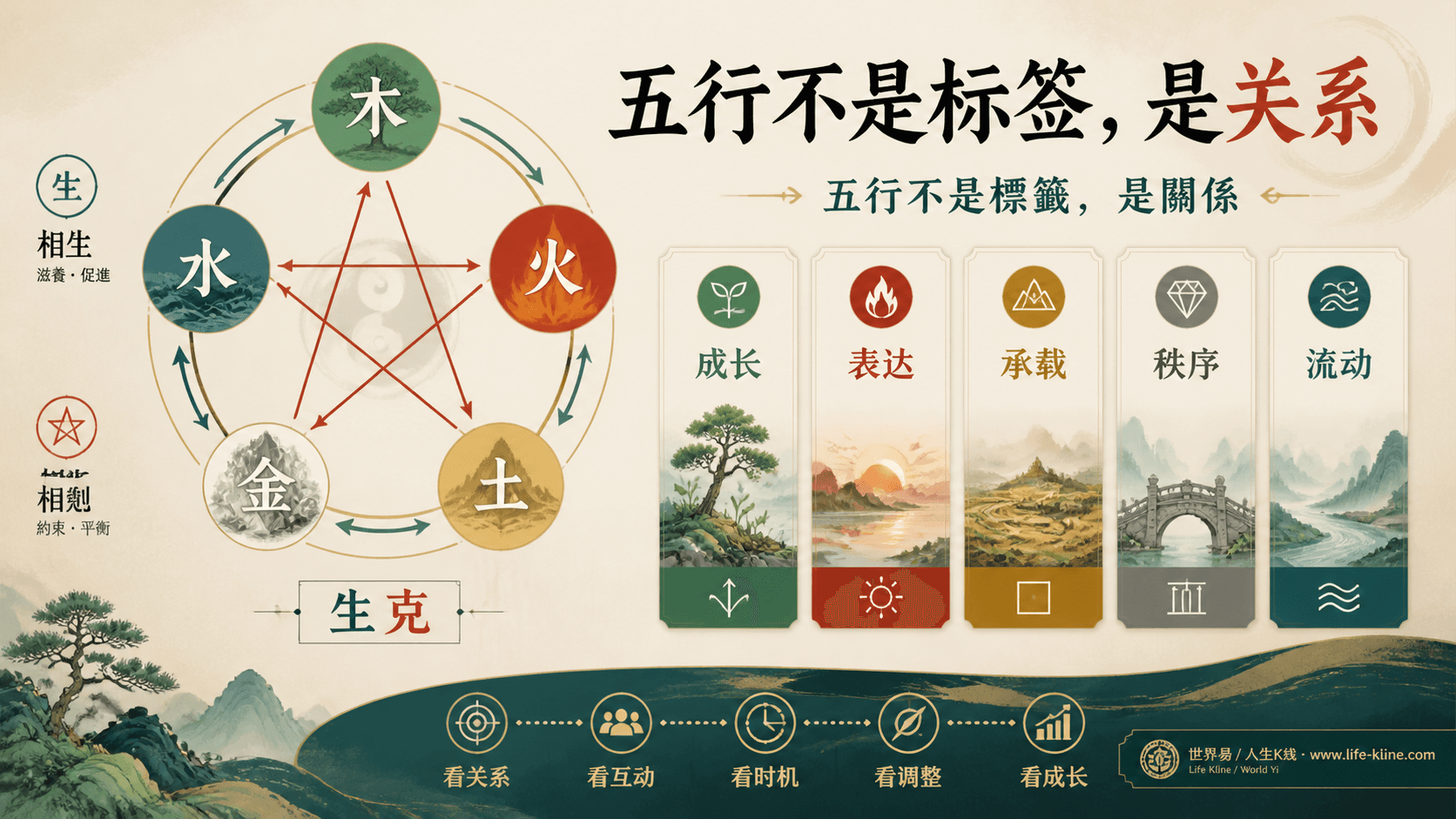
五行现代翻译图
这张图把《Mountain Fire Travel Hexagram: The Gentle Path of Exile》里的命理概念转成关系、边界和应用场景,适合先看图建立结构,再回到知识文章正文理解细节。
五行图把金木水火土从人格标签翻译成系统关系,帮助用户理解生克、承载和转化。